PepsiCo and Eastman Turn Hard-to-Recycle Plastic Waste Into New Gatorade Bottles – Polymer Price Trends
Gatorade Bottles Made With Recycled Plastic: PepsiCo and Eastman Advance Packaging Circularity
PepsiCo sustainable packaging – Full price table (25/05/2026 →01/06/2026)
| ITEM | 25/05/2026 | 01/06/2026 | +/− |
|---|---|---|---|
| Bottle grade PET chips domestic market | 8,400 yuan/ton | 8,370 yuan/ton | -30 |
| Chinese bottle-grade PET chips FOB export price | 1,150 $/ton | 1,130 $/ton | -20 |
| LDPE CFR Est China | 1,210 $/ton | 1,050/ton | -160 |
| PET Semidull — Fiber chips | 7,200 yuan/ton | 7,220 yuan/ton | +20 |
| PET Bright — Fiber chips | 7,350 yuan/ton | 7,400 yuan/ton | +50 |
| Pure Terephthalic Acid PTA domestic market | 6,150 yuan/ton | 6,285 yuan/ton | +135 |
| Pure Terephthalic Acid PTA FOB China | 800 $/ton | 820 $/ton | +20 |
| Monoethyleneglycol (MEG) South China | 4,800 yuan/ton | 4,730 yuan/ton | -70 |
| Monoethyleneglycol (MEG) CFR China | 590 $/ton | 580 $/ton | -10 |
| Paraxylene PX FOB Taiwan market | 1,100 $/ton | 1,184 $/ton | +84 |
| Paraxylene PX FOB South-Korea market | 1,103 $/ton | 1,187 $/ton | +84 |
| Paraxylene PX FOB EU market | 1,141 $/ton | 1,096 $/ton | -45 |
| Polyester filament POY 150D/48F domestic market | 8,550 yuan/ton | 8,700 yuan/ton | +150 |
| Recycled Polyester filament POY 150/48F domestic market | 7,400 yuan/ton | 7,200 yuan/ton | -20 |
| Polyester filament DTY 150D/48F domestic market | 9,650 yuan/ton | 9,450 yuan/ton | -200 |
| Polyester filament FDY 68D/24F | 9,550 yuan/ton | 9,400 yuan/ton | -150 |
| Polyester filament FDY 150D/96F domestic market | 8.850 yuan/ton | 8,700 yuan/ton | -150 |
| Polyester staple fiber 1.4D 38mm domestic market | 7,560 yuan/ton | 7,820 yuan/ton | +260 |
| Caprolactam (CPL) domestic market | 11,800 yuan/ton | 11,500 yuan/ton | -300 |
| Caprolactam (CPL) CFR China | 1,630 $/ton | 1,530 $/ton | -100 |
| Nylon 6 chips overseas market |
Northeast Asia / China $/T 1,600 – $2,010 Southeast Asia $/T 2,220 Europe / Germany $/T 2,092 – $2,560 Middle East / UAE $/T 2,170 – $3,573 North America / USA $/T 3,031 – $3,440
|
China / Asia Benchmark (FOB Shanghai / CFR Asia) $1,650 – $2,000 Taiwan (FOB Kaohsiung) $1,800 – $2,100 Germany / Western Europe (Ex-Works / Domestic) $2,350 – $2,700 United States (Ex-Works US Southeast) $2,900 – $3,150
|
– |
| Nylon 6 chips conventional spinning domestic market | 12,000 yuan/ton | 11,400 yuan/ton | -600 |
| Nylon 6 chips high speed spinning domestic market | 12,750 yuan/ton | 12,100 yuan/ton | -650 |
| Nylon 6.6 chips domestic market | 20,500 yuan/ton | 20,100 yuan/ton | -400 |
| Nylon6 Filament POY 86D/24F domestic market | 14,500 yuan/ton | 13,800 yuan/ton | -700 |
| Nylon6 Filament DTY 70D/24F domestic market | 16,700 yuan/ton | 16,300 yuan/ton | -400 |
| Nylon6 Filament FDY 70D/24F | 15,400 yuan/ton | 14,800 yuan/ton | -600 |
| Spandex 20D domestic market | 31,700 yuan/ton | 31,700 yuan/ton | – |
| Spandex 30D domestic market | 31,200 yuan/ton | 31,200 yuan/ton | – |
| Spandex 40D domestic market | 28,500 yuan/ton | 28,500 yuan/ton | – |
| Adipic Acid China domestic market | 9,200 yuan/ton | 8,850 yuan/ton | -350 |
| Adipic Acid Europe market | 2,140 $/ton | 2,170 $/ton | +30 |
| Benzene domestic market East China | 8,000 yuan/ton | 7,750 yuan/ton | -250 |
| Benzene CFR China | 1,059 $/ton | 1,059 $/ton | – |
| Ethylene South East market | 1,170 $/ton | 1,100 $/ton | -70 |
| Ethylene NWE market CIF | 1,375 $/ton | 1,090 $/ton | -285 |
| Acrylonitrile (ACN) domestic market | 10,750 yuan/ton | 10,450 yuan/ton | -300 |
| Acrylonitrile ACN Southeast Asia | 1,71 $/ton | 1,650 $/ton | -60 |
| Acrylic staple fiber (ASF) CFR China | 16,055 yuan/ton | 16,055 yuan/ton | – |
| VSF viscose staple fiber | 14,100 yuan/ton | 14,100 yuan/ton | – |
| PP Powder domestic market | 9,850 yuan/ton | 9,700 yuan/ton | -150 |
| Naphtha overseas market | 808 $/ton | 728 $/ton | -80- |
| Phenol domestic market (Jinan Dezheng / Yanshan Petrochemical, Shandong) | 7,750 yuan/ton | 7,380 yuan/ton | -370 |
| Recycled PET | 4,200 yuan/ton | 4,250 yuan/ton | +50 |
PepsiCo and Eastman Turn Hard-to-Recycle Plastic Waste Into New Gatorade Bottles
A New Step Toward Circular Packaging
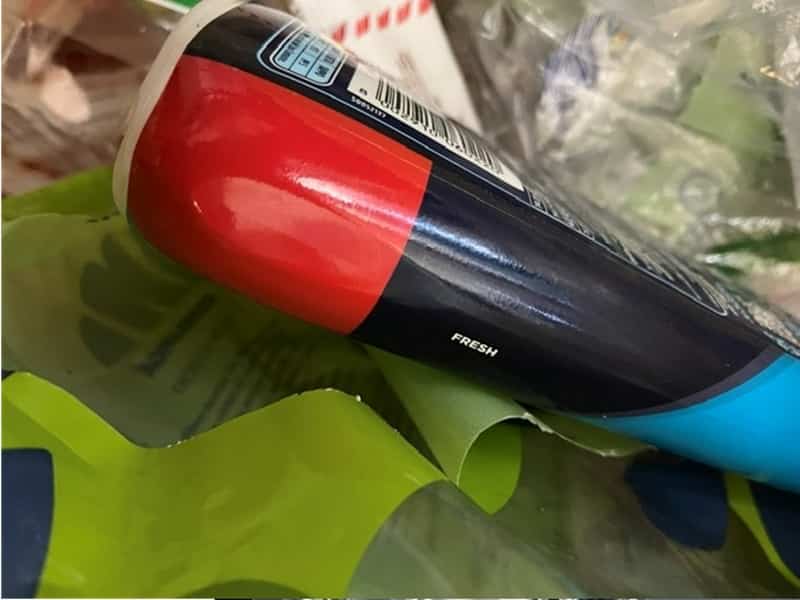
PepsiCo has begun introducing Gatorade bottles produced with Eastman PET Renew, a recycled material created from plastic waste that traditionally has been difficult to recycle through conventional methods.
The rollout is the result of a multi-year collaboration between PepsiCo and Eastman, aimed at reducing reliance on virgin plastic and increasing the use of recycled materials in beverage packaging. The project demonstrates how advanced recycling technologies can help transform waste streams into new, food-grade packaging suitable for major consumer brands.
As sustainability targets become increasingly important across the packaging industry, initiatives like this are attracting attention from manufacturers, retailers, regulators and consumers alike.
How Eastman PET Renew Works
Unlike traditional mechanical recycling, which typically processes clear and easily sortable plastic bottles, Eastman’s molecular recycling technology can handle more challenging polyester-based materials.
These materials may include:
- Colored plastic containers
- Opaque packaging
- Carpet fibers
- Textile waste
- Mixed polyester materials
The process breaks plastic waste down to its molecular building blocks, removes impurities, and rebuilds the material into high-quality recycled PET suitable for food-contact applications.
According to Eastman, the resulting PET Renew material offers performance characteristics comparable to virgin plastic while incorporating recycled content sourced from materials that would otherwise be difficult to recover. PepsiCo sustainable packaging
Why Packaging Circularity Matters
Packaging circularity focuses on keeping materials in use for as long as possible through reuse, collection and recycling.
For beverage companies, one of the biggest challenges remains the recovery of plastic materials that cannot easily enter existing recycling systems. While traditional recycling remains essential, industry experts increasingly view advanced recycling technologies as a complementary solution for processing waste streams that would otherwise end up in landfills or incineration facilities.
The new Gatorade bottles represent a practical example of how previously discarded materials can be reintroduced into the packaging supply chain.
PepsiCo’s Broader Packaging Strategy
The Eastman collaboration is part of PepsiCo’s wider effort to expand the use of recycled content across its beverage portfolio.
The company has recently highlighted packaging innovation as a key pillar of its sustainability strategy, alongside investments in recycling infrastructure, material recovery systems and product design improvements.
By incorporating recycled materials derived from hard-to-recycle waste, PepsiCo aims to reduce demand for newly produced plastic while supporting a more circular packaging ecosystem.
The initiative also arrives as consumer expectations continue to evolve, with growing demand for products that demonstrate measurable environmental progress.
Advanced Recycling Gains Industry Attention
Advanced recycling technologies have become a major topic within the packaging sector as companies search for solutions that can process materials beyond the capabilities of traditional recycling systems.
Supporters argue that molecular recycling can help recover valuable materials that would otherwise be lost, while critics emphasize the need for continued investment in collection systems and conventional recycling infrastructure.
Most sustainability experts agree that no single technology can solve global plastic waste challenges on its own. Instead, progress will likely require a combination of:
- Better packaging design
- Improved collection systems
- Stronger recycling infrastructure
- Consumer participation
- Advanced recycling technologies
- Regulatory support
The PepsiCo-Eastman partnership reflects this broader industry approach, positioning molecular recycling as one tool among several needed to improve material recovery.
What This Means for Consumers
For consumers, the transition may not be immediately visible beyond product packaging. However, the significance lies in the source of the material itself.
The Gatorade bottles now entering the market demonstrate that plastic waste once considered difficult or impossible to recycle can be transformed into high-quality beverage containers.
As brands continue investing in packaging innovation, projects like this could help expand the availability of recycled-content packaging across food and beverage categories.
Looking Ahead
The collaboration between PepsiCo and Eastman highlights how packaging manufacturers are exploring new methods to address long-standing recycling challenges.
While advanced recycling alone will not solve the global plastic waste issue, the successful commercialization of Gatorade bottles made with Eastman PET Renew offers an example of how emerging technologies can support broader circular economy goals.
As regulatory pressure increases and sustainability commitments become more ambitious, similar partnerships are expected to play a growing role in the future of beverage packaging.
More…