Latteria Valtellina adopts PET milk packaging
Latteria Sociale Valtellina brings PET milk packaging in-house
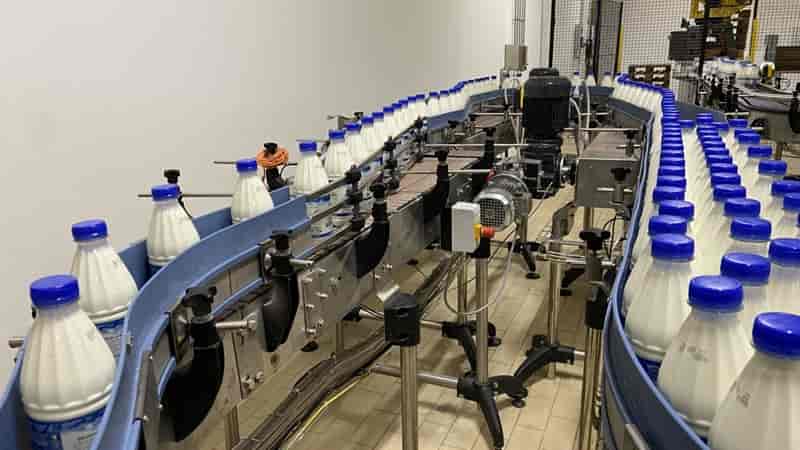
Latteria Sociale Valtellina has moved production of its milk and kefir bottles inside its Postalesio dairy in northern Italy. The cooperative is using an SMI EBS 4 K ERGON rotary stretch-blow moulder to make 0.5-litre and 1-litre PET milk bottles, alongside a 0.48-litre format for kefir.
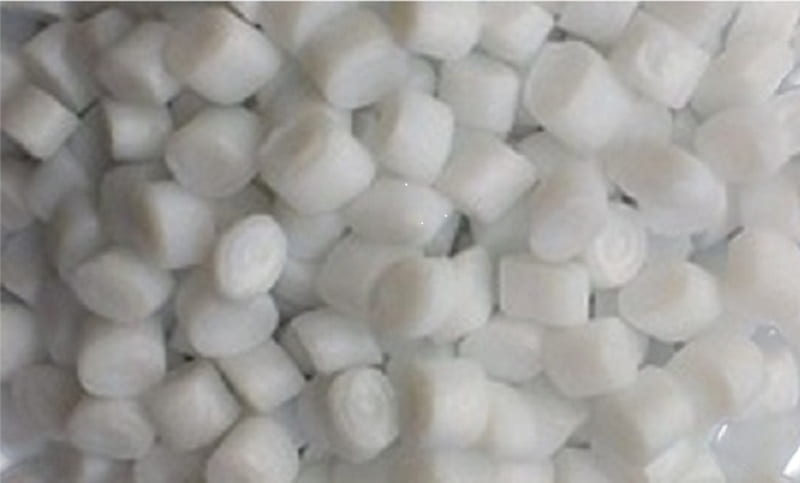
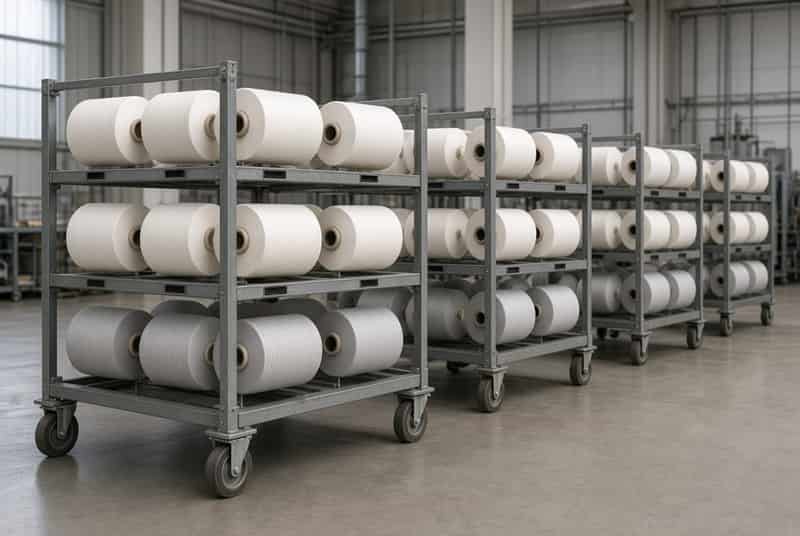
The investment is significant for more than the change in container material. By buying compact preforms and blowing bottles where they are filled, the dairy says it can eliminate the weekly deliveries of empty bottles previously required. It also reports using reusable metal cages for the preforms, reducing the disposable outer packaging associated with transporting finished empty containers.
Key facts
-
Company: Latteria Sociale Valtellina
-
Location: Postalesio, Sondrio, Italy
-
Equipment: SMI EBS 4 K ERGON rotary stretch-blow moulder
-
Milk formats: 0.5 litres and 1 litre
-
Kefir format: 0.48 litres
-
Material reported by the cooperative: rPET50, containing 50% recycled PET
-
Milk collected: more than 1,200 quintals per day, according to SMI
A local supply decision with operational consequences
Founded in 1979 and headquartered in Delebio, Latteria Sociale Valtellina processes milk supplied by farms belonging to the cooperative. SMI reports that more than 1,200 quintals—about 120 metric tonnes—are collected each day and bottled at Postalesio.
Producing containers at the filling site changes the logistics equation. Empty bottles occupy far more space than preforms, so bringing bottle blowing into the dairy can reduce inbound transport volume and storage needs. The exact environmental saving, however, would require a full life-cycle assessment that includes preform production, blowing energy, bottle weight, distribution and end-of-life treatment. The available company information does not provide that calculation.
This distinction matters. PET is light, durable and shatter-resistant, but those properties alone do not prove that it has the lowest environmental impact in every application. Collection rates, design for recycling, recycled content and local waste infrastructure all influence the result. PET milk packaging
Why the rPET50 specification matters
The cooperative says it has selected rPET50, a formulation containing 50% recycled PET. That figure is above the 2030 benchmark in the EU Single-Use Plastics Directive for covered beverage bottles.
The legislation requires PET beverage bottles covered by the directive to contain at least 25% recycled plastic from 2025, calculated as an average across the PET bottles placed on each national market. From 2030, covered beverage bottles must reach at least 30% recycled plastic, again as a market average. Milk is explicitly included among the directive’s examples of beverages, while bottles for food for special medical purposes are excluded.
Using the phrase “market average” is important: the rule does not state that every individual bottle must contain precisely 30% recycled material. Latteria Sociale Valtellina’s reported 50% formulation is therefore a company packaging choice that goes beyond the headline 2030 percentage, rather than proof by itself of regulatory compliance across an entire market.
How the SMI system produces the bottles
The EBS 4 K ERGON combines preform heating and stretch-blow moulding in one system. In the heating section, infrared lamps warm the PET preforms before they are stretched and blown into bottle moulds.
According to SMI, heat-reflecting composite panels are positioned in front of and behind the lamps. Their purpose is to improve heat reflection and distribute heat more evenly over the preform surface. The machine also uses a horizontally arranged preform conveyor and an optimised ventilation system.
These features are intended to support consistent heating and energy efficiency. No independently verified energy-consumption figures or before-and-after data were supplied with the announcement, so any quantified efficiency claim would require additional evidence from the dairy or an audited study.
Dairy packaging is becoming more data-driven
The Valtellina project arrives as dairy companies look beyond material selection and seek better evidence about what happens after packaging is sold. On 3 August 2026, Aldi UK and Arla announced an eight-week pilot using invisible UV tags on wrap-around milk-bottle labels. Detection units at material recovery facilities can record tagged packs as they pass through the recycling stream, giving the partners real-world data on collection and sorting.
The two projects address different parts of the same circularity challenge. Latteria Sociale Valtellina is changing production and recycled content at the dairy; the Aldi-Arla trial is testing traceability after consumer use. Together, they illustrate a shift from broad sustainability language toward measurable packaging design, logistics and recovery data.
What to watch next
The strongest evidence for the Postalesio investment will come from operational results: the number of empty-bottle journeys avoided, electricity used per bottle, bottle weight, reject rates and the share of packs actually collected and recycled.
For now, the verified development is clear. Latteria Sociale Valtellina has installed in-house stretch-blow moulding for three PET formats and says it is using 50% recycled PET. The move can simplify inbound packaging logistics and reduce disposable transport materials, while its full environmental performance will depend on measured energy use and the effectiveness of the recycling system beyond the dairy gates.
Sources
-
SMI press release: https://www.smigroup.it/profilo/smigroup-press/N1626-latteria-sociale-valtellina-sceglie-il-pet-per-il-confezionamento-del-latte?lang=en
-
EUR-Lex, Directive (EU) 2019/904: https://eur-lex.europa.eu/eli/dir/2019/904/oj/eng
-
Dairy Industries International, Aldi-Arla recycling pilot, 3 August 2026: https://www.dairyindustries.com/news/51342/aldi-arla-milk-bottle-recycling-pilot-polytag-uv-tagging/
-
PETnology coverage, 4 August 2026: https://www.petnology.com/online/news-detail/smi-latteria-sociale-valtellina-chooses-pet-for-milk-packaging