PET Resin – China’s New Plastic Recycling Initiative Aims to Reduce Waste in Barely Two Years 11-09-2025
PET Resin
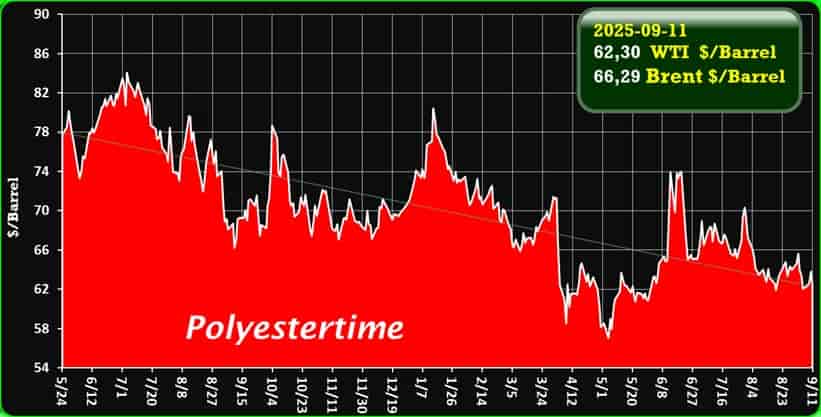
Crude Oil Prices Trend
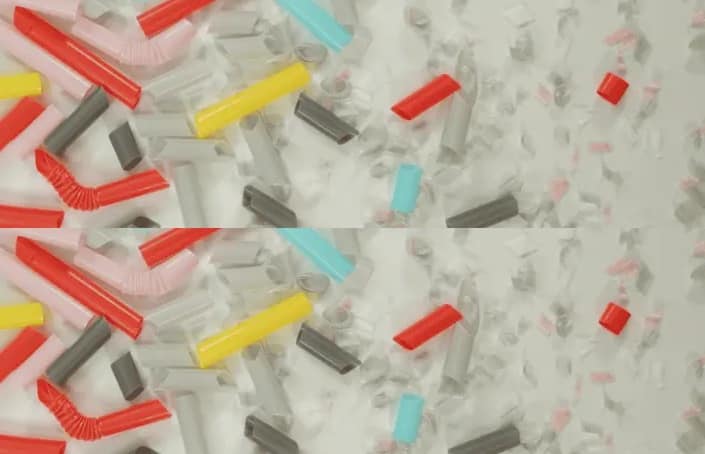
Living Biosensors Detect Microplastics in Water
By ACS Sensors research team — September 11, 2025
What Are Microplastics?
Microplastics are tiny fragments of plastic that infiltrate our air, soil, and water.
Often too small to be seen by the naked eye, these particles have raised global concern due to theirpotential impact on ecosystems and human health. PET Resin
Monitoring their presence is essential. By tracking where microplastics accumulate, policymakers and cleanup teams can direct resources more effectively. Yet, detecting
them has traditionally required slow, costly, and technically demanding methods.
Current Detection Methods
Conventional techniques for identifying microplastics include powerful microscopes and
advanced analytical tools such as infrared and Raman spectroscopy.
While precise, these methods involve multiple preparation steps, specialized equipment, andlong processing times. PET Resin
For scientists and environmental agencies, the challenge has been clear: develop a
faster, more accessible, and affordable detection system that works in real-world conditions.
The Bacterial Biosensor
Enter the new innovation: a living biosensor engineered from the bacterium Pseudomonas aeruginosa. This microbe is commonly found in the environment and naturally attaches to plastic surfaces.
The research team used a harmless laboratory strain of P. aeruginosa, modifying it genetically to glow green when exposed to microplastics. PET Resin
How the Sensor Works
The scientists introduced two genes into the bacterium.
The first activates upon contact with plastic, while the second triggers the production of green fluorescent protein. Together, they create a simple yet powerful signal:
if microplastics are present, the sample glows.
Lab trials confirmed its effectiveness. The bacteria emitted measurable fluorescence within
three hours when exposed to common plastics such as polyethylene terephthalate and polystyrene.
The response was absent when tested against non-plastic materials like glass or sand.
Notably, the modified bacteria remained stable for up to three days when refrigerated,
making the sensor portable and practical for field use. PET Resin
Testing in Real-World Water
To push the biosensor beyond lab conditions, researchers tested it in seawater
from a city waterway. After filtering and treating the samples to remove organic matter,
they added the engineered bacteria.
The result: fluorescence revealed microplastic levels of up to 100 parts per million.
Raman microspectroscopy confirmed that many particles were biodegradable plastics such as polyacrylamide, polycaprolactone, and methyl cellulose. PET Resin
Impressively, the biosensor detected these as effectively as traditional polymers.
Why This Innovation Matters
“Our biosensor offers a fast, affordable and sensitive way to detect microplastics in environmental samples within hours. By acting as a rapid screening tool, it could transform large-scale monitoring efforts and help pinpoint pollution hotspots for more detailed analysis.” — Song Lin Chua
This development marks a shift from expensive, equipment-heavy detection to a living,
responsive system that can scale across diverse monitoring sites. PET Resin
For environmental researchers and policymakers, it means quicker identification of
pollution hotspots and better-informed cleanup strategies.
Future Applications
Beyond microplastics, the underlying concept—using engineered microbes as living detectors—could apply to other environmental challenges. With targeted modifications, similar biosensors might one day detect oil spills, heavy metals, or harmful chemicals in water supplies.
In the long term, living biosensors may become a vital part of global environmental
monitoring networks, providing real-time, cost-effective data. PET Resin
Funding & Acknowledgments
The project received support from the Environment and Conservation Fund, Health and Medical Research Fund, Research Centre for Deep Space Explorations, and Pneumoconiosis Compensation Fund Board.
Indian Polymer Prices Mixed: PET, PVC Gain; PE, PP Weaken
Published: September 2025
Introduction
At the start of September 2025, India’s polymer market presented a mixed picture.
While Polyethylene Terephthalate (PET) resin and Polyvinyl Chloride (PVC) prices gained,
Polyethylene (PE) and Polypropylene (PP) weakened due to softer demand across key sectors. PET Resin
These contrasting movements highlight the importance of demand patterns, sectoral growth, and raw material dynamics in shaping price trajectories. For businesses in packaging, construction, automotive, and textiles, understanding these price shifts is critical to managing costs and competitiveness.
PET Resin Surges on Packaging Demand
PET resin prices surged by ₹4.3 per kg (~$0.049/kg) at the start of September.
The primary driver was robust demand from the packaging and beverage industries,
which traditionally see a seasonal uptick due to bottling activity. PET Resin
Stability in feedstock costs also supported the upward momentum. As a material widely used in food packaging, bottled water, and soft drinks, PET remains closely tied to consumer trends and seasonal consumption.
“PET’s resilience reflects its critical role in both food security and consumer convenience.”
PVC Gains Strength from Construction
PVC prices rose by ₹1.7 per kg, supported by strong demand in construction and infrastructure. Pipes, profiles, and fittings remain essential for ongoing housing and public works projects.
Demand for PVC is less volatile compared to PET, as it is tied to long-term infrastructure and urban development. With India pushing housing schemes and renewable energy projects, PVC’s role in electrical and industrial applications is also expanding. PET Resin
Polyethylene Shows Weakness
Polyethylene (PE) prices slipped by ₹1.5 per kg.
Demand from packaging film manufacturers and consumer goods producers
was muted, contributing to the softness.
Certain grades held steady, but the broader trend remains negative.
The weak buying sentiment reflects pressure on disposable income and slower growth in packaged consumer products.
Polypropylene Faces Pressure
Polypropylene (PP) fell by ₹1.2 per kg.
The decline was driven by subdued demand from automotive and textile sectors, where manufacturers are holding excess inventory. PET Resin
PP’s wide applications—from rigid packaging to automotive parts—make it sensitive to cyclical demand shifts.
A slowdown in exports also added to downward price pressure.
End-Use Sectors Overview
| Polymer | Main Applications |
|---|---|
| PET Resin | Beverage bottles, food packaging, textiles (polyester fibers), consumer goods |
| PVC | Construction pipes, profiles, electrical, automotive interiors, healthcare products |
| Polyethylene (PE) | Packaging films, containers, agriculture (mulch films, irrigation), household goods |
| Polypropylene (PP) | Automotive parts, rigid packaging, textiles, films, consumer appliances |
Key Market Drivers
Polymer prices are influenced by multiple factors beyond local demand:
- Crude Oil Prices: As the key feedstock, oil movements directly impact polymer costs. PET Resin
- Global Supply Chains: Import-export flows of naphtha, ethylene, and propylene matter greatly.
- Sectoral Demand: Construction booms push PVC; consumer packaging drives PET and PE.
- Currency Exchange: Volatility in the rupee-dollar rate affects import competitiveness.
Global Market Comparisons
India’s polymer market trends mirror some global movements, but regional differences remain. In China, demand pressures in automotive plastics have weighed on PP, while Europe has seen stronger recovery in construction-linked PVC demand. PET Resin
These international dynamics matter because India imports substantial volumes of polymer feedstocks, making global price stability critical for domestic manufacturers.
Outlook for the Coming Quarters
The trajectory of polymer prices in India will depend heavily on crude oil and feedstock costs. If oil remains elevated, input costs could push prices higher despite weaker demand in some sectors. PET Resin
On the demand side, festive season consumption could support packaging-related polymers like PET and PE. Construction-linked demand for PVC is expected to stay firm, while PP may remain vulnerable until automotive and textile sectors rebound.
Conclusion
September 2025 reflects a turning point in India’s polymer market. PET and PVC are benefiting from resilient demand in packaging and construction, while PE and PP are under strain from subdued consumer and industrial activity.
Businesses across packaging, infrastructure, and manufacturing should monitor global crude trends, supply chains, and domestic consumption patterns closely. With volatility set to continue, agility and forward planning will be critical for both producers
and end-users navigating India’s polymer market. PET Resin
BYD Warns of Shake-Out in Chinese Car Industry Amid Crackdown on Price Wars
Introduction
China’s electric vehicle (EV) industry, the largest in the world, is facing a dramatic shake-out. Following Beijing’s tightening policies against aggressive discounting, major players like BYD have warned that the number of viable automakers could shrink from more than 100 today to just a handful by the end of the decade. PET Resin
The warning comes at a time when global EV demand is rising, but oversupply and heavy competition within China have driven companies into risky pricing battles. Analysts now expect the market to consolidate, leaving only the strongest brands with the scale and innovation needed to survive.
Beijing’s Crackdown on Price Wars
At the heart of the shake-out is President Xi Jinping’s campaign against neijuan, or “involution.” This term has become shorthand for destructive competition where companies undercut each other with unsustainable discounts.
Authorities argue that these tactics contribute to deflationary pressures and destabilize the automotive sector. The government’s message is clear: survival will no longer hinge on price cuts but on technological strength, product quality, and consumer experience.
BYD’s Position and Warnings
Speaking at the Munich Motor Show, Stella Li, Executive Vice-President of BYD, stressed that “some of the original equipment makers will be pushed out” as China enforces stricter market discipline. She suggested that even 20 automakers may be too many for long-term viability. PET Resin
While BYD stands as one of the world’s leading EV manufacturers, rivaling Tesla in sales, the company admits it is not immune to these pressures. A reduced reliance on discounts could work in BYD’s favor, shifting buyer focus toward driving performance, battery technology, and brand trust.
Market Consolidation Ahead
With around 130 EV makers competing in China, consolidation seems inevitable. According to consultancy AlixPartners, only 15 brands are likely to remain financially viable by 2030. This echoes similar predictions by Xpeng, which has suggested that the global car industry may shrink to as few as 10 dominant players within the next decade.
Analysts believe the shake-out will streamline supply chains, concentrate market power, and force automakers to double down on research, development, and digital services to retain consumer loyalty. PET Resin
Financial Pressures on EV Makers
BYD itself has faced setbacks. The company reported weaker-than-expected revenues in the second quarter, as Beijing cracked down on supplier payment practices and aggressive discounting.
These financial headwinds underline how even industry leaders must adjust their business models. For smaller and less diversified players, the new rules may prove fatal.
Revised Forecasts and Global Expansion
Global banks are revising their expectations. Citi has lowered its sales forecasts for BYD, cutting its 2024 projection from 5.8 million to 4.6 million cars.
The outlook for 2025 now stands at 5.4 million units, and for 2027, 6 million units—well below earlier forecasts. PET Resin
Despite this, BYD is betting heavily on overseas expansion. The company plans to begin manufacturing in Europe, starting with a new plant in Hungary. Scaling up, however, will take time and significant investment.
Chinese Automakers Push Overseas
BYD is not alone in its global ambitions. Changan, a state-owned manufacturer, recently entered the UK market. Meanwhile, Leapmotor has partnered with Stellantis to broaden its European footprint.
These moves reflect a broader trend: with domestic competition intensifying, more Chinese EV makers are looking to international markets. Yet the overseas journey is fraught with challenges. PET Resin
Challenges of Producing in Europe
While Europe represents a lucrative market, building cars there is no easy task. Leapmotor executive Tianshu Xin has noted that localizing production is expensive and complex, citing high labor and energy costs.
For many Chinese firms, exporting vehicles remains cheaper than setting up full-scale operations abroad. But with rising tariffs on imported EVs, the pressure to establish European facilities is only growing. PET Resin
Comparisons with India’s EV Trajectory
While China grapples with consolidation, India is at a different stage of its EV journey. The Indian EV market, valued at billions of dollars in 2023, is expected to grow rapidly, reaching 10 million annual sales by 2030.
Unlike China’s saturated landscape, India is focused on building infrastructure, fostering startups, and developing next-generation battery technologies. Global events such as the ETAuto Electric Mobility Summit highlight how India is prioritizing scalability and sustainable growth over discount-driven competition.
This contrast underscores a key lesson: while early entrants often face chaotic competition, emerging markets can learn from those experiences to avoid the pitfalls of over-saturation. PET Resin
Future Outlook
The coming years will determine which Chinese EV makers can withstand regulatory scrutiny, financial headwinds, and shifting consumer expectations. Companies with robust global strategies, advanced battery technologies, and strong brands are most likely to thrive.
For consumers, the shift away from discounts may lead to higher upfront costs but also better product quality and more sustainable competition. For policymakers, the challenge will be ensuring that consolidation does not stifle innovation.
Conclusion
BYD’s warning highlights a pivotal moment for the Chinese car industry. PET Resin
The end of price wars marks the beginning of a new era—one where survival depends on technology, global expansion, and brand trust rather than unsustainable discounts.
As the world’s largest EV market recalibrates, the outcome will shape not just China’s automotive future but the global industry at large. The shake-out ahead could determine which companies dominate the next generation of electric mobility.
More…

China’s New Plastic Recycling Initiative Aims to Reduce Waste in Barely Two Years
Introduction
In a major step toward environmental responsibility, China has unveiled a nationwide plastic recycling initiative with the bold goal of reducing waste significantly in just two years. The initiative is designed not only to improve recycling rates but also to reshape how industries and citizens view plastic usage and disposal.
At its core, the program promotes a circular economy—an economic model that emphasizes reusing, recycling, and minimizing waste. By aligning public education, technological innovation, and stricter government policies, China hopes to achieve meaningful reductions in its massive plastic footprint. PET Resin
Technological Innovation
A cornerstone of the initiative is investment in Advanced Recycling Technologies (ART). Unlike traditional recycling, which struggles with contaminated or low-grade plastics, ART can break down previously unrecyclable plastics into raw materials that can be reused in manufacturing.
These technologies open the door to new business opportunities and reduce dependence on virgin plastic production. Local companies are being encouraged to adopt these methods, while international firms with proven expertise are invited to collaborate.
“Innovation in recycling is no longer optional—it’s essential for survival in a resource-constrained world,” notes one industry analyst. PET Resin
Public Awareness & Participation
No recycling initiative can succeed without citizen involvement. To this end, China plans to launch extensive public education campaigns highlighting how to properly sort and dispose of plastics.
Municipalities will expand the number of accessible recycling bins, making it easier for households and businesses to contribute. Public buy-in is expected to boost the volume and quality of recyclables collected, reducing contamination and increasing efficiency.
Policy & Industry Framework
The government is introducing stricter regulations for plastic production and disposal. Manufacturers will be held accountable for the waste generated by their products, while those who adopt sustainable practices will be rewarded with incentives.
Policies include promoting recyclable packaging, discouraging single-use plastics, and pushing for biodegradable alternatives. This comprehensive framework is expected to reshape not just consumer behavior but also industrial strategy. PET Resin
International Collaboration
Recognizing that plastic waste is a global challenge, China is opening doors for international knowledge exchange. Pilot programs will involve collaborations with technology leaders from Europe, North America, and other regions where innovative recycling models have already been tested.
Conferences, workshops, and seminars will create platforms for experts, policymakers, and businesses to share best practices and build joint solutions.
Economic & Social Impact
Beyond environmental benefits, the initiative carries significant economic potential. The recycling sector could generate thousands of new jobs, from technology specialists to local waste collectors. PET Resin
Additionally, by reducing reliance on imported raw materials, China could enhance its economic resilience and support industries looking to adopt greener supply chains.
The initiative may also spark new entrepreneurial ventures, as startups innovate around recycling logistics, materials science, and eco-friendly product design.
Future Outlook
Experts are cautiously optimistic. If executed effectively, China’s plan could cut plastic waste drastically and become a model for other countries. The success hinges on maintaining momentum across technology, policy, and public engagement simultaneously.
As sustainability becomes a defining factor in global competitiveness, China’s recycling strategy could position the country as a leader in environmental innovation.
Conclusion
China’s two-year plastic recycling initiative represents a turning point in waste management. By combining advanced technologies, public education, and stronger regulations, the program aims to deliver tangible results in a short timeframe.
The broader implications extend far beyond waste reduction: they touch on job creation, economic sustainability, and global collaboration. As other nations observe China’s progress, the initiative could spark a wave of similar efforts worldwide.

Vioneo Chooses ECI Group Technology to Build World’s First Fossil-Free LDPE Plant
What the project is
Vioneo has awarded ECI Group a major contract to deliver the world’s first low-density polyethylene (LDPE) plant designed to run on a completely fossil-free feedstock. The facility will be built in Antwerp and produce 110,000 tonnes of LDPE per year using certified green methanol.
The move signals a foothold for large-scale, lower-carbon polymers production in Europe and demonstrates how industrial chemistry can pivot away from fossil feedstocks at commercial scale.
Scale, feedstock and certification
The Antwerp plant targets 110,000 t/yr of LDPE using green methanol derived from biogenic CO₂. Vioneo says the methanol supply chain will be fully traceable and certified under ISCC PLUS or equivalent schemes, ensuring the product can meet sustainability claims without ambiguity. PET Resin
Renewable electricity will power the facility, and the feedstock sourcing approach is designed to deliver a fossil-free lifecycle for the produced LDPE — from carbon capture to polymer output.
ECI Group’s autoclave & HPPE technology
ECI Group will supply its proprietary autoclave high-pressure polyethylene (HPPE) technology. Autoclave processes remain the benchmark for LDPE production where specific melt, mechanical and optical properties are required.
Joaquin Flores, ECI Group’s president and CEO, said the selection underlines the company’s ability to modernise a proven pathway — the first new autoclave LDPE plant in Europe in four decades. PET Resin
What ECI brings
- Standardised, optimised autoclave designs for reliability and uptime.
- Adaptations for green methanol feedstock chemistry and downstream processing.
- Modern materials, engineering standards and lessons from recent licenses.
Partners & industrial expertise
The venture is backed by A.P. Moller and sees Repsol acting as ECI Group’s product partner. Repsol contributes technical and commercial experience: the company has over five decades producing LDPE, EVA and EBA at industrial scale across Iberia.
Vioneo’s chief executive, Alex Hogan, framed the project as a practical test that large-scale defossilisation is economically viable within Europe’s €5 trillion chemicals and materials sector. PET Resin
“This project demonstrates the economic viability of large-scale cleaner production using green methanol instead of fossil fuels,” said Alex Hogan. “It positions Europe to lead the defossilisation of chemicals and materials.”
Environmental and market impact
Using green methanol sourced from biogenic CO₂ and renewable power can materially lower lifecycle emissions compared with conventional LDPE made from fossil feedstocks. Traceability and ISCC PLUS certification are central to unlocking market acceptance for “fossil-free” polymers.
High-performance LDPE produced this way is suitable for applications that demand strict performance standards: healthcare products, certain packaging grades, automotive components, and consumer goods where material reliability is critical. PET Resin
| Fact | Detail |
|---|---|
| Output | 110,000 tonnes LDPE / year |
| Feedstock | Certified green methanol from biogenic CO₂ |
| Location | Antwerp, Belgium |
| Core tech | ECI autoclave HPPE technology |
| Key partners | Vioneo, ECI Group, Repsol, A.P. Moller |
Operational outlook & next steps
While official startup dates are not yet published, the agreement moves the project from concept toward delivery: detailed engineering, permitting and integration of green methanol logistics will be immediate priorities.
ECI Group notes it has licensed >1,000,000 tonnes of annual capacity since 2021 using its standardised design approach — an operational track record ECI will leverage to compress delivery risk and speed commissioning. PET Resin
Why this matters
For Europe and the broader polymer market, this project is a test case: it will show whether established high-pressure routes can be re-fueled with novel, low-carbon feedstocks while retaining product quality and commercial economics. If successful, it sets a replicable template for future fossil-free polymer plants.

TotalEnergies Corbion Appoints Multi Trade Group as Primary PLA Distributor in the Middle East
Table of Contents
Strategic Partnership Overview
TotalEnergies Corbion has announced a major step in expanding its sustainable materials portfolio in the Middle East. The company has appointed Multi Trade Group as its primary distribution partner for Luminy® PLA in the United Arab Emirates, the Kingdom of Saudi Arabia, and the wider Middle East.
This agreement aligns with both companies’ shared vision of sustainability and innovation, providing the region with access to a scalable, high-performance alternative to conventional plastics. PET Resin
What Makes Luminy® PLA Different
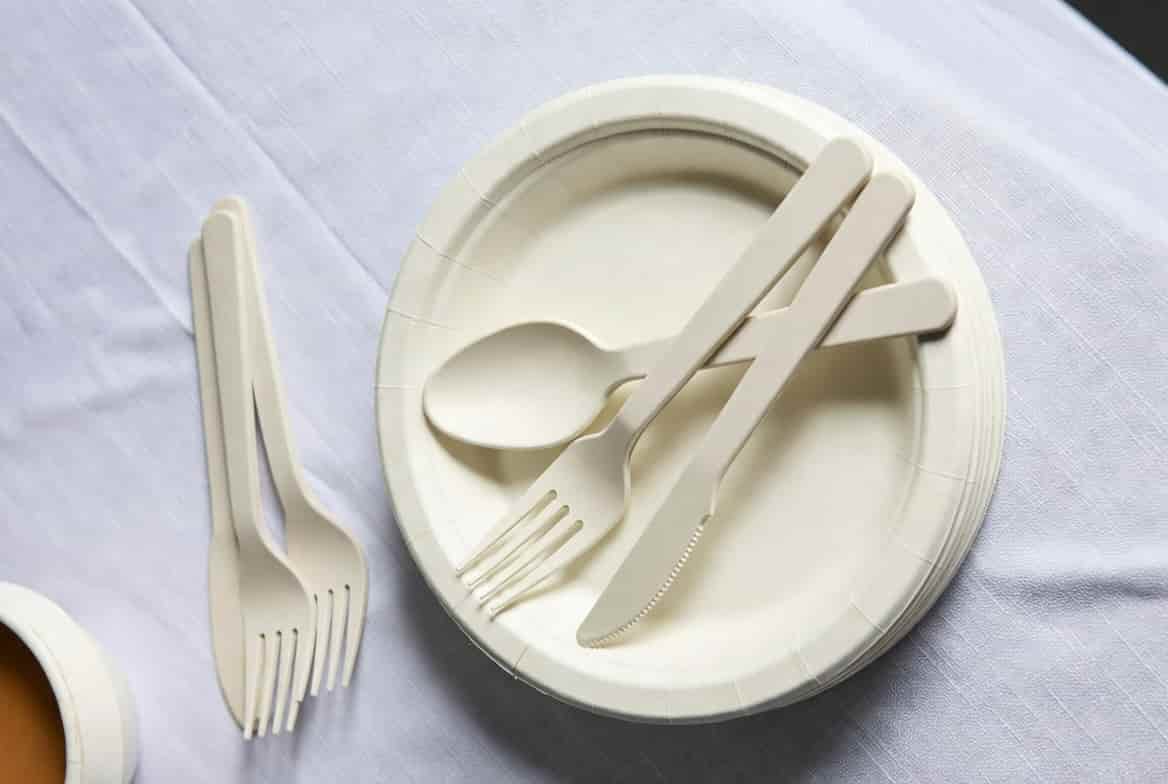
Luminy® PLA (polylactic acid) is not just another plastic substitute. It’s a bio-based, versatile polymer designed for both durability and end-of-life sustainability. Unlike conventional plastics, Luminy® PLA can be reused, mechanically and chemically recycled, or industrially composted.
In composting conditions, it breaks down faster than everyday organic waste such as banana or orange peels—making it an attractive choice for industries seeking responsible alternatives.
Grades and Applications
The Luminy® portfolio includes:
- High-heat grades
- Standard grades
- Low-heat grades
- PDLA for stereocomplex compounds
This flexibility supports a wide range of industries, including:
- Packaging and food service ware
- Textiles and durable consumer goods
- 3D printing applications PET Resin
Luminy® PLA is also available in recycled grades, offering 30% or 100% content allocation, with no compromise in performance or safety.
Sustainability and Life Cycle Analysis
One of Luminy® PLA’s most important strengths lies in its verified sustainability profile. According to life cycle analysis (LCA), it delivers remarkable environmental benefits compared to fossil-based plastics. PET Resin
| PLA Grade | Carbon Footprint (kg CO₂-eq/kg) | Impact |
|---|---|---|
| Virgin Luminy® PLA | 0.29 | 85% lower footprint vs. conventional plastics |
| 30% Recycled Content | 0.01 | Carbon neutral |
| 100% Recycled Content | -0.65 | Negative carbon footprint |
Expanding Access Across the Region
With Multi Trade Group’s established market presence and expertise, converters, compounders, and brand owners across the Middle East will now have easier access to Luminy® PLA. The partnership also supports regional government initiatives to reduce emissions and advance circular economy strategies.
Leadership Insights
At the signing ceremony in Sharjah, Asif Iftekhar, CEO of Multi Trade Group, emphasized the significance of this collaboration:
“We are committed to delivering sustainability, recyclability, and solutions that reduce our carbon footprint and waste impact. This partnership reflects our responsibility to help build a sustainable future for the region.” PET Resin
Derek Atkinson, Vice President of Sales at TotalEnergies Corbion, echoed the sentiment:
“Multi Trade Group’s local expertise and reach make them an ideal partner. Together, we can help customers achieve ambitious sustainability goals and accelerate the shift toward a circular economy.”
Production and Recycling Innovation
TotalEnergies Corbion operates a 75,000-ton-per-year PLA production facility in Rayong, Thailand. The company is also a pioneer in chemical recycling, using hydrolysis depolymerization to produce recycled PLA (rPLA) with identical performance and safety standards as virgin material. PET Resin
Looking Ahead: PLA in the Middle East
As Middle Eastern governments strengthen policies around sustainability and plastic reduction, the availability of Luminy® PLA through this partnership represents a crucial milestone. Businesses in the region now have a practical path toward balancing functionality with responsibility.
The partnership between TotalEnergies Corbion and Multi Trade Group is more than a distribution deal—it is a catalyst for advancing the circular economy across the Middle East. PET Resin