Plant-based plastic – Green Polyethylene: The Plant-Based Plastic Transforming Sustainability As plastic waste and fossil fuel use grow more urgent, Green Polyethylene (Green PE) is leading the charge toward a low-carbon future. Made from renewable crops like sugarcane, wheat, or beet, Green PE mimics traditional plastic—without the climate cost 02-05-2025 - Archive
Plant-based plastic
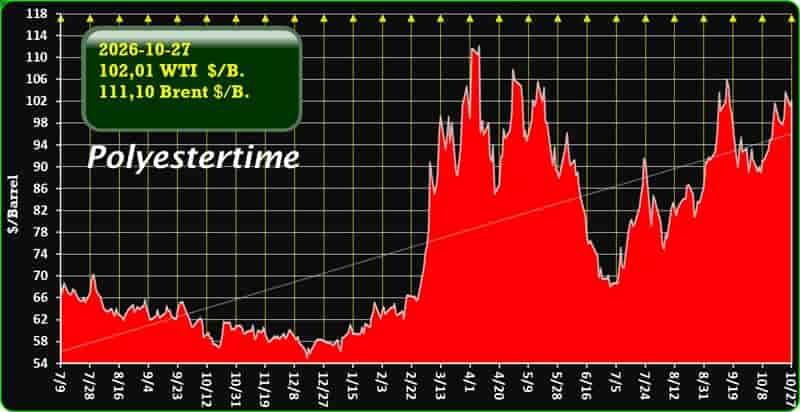
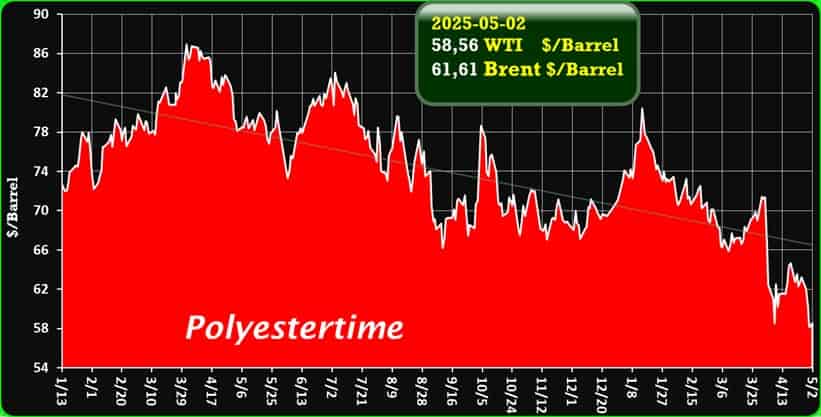
Crude Oil Prices Trend
Doğa PET Elevates PET Recycling with TOMRA’s Advanced Sorting Technology
A Bold Step Into Recycling by Doğa Holding
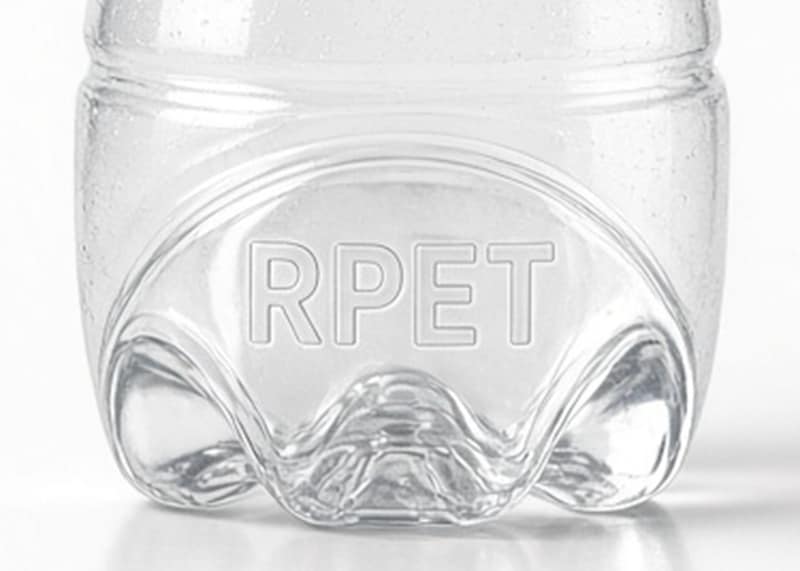
Doğa PET, a pioneering initiative by Türkiye’s prominent conglomerate Doğa Holding, is redefining PET recycling. With TOMRA Recycling’s sensor-based sorting solutions at its core, Doğa PET produces top-grade PET flakes and rPET granules—ready for food packaging and textile use. Plant-based plastic
Situated in northwestern Türkiye, the facility processes over 4,200 tons of PET bottles each month. It produces 3,000 tons of PET flakes and 2,000 tons of rPET granules, setting a new benchmark in recycling efficiency.
High-Tech Sorting for Maximum Purity
Doğa PET’s plant is equipped with TOMRA’s full suite of advanced sorting technologies, including four AUTOSORT™ units, two INNOSORT™ FLAKE machines, and two AUTOSORT™ FLAKE units. These machines deliver exceptional levels of purity, catering to both domestic and European markets.
“Our goal was 99.998% polymer purity and 99% clarity in color. We’ve surpassed both targets,” says Dr. Selçuk Gökhan Gerlikhan, General Manager of Doğa PET.
“This high level of precision ensures our recycled material closely matches virgin PET in quality.” Plant-based plastic
Smart Separation of Light Blue PET
Doğa PET is Türkiye’s first facility capable of precisely separating light blue PET from clear flakes, preserving material that would otherwise be wasted. These sorted flakes are then repurposed for other high-value applications, enhancing overall efficiency and sustainability.
Streamlined Workflow from Bottle to Flake
The recycling process begins with four AUTOSORT™ units for pre-sorting by material and color. Post-sorting, materials are crushed, washed, and further refined by INNOSORT™ FLAKE and AUTOSORT™ FLAKE units. These systems detect and remove any contaminants, including metals and undesired polymers, to meet the strictest food-grade requirements. Plant-based plastic
Real-Time Waste Analysis for Certification
To ensure food-grade quality, Doğa PET uses a cutting-edge waste analyzer powered by PolyPerception. This tool monitors the percentage of non-food grade PET and helps validate production quality for each batch—crucial for meeting European export standards.
Quality Matters in Textiles Too
Beyond bottle-to-bottle recycling, Doğa PET serves the textile industry with filament-grade rPET granules. “High purity and color consistency are essential for producing strong, aesthetic, and functional fibers,” explains Dr. Gerlikhan.
Conclusion:
With TOMRA’s advanced sorting solutions and Doğa PET’s commitment to quality, the company is setting new industry standards for sustainable PET recycling—both for food-grade packaging and high-performance textiles.

FSSAI Approves Food-Grade rPET for Food Packaging in India
India has taken a major step toward sustainable packaging. The Food Safety and Standards Authority of India (FSSAI) has officially approved the use of food-grade recycled PET (rPET) for packaging food and beverages. This groundbreaking decision aligns India with global practices already in place across the U.S. and Europe.
Why This Matters for India’s Packaging Industry
Until now, India prohibited recycled plastics in direct contact with food. This update paves the way for a circular economy, reduces dependency on virgin plastic, and encourages the growth of a robust recycling infrastructure. Plant-based plastic
The new FSSAI guidelines allow only post-consumer PET bottles previously used for food or drink to be recycled for food-grade applications. This ensures that source materials are already food-safe before being reprocessed.
Strict Recycling Processes Required
To qualify as food-grade, rPET must undergo advanced decontamination through recognized methods such as:
- Super-Clean Recycling
- Melt-in Recycling
- Paste-in Recycling
- Enhanced Chemical Recycling Plant-based plastic
Each process must pass validation tests including:
- Challenge tests (to simulate contamination)
- Extraction tests (to analyze residues)
- Migration tests (to assess transfer to food or beverages)
Meeting Global Food Safety Standards
FSSAI’s standards are aligned with international benchmarks:
- U.S. FDA: Contaminants in recycled resin must be below 220 micrograms/kg
- EU Guidelines: Migration into food must be less than 10 micrograms/kg
Additionally, recycling facilities must maintain:
- Good Manufacturing Practices (GMP)
- Complete material traceability
- Ongoing product quality monitoring Plant-based plastic
Opportunities for Brands and the Environment
This approval opens the door for:
- Beverage companies and food brands to safely use recycled materials
- Packaging producers to innovate with sustainable alternatives
- India to significantly reduce plastic waste pollution
Industry leaders predict the move will stimulate investment, create new jobs, and boost consumer trust in recycled packaging—provided quality and safety remain the top priorities.
Final Thoughts: A Win for Circular Economy Goals
FSSAI’s approval of food-grade rPET is a win for the environment, business, and consumers alike. By enabling the safe reuse of plastic, India is moving closer to a sustainable, circular future—one bottle at a time. Plant-based plastic
Borouge Set to Expand Production to Over 6.6 Million Tonnes
Borouge Plc, a global leader in advanced polyolefin solutions, is undertaking major expansion projects that will boost its annual production capacity to over 6.6 million tonnes by 2028. These initiatives are projected to add up to $200 million (AED 730 million) in EBITDA annually, reinforcing Borouge’s leadership in sustainable petrochemical growth.
? Major Capacity Upgrades Underway
? EU2 Cracker Expansion
Borouge has awarded Linde Engineering a contract for the Front-End Engineering Design (FEED) of its second ethane cracker (EU2). This upgrade will add 230,000 tonnes per annum (tpa), enhancing EU2’s capacity by 15%. Completion is targeted for Q4 2028, with feedstock reliably supplied by ADNOC Gas and ADNOC Refining Polyethylene Units PE4 & PE5 Expansion Plant-based plastic
Meanwhile, Target Engineering Construction Company will handle the engineering, procurement, and construction (EPC) of Borouge’s PE4 and PE5 units. Each will grow from 540,000 to 700,000 tpa, powered by Borealis Borstar® technology, with a start-up date in Q1 2027.
? Strategic Vision for Long-Term Growth
“By expanding EU2, PE4, and PE5, and advancing Borouge 4, we are scaling our footprint and unlocking new growth avenues,” said CEO Hazeem Sultan Al Suwaidi.
These enhancements align with Borouge’s strategy to deliver high-margin, innovative products, backed by a strong balance sheet and a robust, integrated supply chain.
? Global Ambitions: Borouge Group International
A game-changing merger is on the horizon. ADNOC and OMV, Borouge’s shareholders, are proposing to combine Borouge with Borealis, alongside acquiring Nova Chemicals.
If approved, this would create Borouge Group International, the world’s fourth largest polyolefins company, with:
- 13.6 million tonnes capacity Plant-based plastic
- 62 production sites worldwide
- An estimated $2.2 billion annual dividend from 2026–2030
- A projected minimum 16.2 fils per share payout

Vioneo Taps Wood for Fossil-Free Plastic Plant in Antwerp
Vioneo is taking a major step toward decarbonizing the plastics industry with the development of a new 300,000-tonnes-per-year polypropylene (PP) and polyethylene (PE) plant in the Port of Antwerp, Belgium. The facility will be powered by green methanol, offering a fossil-free alternative to traditional plastic production.
Established in September 2024 as a subsidiary of A.P. Moller Holding — the investment arm of Danish shipping giant Mærsk — Vioneo is setting its sights on becoming a leader in sustainable plastic manufacturing.
The company has awarded a multi-million dollar front-end engineering design (FEED) contract to engineering powerhouse Wood. Known for its work on large-scale energy transition projects, Wood will bring its expertise in innovative, sustainable engineering solutions to this groundbreaking development. Plant-based plastic
“Demand for fossil-free plastics in Europe is growing,” said Gerry Traynor, president of eastern hemisphere projects at Wood. “Vioneo is developing an exciting project that will accelerate the decarbonisation of Europe’s plastics sector.” Traynor highlighted Wood’s proven success with similarly ambitious projects, which will help position Vioneo at the forefront of the green plastics movement.
At the heart of the plant’s innovation is Honeywell’s methanol-to-olefin (MTO) technology. This advanced process allows for the conversion of green methanol—made exclusively from biogenic carbon—into key plastic building blocks like ethylene and propylene. Unlike conventional methods that rely on fossil fuels such as coal or crude oil, this approach significantly reduces carbon emissions. Plant-based plastic
Green methanol is produced using sustainable sources such as green hydrogen, biomass, and captured carbon dioxide. It serves as a low-carbon raw material for the chemical industry, offering a cleaner path to manufacturing. Paired with renewable electricity powering the plant, this initiative is expected to cut CO₂ emissions by 1.5 million tons compared to fossil-based alternatives.
With a total investment of €1.5 billion, the Antwerp plant is slated to begin commercial operations by 2028. The project marks a milestone in the shift toward circular and climate-resilient plastic production in Europe.
As environmental pressures and demand for sustainable products increase, Vioneo’s vision and strategic partnerships aim to reshape the future of plastics — one molecule at a time.
Turkey Invests $2B in New Polypropylene Plant to Cut Import Dependency
A Game-Changer for the Turkish Plastics Industry
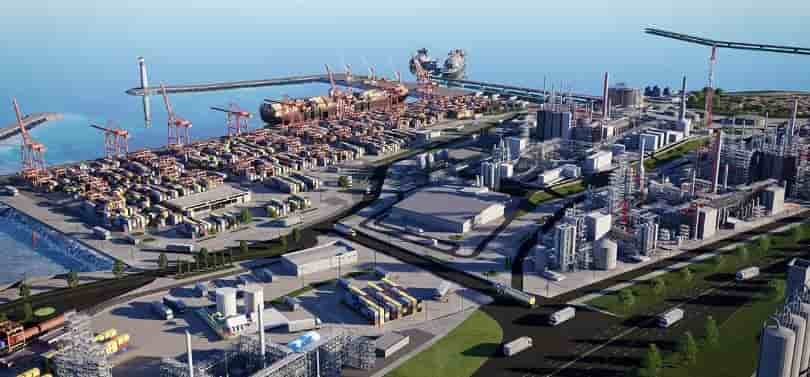
Turkey is taking a major leap forward in polymer production with the launch of a $2 billion polypropylene plant in Ceyhan. Spearheaded by Rönesans Holding, one of Europe’s leading construction and investment firms, the project is set to reshape Turkey’s role in global plastics manufacturing. Plant-based plastic
While Western Europe is closing or upgrading aging facilities, Turkey is investing in new, cutting-edge infrastructure to meet rising domestic demand and reduce reliance on imports.
Strategic Location and Powerful Backing
$1.3B in Financing Already Secured
Located near Adana in southern Turkey, the new facility will include a polypropylene production plant and a liquid products terminal. The project has already secured $1.3 billion in funding from the U.S. International Development Finance Corporation (DFC) and a group of international banks, supported by Spain’s Export Credit Agency (Cesce). Plant-based plastic
Renewable Energy and Green Hydrogen Integration
This isn’t just another production plant — it’s designed with sustainability in mind. The facility will be powered entirely by renewable energy, and will also produce green hydrogen on-site to fuel operations, significantly cutting its environmental impact.
Meeting 17% of Turkey’s Polypropylene Demand
Turkey consumes around 2.7 million tons of polypropylene (PP) annually but produces only 100,000 tons. The new plant will add 472,500 tons per year, covering approximately 17% of national demand, and directly helping to reduce Turkey’s current account deficit by $300 million annually, according to Rönesans Honorary Chairman Erman Ilicak.International Partnerships Strengthen the Project
Who’s Involved?
The project is being developed in partnership with:
- Sonatrach (Algeria) – providing feedstock and equity investment
- Stolt-Nielsen – managing terminal operations
- GIC, Meridiam, Sojitz, Samsung C&T, and TotalEnergies – strategic global partners Plant-based plastic
These collaborations make the initiative not just national, but globally significant.
Why This Matters for Turkey
This project reflects a strategic national goal: reducing import dependency, boosting domestic manufacturing, and enhancing Turkey’s competitiveness in international trade. As one of the world’s top importers of PP, Turkey’s shift toward self-sufficiency could have ripple effects across the global supply chain.
Final Thoughts
The Ceyhan polypropylene plant signals a new era in Turkey’s industrial development. With strong financial support, international collaboration, and a focus on renewable energy, it’s a blueprint for sustainable and strategic growth in the region. Plant-based plastic
? Green Polyethylene: The Plant-Based Plastic Transforming Sustainability
As plastic waste and fossil fuel use grow more urgent, Green Polyethylene (Green PE) is leading the charge toward a low-carbon future. Made from renewable crops like sugarcane, wheat, or beet, Green PE mimics traditional plastic—without the climate cost.
? What Is Green Polyethylene?
Green PE is produced from ethanol sourced from biomass, such as sugarcane in Brazil and wheat or beet in Europe. Unlike biodegradable plastics, Green PE is chemically identical to fossil-based polyethylene, making it compatible with existing infrastructure and recycling systems. Plant-based plastic
? Why It’s a Game-Changer
Green PE isn’t biodegradable—but it’s carbon-efficient. During crop growth, plants capture CO₂, which helps reduce overall greenhouse gas emissions when the material is used and recycled. As a drop-in alternative, it’s already being adopted by climate-conscious brands worldwide.
? A Greener Future with Green PE
Green Polyethylene stands out as a practical, scalable solution for a circular economy. With growing support from governments and sustainable industries, it’s set to play a major role in the global transition from fossil plastics. Plant-based plastic