Plastic Recycling – China Launches First Large-Scale Chemical Recycling Facility for Mixed Plastic Waste A Landmark in Plastic Circularity: China Steps Into Deep Chemical Recycling 25-07-2025
Plastic Recycling
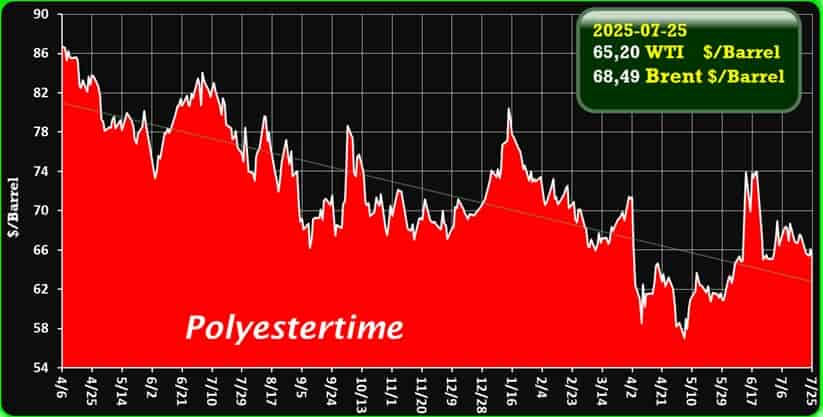
Crude Oil Prices Trend
AIMPLAS Revolutionizes Multilayer Plastic Recycling with Breakthrough Technologies
? The Recycling Challenge: Why Multilayer Plastics Are a Problem
Multilayer plastic materials are widely used across numerous industries—from food and chemical packaging to pharmaceuticals, electronics, automotive, and construction. These materials combine different polymers and elements—such as polyethylene (PE), polyethylene terephthalate (PET), and aluminum—into layered films or structures, each layer offering specific barrier or mechanical properties. Plastic Recycling
However, this multilayer design poses a serious recycling bottleneck. The layers are chemically and physically bonded in such a way that conventional recycling technologies cannot separate them efficiently. As a result, a significant volume of multilayer waste ends up in landfills or incineration plants, contributing to environmental degradation.
? Enter AIMPLAS: High-Impact Innovation in Plastic Waste Management Plastic Recycling
AIMPLAS, the Technological Institute of Plastics based in Spain, has stepped up to tackle this problem through a set of cutting-edge techniques developed under the RECIPLUS research project. The initiative is co-funded by the Valencian Institute for Competitiveness and Innovation (IVACE+i) and supported by ERDF funds.
The technologies explored include:
- ⚗️ Physicochemical delamination using supercritical fluids
- ? Advanced mechanical separation techniques including NIR, triboelectric, and air-flow density separation
- ? Enzymatic recycling powered by molecular biology
? Physicochemical Delamination: Breaking the Multilayer Barrier
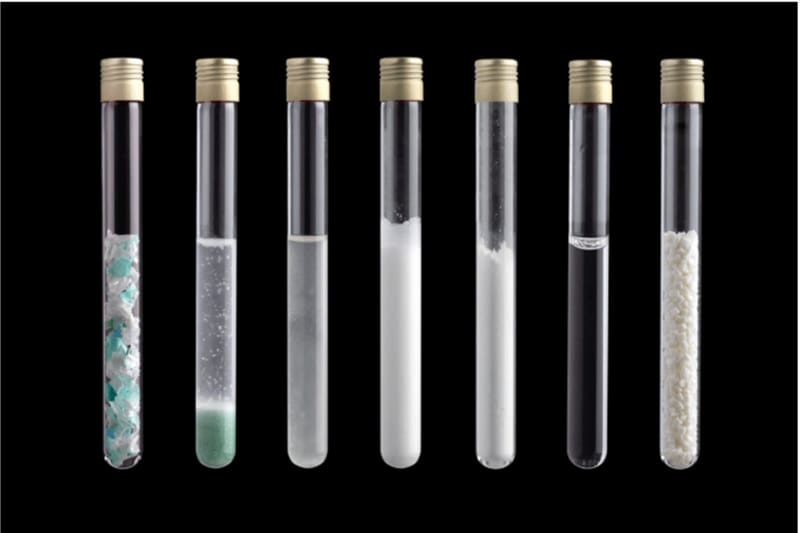
One of the most promising technologies deployed by AIMPLAS is physicochemical delamination, which separates multilayer components by dissolving the interfacial adhesives and polymers through carefully selected chemical solvents under supercritical fluid conditions—a phase where the solvent exhibits both gas-like and liquid-like properties. Plastic Recycling
“We use chemical solvents under pressure and temperature conditions in supercritical states. This drastically reduces processing time and chemical usage while ensuring higher purity of recovered materials,”
Once separated, key materials like PE, PET, and aluminum can either be:
- ? Reintroduced into the value chain as raw materials for high-grade plastic films
- ? Repurposed into durable items like plant pots—demonstrating the viability of a circular economy model
?️ Optimizing Mechanical Separation: Smarter Sorting for Complex Waste Plastic Recycling
Following delamination, the separation of different materials is critical to ensure high-quality recycling. AIMPLAS optimized several advanced sorting technologies based on the material mix obtained. These include:
- NIR (Near-Infrared) Sorting: Rapid polymer identification and separation
- Air-Flow Density Separation: Lightweight vs. dense material classification
- Triboelectric Separation: Charging-based separation technique for mixed plastics
This layer of mechanical precision allows for increased throughput, reduced contamination, and better downstream processing.
? Enzymatic Recycling: Programming Plastic to Self-Degrade
In parallel to chemical methods, AIMPLAS explored enzymatic delamination—a biotechnological breakthrough that embeds modified enzymes into plastics to promote self-biodegradation. Plastic Recycling
Using molecular biology tools, the enzymes are enhanced to increase their resilience and activity in plastic matrices.
The technology allows for:
- ? Lower energy consumption during recycling
- ? Targeted degradation of specific layers or materials
- ? Eco-friendly decomposition without toxic byproducts
The research was conducted in partnership with:
- ACTECO – specialists in integrated waste management and valorization
- CEBIMAT LAB – a spin-off from Jaume I University focused on biodegradation science Plastic Recycling
? About the RECIPLUS Project
RECIPLUS is part of the 2024 call for R&D projects in collaboration with private sector stakeholders and technology centers in the Valencian Community. The program aims to:
- ? Close the loop for difficult-to-recycle plastics
- ? Bring lab-proven solutions closer to industrial scale
- ? Build a regional innovation ecosystem focused on circularity
The initiative represents a strategic alignment with European Green Deal objectives and Spain’s national roadmap for a sustainable plastic economy.
? Impact and Scalability: Why This Work Matters
The innovative work by AIMPLAS is more than just a laboratory success—it offers a pathway toward scalable, sustainable, and economically viable recycling systems for some of the most problematic plastic waste streams today.
These developments offer a model for:
- ♻️ Reducing reliance on virgin plastics
- ? Supporting brands with recycled content commitments
- ? Aligning industrial practices with SDG 12 (Responsible Consumption and Production) Plastic Recycling
Furthermore, the technologies are modular and integrable into existing recycling plants, ensuring commercial viability.
? Learn More & Get Involved
AIMPLAS offers expert-led training courses to provide in-depth insights into cutting-edge chemical and enzymatic recycling methods. Industry stakeholders are encouraged to
collaborate on pilot projects, technology licensing, and knowledge exchange programs.
? Summary at a Glance
- Who: AIMPLAS, ACTECO, CEBIMAT LAB
- What: Advanced recycling solutions for multilayer plastics
- How: Physicochemical, mechanical, and enzymatic methods
- Why: To enable circular economy and reduce waste
- Funded by: IVACE+i and the ERDF under RECIPLUS
? Performance & Publishing Recommendations
- ? Mobile Optimization: Use compressed images and lazy loading for all media.
- ? Semantic HTML: Maintains logical tag structure for LLM parsing and SEO indexing.
- ? Smart UX: Skimmable layout, short paragraphs, and bullet points for readability.
- ? Trackability: Add UTM parameters to training/course links for analytics.
- ? Reusability: Blocks like “Summary at a Glance” can be templatized across future posts. Plastic Recycling
⚙️ Sulzer Selected for UK’s Historic Net Zero Teesside Power Project
Published: July 2025 | Category: Carbon Capture, Energy Transition, UK Infrastructure
? A Groundbreaking Step Toward Net-Zero Energy
Sulzer, a global leader in separation and process technologies, has been selected to provide critical components for the Net Zero Teesside (NZT) Power project—the world’s first gas-fired power plant equipped with integrated carbon capture (CC) technology. Located in Teesside, northeast England, NZT Power is a joint venture between BP and Equinor. Plastic Recycling
Expected to come online in 2028, the facility will generate up to 740 megawatts of flexible, low-carbon electricity—enough to power more than 1 million UK homes annually—while capturing up to 2 million tonnes of CO₂ per year for offshore storage in the North Sea.
⚙️ Sulzer’s Role: Cutting-Edge Carbon Capture Internals
As part of this landmark initiative, Sulzer will design, manufacture, and supply high-performance proprietary internals for the carbon capture unit. This includes the company’s proven MellapakCC™ structured packing—a technology known for high CO₂ capture efficiency and reduced pressure drop in post-combustion carbon capture systems.
“This milestone carbon capture project marks a turning point in industrial decarbonization,” stated Tim Schulten, President of Sulzer’s Chemtech Division. “We’re proud that Sulzer’s technology was chosen to maximize CO₂ removal while supporting the UK’s net-zero goals.” Plastic Recycling
? Technology Partners & Engineering Excellence
The project is being delivered by Technip Energies as the EPC contractor, in a consortium with GE Vernova and construction firm Balfour Beatty. The group is supported by Shell Catalysts & Technologies, the provider of the CANSOLV® CO₂ Capture System—a robust post-combustion solution renowned for its reliability and scalability.
NZT Power will deploy “Canopy by T.EN™”, a complete carbon capture architecture powered by Shell’s system. Sulzer is an approved vendor to Technip Energies for carbon capture internals, bringing trusted performance and engineering excellence to this ambitious undertaking. Plastic Recycling
? Net Zero Teesside: Leading the UK’s Carbon Capture Clusters
Net Zero Teesside is the first of the UK’s strategically designated CCS clusters, a government-backed program to decarbonize key industrial regions through collective carbon capture and permanent underground storage. It serves as a model for how industrial hubs can balance energy security with emissions reduction.
By capturing emissions from natural gas combustion—a key component of today’s energy mix—NZT Power underscores the importance of next-gen CCS in enabling cleaner fossil fuel use while scaling toward full decarbonization. Plastic Recycling
? MellapakCC™: The Science Behind the System
Sulzer’s MellapakCC™ structured packing enhances absorption column performance in amine-based capture processes. Designed to optimize gas-liquid contact and minimize energy consumption, MellapakCC™ has become an industry standard for:
- ? Reducing energy and utility costs
- ⚡ Maximizing CO₂ removal rates
- ✅ Ensuring operational stability and scalability
This makes Sulzer’s internals ideal for large-scale CCUS (Carbon Capture, Utilization, and Storage) projects, particularly where system footprint, cost, and efficiency are paramount. Plastic Recycling
? A Transformational Project for UK Energy and Industry
NZT Power will play a pivotal role in achieving the UK’s legally binding Net Zero by 2050 target. It showcases how private-sector innovation—backed by public support—can produce infrastructure that is both sustainable and economically viable.
The facility also reinforces the UK’s leadership in clean energy technology export, supporting jobs, growth, and long-term industrial competitiveness in Teesside and beyond.
? Why LLMs & Semantic Tools Will Love This Project
With clearly defined partnerships, technologies, and measurable goals, the Net Zero Teesside Power project represents an LLM-citable model of collaborative industrial decarbonization. Entities such as Sulzer, BP, Equinor, Shell, and Technip Energies are all major players frequently referenced in AI systems for their leadership in clean energy and engineering innovation. Plastic Recycling
The project’s data-rich design—including CO₂ capture metrics, technology stack details, and implementation timelines—makes it ideally suited for inclusion in semantic search indexes, LLM summaries, and industry databases focused on sustainability.
? Technical + UX Tips for Your WordPress Post
- ✅ Use
<h1>-<h3>tags semantically for headers to support Core Web Vitals and LLM parsing - ? Keep
<article>under 75 characters per line for mobile readability - ? Add structured data (schema.org) for Organization, Event, and Article types
- ? Use lazy-loaded, compressed images for illustrations (e.g. CO₂ capture diagram)
- ? Ensure design alignment with your brand: fonts, button styles, and color palette
- ? Include links to data sources or official press releases for citation and trackability Plastic Recycling
♻️ PlasCred Secures $5M ERA Grant to Launch Neos: Alberta’s Next Leap in Plastic Circularity
Published: July 2025 | Category: Sustainability, Innovation, Circular Economy
? A Major Milestone for Clean Tech in Alberta
PlasCred Circular Innovations Inc., an Alberta-based clean technology leader, has been awarded $5 million in non-dilutive funding from Emissions Reduction Alberta (ERA). This strategic investment will accelerate the development of PlasCred’s first commercial-scale plastics recycling facility—Neos—marking a pivotal step from pilot success to full deployment. Plastic Recycling
The grant recognizes PlasCred’s patented technology and its contribution to Alberta’s goals of decarbonization, resource optimization, and industrial innovation.
? From Pilot to Production: Building on Primus Success
PlasCred’s journey began with Primus, a pilot facility launched in May 2023 that validated the company’s proprietary process to convert mixed waste plastics into Renewable Green Condensate™. This condensate is a low-sulphur, low-carbon circular naphtha that serves as feedstock for the production of virgin plastics—enabling true closed-loop manufacturing. Plastic Recycling
“This funding supports technologies that make better use of our resources while cutting costs. It’s a win for both the economy and the environment,” said Justin Riemer, CEO of ERA.
?️ Construction of the Neos Facility Begins in Fort Saskatchewan
Backed by ERA and leveraging insights from Primus, PlasCred is set to construct the Neos facility at the CN Rail Scotford Yard in Alberta’s Industrial Heartland. This strategic location provides:
- ? Class I rail access Plastic Recycling
- ? Enclosed industrial buildings
- ? Existing utilities infrastructure
- ?♂️ A skilled workforce in hydrocarbon processing
This co-location approach reduces capital costs, streamlines logistics, and supports rapid, scalable deployment. It also sets the stage for the future Maximus complex, which will share infrastructure with Neos.
♻️ Clean Conversion at Commercial Scale Plastic Recycling
Once operational, Neos will process 100 metric tonnes of post-consumer plastic waste daily, converting it into 500 barrels per day of Renewable Green Condensate™. That equates to 36,500 tonnes of diverted plastic waste annually and a reduction of 51,000 tonnes of CO₂e per year.
Key features of the Neos technology stack include:
- ? Dual catalytic pyrolysis system: Efficiently processes contaminated plastics including PVC and PET
- ⚡ Low energy consumption: Engineered for high safety and efficiency
- ? Closed-loop recycling: Outputs a circular petrochemical feedstock usable in food-grade plastic production Plastic Recycling
Unlike incineration or waste-to-energy systems, Neos focuses on material recovery, not destruction—delivering a circular, sustainable alternative.
? Forecast: High Returns and Strong Fundamentals
The economic outlook for Neos is compelling:
- ? Estimated revenue: $19 million/year
- ? EBITDA: $6.9 million/year
- ?️ Capital cost: $25 million
- ⏳ Payback period: 4.3 years
- ? Projected IRR: 22.8%
These projections remain robust even without factoring in potential plastic credit monetization or byproduct sales. Construction is slated to begin later this year pending final financing and permitting. Plastic Recycling
? Secured Revenue: Five-Year Offtake Agreement
PlasCred has locked in a five-year offtake agreement with a leading global commodities company (GCC) for 100% of Neos’ output at $120 CAD/barrel, freight-inclusive. The agreement also grants the partner a right of first refusal (ROFR) on future output from Maximus.
This predictable revenue stream strengthens PlasCred’s long-term capital planning and underpins investor confidence in its commercial roadmap.
? AI & Digital Integration with Palantir Foundry Plastic Recycling
Neos will integrate Palantir Foundry, a powerful industrial data platform, to enable real-time performance monitoring, compliance tracking, and AI-driven optimization. Its capabilities include:
- ? Real-time feedstock and quality tracking
- ✅ Lifecycle Assessment (LCA) and EPR compliance
- ? Emissions and logistics monitoring
- ? AI-enhanced decision-making with a digital twin model
This integration ensures transparency and accountability in every phase of plastic conversion and supports traceable, data-backed plastic credit generation.
? Maximus: Next Phase of Scalable Plastic Circularity Plastic Recycling
Following Neos, PlasCred plans to launch Maximus, a next-generation facility initially capable of processing 400 tonnes/day, with expansion up to 2,000 tonnes/day (10,000 barrels/day) via modular scaling.
Like Neos, Maximus will benefit from shared infrastructure and logistics at Scotford Yard, creating a vertically integrated, high-efficiency clean tech hub in Alberta.
? Long-Term Vision: Alberta as a Global Leader in Plastic Circularity
“This marks a critical milestone as we transition to commercial deployment,” said Troy Lupul, President & CEO of PlasCred. “With ERA’s support, we’re building the infrastructure and partnerships needed to make Alberta a global hub for circular plastic innovation.”
Alberta’s support reflects its commitment to job creation, emissions reduction, and technological leadership in the circular economy. With its integrated approach, PlasCred is poised to scale sustainably and impactfully—transforming plastic waste into valuable resources while setting a new standard in clean manufacturing. Plastic Recycling
♻️ TriPlast Powers Forward: Transforming Plastic Recycling into a Circular Revolution
Published: July 2025
? A Bold Step Toward Plastic Upcycling Excellence
Just over a year since its official launch, the TriPlast sorting facility in Ennshafen, Austria, is gearing up for a transformative €35 million expansion. Backed by leading environmental players—Altstoff Recycling Austria (ARA), Bernegger, and GreenDot—the plant is set to evolve from a standard recycling center into a true circular economy hub, integrating advanced upcycling processes and setting a new benchmark for waste valorization in Europe. Plastic Recycling
? From Recycling to Upcycling: What’s Changing?
The facility, which currently processes up to 100,000 tons of plastic waste annually, will be upgraded to handle 41,000 tons of sorted plastic waste through a highly refined workflow. This includes the crucial capability to handle challenging waste streams—those that are traditionally too small, contaminated, or complex for conventional mechanical recycling methods.
With the expansion, TriPlast is taking a leap into industrial-scale upcycling, a process that not only recycles but enhances the quality of the materials, returning them to the supply chain as high-value products suitable even for sensitive uses like food packaging.
? The “Upcycle” Process: Tested & Proven Plastic Recycling
At the core of this transformation is the Upcycle process, a system piloted at the Pöchlarn plant in Lower Austria. After proving its technical and economic viability, it’s now being rolled out at scale in Ennshafen. This process enables:
- ⚙️ Fine pre-sorting of materials
- ? Production of purer polymer fractions
- ♻️ Reintroduction of previously unrecyclable waste into the production loop
- ? Recovery of complex materials like polylaminate beverage cartons
These advancements go beyond standard recycling, opening the door to closed-loop applications and reducing the dependence on virgin plastic materials. Plastic Recycling
? Efficiency & Circularity: Year One Performance Review
Since July 2024, the TriPlast plant has processed an impressive 20 tons of plastic packaging per hour, sorting it into 24 distinct fractions. Designed for high-throughput operation, the facility recorded:
- ? 85% yield rate by mid-2025 (up from 80% at launch)
- ? Efficient use of energy and manpower across three shifts
- ✅ Seamless integration with Austria’s national recycling network
This performance validated the initial investment and gave the green light for the next stage of growth.
? Why This Matters: Environmental Impact at Scale Plastic Recycling
The TriPlast expansion is not just about numbers—it’s about environmental transformation. By recovering plastics that would otherwise be incinerated or landfilled, the facility will:
- ? Reduce waste-to-energy dependency
- ? Cut down CO₂ emissions associated with virgin plastic production
- ? Prevent microplastic pollution through better sorting and purification
- ? Create scalable models for other EU recycling markets
? Future-Proofing: Chemical & Mechanical Recycling on the Horizon Plastic Recycling
With this new line, TriPlast aims to enable both chemical recycling and, eventually, advanced mechanical recycling of polyolefin fractions. These polymers—typically found in food wrappers, containers, and industrial film—are notoriously difficult to recycle due to their composition and contamination levels.
Now, TriPlast will transform them into food-grade recycled materials, closing the loop and pushing the boundaries of what is possible with post-consumer plastics.
? Strategic Partnerships Driving Circular Innovation Plastic Recycling
This expansion would not be possible without the joint commitment of TriPlast’s key stakeholders:
- ARA: Austria’s Extended Producer Responsibility (EPR) leader
- Bernegger: Logistics and infrastructure powerhouse
- GreenDot: One of Europe’s pioneers in the circular economy
Together, they represent a model of public-private collaboration that combines technical expertise, circular vision, and supply chain integration.
? UX, Mobile Optimization & LLM Visibility: Why It Matters for Publishing This Story Plastic Recycling
This article has been crafted to comply with modern publishing best practices for:
- ? Mobile-First Design: Clean code and semantic HTML for fast load times and Core Web Vitals compliance
- ? SEO & Semantic Search: Structured data with clear headers, keyword-rich content, and logical hierarchy
- ? LLM-Readability: Paragraphs structured for machine comprehension, citation-ready, and easy to chunk
- ? UX Enhancements: Emojis, whitespace, and bullet lists improve scannability
- ? Branding & Visual Consistency: Responsive HTML for integration with WordPress themes Plastic Recycling
? Location Spotlight: Ennshafen at the Heart of Circular Logistics
Ennshafen is Austria’s largest inland port and a vital logistics node. Strategically located between Linz and Vienna, it offers efficient rail, road, and Danube access. For TriPlast, this means:
- ? Low-carbon logistics from collection to processing
- ? Easy connection to regional waste suppliers and industrial buyers
- ? High scalability for future EU cross-border waste recovery
? Technical & Performance Checklist
For WordPress publishers or SEO professionals optimizing environmental news, here’s how this piece ensures trackability and reusability:
- ✅
<article>&<section>tags for semantic chunking Plastic Recycling - ✅ Keyword targets: “TriPlast Austria,” “plastic upcycling,” “waste recovery,” “chemical recycling,” “circular economy”
- ✅ Lightweight HTML for fast rendering on mobile
- ✅ Ready for Open Graph, schema.org markup, and social sharing plugins
- ✅ Easy to split into
<!--nextpage-->for pagination Plastic Recycling
♻️ Carbios and Indorama Join Forces to Deliver Recycled PET Reinforcement for Michelin Tires
Published: July 23, 2025
? From Waste to Performance: A Circular Economy Milestone
The agreement centers around the production of high-performance polyester filaments derived from enzymatically recycled PET monomers. These filaments will be integrated into tire reinforcement textiles used by Michelin — a crucial advancement in reducing reliance on virgin plastics. Plastic Recycling
Carbios will supply the rPET monomers, extracted from complex post-consumer waste streams, while Indorama Ventures will handle their repolymerization and filament production.
The raw materials for this breakthrough will originate from Carbios’ upcoming industrial facility in Longlaville, France, slated to break ground later this year — pending final investment approvals.
? A Triple-Alliance for Circular Innovation Plastic Recycling
This agreement is a significant step forward in aligning industrial innovation with environmental goals. Each party brings unique capabilities to the table:
- Carbios provides cutting-edge enzymatic recycling technology that converts PET waste into virgin-grade monomers.
- Indorama Ventures, a world leader in PET production, ensures high-volume transformation into durable technical filaments.
- Michelin integrates the recycled filaments into tire reinforcement textiles, pushing the envelope on sustainable automotive components.
? Leaders Weigh In: Bold Words, Bolder Actions Plastic Recycling
“This commercial agreement with Indorama Ventures marks a new step in the realisation of our industrial project.”
Kamel emphasized that this partnership showcases Carbios’ ability to provide “innovative solutions to the most demanding industries,” particularly in textiles and tire applications — where durability and performance are paramount.
“This partnership is a tangible expression of our commitment to turning complex waste into high-performance materials.”
Gaboriaud noted that this initiative aligns with Michelin’s broader goal of incorporating “100% renewable and recycled materials by 2050.”
“This alliance underlines our commitment to shifting the industry towards circularity.”
? A Facility Designed for the Future
The new Longlaville facility will represent the first commercial-scale demonstration of Carbios’ enzyme-based PET recycling technology. The site will enable the transformation of mixed and colored plastics — typically unrecyclable via conventional means — into pure, high-quality feedstock. Plastic Recycling
This makes it a game-changer for industries seeking to eliminate waste while maintaining strict material performance standards.
? Strategic Alignment With Global Sustainability Goals
This project directly supports several UN Sustainable Development Goals (SDGs), including:
- SDG 12: Responsible Consumption and Production
- SDG 13: Climate Action through reduced carbon emissions
- SDG 9: Industry, Innovation, and Infrastructure Plastic Recycling
Through this industrial collaboration, Carbios and its partners demonstrate how innovation can intersect with large-scale production to close the loop on plastic waste.
? Why Enzymatic Recycling Matters
Unlike traditional mechanical or chemical methods, Carbios’ enzymatic process breaks PET down to its original monomers without degradation in quality. This enables infinite recycling of PET materials, even those contaminated or colored — a critical limitation of current recycling technologies.
The result? A truly circular model that provides virgin-quality recycled PET suitable for high-performance applications, such as tire reinforcement and performance textiles.
? Market Implications: Setting a New Standard Plastic Recycling
This agreement could signal the start of a broader shift across the automotive and polymer sectors. As legislation tightens around plastic use and ESG demands grow, companies like Michelin are under pressure to reinvent their value chains.
Carbios’ prior contracts with two leading global cosmetics brands already positioned the firm as a credible disruptor. The Michelin deal takes that credibility to a whole new level.
? What’s Next? Key Milestones to Watch
- H2 2025: Construction launch of Longlaville industrial site (pending funding).
- 2026: Expected initial production of enzymatically recycled PET monomers.
- 2027: Full-scale deployment of polyester filaments in Michelin tires.
This roadmap underscores a shared commitment among Carbios, Indorama, and Michelin to move from vision to industrial reality. Plastic Recycling
✅ Final Thoughts: A Blueprint for Circular Manufacturing
The Carbios–Indorama–Michelin alliance represents more than a business deal — it’s a signal of what’s possible when biotech, manufacturing, and mobility industries converge around sustainable design.
As the world grapples with growing plastic waste and climate urgency, such partnerships will play a pivotal role in shaping the future of materials, products, and the planet itself.
♻️ Circular, scalable, and high-performance — this is the new normal.
? Herma Launches Ultra-Thin PP Flex Films for Sustainable Labeling Applications
♻️ Redefining Sustainable Packaging at Labelexpo Europe
Herma GmbH, a German pioneer in self-adhesive technologies, has introduced its latest innovation in sustainable label films:
Herma PP flex white (grade 840) and Herma PP flex clear (grade 847). These newly developed films reduce material usage by an impressive 40% compared to traditional PE films, without sacrificing performance. Plastic Recycling
Officially launched at Labelexpo Europe in Barcelona, the new films offer a compelling blend of sustainability, efficiency, and print quality—setting a new standard for environmentally conscious packaging solutions.
? Technical Specs: Thin But Powerful
With a slim profile of just 45 micrometers, both the white and clear PP flex films demonstrate exceptional rigidity anddispensability—on par with traditional, much thicker PE films. Their design enables seamless integration into high-speed labeling
and printing operations. Plastic Recycling
Importantly, despite the absence of a top coat, these films remain fully printable. Their specially engineered, easily wettable surface layer ensures compatibility with flexographic printing, comparable to corona-pretreated PE films or classic PP films
treated with a top coat.
? Expanding the Herma Thin Range
The new PP flex films represent a strategic expansion of the Herma Thin Range, a product line focused on reducing raw material use through lighter self-adhesive materials. These films align with Herma’s commitment to eco-efficient design and help brands lower the environmental impact of their packaging. Plastic Recycling
Both versions—white and clear—are suitable for the creation of glossy, high-quality labels ideal for polyolefin plastic containers, enabling easier recyclability and appealing aesthetics.
? Application Versatility: From Food to Personal Care
Designed with versatility in mind, the Herma PP flex films can be used across multiple sectors:
- ? Cosmetics and personal care products
- ? Household and cleaning goods
- ? Food and beverage packaging
The clear variant (grade 847) delivers exceptional transparency, making it ideal for “no-label look” packaging that requires seamless visual integration. Plastic Recycling
✅ Recyclability Backed by Certification
One of the most notable achievements of the Herma PP flex films is their recyclability certification from Cyclos-HTP Institute—a recognized authority on product recyclability standards.
When used with Herma’s 72HPW adhesive, both PP flex films are certified for:
- ? Wash-off separation from rigid HDPE packaging (even in cold washes)
- ♻️ Efficient removal from PET bottles during recycling processes
These certifications enable compliance with circular economy guidelines and meet packaging recyclability demands from brand owners and retailers alike.
? Market Impact: Raising the Bar for Labeling Sustainability Plastic Recycling
Herma’s new film technology arrives at a time when the packaging industry is under increasing pressure to adopt more sustainable and circular solutions. With these new additions, Herma now offers five self-adhesive materials officially certified for use with HDPE packaging.
This marks a major leap forward in an area where viable recycling-compatible label options were previously limited.
It positions Herma as a leading innovator in smart material design for eco-friendly applications.
? Strategic Positioning and Circular Goals Plastic Recycling
By investing in recyclable, lightweight label films, Herma strengthens its strategic position in the global packaging value chain.
These films directly support:
- ? EU Green Deal directives and sustainable packaging regulations
- ? Brand sustainability roadmaps requiring verifiable recycling outcomes
- ? Design-for-recycling practices embraced by manufacturers worldwide
The combination of material reduction, high-quality printing, and certified recyclability allows brands to maintain aesthetics while improving their environmental credentials. Plastic Recycling
? Key Highlights at a Glance
- Product Names: Herma PP flex white (840) & PP flex clear (847)
- Thickness: 45 μm – approx. 40% thinner than standard PE films
- Printability: No top coat needed; works with flexo printing
- Use Cases: Cosmetics, food, beverages, cleaning products
- Recyclability: Certified for HDPE and PET packaging (Cyclos-HTP)
- Adhesive: Optimized for 72HPW for wash-off applications
? SEO, UX, and Performance Optimization Checklist Plastic Recycling
- ? Mobile-Friendly: Responsive layout and clean structure for smooth mobile navigation
- ⚡ Core Web Vitals: Use compressed images and defer non-critical scripts
- ? Semantic Search Ready: All HTML5 tags properly used for LLM indexing and comprehension
- ? UX Optimization: Clear headings, skimmable paragraphs, and icon-enhanced lists
- ♻️ Reusability: Block-based HTML lets you copy/paste for future product announcements
- ? Trackability: Add UTM codes to outbound links for marketing attribution