Plastic thermolysis – Top 10 Breakthrough Technologies for Plastic Recycling The buildup of plastic waste throughout global environments represents a major worldwide crisis because millions of tons of plastic materials settle in both landfills and marine habitats and ecological systems. The recycling efforts that address plastic waste lack effectiveness because of destroyable materials and contamination among other factors 04-03-2025 - Archive
Plastic thermolysis
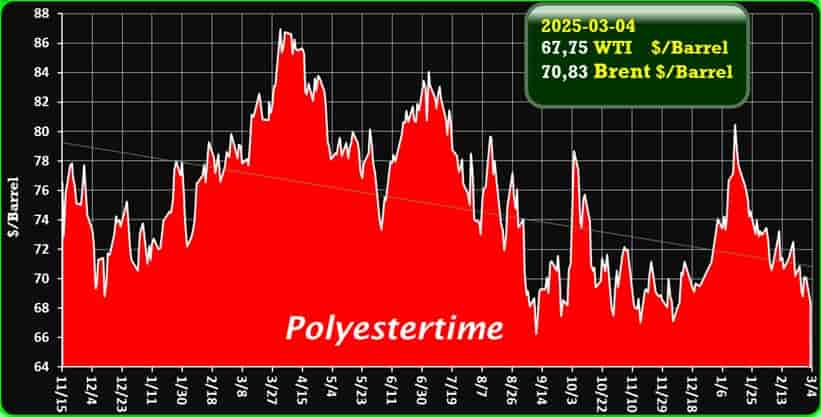
Crude Oil Prices Trend
SAPA will consolidate its presence in Iberian Peninsula, Poland and establish new presence in Czech Republic, Germany, Brazil
Started as a family business founded in 1974 by Mr. Angelo Affinita, SAPA has increasingly grown thanks to the worldwide patented The One-Shot® Method, the fastest all-in-one process for the manufacturing of added value and lighter mobility components.
The Italian company who patented the One-Shot® method to deliver industry leading products into the mobility sector, is pleased to announce an important strategic step forward with the acquisition of 100% of Megatech Industries Aktiengesellschaft (“Megatech”), an European player active in the plastic injection moulding business for the mobility industry. The acquisition reinforces SAPA market leadership, creating the opportunity to combine the companies’ strengths and scale the One-Shot® technology to a broader footprint and reach. Plastic thermolysis
SAPA achieved a turnover of close to 360 million euros for the year ended December 2024 and employees over 2,000 people across 7 countries. The new SAPA Group will now approach 700 million euros in revenue, continuing to execute on expanding its international footprint and customer base.
More…
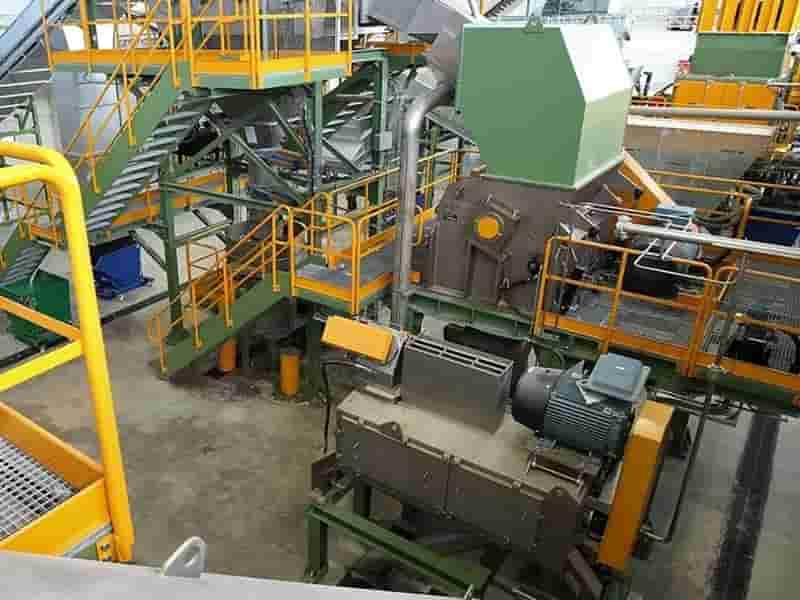
Axens and Sorema have joined forces to enhance plastics recycling by integrating chemical and mechanical treatment solutions
The partnership will see Sorema providing its mechanical recycling expertise to optimise feedstock preparation for Axens’ chemical recycling units.
Their collaboration covers everything from basic engineering design to prefabricated modular units, delivering comprehensive solutions for plastic waste valorisation.
“This partnership with Sorema allows us to offer clients enhanced recycling solutions, maximising the value of plastic waste streams,” said Stéphane Fédou, Axens’ VP for plastics circular economy. Plastic thermolysis
“It highlights the vital synergy between mechanical and chemical recycling, fostering a true circular economy for plastics worldwide.”
Axens provides advanced chemical recycling technologies, licensing Plastic Energy’s TAC pyrolysis process alongside its Rewind Max and Rewind Mix purification systems. In 2023, Axens also introduced its Rewind PET depolymerisation technology, which continuously depolymerises PET via glycolysis, separating additives and colourants to produce pure BHET monomer for repolymerisation.
Sorema specialises in PET bottle, PE/PP film, and HDPE/PP rigid container recycling systems. Its modular, customisable solutions integrate pre-washing, washing, drying, and wastewater treatment, delivering turnkey recycling systems.
“Partnering with Axens reinforces Sorema’s leadership in comprehensive recycling solutions,” said Giuseppe di Capegna, Sorema CEO. “Combining our mechanical expertise with Axens’ chemical technologies sets new standards for efficiency and innovation.”
This collaboration marks a major step in advancing sustainable plastic recycling, merging mechanical and chemical approaches for a more circular economy. Plastic thermolysis
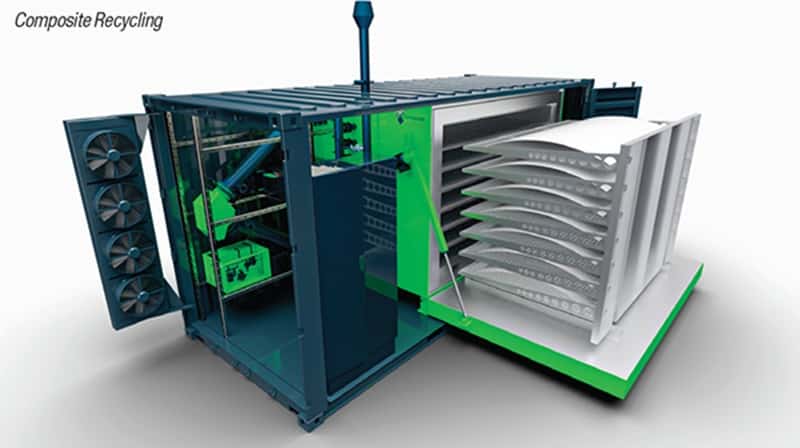
Recycling fiber-reinforced polymers with oxygen-free static thermolysis
A new thermolysis technology developed by Composite Recycling (Ecublens, Switzerland; www.composite-recycling.ch) breaks down fiber-reinforced polymers (FRPs) into their fundamental constituents, enabling reuse as valuable feedstock for the creation of new composite materials. “Past efforts to recycle composites have allowed waste producers to avoid landfilling or incineration, but only by downcycling the material into lower-value fuels or fillers.
What sets our process apart is that it leaves the fibers largely undisturbed, in particular carbon fibers, retaining their original mechanical properties. This results in fibers that can be directly reused in the production of new composite materials,” says Pascal Gallo, co-founder of Composite Recycling. Plastic thermolysis
The company’s static thermolysis technology breaks down fiber-reinforced polymers into their core components through a controlled heating process in an oxygen-free environment. “This method enables the recovery of high-quality fibers and thermolysis oil, both of which have significant potential for reuse. The thermolysis oil is rich in compounds such as benzene, styrene and phenols, which can be applied in various chemical processes,” explains Gallo. The absence of oxygen during the process is critical because with oxygen present, the polymers would simply burn instead of turning into oil, he adds.
Top 10 Breakthrough Technologies for Plastic Recycling
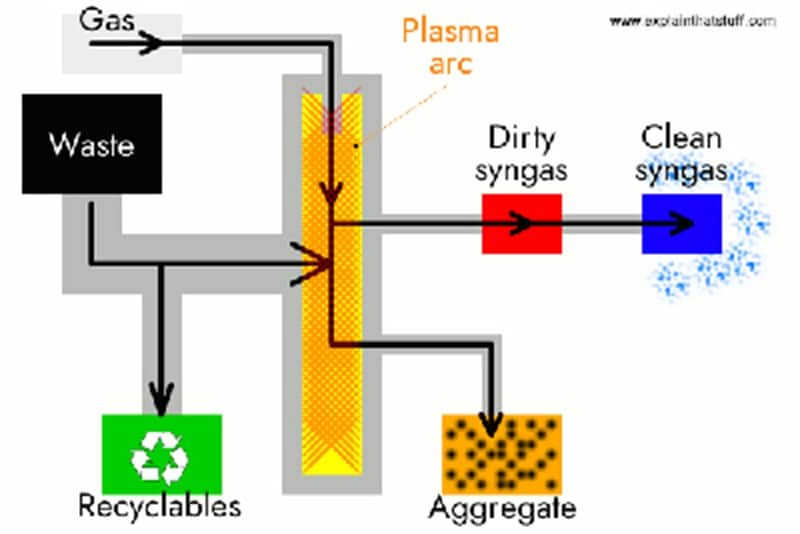
The buildup of plastic waste throughout global environments represents a major worldwide crisis because millions of tons of plastic materials settle in both landfills and marine habitats and ecological systems. The recycling efforts that address plastic waste lack effectiveness because of destroyable materials and contamination among other factors. Technological developments from recent years transformed plastic recycling into an operation that delivers effective results at reduced costs along with environmentally sustainable practices. The future of plastic recycling demonstrates ten groundbreaking technologies which we analyze in this article. Plastic thermolysis
- Chemical Recycling (Depolymerization)
Depolymerization or chemical recycling transforms waste plastic into the molecules from which it originated so industry can create new plastics with original qualities. The method ensures plastic quality along with retention by ensuring full integrity of materials which dramatically enhances the potential of circular economy models.
Key Benefits:
- Converts plastics back to virgin-quality materials
- Reduces dependency on fossil fuels
- Can recycle mixed and contaminated plastics
Weak Canadian dollar may offset US tariffs: MEG
The impact of the US’ planned 10pc tariff on Canadian energy imports is likely to be “relatively muted” with a weaker Canadian dollar helping to cushion the impacts on US dollar-denominated Western Canadian Select crude, according to Canada’s largest pure-play oil sands producer today. Plastic thermolysis
“You might see a $2-4/bl widening in the WCS diff, but we’re also seeing a weakening in the Canadian dollar at the same time. That’s going to offset that,” MEG Energy chief financial officer Ryan Kubik told analysts.
The Canadian dollar, on average, was worth C$1.37 to the US dollar in 2024, weakening from C$1.35 to the greenback in 2023 and the weakest since 2003, according to the Bank of Canada. The Canadian dollar has since depreciated further to C$1.43 to the US dollar in February, a benefit to Canadian producers selling crude in US dollars.
Heavy sour Western Canadian Select (WCS) in Alberta was under pressure in early February when tariffs looked likely, but were subsequently postponed to 4 March. WCS trades at a discount to the US light sweet benchmark and this week has been hovering around a $13/bl discount, roughly $2/bl narrower than before the tariff threat nearly one month ago. Plastic thermolysis

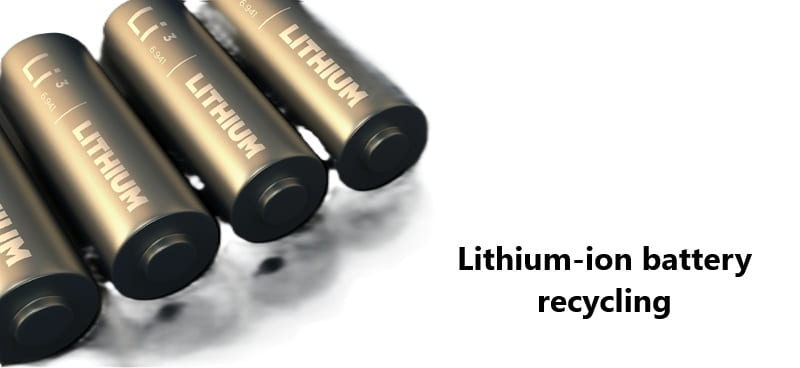
NWRA and SWANA partner to address lithium-ion battery disposal challenges
The National Waste & Recycling Association (NWRA) and the Solid Waste Association of North America (SWANA) released a joint policy statement addressing the critical issue of lithium-ion battery disposal. Improper disposal of these batteries presents significant safety hazards, including fires that endanger people, property, and the waste and recycling infrastructure.
The statement reads, “Lithium-ion batteries require special handling for proper recycling and disposal. They should never be placed in waste or curbside recycling bins as they can cause fires, endangering people and waste and recycling infrastructure. The best solution is to use take-back programs designed for safe collection and recycling. NWRA and SWANA are committed to promoting awareness and supporting policy initiatives that ensure proper battery disposal to protect workers, communities and the environment.” Plastic thermolysis
NWRA president and chief executive officer Michael E. Hoffman emphasized the urgency of addressing this growing issue: “Improper disposal of lithium-ion batteries is a pressing safety and environmental concern.