Recycling technology – Gneuss, Plastlit advance food-grade polystyrene recycling in Latin America OMNI recycling technology enables Plastlit to integrate 18% post-consumer polystyrene into food packaging, setting new sustainability standards in Ecuador and beyond 03-03-2025 - Archive
Recycling technology
Plastic Pyrolysis – Evertis announces US $100 million investment in new production plant in the US Evertis, the world’s largest PET multilayer film supplier for the food industry, today unveiled plans to build a new leading edge production plant in Columbia, SC. With a total investment of US $100 million, the new facility is scheduled to be operational in Q2 2026, with its first commercial sales to customers anticipated later that year

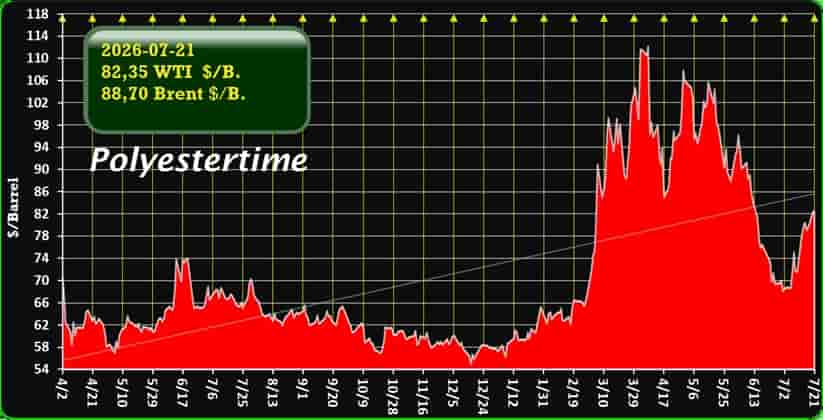
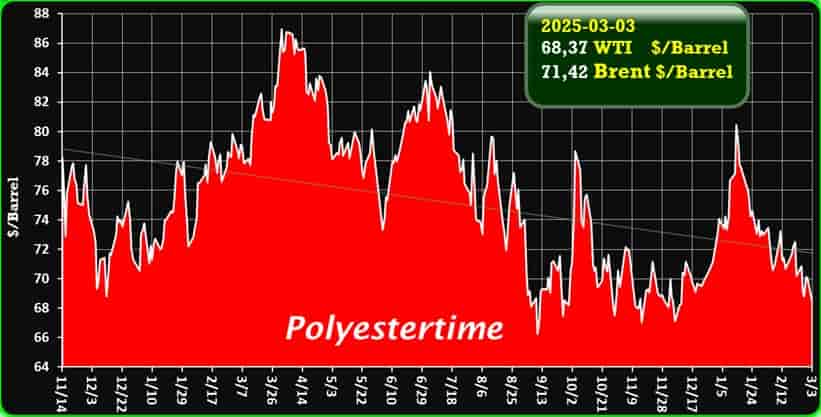
Crude Oil Prices Trend
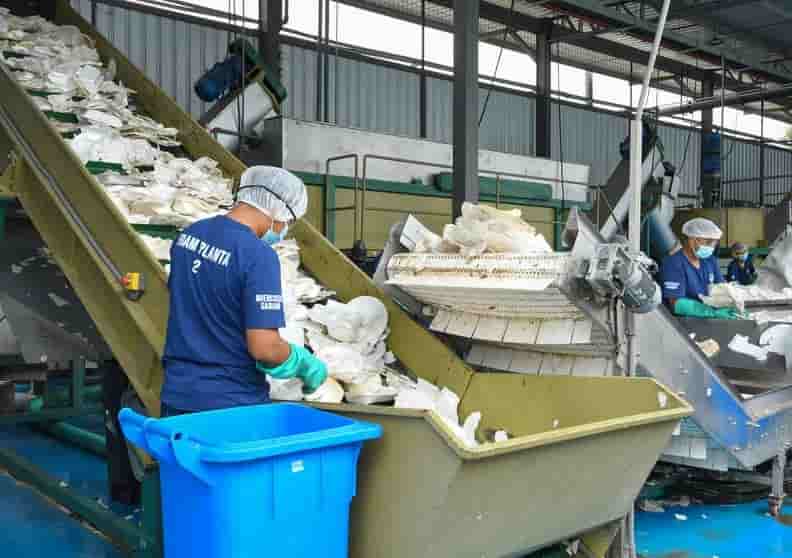
Gneuss, Plastlit advance food-grade polystyrene recycling in Latin America
OMNI recycling technology enables Plastlit to integrate 18% post-consumer polystyrene into food packaging, setting new sustainability standards in Ecuador and beyond
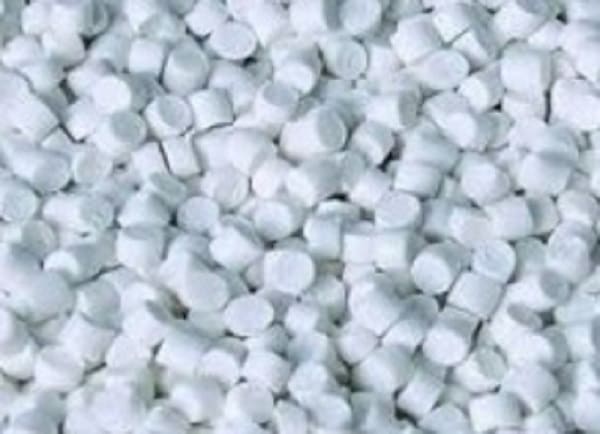
Plastlit, a supplier of single-use plastics to the food service industry in Ecuador, now uses 18% post-consumer recycled polystyrene with 82% virgin material in all of its expanded polystyrene foam packaging. Recycling technology
This has been made possible through a joint effort with local recyclers who collect material from towns and cities. The collected post-consumer material is washed, shredded and then processed using Gneuss OMNI recycling technology for decontamination and cleaning.
The Gneuss OMNI recycling line at Plastlit is the first of its kind in Latin America to recycle post-consumer polystyrene waste into food contact materials.
“We chose Gneuss as our partner because of their outstanding technologies and know-how,” said Esteban Simon, Plastlit CEO. “Their achievements in the plastics and recycling industries truly convinced us of their ability to support our project.”
The Gneuss Super-Clean Process enables the efficient recycling of 100% post-consumer plastics into safe, high-quality materials, including for food packaging. The Gneuss OMNI recycling system combines advanced degassing with the MRS extruder and fine filtration with the RSFgenius system to effectively remove contaminants. Recycling technology
US plastic scrap imports reached record high in 2024
According to an ICIS report, PET imports rose 23 percent over the previous year.
Data from the U.S. International Trade Commission (ITC) shows the United States rewrote its own record in regard to plastic scrap imports last year, led by polyethylene terephthalate (PET).
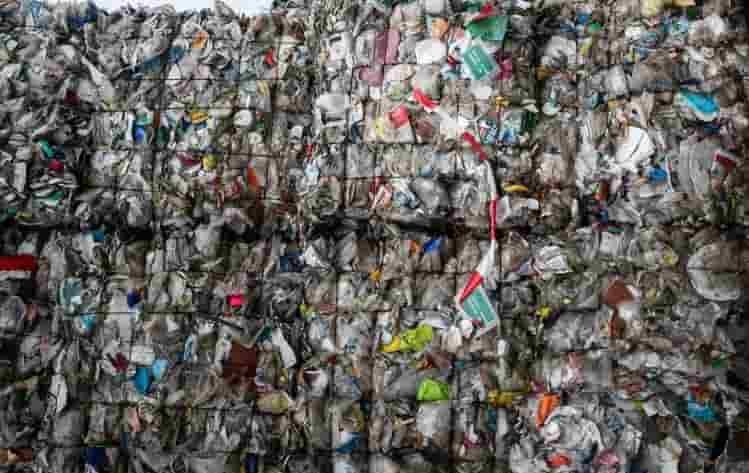
According to a recent report by Emily Friedman, the Houston-based senior recycled plastics editor at London-based commodities consulting firm ICIS, the U.S. remained a net importer of plastic scrap in 2024, bringing in a record 492,101 tons. Recycling technology
More specifically, PET totaled 59,222 tons—a 23 percent increase over 2023. At the same time, she writes that PET scrap exports to Mexico also reached a record high of 46,307 tons—up 32 percent over the previous year.
2024 trade data from the U.S. Census Bureau shows U.S. imports of plastic scrap, which are noted by the harmonized system (HS) code 3915, rose 10 percent year over year. Friedman notes that plastic scrap imports include items such as used bottles, purge, leftover pairings and flake.
“Throughout 2024, stagnant PET bottle collection volumes, paired with increasing bottle exports, led to a need for imported PET scrap material,” Friedman writes. “This was further supported by the cost proposition of cheaper imported flake. … As a result, recycled flake imports are seen as both a help and harm to the broader U.S. recycling market.”
Canada remained the top exporter to the U.S. last year, according to the report, followed by Thailand, Ecuador and Japan. Recycling technology
SIBUR to begin producing polymerization catalysts based on own formulations under tolling agreements in 2025, localize production in Russia in 2027-2029
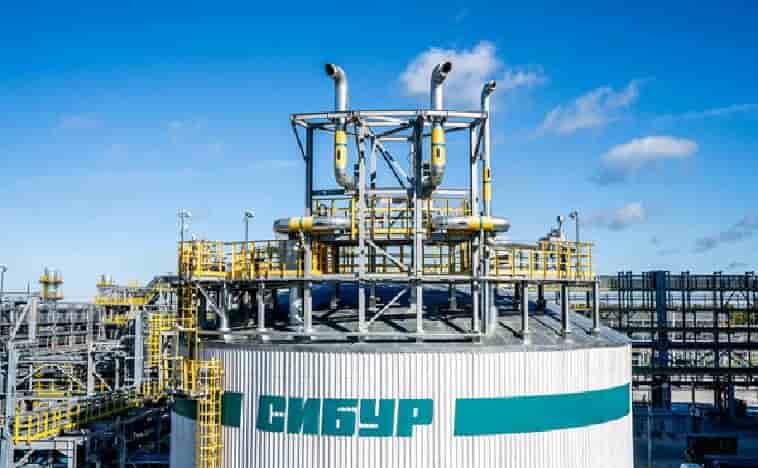
SIBUR plans to begin producing polymerization catalysts of its own design in 2025 at friendly countries’ facilities, the company’s director of R&D and innovation Sergei Tutov said in an interview with Interfax.
SIBUR uses around 25 polymerization catalysts at its facilities. Previously, these were supplied from Europe, the United States and Japan, but the company has shifted to available analogs since 2022. Recycling technology
SIBUR has now completed laboratory testing for domestic substitutes for all key positions. Chrome catalysts needed by ZapSibNefteKhim (ZSNKh) and Kazanorgsintez have already passed the industrial testing stage.
“During 2025, our goal is to start producing catalysts based on our own formulations under tolling agreements. That is, since we have completed laboratory development, we are ready to produce them in industrial volumes. We do not yet have industrial capacity in Russia, [so] we will use friendly countries’ industrial capacities to produce catalysts according to our formulations, homologate them at all our plants, and ensure a seamless transition to our own localized catalysts. We plan to begin domestic production in Russia in stages from 2027, and we intend to fully launch a catalyst production complex for polymerization by 2030,” he said. Recycling technology
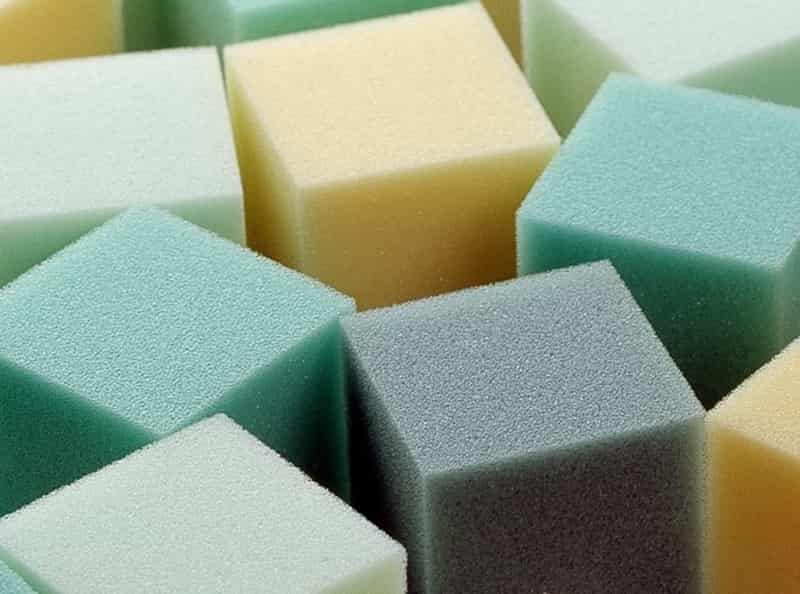
Isopa and Alipa commissioned Conversio Market & Strategy to conduct a socio-economic study on Europe’s polyurethane industry, emphasizing its economic impact, employment contribution, and development trends
Covering 2018-2023 across the EU-27, Switzerland, Norway, the UK, and Turkey, the analysis does not factor in the recent chemical industry crisis.
Europe’s polyurethane sector comprises over 80,000 companies, employing 700,000 people and generating €149 billion annually. Additionally, 1.7 million European companies utilize polyurethane, contributing €84 billion in revenue and employing 6.5 million workers. Recycling technology
Despite economic challenges, the industry has grown since 2018, particularly in construction and furniture. Construction remains the top application sector, generating €25 billion in direct value, with 3,500 companies and 100,000 employees. Over a million installation and artisanal businesses also rely on polyurethane, adding €42 billion and employing 4.7 million people. This sector grew by 5.6% from 2018 to 2023, the highest rate among polyurethane consumers.
The automotive sector saw a more modest 2% increase in added value, with a downturn in 2022-2023 posing future challenges.
Germany leads the market with €50 billion in turnover and over a million employees, followed by France, Italy, and the UK. Turkey is emerging as a high-growth market, contributing €8 billion annually, particularly in construction, bedding, and furniture.
Isopa and Alipa highlight the industry’s resilience but stress the need for competitiveness. With proper incentives, collaboration, and innovation, polyurethane can remain a key player in Europe’s socio-economic framework. Recycling technology
PVC Resin Prices Surge
North American PVC resin prices rose by 2 cents per pound in February.
This increase followed two months of stability after a 1-cent decline in November.
A sluggish construction sector—partly due to high interest rates—kept PVC demand in check for most of 2024. By February, regional PVC prices had declined a net 4 cents for the year. However, the market rebounded, possibly driven by manufacturers stocking up on pipe and construction materials ahead of peak building season. Recycling technology
Pipe and conduit markets remain strong, and exports are doing well.
Despite this, U.S. residential construction remained subdued. The sector, which represents about 60% of North American PVC demand, showed no significant growth in January. Housing starts reached an annual rate of 1.48 million units, unchanged from December and down 2% from the previous year, according to the U.S. Census Bureau.
The unexpected price increase suggests a shift in market dynamics, possibly signaling early preparations for stronger construction activity in the coming months.
Industry watchers will be monitoring whether this trend continues as demand fluctuates.