Plastics Packaging – Evonik Showcases Sustainable High-Performance Polymers at K 2025 Evonik is bringing sustainability, innovation, and high-performance materials to the spotlight at K 2025 03-10-2025 - Archive
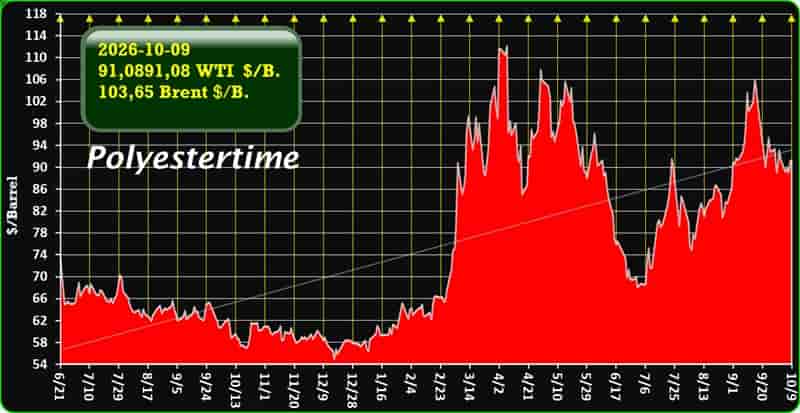
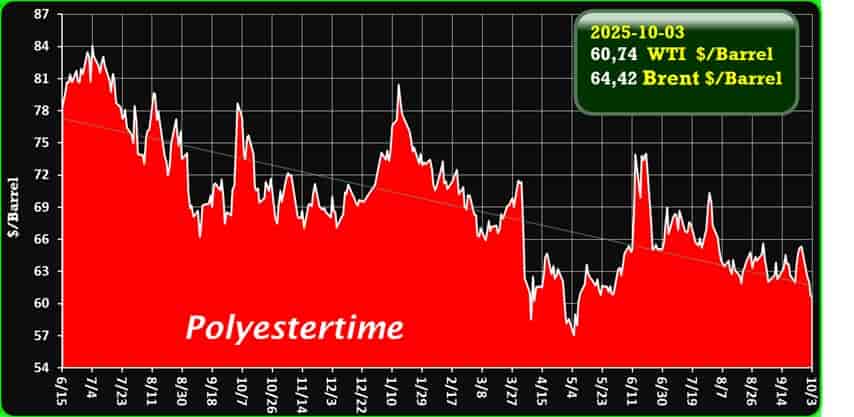
Crude Oil Prices Trend
Single-Material Food Pouch with 50% Chemically Recycled Polyethylene — Dow, Macchi & ITP Showcase at K2025
Overview
At K2025, Dow, Macchi and ITP unveiled a prototype flexible food pouch built as a single-material construction that contains 50% chemically recycled polyethylene. The recycled content is attributed via certified mass balance. The pouch aims to combine environmental ambitions with food-safety and barrier performance.
Short, clear takeaway: the team demonstrates that chemical recycling can enable high recycled-content flexible packaging while meeting evolving regulatory targets and functional demands. Plastics Packaging
Partners & Roles
This collaboration pairs raw-material expertise (Dow) with converting and machine-building know-how (ITP and Macchi). Each party contributed distinct capabilities:
- Dow supplied its polyolefin portfolio (Innate, Elite, Affinity, Bynel).
- ITP (Industria Termoplastica Pavese) handled film production, digital printing, lamination and pouch formation.
- Macchi supplied blown-film multilayer extrusion technology.
Technical Approach
The solution uses multilayer blown film extrusion to create a single-material pouch. That matters because single-material formats are easier to recycle mechanically and can help meet the circular-economy goals in packaging legislation. Plastics Packaging
Chemical recycling (feedstock processed and fed back into polymer production) is used here with certified mass-balance accounting to reach 50% recycled content while maintaining control over barrier and food-safety properties.
Key material inputs
| Role | Material / Tech |
|---|---|
| Barrier / sealant | Bynel & polyolefin laminates |
| Structural layers | Innate, Elite, Affinity grades |
| Processing | Macchi multilayer blown film lines |
Regulatory Fit (PPWR)
The EU Packaging and Packaging Waste Regulation (PPWR) sets minimum recycled-content thresholds for packaging. For food contact flexible packaging, the requirement is at least 10% recycled content by 2030. The Dow–Macchi–ITP pouch demonstrates that substantially higher recycled content is technically feasible. Plastics Packaging
That said, developers must validate compliance for food safety and maintain documentation for mass-balance certification and migration testing where relevant.
Product Samples & Where to See Them
Samples of two flexible packaging solutions for snacks were displayed at the Dow and Macchi stands during K2025. The showcase included finished pouches demonstrating digital-printed graphics, lamination quality, and pouch formation.
If you plan to reference these samples on a product page or case study, include high-quality images, material specs, and short captions highlighting recycled-content percentages and certification details. Plastics Packaging
Sustainability Implications
Using chemically recycled polyethylene at 50% (mass balance) helps reduce virgin fossil feedstock demand and can close the loop on polyolefin packaging. Importantly, the approach preserves the mechanical and barrier performance necessary for food protection.
Chemical recycling + single-material construction = higher circularity potential without sacrificing food safety or barrier function.
Manufacturers should weigh lifecycle analyses (LCA) and the sourcing footprint of chemically recycled feedstock when making product claims.
Performance & Technical Tips
For converters and brand owners testing similar constructions:
- Run pilot extrusion runs to validate layflat, seal integrity, and print adhesion when switching resin blends. Plastics Packaging
- Verify migration and organoleptic performance for food-contact layers.
- Document mass-balance chain-of-custody and certification for marketing claims.
Consider controlled A/B shelf-life testing versus current packaging to quantify any differences in barrier performance.
Conclusion
The Dow–Macchi–ITP prototype presented at K2025 is a concrete example of how chemical recycling and collaborative engineering can raise recycled content in food packaging without compromising performance. For brands and converters, the project highlights a practical route to meeting regulatory targets and improving packaging circularity.
Meraxis Enters Compounding with German Plant Acquisition
Overview of the Acquisition
Swiss plastics distributor Meraxis is officially entering the compounding sector.
Starting January 1, 2026, the company will acquire a state-of-the-art compounding plant from the Rehau Group, located in Velen, North Rhine-Westphalia, Germany.
With this move, Meraxis is positioning itself not only as a distributor of raw materials but as a vertically integrated supplier capable of producing, customizing, and delivering high-performance compounds to industries worldwide. Plastics Packaging
Plant Capacity and Capabilities
The German facility boasts a production capacity of 50,000 tons annually. Equipped with 14 extrusion-compounding lines, it is designed to serve multiple industries with both volume and quality.
Once the acquisition is finalized, Meraxis will exclusively market and distribute the output of this plant through its global network.
Product Portfolio and Applications
The portfolio includes compounds based on ABS, polyolefins (PE, PP), polyamides, and PVC, along with masterbatches. These materials are essential in sectors such as:
- Automotive
- Medical technology
- Furniture
- Extrusion and injection molding applications
This diverse product mix makes Meraxis a more versatile partner, offering solutions that meet bothtechnical and sustainability-driven requirements. Plastics Packaging
Focus on Polypropylene Compounds
Polypropylene compounds are set to make up nearly half of the plant’s production.
These include both homopolymer and copolymer variants reinforced with:
- Talc
- Calcium carbonate
- Glass fibers
- Glass beads
Beyond reinforcement, specialized formulations will be available. These may include flame retardants, UV stabilizers, heat stabilizers, and recycled content — even up to 100% recycled compounds. Plastics Packaging
Leadership Commentary
“We can now offer our partners greater expertise and flexibility, all from a single source.
In addition to ready-made compounds, we can also produce customer-specific formulations.”— Stefan Girschik, CEO of Meraxis
Girschik emphasized that the acquisition complements Meraxis’ in-house development expertise,particularly in high-demand sectors like automotive and medical technology.
Global Footprint and Strategy
Together with its subsidiary Fournier Polymers, acquired in 2023, Meraxis operates over 30 sales locations worldwide. Plastics Packaging
The group has an annual turnover exceeding €1.5 billion.
Its broad portfolio spans standard polymers, recycled and bio-based materials, engineering polymers, and masterbatches, making it a global one-stop supplier.
Market Impact and Industry Outlook
Meraxis’ expansion into compounding reflects a larger trend in the plastics industry:
distributors moving closer to production to secure supply chains, meet sustainability demands, and offer tailored solutions. Plastics Packaging
By integrating compounding capabilities, Meraxis can:
- Enhance control over quality and supply
- Expand its product customization services
- Offer sustainable material options with higher recycled content
- Strengthen relationships with automotive and medical customers
Conclusion
Meraxis’ entry into the compounding market marks a pivotal step in its global strategy.
With a robust production base in Germany, advanced formulations, and a strong sales network, the company is poised to become a leading force in polymers and compounding.
For customers, this means greater choice, more sustainable options, and streamlined supply solutions — all critical factors in today’s competitive landscape.
Evonik Showcases Sustainable High-Performance Polymers at K 2025
Evonik is bringing sustainability, innovation, and high-performance materials to the spotlight at K 2025.
Introduction
At K 2025, the world’s leading trade fair for plastics and rubber, Evonik is set to showcase its sustainable portfolio of high-performance polymers. The focus this year is on Polyamide 12 (PA12) and Polyetheretherketone (PEEK)—two materials central to Evonik’s innovation strategy and commitment to sustainability. Plastics Packaging
These advanced polymers are not only essential for high-performance applications across industries such as automotive, aerospace, and medical devices, but also set new benchmarks in reducing carbon footprints and supporting circular economy initiatives.
PA12 and PEEK: The Core of Innovation
Polyamide 12 (PA12) and PEEK are at the heart of Evonik’s efforts to combine material performance with sustainability. Both polymers are lightweight, durable, and versatile, offering manufacturers new opportunities to design efficient, eco-friendly solutions without sacrificing quality or strength. Plastics Packaging
Evonik has consistently invested in developing more sustainable production processes for PA12, including the use of renewable raw materials and renewable energy sources. PEEK, meanwhile, is celebrated for its exceptional thermal and chemical resistance, making it indispensable for demanding industries aiming to reduce environmental impacts.
Panel Discussion: Navigating Footprint Reduction with PA12
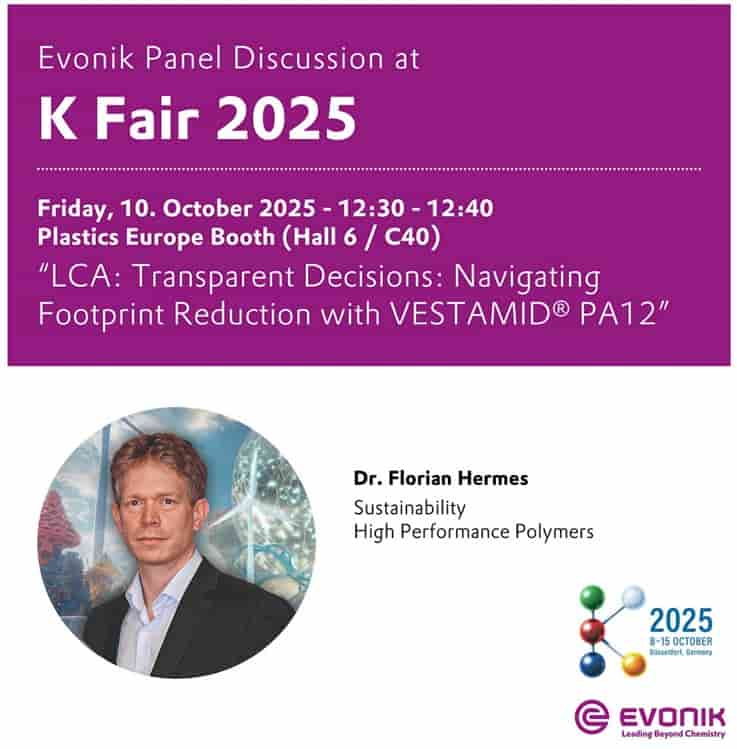
“LCA: Transparent Decisions: Navigating Footprint Reduction with VESTAMID® PA12” — featuring Dr. Florian Hermes, Evonik
One of the key highlights at K 2025 will be Evonik’s panel discussion on Life Cycle Assessment (LCA). The session explores how LCA empowers businesses to make informed choices, communicate transparently with customers, and guide long-term strategic development. Plastics Packaging
Evonik will share the remarkable achievement of reducing the carbon footprint of its VESTAMID® PA12 range by 30% since 2023. This reduction is the result of incorporating renewable energy in manufacturing and adopting alternative raw materials that align with sustainability goals.
The eCO Product Range: Up to 70% Lower Carbon Emissions
Evonik will also unveil its eCO product range at K 2025—a breakthrough in sustainable polymers. These materials deliver up to 70% lower carbon emissions compared to conventional alternatives, while maintaining the same high-performance properties that industries depend on. Plastics Packaging
Importantly, the eCO materials are fully compatible with existing manufacturing processes. This ensures a seamless transition for manufacturers seeking to integrate more sustainable solutions without incurring major changes in infrastructure or production efficiency.
Complementary Materials and Additives
In addition to PA12, PEEK, and the eCO range, Evonik will showcase complementary solutions that further strengthen its sustainable portfolio. These include:
- Specialty flame retardant additives for safer material applications.
- Resource-efficient silicas designed to optimize material usage.
- Innovative silane solutions that support advanced performance needs.
Together, these materials expand the company’s ability to provide tailored solutions across industries while reinforcing its sustainability-first approach. Plastics Packaging
Driving Circularity in Plastics
Evonik’s commitment extends beyond individual products to a broader mission: fostering circularity in the plastics industry. Through its Global Circular Plastics Program, the company is actively transitioning from the traditional linear “take-make-dispose” model to a fully sustainable, circular approach.
This program includes collaborations with partners across industries to advance recycling technologies, develop sustainable business models, and support closed-loop systems that keep materials in circulation for longer.
By embedding circularity into its strategy, Evonik demonstrates leadership in addressing one of the plastics industry’s most pressing challenges: reducing waste and conserving resources. Plastics Packaging
Visit Evonik at K 2025
Attendees of K 2025 can discover these innovations firsthand at Hall 6/D79. Visitors will have the opportunity to engage with Evonik experts, explore material solutions, and participate in knowledge-sharing sessions that highlight the future of sustainable high-performance polymers.
Evonik’s message is clear: performance and sustainability can go hand in hand, and the future of plastics lies in innovation that respects both industry needs and environmental responsibilities.
DOMO Chemicals to Showcase Specialized, Low-Carbon Polyamides Portfolio at K 2025
At K 2025 in Düsseldorf, DOMO Chemicals will present a specialized, low-carbon portfolio of polyamides under the theme “Building the Future Together”. The company invites customers, industry partners, and stakeholders to experience how collaboration, sustainability, and innovation can shape the next generation of performance materials.
Innovations Across Four Applications
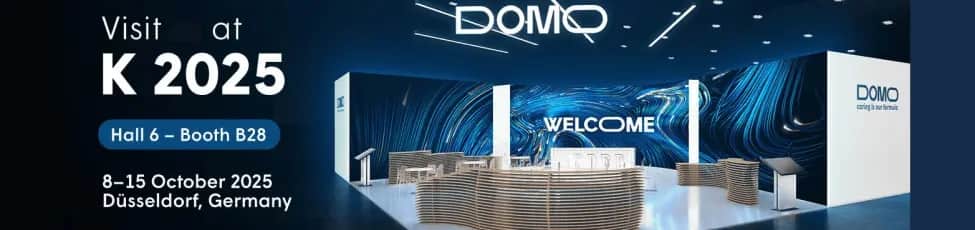
DOMO’s fully digital and interactive booth at Hall 6, Booth B28 will highlight innovations across four application pillars. Each pillar draws inspiration from one of the classical elements—Earth, Air, Fire, and Water—reflecting how sustainability and performance come together in polyamide technology. Plastics Packaging
Earth – Recycling & Sustainable Polyamides
DOMO has positioned itself at the forefront of recycling technologies for polyamides. Visitors will be able to explore four distinct sustainability-driven approaches:
- Mechanical recycling – ensuring resource efficiency and material reuse.
- MOVE 4EARTH® process – DOMO’s patented process for advanced recycling.
- Chemical recycling – breaking down materials to enable high-purity polyamide regeneration.
- Mass balance bio-attributed solutions – ISCC PLUS certified, offering a bio-based alternative with reduced carbon emissions. Plastics Packaging
DOMO’s recycling solutions provide customers with low-carbon, high performance materials while driving circular economy principles.
Air – Lightweighting & Metal Replacement
As industries demand lighter, stronger, and more sustainable materials, DOMO’s polyamide innovations provide a reliable alternative to metal. At K 2025, DOMO will demonstrate how lightweighting solutions reduce both costs and environmental footprints across multiple industries:
- Automotive – improved efficiency and lower emissions through reduced vehicle weight.
- Sports & leisure – high-performance gear with enhanced durability.
- Consumer goods – lightweight, sustainable designs without compromising strength. Plastics Packaging
These examples highlight how replacing traditional metals with advanced polyamides supports global sustainability goals.
Fire – Safety in E-Mobility & Electronics
With the growth of electrification, the demand for safer materials has never been higher. DOMO is introducing several fire-resistant polyamide solutions designed for next-generation applications:
- TECHNYL STAR® high-flow PA6 and PA66 FR grades for automotive uses.
- TECHNYL® PROTECT – sustainable halogen-free solutions for electronics and electrical applications.
- New breakthrough material for battery housing – combining safety with sustainability.
These innovations redefine material safety standards for electric vehicles and modern electronics, ensuring reliability and performance in critical applications. Plastics Packaging
Water – Smarter Water Management
DOMO’s advanced polyamides play a pivotal role in improving water infrastructure, offering materials that are cost-effective, reliable, and sustainable. At K 2025, DOMO will highlight:
- TECHNYL® SAFE – certified for direct food and drinking water contact.
- Innovations in metal replacement – reducing costs and enabling safer, long-lasting systems.
By providing solutions that enhance water system performance, DOMO contributes to global sustainability efforts and safer resource management. Plastics Packaging
Moving Towards Net-Zero
DOMO is taking bold steps toward net-zero innovation with the introduction of DOMAMID® MBB – a mass-balanced, ISCC PLUS certified PA6. This material contains up to 69% bio-attributed content and delivers nearly 100% CO₂ reduction compared to fossil-based alternatives.
Its applications include:
- Food and pharmaceutical packaging.
- Textiles and apparel.
- High-performance engineering plastics. Plastics Packaging
This breakthrough represents a milestone in low-carbon materials, aligning DOMO’s strategy with global climate goals and customer sustainability demands.
Conclusion
At K 2025, DOMO Chemicals will not only showcase its specialized portfolio but also reinforce its commitment to a sustainable, low-carbon future. From recycling innovations to net-zero certified solutions, DOMO sets the stage for performance materials that meet the challenges of tomorrow.
Visit DOMO at K 2025, Hall 6, Booth B28, to explore the future of sustainable polyamides.
Düsseldorf to Host Conference on New EU Plastics Packaging and Food Contact Regulations
Conference Overview
The European Union is moving into a decisive phase of regulatory transformation in the field of plastics packaging and food contact materials. To address these changes, the one-day conference “New Regulations on EU Plastics Packaging, Recycling & Food Contact” will take place on in Düsseldorf, Belgium, coinciding with the internationally renowned K-Show. Plastics Packaging
Organized by Centre for Management Technology (CMT), the event will unite regulators, industry experts, legal practitioners, recyclers, and sustainability professionals. Together, they will explore how new and revised EU rules are reshaping packaging production, food safety standards, recycling certification, and extended producer responsibility.
Key EU Regulations Under Discussion
Central to the agenda is the newly adopted Commission Regulation (EU) 2025/351, which imposes stricter safety and compositional rules for plastics intended for food contact. This regulation places particular emphasis on non-intentionally added substances (NIAS) assessments, requiring enhanced testing and monitoring by manufacturers and suppliers. Plastics Packaging
Another focal point is Regulation (EU) 2020/1616, which sets standards for recycled plastics in food packaging. Certification, traceability, and safety form the core of this regulation as the EU pushes forward with its circular economy objectives.
In addition, the ongoing revisions to the Packaging and Packaging Waste Regulation (PPWR) will be discussed. Key issues include:
- New extended producer responsibility (EPR) schemes
- Minimum recyclability standards
- Targets for reuse and refill
- The role of chemical recycling in achieving recyclability “at scale”
Expert Speaker Line-Up
The conference features a distinguished panel of international experts, including:
- Dr. Thomas Gude, Thomas Gude GmbH – Safety of recycled plastics in food contact Plastics Packaging
- Paolo Glerean, Chair of RecyClass – Certification and recyclability protocols
- Jean-Philippe Montfort, Mayer Brown – Packaging chemicals management under REACH
- Job Ridderbecks, FoodChain ID – NIAS assessment implications
- Dr. Jan Henke, ISCC System GmbH – Certified chemical recycling
- Laura Tibi & Jan Seebass, Taylor Wessing – New packaging rules and medical devices
- Thomas de Meester, European Plastic Films – Reuse targets & recycling scalability
- Antonello Ciotti & Raphael Jaumotte, Petcore Europe – PET recycling standards
- Dr. Chris Sherrington, Eunomia – EPR compliance strategies
- Charlotte Neumair, Circular Analytics – Fiber-based packaging recyclability
- Sandro Hubert, Landbell Group – EPR for non-EU suppliers & e-commerce
Why This Conference Matters
For businesses and policymakers, this conference offers more than just updates. It provides practical guidance on adapting supply chains, packaging strategies, and compliance processes to align with new EU rules. Delegates will leave with:
- Clear understanding of food contact safety and NIAS requirements
- Insights into certification systems for recycled plastics
- Guidance on EPR obligations and their impact on global trade
- Opportunities to network with regulators and industry peers
“The regulatory landscape is shifting rapidly. This conference provides the roadmap businesses need to remain competitive and compliant in Europe’s evolving packaging market.” Plastics Packaging
Registration & Contact
Registration for the event is now open. Full program details and pricing are available on the official conference page:
Register here.
For inquiries, please contact:
| Name | Huiyan Fu |
| Organization | Centre for Management Technology |
| huiyan@cmtsp.com.sg | |
| Phone | +65 6346 9113 |
Vanden Recycling Announces Strategic Closure of UK Reprocessing Facility
Global Growth and Feedstock Alignment
Vanden Recycling has announced the planned closure of its UK plastic reprocessing facility, marking a strategic move to accelerate global growth and strengthen its role as a trusted technical partner in recycled plastic feedstock acquisition. Plastics Packaging
The UK facility, which accounted for less than 10% of Vanden’s global operations, supported early growth in the region. However, following sustained international expansion and increased demand from manufacturers and converters for tailored feedstock solutions, Vanden is repositioning to better serve its global client base.
“The processing facility has been a small but important part of our operations,” said the UK Managing Director, Kevin Thompson. “However, it does not offer the opportunity to scale in line with our strategic objectives. By redirecting resources to our core trading business, we can concentrate on the areas that offer the greatest growth potential and provide improved service to our key clients.” Plastics Packaging
Enabling High-Performance, Circular Supply Chains
Over the past 18 months, Vanden has expanded its regional teams, and built a business model focused on aligning supply and demand for recycled plastics. The company now plays a key role in helping manufacturers and converters access reliable, specification-matched PCR feedstock across core materials including PET, PP, and HDPE.
Working with every part of the value chain – from collectors and sorters to reprocessors and end users – Vanden delivers a one-stop solution for clients seeking quality, consistency, and continuity in their recycled plastic inputs. Plastics Packaging
“Our clients are under pressure to maintain performance, meet sustainability goals, and secure supply in an unpredictable landscape,” said Director Damien van Leuven. “Our job is to simplify that process by delivering technically suitable, commercially viable feedstock solutions that work for them, now and into the future.”
Science-Backed Innovation and Technical Matching
Vanden combines material science, hands-on application knowledge, and global sourcing networks to meet the precise needs of manufacturers and converters. Earlier this year, the company announced a partnership with the University of Oxford to co-develop plastic sorting technologies that improve recyclability and system efficiency.
This scientific approach allows Vanden to go beyond brokering material, providing technical validation, tailored analysis, and reliable guidance on how to achieve the best outcomes from recycled inputs. Plastics Packaging
Built Around the Client
As the recycling landscape becomes more complex, Vanden’s model is intentionally built to reduce friction and unlock value for both suppliers and buyers. With dedicated logistics and support teams, Vanden ensures that materials are moved efficiently, transparently, and to the standards required by manufacturers, converters and brand owners alike.
From managing fluctuating demand to matching technical specifications and supporting long-term supply planning, Vanden acts as a bridge between waste and manufacturing – streamlining procurement and helping clients scale their use of recycled content with confidence.
“We are building a customer-first business that solves real challenges,” added van Leuven. “It’s about more than sourcing plastic – it’s about building long-term supply partnerships that are efficient, sustainable, and technically sound.” Plastics Packaging
Looking Ahead
Vanden’s strategy has included expanding its capabilities in advanced recycling feedstock supply, a move that will further enhance its ability to serve clients requiring specific recycled content for advanced manufacturing applications.
With a global presence and local expertise, Vanden is well-positioned to support brands in creating circular supply chains that are resilient, scalable, and aligned with performance and sustainability goals.