Plastics Recycling Innovation Advances Quality Efficiency and Profitability Across European Industry Sectors
Plastics recycling innovation
Plastics recycling innovation driving a new industrial standard
Plastics recycling innovation is rapidly transforming the European recycling landscape, placing process excellence and technological integration at the center of industrial progress. At the Plastics Recycling Show Europe, leading companies are demonstrating how advanced systems and engineered solutions can significantly improve recyclate quality, reduce energy consumption, and optimize operational workflows.
The industry is no longer focused solely on waste processing. Instead, plastics recycling innovation is redefining the entire value chain, from raw material input to high-quality output suitable for demanding applications such as food packaging and personal care products. This shift reflects growing regulatory pressure and market demand for sustainable yet high-performance materials.
Integrated systems improving efficiency and output quality
A key driver of plastics recycling innovation is the development of integrated, end-to-end systems. These solutions combine shredding, sorting, washing, and extrusion into a seamless process that maximizes throughput and consistency.
With decades of expertise in recycling technologies, modern solution providers now deliver complete systems rather than standalone machines. This approach ensures better synchronization between process stages, resulting in improved material flow, reduced downtime, and enhanced product quality.
The integration of mechanical processing with extrusion technologies represents a major step forward. By aligning these processes, companies can achieve continuous recycling operations that minimize inefficiencies while maintaining high purity levels in the final recyclate.
Advanced process optimization across the supply chain
Process optimization is a cornerstone of plastics recycling innovation. Standardized interfaces, system connectivity, and coordinated project management contribute to more stable and predictable operations.
These improvements lead to measurable gains in several critical areas:
- Energy efficiency through optimized machine performance
- Increased plant availability with reduced maintenance interruptions
- Enhanced process stability ensuring consistent output quality
- Greater transparency for operational and investment decisions
Such advancements are essential in a market increasingly affected by volatile raw material prices and rising energy costs. By improving efficiency at every stage, plastics recycling innovation helps companies remain competitive while meeting sustainability goals.
Achieving food-grade recyclate through innovation
One of the most significant breakthroughs in plastics recycling innovation is the ability to produce food-grade recyclates. This represents one of the most complex challenges in the industry due to strict safety and purity requirements.
Through highly controlled processes involving sorting, washing, extrusion, and thermal decontamination, it is now possible to convert post-consumer plastics into materials suitable for food contact. For example, used milk bottles can be transformed into high-quality rHDPE granulate that meets regulatory standards.
This achievement demonstrates that plastics recycling innovation can close the loop in packaging applications, enabling true circularity. It also opens new business opportunities in regulated sectors such as food and cosmetics, where demand for recycled materials is growing rapidly.
Flexibility and purity through new extraction technologies
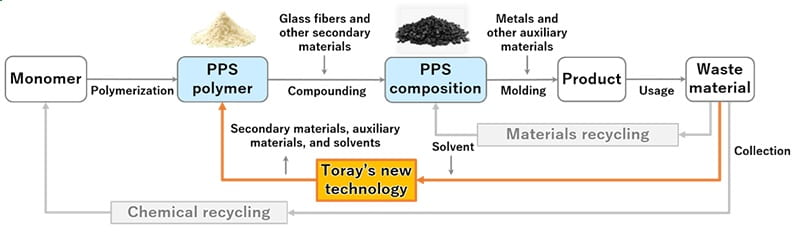
Another major advancement in plastics recycling innovation is the introduction of solvent-based extraction systems. These technologies are designed to remove impurities from polymer chains without degrading the material itself.
By eliminating contaminants such as odours, adhesives, printing inks, and non-intentionally added substances, these systems significantly improve recyclate purity. This allows recycled materials to be used in high-value applications that were previously inaccessible.
The flexibility of such systems also enables recyclers to process a wider range of input materials, increasing operational versatility and profitability. As a result, plastics recycling innovation is not only improving quality but also expanding the scope of what can be recycled effectively.
Strengthening the circular economy through collaboration
Collaboration between technology providers plays a crucial role in advancing plastics recycling innovation. Strategic partnerships allow companies to combine specialized expertise, resulting in more comprehensive and efficient solutions.
By aligning mechanical processing with advanced extrusion capabilities, these collaborations create fully integrated recycling systems. The benefits include:
- Improved coordination across the supply chain
- Faster implementation of new technologies
- Enhanced customer support and service integration
- Greater scalability for industrial applications
Such partnerships are essential for addressing the complexity of modern recycling challenges and accelerating the transition to a circular economy.
Responding to industry challenges with innovation
The plastics and recycling sectors are currently facing significant economic pressures, including fluctuating raw material prices and increasing energy costs. Plastics recycling innovation provides a critical response to these challenges.
Efficient and stable processes reduce operational expenses while improving the quality of recycled materials. This dual benefit enables companies to maintain profitability while meeting environmental and regulatory requirements.
Moreover, high-quality recyclates unlock new revenue streams by enabling entry into premium markets. This is particularly important in sectors with strict compliance standards, where demand for sustainable materials continues to grow.
A future shaped by plastics recycling innovation
Plastics recycling innovation is setting the foundation for the future of the industry. By combining process excellence, advanced technologies, and strategic collaboration, the sector is evolving toward more sustainable and economically viable models.
Trade events like the Plastics Recycling Show Europe serve as key platforms for showcasing these advancements and fostering industry dialogue. They highlight how innovation is not only addressing current challenges but also creating new opportunities for growth.
As the industry continues to evolve, plastics recycling innovation will remain a critical driver of progress, enabling higher quality standards, improved efficiency, and a stronger circular economy.
More…