Radici Chimica Sale Sparks Growing Alarm as Workers Demand Guarantees While Finance Reshapes a Strategic Italian Industrial Plant 08-01-2025
A corporate transaction that exposes a deeper industrial tension
The Radici Chimica case is not merely a corporate transaction or a routine labor dispute. It represents a broader and increasingly visible tension between global financial strategies and locally rooted industrial systems. As Radici Chimica moves toward a sale involving an international investment fund, workers find themselves navigating uncertainty that extends well beyond balance sheets and corporate announcements.
At the heart of the issue lies a simple but powerful concern. Hundreds of workers continue to generate industrial value every day without clear answers about the future of their plant, their jobs, or the long-term vision for the business. This disconnect between strategic decisions and daily industrial reality is what fuels anxiety across the workforce.
The sale of Radici Chimica and the logic behind it
From a formal standpoint, the sale of RadiciGroup’s chemical operations, including Radici Chimica, to the US fund Lone Star is a legitimate and lawful business decision. It reflects a strategic reorganization aimed at refocusing the group’s activities and unlocking financial value.
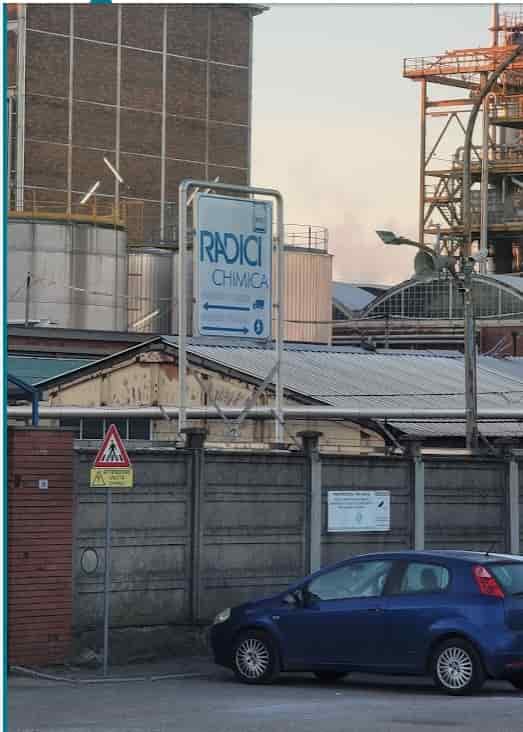
However, legitimacy does not automatically translate into social or industrial sustainability. The announcement of the deal created a gap between corporate strategy and workforce involvement. That gap has not yet been filled with concrete information, binding commitments, or a clearly articulated industrial plan for Radici Chimica sites, including the Sant’Agabio plant in Novara.
Finance versus industry: two different time horizons
The Radici Chimica situation illustrates a structural difference between financial investors and industrial territories. Investment funds typically operate with defined time horizons, focusing on performance indicators, margins, and exit strategies. Territories and workers, by contrast, depend on continuity, accumulated expertise, and long-term employment stability.
When these two perspectives fail to communicate transparently, mistrust becomes inevitable. In the case of Radici Chimica, workers are not questioning the existence of market dynamics. They are questioning whether industrial logic still plays a central role in decisions that will directly affect their lives and their community.
What workers are actually asking for
Contrary to some simplified narratives, employees at Radici Chimica are not demanding absolute guarantees or immunity from economic change. Their requests are pragmatic and grounded in industrial realism.
Workers want clarity on whether a detailed industrial plan exists. They want to know whether the Novara plant will remain a strategic asset or become expendable in future restructuring phases. They want confirmation that investments will continue and that production know-how will be preserved rather than gradually dismantled.
These are not ideological demands. They are operational questions that any serious industrial transition should be able to address.
The destabilizing effect of silence
One of the most critical aspects of the Radici Chimica affair is the lack of clear, consistent communication. Silence, delayed answers, or generic reassurances often prove more destabilizing than difficult truths.
When information is scarce, uncertainty fills the void. Workers begin to feel that decisions affecting their future are being made far from the production floor, guided by logics disconnected from the territory. This perception erodes trust not only in corporate leadership but also in the broader industrial system.
The role of unions and collective representation
Trade unions, including UGL, have played a central role in articulating workers’ concerns regarding Radici Chimica. Their position focuses on guarantees, transparency, and social responsibility rather than outright opposition to change.
Union involvement highlights the need for structured dialogue. Industrial transitions that exclude collective representation tend to generate conflict rather than stability. In this case, the union response reflects an attempt to bring balance to a process heavily driven by financial considerations.
Why institutions cannot remain passive
The Radici Chimica sale also raises questions about the role of public institutions. When a transaction affects hundreds of jobs and a strategic industrial site, local and regional authorities cannot limit themselves to passive observation.
Institutional engagement does not imply interference in private business decisions. It means demanding transparency, monitoring commitments, and ensuring that industrial assets critical to a region’s economy are not weakened without accountability.
Public institutions serve as a bridge between corporate autonomy and collective interest. Their absence leaves workers exposed to decisions they cannot influence.
A test case for Italy’s industrial future
Radici Chimica risks becoming a symbolic case, not because of the sale itself, but because of how the process unfolds. If the transition is accompanied by clear agreements, sustained investments, and credible safeguards, it could demonstrate that financial operations and industrial responsibility can coexist.
If opacity prevails, however, the case will reinforce a troubling narrative in which finance dictates outcomes and labor absorbs the consequences. Such a model undermines confidence in Italy’s ability to protect its industrial base.
The broader question behind the dispute
At its core, the Radici Chimica affair raises a fundamental question about industrial policy and social priorities. What value does Italy assign to industrial labor today. Is manufacturing still considered a strategic asset, or merely a variable in financial optimization models.
Workers are asking this question not through ideology, but through lived experience. They are asking it on production lines, in assemblies, and through their representatives.
Why answers are needed now
Delaying answers until after the transaction is completed risks deepening mistrust and social tension. Once decisions are finalized, opportunities for meaningful negotiation diminish. Transparency and accountability are most effective before outcomes are locked in.
The future of Radici Chimica should not be discussed only in financial terms. It should be addressed as an industrial, social, and territorial issue. The time for clarity is not later. It is now.
More…