RadiciGroup sale Lone Star reshapes global chemicals future with 5 impacts
RadiciGroup sale Lone Star closes after long ожидed process
The RadiciGroup sale Lone Star transaction has officially closed, marking a major shift in the ownership of one of Italy’s most established chemical and polymer producers. After more than a year since the initial agreement, the deal between RadiciGroup and Lone Star Funds reached completion on April 30, confirming the transfer of the Specialty Chemicals and High Performance Polymers divisions.
Although the timeline extended beyond expectations, the substance of the agreement remained stable throughout the process. Early estimates valued the deal at around one billion euros, reflecting the strategic importance of the assets involved. The completion of the RadiciGroup sale Lone Star deal signals a decisive moment for both the Italian industrial landscape and international private equity investments in manufacturing.
What Lone Star acquires in the RadiciGroup sale Lone Star deal
Through the RadiciGroup sale Lone Star, the American fund takes control of a globally integrated industrial platform. Founded in 1941, the group has built a strong presence across multiple continents, employing more than 3,000 people and operating in key markets such as Asia, the Americas, and Europe.
The acquisition includes advanced chemical production facilities and polymer manufacturing plants. In Europe, the company maintains operations in Germany, while in Italy its industrial backbone remains concentrated in the Bergamo and Novara areas. The Novara site alone spans over 350,000 square meters and specializes in polyamide 66 production, a critical material for high-performance applications.
This global footprint makes the RadiciGroup sale Lone Star particularly significant, as it transfers not just assets but a fully developed industrial ecosystem with deep expertise in the nylon value chain.
Strategic importance of polyamide leadership
A central element of the RadiciGroup sale Lone Star transaction is the company’s leadership in polyamide production. Polyamides, commonly known as nylon, are essential materials across multiple industries, including automotive, electronics, industrial manufacturing, and consumer goods.
The group has spent decades refining its capabilities in this sector, achieving a level of vertical integration that enhances both efficiency and product quality. This expertise positions the company as a global leader, making the acquisition highly attractive to an investor seeking long-term industrial value.
For Lone Star, the RadiciGroup sale Lone Star deal represents an opportunity to strengthen its portfolio with a business that combines technical specialization with international scalability.
The Radici family retains key assets and launches Raditex
Despite the scale of the RadiciGroup sale Lone Star, the Radici family has chosen to retain control over several strategic assets. These include the textile machinery business Itema, the renewable energy company Geogreen, and the historic Excelsior San Marco hotel in Bergamo.
In addition, the family has reorganized its textile operations under a new entity, Raditex. This company consolidates the Advanced Textile Solutions business area and represents a renewed focus on innovation within the textile sector.
The creation of Raditex ensures continuity for the family’s industrial legacy while allowing the chemical and polymer divisions to evolve under new ownership. This dual strategy highlights how the RadiciGroup sale Lone Star is not simply a divestment, but a broader transformation.
Workforce transition and operational continuity
The RadiciGroup sale Lone Star also involves a significant workforce transition. Approximately 1,300 employees from the Chemicals and Polymers divisions will move under the new ownership, including 800 from the Polymers Area and 500 from the Chemicals Area.
Meanwhile, around 1,300 employees remain within the textile division under Raditex. This balanced distribution ensures operational continuity while aligning each business unit with its strategic direction.
From an economic perspective, the Chemicals Area generates roughly 300 million euros in revenue, while the Polymers Area contributes about 500 million euros. These figures underline the importance of the assets included in the RadiciGroup sale Lone Star, as they represent a substantial portion of the group’s overall turnover.
Financial performance and growth trajectory
Before the RadiciGroup sale Lone Star, the company consistently reported revenues between one and 1.5 billion euros. In 2022, it achieved its best financial performance, with operating profit reaching 80 million euros and EBITDA totaling 157 million euros.
These results demonstrate the strength of the business being acquired. For Lone Star, the deal provides a solid financial foundation combined with growth potential in high-demand sectors.
The RadiciGroup sale Lone Star is therefore not a turnaround situation, but rather a strategic investment in a well-performing industrial leader with room for further expansion.
Innovation and industrial excellence remain central
One of the defining characteristics of the business involved in the RadiciGroup sale Lone Star is its commitment to innovation. The company has built its reputation on continuous research, product development, and close collaboration with clients.
This focus on innovation is expected to continue under Lone Star’s ownership. The fund aims to enhance operational efficiency, strengthen market positioning, and unlock new growth opportunities.
The RadiciGroup sale Lone Star aligns with a broader trend in private equity, where investors seek companies with strong technical capabilities and long-term industrial relevance.
Global expansion opportunities after the deal
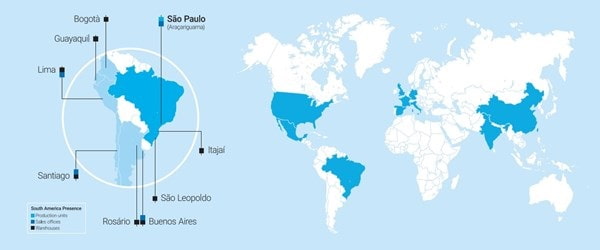
The international presence of the company plays a crucial role in the RadiciGroup sale Lone Star. With operations in China, Brazil, the United States, and Mexico, the business is already positioned in key growth markets.
Under Lone Star, these global operations may be further expanded or optimized. The fund’s experience in managing international portfolios could accelerate the company’s entry into new markets or strengthen its position in existing ones.
The RadiciGroup sale Lone Star thus opens the door to a new phase of global development, leveraging both financial resources and industrial expertise.
Challenges and expectations for the future
While the RadiciGroup sale Lone Star presents many opportunities, it also comes with challenges. Integrating a complex industrial organization into a private equity structure requires careful management to maintain performance and employee engagement.
At the same time, the transition must preserve the company’s core values, including quality, innovation, and customer focus. These elements have been key to its success and must remain central to its future strategy.
The RadiciGroup sale Lone Star will be closely watched by industry observers as a test case for how private equity can support long-term industrial growth.
A new chapter for an Italian industrial leader
The completion of the RadiciGroup sale Lone Star marks the beginning of a new chapter for a company with deep roots in Italian industry. While ownership has shifted, the foundations built over decades remain intact.
For the Radici family, the decision to sell part of the business was undoubtedly significant. However, it also creates an opportunity to focus on other strategic areas while ensuring that the chemical and polymer divisions continue to grow under new leadership.
Ultimately, the RadiciGroup sale Lone Star reflects a broader transformation in global industry, where partnerships between traditional manufacturers and international investors are reshaping the competitive landscape.
Why the RadiciGroup sale Lone Star matters globally
The importance of the RadiciGroup sale Lone Star extends beyond Italy. It highlights the increasing role of private equity in industrial sectors traditionally dominated by family-owned businesses.
It also underscores the value of specialization in materials like polyamides, which are essential for modern technologies and sustainable solutions. As industries evolve, companies with strong technical expertise and global reach will play a crucial role.
The RadiciGroup sale Lone Star is therefore more than a financial transaction. It is a strategic move that could influence the future direction of the chemicals and polymers industry worldwide.
More….