Definitive EU Anti-Dumping Duties on Chinese Adipic Acid Confirmed (2026 Update)
EU anti-dumping duties Chinese adipic acid
The European Commission has formally confirmed the imposition of definitive anti-dumping duties on imports of adipic acid originating from China, solidifying a provisional measure that had been in place since November 2025.
This decision marks a significant step in the European Union’s ongoing efforts to protect its domestic chemical industry from what it considers unfair trade practices, particularly the practice of exporting goods at artificially low prices. EU anti-dumping duties Chinese adipic acid
Under the newly confirmed framework, the definitive anti-dumping duties range from 29.1% to 42.3%, depending on the exporting producer. These duties are designed to offset the price advantage that Chinese exporters were found to have gained through dumping practices, thereby restoring fair competition within the European market.
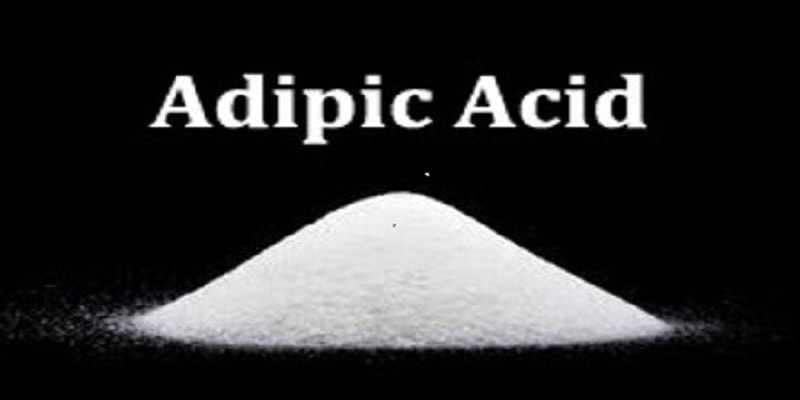
Adipic acid is an important industrial chemical primarily used in the production of polyamide 66 (nylon 66), a widely utilized material in the automotive, textile, and electronics industries due to its strength and durability.
It is also used in the manufacture of polyester-based polyols, which are key components in polyurethane products such as foams, coatings, and adhesives. Because of its central role in multiple value chains, any disruption or distortion in the adipic acid market can have ripple effects across a broad range of manufacturing sectors. EU anti-dumping duties Chinese adipic acid
The European market for adipic acid is substantial. Imports of this chemical intermediate from non-EU countries are estimated to total approximately €160 million annually, with around €130 million—more than 80%—originating from China. This heavy reliance on Chinese imports has raised concerns among European producers, who argue that they have been undercut by unfairly low-priced goods.
The origins of the case date back to March 2025, when an anti-dumping investigation was launched following a formal complaint by two major European producers, Lanxess Deutschland and Radici Chimica. These companies alleged that Chinese exporters were selling adipic acid in the EU at prices below their normal market value, a practice that violates international trade rules when it causes injury to domestic industries. EU anti-dumping duties Chinese adipic acid
The investigation conducted by the European Commission covered the period from January 1, 2024, to December 31, 2024. During this time, investigators analyzed pricing data, production costs, export volumes, and market trends. Their findings concluded that Chinese adipic acid was indeed being dumped into the European market, leading to significant economic harm for EU-based manufacturers.
Specifically, the Commission determined that European producers—located mainly in Germany, France, and Italy—were suffering from reduced market share, declining profitability, and downward pressure on prices.
These companies collectively employ more than 1,100 workers, making the issue not only an economic concern but also a social one, tied to employment and industrial sustainability within the EU. EU anti-dumping duties Chinese adipic acid
The confirmation of definitive duties aligns with a broader pattern in EU trade policy. In recent years, the European Union has intensified its use of trade defense instruments, particularly in sectors such as chemicals, steel, and renewable energy components.
According to multiple verified reports from international business news outlets in late 2025 and early 2026, the EU has increasingly taken a firmer stance against what it perceives as systemic overcapacity and state-supported pricing distortions in China’s industrial sectors.
These concerns are not limited to adipic acid. Similar investigations and duties have been applied or considered in other chemical segments, as well as in industries like electric vehicles and solar panels. EU anti-dumping duties Chinese adipic acid
The underlying issue is often the same: European authorities argue that subsidies, excess production capacity, and pricing strategies in China create unfair competitive conditions for EU manufacturers. EU anti-dumping duties Chinese adipic acid
At the same time, the decision has sparked debate among downstream users of adipic acid within Europe. Industries that rely on this chemical as an input—such as automotive suppliers and plastics manufacturers—have expressed concerns about potential cost increases resulting from the duties. Higher import tariffs could lead to increased production costs, which may ultimately be passed on to consumers or reduce the competitiveness of European finished goods in global markets. EU anti-dumping duties Chinese adipic acid
Balancing these competing interests is a recurring challenge for policymakers. On one hand, there is a need to safeguard domestic production and employment; on the other, there is a risk of raising costs for industries that depend on imported raw materials. The European Commission has stated that its analysis includes a “Union interest test,” which evaluates whether imposing measures would be more beneficial than harmful to the overall EU economy. EU anti-dumping duties Chinese adipic acid
In this case, the Commission concluded that the benefits of protecting the EU adipic acid industry outweigh the potential downsides. Officials argued that maintaining a viable domestic production base is crucial for supply chain resilience, especially in light of recent global disruptions caused by geopolitical tensions and the COVID-19 pandemic. EU anti-dumping duties Chinese adipic acid
Another factor influencing the decision is the EU’s broader industrial strategy, which emphasizes strategic autonomy and reduced dependency on external suppliers for critical materials. While adipic acid may not be classified as a critical raw material in the same way as rare earth elements, it is nonetheless an essential component in several key manufacturing processes.
From a geopolitical perspective, the move may also contribute to ongoing trade tensions between the European Union and China.
Chinese authorities have frequently criticized EU anti-dumping measures, arguing that they are protectionist and inconsistent with World Trade Organization (WTO) rules. In some cases, China has responded with its own investigations into European exports, creating a cycle of retaliatory trade actions. EU anti-dumping duties Chinese adipic acid
However, the EU maintains that its measures are fully compliant with WTO regulations and are based on thorough, evidence-based investigations. The Commission emphasizes that anti-dumping duties are not intended to block imports altogether but to ensure that they are sold at fair prices.
Looking ahead, the definitive duties on Chinese adipic acid are expected to remain in place for five years, subject to review. During this period, the Commission will monitor market developments and may conduct interim reviews if circumstances change significantly.
For European producers, the decision provides a measure of stability and an opportunity to recover from the pressures of recent years. For importers and downstream users, it represents a new cost factor that will need to be managed carefully. EU anti-dumping duties Chinese adipic acid
And for global trade relations, it serves as another example of the increasingly complex and contested landscape of international commerce in the chemical sector. EU anti-dumping duties Chinese adipic acid
In conclusion, the European Commission’s confirmation of definitive anti-dumping duties on Chinese adipic acid reflects a broader effort to enforce fair trade practices and protect domestic industry. While the move is likely to support European producers, it also highlights the delicate balance between industrial protection and economic efficiency in an interconnected global market.
More…