BOPP Film Market Shows Powerful Resilience Amid Regional Pressures
BOPP Film Market Unlocks Remarkable Growth Across Global Regions
The global BOPP film market is moving toward steadier growth after several years of exceptional disruption. Demand for food packaging, labels and technical applications remains robust, but the opportunities—and the risks—vary considerably by region.
Biaxially oriented polypropylene, commonly known as BOPP, is difficult to displace in many high-volume packaging applications. Its combination of strength, clarity, moisture resistance, printability and relatively low weight makes it particularly valuable for snacks, confectionery, labels and other consumer products.
The central market question is therefore not whether BOPP will remain relevant. It is where demand will grow fast enough to absorb new capacity—and which producers can compete without relying on volume alone.
BOPP demand is returning to a steadier pattern
The pandemic initially created an unusual rise in demand for packaged retail products. That surge was followed by inventory reductions across supply chains, producing sharp changes in film consumption.
Conditions are now becoming more stable. AMI Market Intelligence expects global BOPP demand to record compound annual growth of more than 3% through 2030. Its analysis also indicates that investment continued during the five years to 2025, even as inflation, geopolitical conflict and protectionist policies created uncertainty.
This outlook should not be interpreted as a guarantee of evenly distributed growth. Global expansion can coexist with regional overcapacity, weak margins and intense import competition.
Food packaging remains the market’s foundation
Food is still one of the strongest anchors for BOPP demand. The material performs particularly well in applications where moisture protection, visual presentation and efficient high-speed packing are important.
Growth in packaged snacks is especially significant. Rising urbanisation, changing shopping habits and demand for convenient food portions support film consumption in emerging economies. BOPP is also gaining attention in retortable structures and other applications requiring improved temperature or barrier performance.
These uses strengthen its long-term position, but performance expectations are changing. Customers increasingly want downgauged films, recyclable structures, dependable barriers and compatibility with high-speed converting equipment.
Producers will consequently need to compete on technical performance and resource efficiency, not simply on tonnes of installed capacity.
China is changing both domestic and export competition
China represents the largest concentration of BOPP capacity expansion. According to AMI, the country accounts for more than half of the production-line installations expected between 2020 and 2030.
Large Chinese manufacturers have developed export-oriented strategies capable of supplying substantial volumes at competitive prices. At the same time, the industry is placing greater emphasis on domestic consumption.
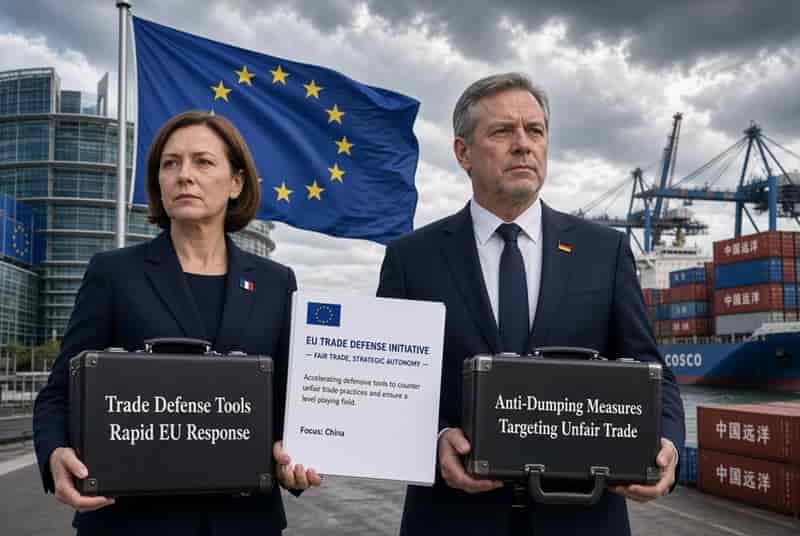
That combination gives Chinese producers considerable influence over global trade. When domestic demand cannot absorb available production, aggressively priced exports can increase pressure on manufacturers in other regions.
The result is a market in which capacity growth in one country can affect margins, operating rates and investment decisions thousands of kilometres away.
India offers rapid demand growth—and a capacity warning
The Indian Subcontinent presents a different opportunity. Per-capita BOPP consumption remains below the global average, while population growth, higher disposable income and expanding demand for packaged foods create a substantial runway for consumption.
The region also benefits from a competitive manufacturing base and experienced film producers. Several companies are increasing capacity domestically and in overseas markets, while new participants continue to enter the industry.
However, fast-growing demand does not automatically eliminate oversupply risk. If production starts faster than consumption develops, the region could encounter a supply-demand imbalance. Project timing, product differentiation and access to export markets will therefore be decisive.
Northeast Asian producers face a specialty-film test
Northeast Asia illustrates the challenges confronting mature markets. Ageing and declining populations limit volume growth, while high production costs make it difficult for local companies to compete with lower-cost Asian suppliers.
Sophisticated packaging still has an important role in countries such as Japan and South Korea. Yet producers increasingly need to focus on specialist BOPP grades and technical films for non-packaging applications.
This shift may reduce direct exposure to commodity price competition. It also raises the requirements for research, quality control and close cooperation with converters and end users.
Regulation is becoming a competitive factor
European packaging rules add another dimension to the market. The EU Packaging and Packaging Waste Regulation introduces sustainability, labelling, waste-prevention and recycling requirements across the packaging life cycle. Most of the regulation begins applying on 12 August 2026.
The regulation does not guarantee an advantage for any particular material. It instead increases the importance of demonstrable recyclability, material minimisation, documentation and responsible packaging design.
For BOPP suppliers, this creates both pressure and opportunity. Polypropylene-based mono-material structures may help simplify certain packaging constructions, but their practical recyclability depends on the complete pack, including coatings, inks, adhesives, barriers and local collection infrastructure.
Unsupported claims such as “fully recyclable” should therefore be avoided. Producers and converters will need evidence that relates to the finished packaging and the market in which it is sold. BOPP film market
New capacity will be wider and more efficient
The pace of capacity additions may moderate during the second half of the decade, but production can continue increasing through wider, faster and more efficient lines.
This distinction matters. Fewer new machines do not necessarily mean limited output growth. Improvements in line width, speed, energy consumption and yield can increase supply while reducing unit costs.
Efficiency investments can strengthen competitive positions, although they may also add pressure in markets where demand develops more slowly than available production.
What should BOPP companies watch?
Four indicators deserve particular attention:
- Regional operating rates: Global growth figures can conceal local overcapacity.
- Trade measures: Tariffs and investigations can rapidly change established film flows.
- Polypropylene costs: Feedstock movements directly affect converter margins and purchasing decisions.
- Packaging design rules: Recyclability and documentation requirements increasingly influence material selection.
Companies that monitor only headline demand growth risk missing the market’s regional complexity.
Outlook: resilient growth with sharper competition
The BOPP film market retains strong fundamentals. Essential food packaging, convenience products and expanding technical applications should continue supporting demand.
Nevertheless, future success will not be shared equally. China’s scale, India’s growth potential, Northeast Asia’s specialty strategy and Europe’s regulatory transformation are producing very different competitive environments.
The strongest businesses are likely to be those that balance efficient production with specialist capabilities, credible sustainability data and a clear understanding of regional supply and demand.
BOPP remains a vital packaging material. Its next stage of growth, however, will be defined as much by product quality, circular design and regional discipline as by installed capacity.
Frequently asked questions
What is driving the BOPP film market?
Major drivers include food and snack packaging, labels, convenient product formats and growing consumption of packaged goods in emerging markets.
Which region is adding the most BOPP capacity?
AMI identifies China as the largest source of capacity additions, accounting for more than half of expected line installations between 2020 and 2030.
Where is BOPP demand growing fastest?
The Indian Subcontinent has particularly strong growth potential because consumption per person remains comparatively low while incomes and packaged-food demand are increasing.
Is BOPP recyclable?
Uncoated polypropylene film can be technically recyclable, but the recyclability of a package depends on its entire construction and the collection and recycling systems available in the relevant market.
What is the principal market risk?
The main risk is a regional mismatch between supply and demand. Capacity can expand faster than consumption, causing lower operating rates, pricing pressure and greater export competition.
Editorial source note
The market analysis is based primarily on AMI Market Intelligence’s BOPP market update, published 22 July 2026. Regulatory statements were checked against the European Commission and the official EU regulation and implementation summary.
I found no sufficiently authoritative, directly relevant BOPP report published between 5 and 8 August 2026. I therefore did not insert weak, recycled or unverifiable “recent news” merely to satisfy the three-day window.
More…