Recycled carbon fibre – Procotex France’s Recycled Carbon Fibre Platform Proves That Sustainability Can Outperform Virgin Materials on Cost, Performance and Embedded CO₂ Savings 05-11-2025
Recycled carbon fibre – Introduction
In an era when companies often cite sustainability as a marketing slogan, Procotex France is delivering measurable results by using recycled carbon fibre to prove that eco-friendly materials can compete on performance and cost. The company has developed an industrial platform that takes waste carbon and para-aramid fibres, transforms them into feedstock, and supplies multiple markets—showcasing how recycled carbon fibre can deliver both environmental and functional value.
From Textile Recycling to Technical Fibre Reuse
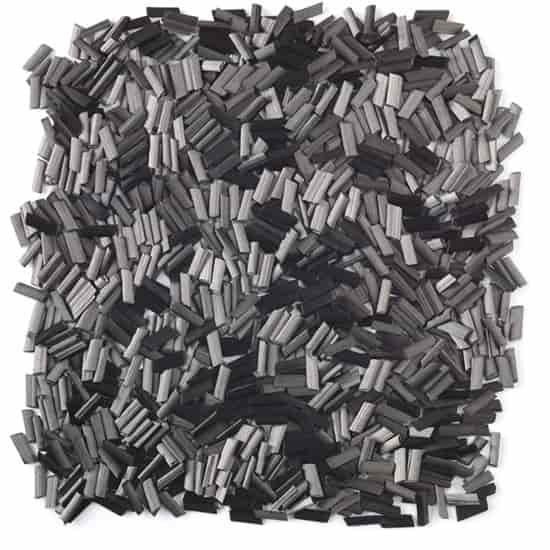
Procotex France, part of the Belgium- and France-based recycler Procotex, evolved from textile waste recycling into reclaiming high-performance materials such as carbon and para-aramid fibres. The French unit handles dry carbon waste—offcuts, filament remnants, weaving leftovers—and rather than produce virgin material the business focuses entirely on reused feedstock. The waste is milled or treated, epoxy sizing removed or adjusted, and then provided in forms such as powder or pelletised clusters (often described as “birdseed”) for downstream use.
Industrial Scale and Quality Assurance
Unlike many smaller recyclers, Procotex maintains full in-house capability across feedstock reception, processing, finishing and stock management. The team emphasises supply reliability: “you cannot ask your supplier to make some waste for us,” the sales director explains. By blending waste from multiple sources and maintaining buffer stock, the company can meet industrial scale demand with consistent quality. This industrialised approach underpins their claim of cost competitiveness with virgin carbon fibre.
Performance and Carbon Footprint Gains
Independent lifecycle assessments show the dramatic environmental benefit of recycled carbon fibre. Procotex reports that their recycled carbon and aramid fibres carry an embedded footprint of around 2.0 kg CO₂-equivalent per kg, versus ~12.6 kg for virgin carbon and ~13.2 kg for virgin aramid. These savings derive mainly from avoiding the energy-intensive synthesis of virgin fibres. Researchers in the wider field also confirm that recycled carbon fibres retain substantial mechanical performance when processed appropriately. Strathprints+1 For example, in one study recycled carbon fibre used in an aerospace spar achieved comparable performance to virgin material. MDPI
Cost Advantage and Market Applications
The company claims recycled carbon fibre can be 30-50% cheaper than virgin equivalents thanks to efficient automation and lower energy input. They supply milled granules for additive manufacturing and chopped or pelletised formats for compounding. As part of their strategy they emphasise: “Use recycled first for sustainability and cost.” Target sectors include automotive, electronics and 3D printing, where short-fibre formats are compatible. The market for recycled carbon fibre is still emerging but has strong growth potential—only about 15 % of global carbon-fibre waste is currently recycled.
Post-Consumer Recycling and Regulatory Support
While currently the feedstock is predominantly post-industrial waste, Procotex is capable of recycling post-consumer composites such as aircraft or hydrogen-tank components. The economic barrier remains high because of the need to burn off resin and recover fibres at scale. The company supports regulation that would require minimum recycled content in new products—such mandates would help drive viability of large-scale post-consumer recycling. Additionally new rules in automotive recycling (vehicles required to reach ~80-85 % recyclability) present growth opportunities for recycled carbon-fibre use.
Future Forward: Expanding Applications
Beyond carbon and para-aramid fibres, Procotex is exploring recycled options for applications requiring heat resistance, electrical conductivity and abrasion performance. Use cases include e-chains, drones, electronic shielding and static-dissipative parts. The additive manufacturing sector is expected to accelerate demand for short-fibre recycled feedstock. While volumes remain smaller than large-scale compounding, the faster qualification cycles and cost advantages give recycled carbon fibre a compelling role.
Why this matters
The shift to recycled carbon fibre demonstrates that sustainability need not be a trade-off with performance or price. By offering an industrialised, high-quality recycled material, Procotex France shows that eco-credentials and cost-competitiveness can align. For manufacturers seeking lightweight, high-performance materials with lower carbon footprint, recycled carbon fibre offers a credible, scalable option.
Key Takeaways
-
Recycled carbon fibre is coming of age with industrial scale, consistency and cost competitiveness.
-
Lifecycle assessments show >80% CO₂ savings versus virgin fibre production.
-
Cost reductions of 30-50% are achievable thanks to efficient processing and reuse of waste streams.
-
Regulatory trends and circular-economy imperatives are creating stronger drivers for recycled content in new products.
-
The message is clear: with the right approach, recycled carbon fibre can deliver the triple benefit of sustainability, performance and cost.