Recycled PET – Stronger Plastics with AI: How Machine Learning Reinvents Material Science Breakthrough research by MIT and Duke University reveals how artificial intelligence accelerates polymer innovation using ferrocenes — paving the way for tougher, smarter, and more sustainable plastics 07-08-2025
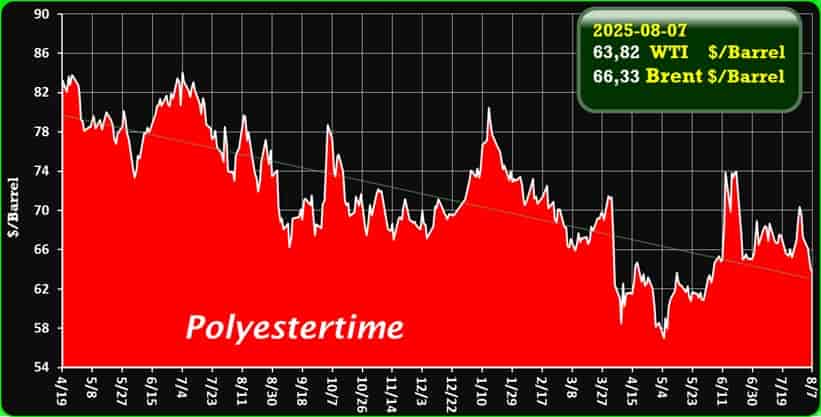
Crude Oil Prices Trend
? Stronger Plastics with AI: How Machine Learning Reinvents Material Science
Breakthrough research by MIT and Duke University reveals how artificial intelligence accelerates polymer innovation using ferrocenes — paving the way for tougher, smarter, and more sustainable plastics.
? The Big Picture: Why Stronger Plastics Matter
In a world increasingly dependent on high-performance materials, plastics are essential — from packaging and electronics to aerospace and medicine. But conventional plastics have a weakness: when stressed, they often crack or fail. Recycled PET
Now, scientists at MIT and Duke University are rewriting the rules of plastic durability. With the help of an AI-driven discovery engine, they’ve designed mechanically stronger polymers — all thanks to a clever use of chemistry and machine learning.
? What’s the Secret? AI + Ferrocenes
The innovation centers around a unique class of compounds called ferrocenes. These iron-containing molecules, when integrated into polymers as mechanophore cross-linkers, can dramatically improve how plastics respond to mechanical stress.
Instead of breaking under pressure, these new polymers adapt — becoming more resilient. Think of them as “self-strengthening” materials for the future. Recycled PET
? Published Breakthrough
This pioneering study, “High-Throughput Discovery of Ferrocene Mechanophores with Enhanced Reactivity and Network Toughening”, was recently published in ACS Central Science.
- ?? Lead Author: Ilia Kevlishvili (Postdoc, MIT)
- ? Contributors: Jafer Vakil (Duke), David Kastner, Xiao Huang (MIT), Prof. Stephen Craig (Duke)
- ? Senior Author: Prof. Heather Kulik, MIT
? How It Works: The Role of Mechanophores
Mechanophores are special chemical groups that respond to stress by altering their structure — acting almost like mechanical sensors within the polymer matrix. In this case, researchers used modified ferrocenes to create materials that get stronger when pulled or compressed. Recycled PET
“Rather than breaking or cracking, they acquire greater resilience under stress,” said Prof. Kulik.
⚙️ AI Accelerates Discovery
Finding the best mechanophores manually would take years. So the team turned to machine learning to do the heavy lifting:
- ? Data Collection: Started with 5,000 known ferrocenes from the Cambridge Structural Database.
- ? Simulations: Ran molecular simulations on 400 of them to measure bond-breaking forces.
- ? Model Training: Trained a custom ML model to predict behavior across 11,500 more variants. Recycled PET
The AI didn’t just replicate human logic — it discovered non-obvious patterns, like how symmetrical group placement on both ferrocene rings leads to selective stress-resistance.
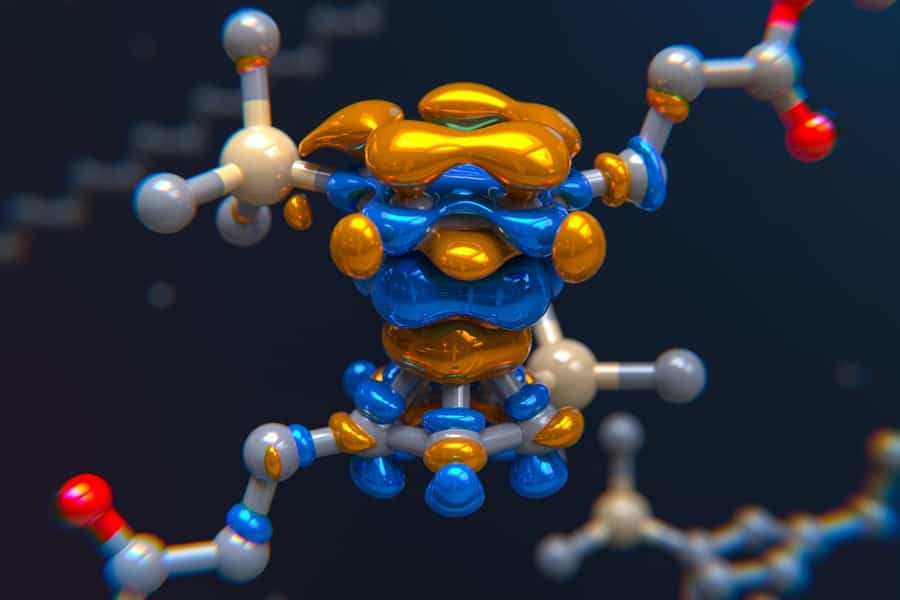
? Star Molecule: m-TMS-Fc
Among all candidates, one molecule stood out: m-TMS-Fc. When incorporated into a polyacrylate-based polymer, it made the material 4× tougher than conventional ferrocene-linked plastics.
This single innovation opens the door to creating longer-lasting, high-performance materials for industry and consumer use — with broad environmental benefits.
“If stronger plastics are made, they will last longer, reducing the need to produce new plastics over time,” said Kevlishvili.
? Sustainability Benefits
- ♻️ Less Waste: Tougher plastics mean fewer replacements.
- ? Durability: Increases lifespan of consumer and industrial products.
- ? Innovation Potential: Enables “smart” materials that respond to their environment. Recycled PET
? What’s Next? Smart Polymers Ahead
This is just the beginning. The team now plans to explore mechanophores with other reactive properties:
- ? Color-changing under stress
- ? Catalytic activation for smart chemistry
- ? Biomedical uses like controlled drug release
These applications could revolutionize fields like medical diagnostics, robotics, and environmental sensing.
♻️ Indorama Ventures Hits 150 Billion PET Bottles Recycled – Powering the Global Circular Economy
Published: August 7, 2025 Recycled PET
? How Big Is 150 Billion Bottles?
That’s the equivalent of recycling nearly 789 PET bottles every second – a staggering pace that reflects Indorama Ventures’ massive investment in recycling infrastructure. Operating 20+ recycling facilities across 11 countries, the company has transformed the way the world views plastic waste.
? The Journey from 2011 to Today
Indorama’s recycling evolution began in 2011. Here’s a look at the milestones achieved along the way:
- ? 2011: Recycling operations launched
- ?️ 2020: 50 billion bottles recycled
- ⚡ 2023: 100 billion milestone reached
- ? 2025: 150 billion bottles recycled
These milestones reflect both the increasing global demand for recycled PET (rPET) and Indorama’s commitment to scale rapidly and responsibly.
? What Happens to the Bottles?
Post-consumer PET bottles are collected, cleaned, and processed into high-quality rPET resins. These are then used in packaging, textiles, and other industrial applications — creating a closed-loop system that extends the life of plastics and significantly reduces environmental impact.
From your water bottle to your favorite polyester t-shirt, rPET materials are helping to build a more sustainable, low-carbon future.
? Collaboration at the Core
Yash Lohia, Executive President of Petchem and Chairman of the ESG Council, shared:
“Recycling 150 billion PET bottles is more than a milestone — it reflects the power of people, purpose, and technology driving scalable, sustainable impact. We’re grateful to our consumers, customers, and partners who make this progress possible.”
Lohia emphasized that strategic investments, business partnerships, and community trust have been the driving forces behind this achievement.
? Why This Matters for the Planet
Plastic pollution continues to be a global crisis. By focusing on recycling and innovation, Indorama Ventures is actively reducing landfill waste and ocean pollution while supporting carbon reduction goals across industries.
This achievement translates to:
- ? Less plastic in oceans
- ?️ Reduced landfill pressure
- ? Lower carbon emissions through material reuse
- ? Promoting circular economy models across supply chains
? Global Footprint, Local Impact
With operations in Europe, the Americas, Asia, and Africa, Indorama’s circular economy model is truly global. Local communities benefit through job creation, waste management solutions, and environmental education programs.
Each recycling facility is not just a production hub, but a community partner.
? Built for the Future: Smart, Scalable Infrastructure
Behind the scenes, Indorama Ventures leverages data analytics, automation, and sustainable engineering to optimize recycling operations. This digital transformation ensures performance, traceability, and compliance at every stage.
The company’s facilities are designed for maximum energy efficiency, minimal waste, and fast scalability as global demand for rPET continues to rise. Recycled PET
? Final Thoughts
As the world leans into sustainability, Indorama Ventures is proving that scalable recycling is not only possible — it’s already happening. This 150-billion-bottle milestone shows the power of circular thinking, global cooperation, and purpose-driven leadership.
? Every bottle recycled is a step closer to a cleaner, more circular world.
? New DECONWASTE Project Paves the Way for Food-Grade Recycled Polyolefins
August 7, 2025
? Circular Economy Meets Cutting-Edge Recycling Recycled PET
Polyolefins (like polyethylene and polypropylene) are widely used in everyday packaging. Yet, transforming them into food-safe recycled materials has remained a major technical hurdle—until now. DECONWASTE is set to change that by developing advanced cleaning and decontamination processes that meet strict EFSA (European Food Safety Authority) standards.
? Why Polyolefin Recycling Is So Challenging
Unlike PET, which is more straightforward to recycle for food use, polyolefins present multiple obstacles:
- ? Complex chemical structures
- ? Diverse additives and stabilizers
- ? Inability to differentiate between food and non-food packaging waste
- ? Lack of traceability in post-consumer packaging
“These challenges require highly specialized technologies,” said Adrián Morales, lead researcher in mechanical recycling at AIMPLAS. Recycled PET
? DECONWASTE Goals: Safety, Traceability, and Compliance
According to Morales, the ultimate mission is to ensure consumer safety while complying with EU regulations. “We’re not just looking at innovation for the sake of it,” he noted. “We’re building trust—ensuring that recycled food packaging is both safe and traceable.”
DECONWASTE aims to equip companies, especially SMEs, with the tech they need to confidently integrate recycled polyolefins into their production workflows—without compromising quality or safety.
? Strategic Collaboration for Greater Impact
The project isn’t going it alone. DECONWASTE brings together an alliance of forward-thinking partners:
- ACTECO – Experts in sustainable waste management
- SPBERNER – Pioneers in recycled product manufacturing
- PICDA – Leaders in industrial process validation Recycled PET
Each of these partners is actively involved in validating and scaling up the developed technologies, ensuring real-world applicability and commercial readiness.
? Alignment with the UN Sustainable Development Goals
DECONWASTE directly supports several key UN Sustainable Development Goals (SDGs):
- ? Goal 8: Decent Work and Economic Growth
- ? Goal 9: Industry, Innovation, and Infrastructure
- ♻️ Goal 12: Responsible Consumption and Production
This project reflects a holistic approach to sustainability, addressing not just environmental concerns but also social and economic impacts. Recycled PET
? Backed by Public & EU Support
Funding is provided through the Valencian Institute for Competitiveness and Innovation (IVACE+i), under the 2024 call for Strategic Cooperation Projects. Additional support comes from the European Regional Development Fund (ERDF).
Public-private collaboration is a key pillar of DECONWASTE’s success model, ensuring both innovation and scalability.
? How This Impacts Your Business
? Whether you’re a packaging producer, brand owner, or sustainability-driven startup, this project is poised to unlock new opportunities in the recycled materials market. With upcoming legislation and eco-conscious consumers demanding cleaner, safer packaging, being ready for food-grade recycled polyolefins is a strategic advantage. Recycled PET
By adopting technologies developed by DECONWASTE, companies can:
- ✅ Meet regulatory compliance
- ✅ Improve supply chain transparency
- ✅ Tap into eco-label certifications
- ✅ Lower their environmental footprint
?Houston Scientists Create Strong, Biodegradable Material to Replace Plastic
Published: August 2025
? Key Highlights
- ? Stronger than traditional biomaterials
- ? Fully biodegradable and eco-friendly
- ? Customizable with nanomaterials like graphene
- ? Potential for disposable bottles, packaging & more
- ? Scalable and adaptable for various industries Recycled PET
Engineering a Green Alternative to Plastic
This innovative work was led by Dr. Muhammad Maksud Rahman, assistant professor of mechanical and aerospace engineering at the University of Houston and adjunct assistant professor at Rice University. The study was published in Nature Communications, one of the leading scientific journals in materials science.
First author M.A.S.R. Saadi, a doctoral researcher in materials science at Rice, played a crucial role in the project. The team introduced a revolutionary way to align bacterial cellulose fibers during biosynthesis, resulting in extremely strong, flexible, and biodegradable sheets of material. Recycled PET
? How It Works: Fiber Alignment Through Rotation
In nature, bacterial cellulose fibers align randomly. The Houston team changed this by designing a rotational bioreactor that uses fluid motion to align the fibers during growth.
This real-time alignment produced sheets with mechanical properties comparable to some metals and glasses — yet the material remains foldable, lightweight, and fully biodegradable.
? Integrating Nanomaterials for Supercharged Strength
The process is not only environmentally friendly but also technically advanced. The team integrated nanoscale additives such as:
- ? Graphene – for conductivity and tensile strength
- ? Carbon nanotubes – for flexibility and electrical properties
- ? Boron nitride – for thermal management Recycled PET
These additives enhanced the functionality without compromising the eco-friendly nature of the base material.
“This dynamic biosynthesis approach enables the creation of stronger materials with greater functionality,” said Saadi. “It allows easy integration of various nanoscale additives directly into bacterial cellulose.”
? Future Use: The Next Generation Water Bottle
Rahman and his team envision this material being used for the “next disposable water bottle.” Unlike plastic, these bottles would decompose naturally and safely, eliminating microplastic pollution and landfill waste. Recycled PET
The biomaterial is derived from bacterial cellulose, a sustainable and abundant natural polymer produced by microbes — making it a scalable and globally accessible solution.
? Applications Beyond Bottles
Beyond the beverage industry, this biomaterial could be used in several other sectors:
- ? Packaging – Replacing plastic wraps and containers
- ? Textiles – Creating breathable, biodegradable fabrics
- ? Energy – Used in insulation or battery casings
- ?️ Food – Safe, eco-friendly food storage and wraps
- ? Electronics – Flexible components and circuit substrates
The scalability and customization potential make this material a compelling candidate for widespread commercial use. Recycled PET
Trump Pushes China and India to Halt Cheap Russian Oil Imports
? Geopolitical Pressure Mounts: Former U.S. President Donald Trump is urging China ?? and India ?? to stop purchasing discounted oil from Russia ??, aiming to cut off a crucial revenue stream fueling Russia’s war in Ukraine.
? Redirection of Russian Oil Exports
Following the European Union’s ban on most Russian seaborne oil in early 2023, global oil flows drastically shifted. Russia has since redirected its exports toward Asia, with China, India, and Turkey emerging as the top buyers. Recycled PET
? Billions at Stake
Since the EU sanctions, these nations have imported significant volumes of Russian energy:
- China: $219.5 billion worth of oil, gas, and coal
- India: $133.4 billion
- Turkey: $90.3 billion
For comparison, India had minimal Russian oil imports before the war began.
? Why the Attraction to Russian Oil?
Price. Russian oil trades at a discount compared to global benchmarks like Brent. This price difference allows refineries in buyer nations to enjoy higher profit margins when converting crude oil into diesel, gasoline, and other products. Recycled PET
? War Financing & the Ruble
Russia continues to rake in massive revenues despite Western efforts to choke off its oil income. In June alone, Russia earned $12.6 billion from oil sales. These funds are vital for:
- Fueling its war efforts in Ukraine
- Stabilizing the ruble
- Purchasing foreign goods and military parts Recycled PET
?️ The Shadow Fleet & Sanctions Evasion
Although the G7 nations imposed a price cap on Russian oil, enforcement is weak. Russia often uses a “shadow fleet“—older vessels insured and operated by companies in countries that ignore sanctions. This loophole allows Russia to evade the price cap and continue exporting oil profitably.
? 2025 Outlook: Russian Oil Revenues
According to the Kyiv School of Economics, Russian oil exporters are on track to earn $153 billion in 2025. Fossil fuel revenue remains the backbone of the Kremlin’s budget.
?? Hungary’s Stance Recycled PET
Although part of the EU, Hungary continues to import Russian oil via pipelines. Hungarian Prime Minister Viktor Orban has voiced criticism of sanctions, further complicating EU unity.
? Trump’s Diplomatic Strategy
Trump’s push aims to isolate Putin economically and pressure him into negotiating a ceasefire. However, India and China show little sign of changing course, given their energy needs and economic interests.
? Bottom Line: Trump’s call to end Asian imports of Russian oil reflects the high-stakes battle over energy and geopolitics. While his pressure campaign might not sway China or India, it underscores a broader effort to cut off the financial lifeline sustaining the war in Ukraine. Recycled PET

? Origin Materials & Berlin Packaging Partner for Sustainable PET Bottle Caps
Published on August 7, 2025
? Category: Sustainability, Packaging Innovation, Circular Economy
♻️ A Game-Changer in Sustainable Packaging
Origin Materials, a leading carbon-negative materials company, has announced a strategic customer relationship with Berlin Packaging, the world’s largest Hybrid Packaging Supplier®, to bring a new generation of eco-conscious packaging to market.
Under this groundbreaking agreement, Berlin Packaging will distribute Origin’s cutting-edge PET 1881 caps—a revolutionary alternative to traditional closures—to a broad customer base, including some of the world’s most iconic beverage brands.
This collaboration is more than a supply chain partnership—it’s a step toward a circular, low-carbon packaging future. Recycled PET
? What Are PET 1881 Caps?
The PET 1881 caps are a technological innovation designed to meet the growing global demand for sustainable packaging. Unlike traditional polypropylene (PP) or high-density polyethylene (HDPE) closures, PET caps offer a range of unique benefits:
- ✅ Made from 100% post-consumer recycled PET (rPET)
- ✅ Food-grade compliant and safe for beverage applications
- ✅ Thermoformed instead of injection molded—reducing energy usage
- ✅ Enable lighter packaging and mono-material bottles, boosting recyclability
- ✅ Support longer shelf life due to superior sealing performance
In short, these caps represent a future-proof packaging component that aligns with both industry needs and environmental goals. Recycled PET
? Why Berlin Packaging?
Berlin Packaging’s involvement in this partnership is no coincidence. As the largest Hybrid Packaging Supplier® in the world, Berlin brings a robust infrastructure of 1,700+ suppliers, a portfolio of 55,000+ SKUs, and more than 100 global locations.
Their commitment to sustainability, innovation, and customer-centric solutions makes them an ideal distribution partner for Origin’s revolutionary cap technology.
In fact, their recently released 2024 Sustainability Report outlines a bold roadmap for climate-conscious packaging and circular business practices. Recycled PET
? How This Partnership Supports a Circular Economy
By prioritizing mono-material packaging, the Origin-Berlin collaboration addresses one of the key barriers to recyclability: the complexity of mixed materials.
Consumers, recyclers, and brands all benefit when packaging is easier to sort and reprocess. The PET 1881 cap paired with PET bottles creates a fully recyclable solution—no more separating caps from containers!
This shift is aligned with rising global regulations and industry pledges around Extended Producer Responsibility (EPR) and net-zero carbon goals. Recycled PET
? Business Impact: Beyond Compliance
While environmental stewardship is at the heart of this partnership, it also represents a smart business move. Brands adopting sustainable caps benefit from:
- ? Lower carbon emissions and material usage
- ?️ Enhanced brand image and consumer trust
- ? Simplified packaging SKUs with mono-materials
- ? Improved recyclability that meets global compliance standards
This isn’t just sustainability—it’s strategic growth through innovation. Recycled PET
? Technical Performance & Innovations
One of the most impressive aspects of the PET 1881 caps is their manufacturing process. Origin uses a thermoforming method, which is faster and more energy-efficient than traditional injection molding.
This technique contributes to better scalability, cost savings, and performance consistency. Combined with a 100% rPET material input, this process forms a strong foundation for carbon footprint reduction.
? Visual Consistency & Branding Opportunities
Packaging isn’t just functional—it’s part of your brand’s story. With Origin’s PET 1881 caps, companies can highlight:
- ? Eco-conscious design choices Recycled PET
- ?️ Premium material feel with food-grade quality
- ? Commitment to recyclability and zero-waste packaging
This is the kind of visual branding consistency that wins shelf appeal and customer loyalty.
? Join the Movement Toward Smarter Packaging
As industries move rapidly toward sustainable practices, this partnership is a clear signpost of what’s to come. Lightweight, recyclable, mono-material caps like Origin’s PET 1881 are more than a trend—they’re a necessary evolution.
Berlin Packaging’s unmatched reach, combined with Origin’s breakthrough technology, makes this a high-impact development worth watching.