Breakthrough Sustainable PLA Filter Media Achieves Unmatched 95% Efficiency
Breakthrough Sustainable PLA Filter Media Achieves Unmatched 95% Efficiency
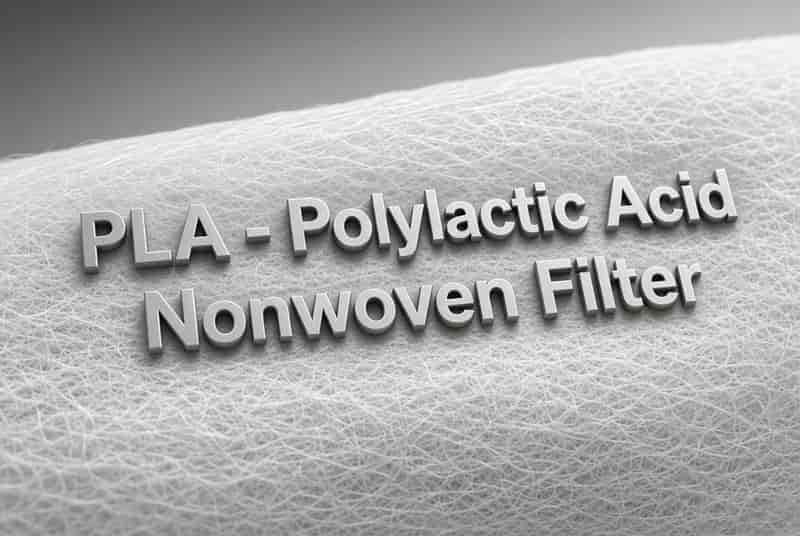
The global transition toward eco-conscious manufacturing has reached a monumental milestone in the nonwovens and filtration sectors. For years, manufacturers have faced a difficult trade-off: choosing between the high performance of fossil-based plastics and the environmental benefits of bioplastics. That compromise is now officially over. TotalEnergies Corbion has commercially launched Luminy L040, a revolutionary polylactic acid (PLA) grade specifically engineered for meltblown nonwoven filter media, marking a massive leap forward for the industry.
Following rigorous industrial trials, this new material has demonstrated filtration efficiencies exceeding 95%. This achievement not only redefines what is possible with biobased materials but also provides a much-needed solution for industries scrambling to meet tightening environmental regulations. sustainable PLA filter media
The Science Behind the Breakthrough
At the heart of this innovation is the ability to produce sub-micron fibers. The Luminy L040 grade can be processed on existing meltblown production lines without requiring major, costly equipment modifications. This drop-in capability is crucial for manufacturers looking to scale sustainable solutions rapidly.
By utilizing this specific PLA formulation, producers can spin ultra-fine fibers with diameters of one micron or less. These microscopic fibers are the secret to high-efficiency filtration. However, creating fine fibers is only half the battle. The true genius of Luminy L040 lies in its unique ability to retain an electrostatic charge.
In air filtration, electrostatic charge is essential. It acts like a magnet, capturing fine airborne particles that would otherwise pass through the physical mesh of the filter. Crucially, this electrostatic capture happens without creating excessive resistance to airflow. Historically, achieving this level of efficiency required the addition of degrading agents or specialized electrostatic additives, which complicated the manufacturing process and compromised the material’s environmental profile. Luminy L040 eliminates the need for these additives, relying on its ultra-low viscosity and inherent electrostatic properties to deliver top-tier performance. sustainable PLA filter media
Real-World Validation and Industry Adoption
The transition from laboratory success to commercial viability is often where new materials fail. However, TotalEnergies Corbion has already secured real-world validation for this sustainable PLA filter media. Dring an early-access program, industrial partners, including Hansae in South Korea, successfully processed the material on commercial meltblown lines. sustainable PLA filter media
According to Bert Clymans, EMEA senior business development and nonwovens market segment leader at TotalEnergies Corbion, these partners demonstrated stable production, consistent ultra-fine fiber formation, and the promised 95% plus filtration efficiencies. This proves that the material is not just a theoretical concept, but a robust, commercially viable product ready for global deployment.
Furthermore, independent research from the University of Michigan corroborates these industrial findings. Their recent studies indicate that PLA-based meltblown media can achieve filtration performance that is directly comparable to, and in some metrics superior to, conventional polypropylene (PP) materials.
Meeting 2026 Sustainability Mandates
This commercial launch arrives at a critical juncture for the global manufacturing sector. According to industry market analyses published earlier this week in October 2026, HVAC, air purifier, and industrial filtration manufacturers are facing unprecedented pressure to lower the embodied carbon of their products. Stricter global carbon reporting mandates and updated environmental guidelines have made it imperative for companies to audit their supply chains. sustainable PLA filter media
Because Luminy L040 is made from annually renewable feedstocks rather than petroleum, it offers a staggering environmental advantage. TotalEnergies Corbion reports that the new PLA grade boasts a carbon footprint more than 80% lower than conventional PP. For manufacturers, this translates to an immediate and massive reduction in the Scope 3 emissions associated with their final products.
By integrating this sustainable PLA filter media into their product lines, companies can market high-efficiency air purifiers and HVAC filters that actively contribute to corporate net-zero goals, turning a regulatory burden into a powerful competitive advantage.
Expanding Applications Beyond Air Filtration
While the current performance data and primary focus relate to air filtration, the versatility of Luminy L040 extends far beyond HVAC systems. The material is highly suitable for a variety of other meltblown applications.
Water filter media, for instance, stands to benefit immensely from the sub-micron fiber capabilities of this PLA grade, offering advanced microplastic and pathogen capture without leaching synthetic polymers into the water supply. Additionally, the material is being evaluated for use in advanced industrial and consumer wipes, where high absorbency and strength are required alongside biodegradability and reduced environmental impact. sustainable PLA filter media
Frequently Asked Questions
To ensure clarity for industry professionals and consumers alike, here are the most critical details regarding this new technology. sustainable PLA filter media
What is Luminy L040? Luminy L040 is a specialized polylactic acid (PLA) grade developed by TotalEnergies Corbion. It is specifically engineered for meltblown nonwoven applications, particularly high-efficiency air and liquid filter media.
Does it require new manufacturing equipment? No. A major advantage of Luminy L040 is that it can be processed on existing commercial meltblown production lines without the need for major equipment modifications, allowing for rapid industry adoption.
How efficient is the filtration? Industrial trials and early-access programs have demonstrated that filter media produced with Luminy L040 can achieve filtration efficiencies exceeding 95%, capturing sub-micron particles effectively.
What is the environmental benefit compared to traditional plastics? Because it is derived from annually renewable feedstocks, Luminy L040 has a carbon footprint that is more than 80% lower than conventional petroleum-based polypropylene (PP).
Is it commercially available now? Yes, TotalEnergies Corbion has confirmed that Luminy L040 is now commercially available worldwide for qualified manufacturers. sustainable PLA filter media
More…