Tire Pyrolysis – Ecolomondo Corp., a Canadian tire recycler, is advancing its end-of-life tire (ELT) recycling through pyrolysis with a new milling line at its Hawkesbury, Ontario facility. Trial production began last April, utilizing its thermal decomposition process (TDP) to convert scrap tires into recovered carbon black (rCB) 16-01-2025 - Archive
Tire Pyrolysis
Crude Oil Prices Trend

Spolana to Cease PVC and Caprolactam Production by Mid-2025
Spolana, based in Neratovice, Czech Republic, will end its production of polyvinyl chloride (PVC) and caprolactam (CPL) by mid-2025 as part of a major restructuring.
This decision follows a sustained downturn in the European petrochemical market, falling demand, and rising production costs. With limited production capacity compared to other European facilities, maintaining current operations is no longer feasible.
The restructuring will lead to the loss of approximately 500 jobs. Affected employees will receive enhanced severance packages based on their tenure and access to retraining, job-search assistance, and counselling services. Post-restructuring, about 150 employees will remain to oversee ongoing operations, including sulphuric acid production and wastewater treatment. Tire Pyrolysis
Spolana will also continue its partnership with the town of Neratovice on flood protection projects. Additionally, the company is exploring industrial decarbonisation initiatives to ensure sustainable profitability in the future.
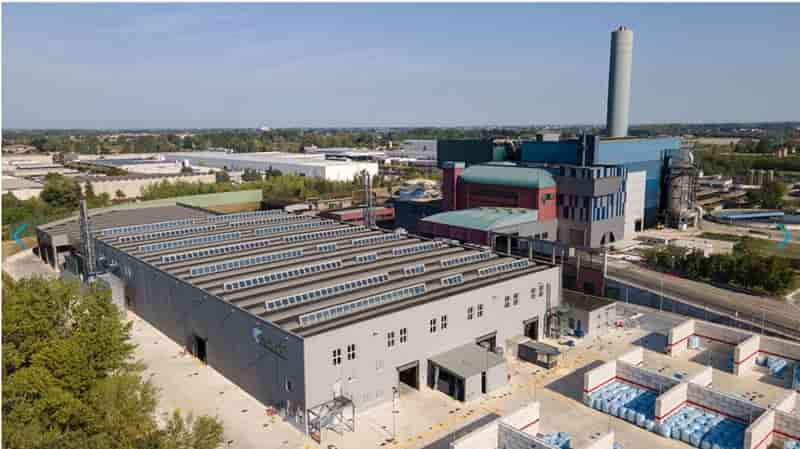
Ecolomondo Enhances Tire Pyrolysis Facility with New Milling Line
Ecolomondo Corp., a Canadian tire recycler, is advancing its end-of-life tire (ELT) recycling through pyrolysis with a new milling line at its Hawkesbury, Ontario facility. Trial production began last April, utilizing its thermal decomposition process (TDP) to convert scrap tires into recovered carbon black (rCB).
During trials, a significant deficiency was identified in the existing milling line, which failed to meet the targeted output of 1,600 lbs per hour or achieve the required particle size of 10-15 microns, crucial for rCB buyers. Tire Pyrolysis
The upgraded milling line, arriving this month, boasts a capacity of 2,200 lbs per hour and will meet the required particle specifications. Commissioning is slated to start in February.
At full capacity, the plant will process 1,980 batches (15,000 lbs each) of tires annually, yielding 5.3 kilotonnes of rCB. Additional outputs include 42,700 barrels of oil, 1,800 tonnes of steel, 1,600 tonnes of process gas, and 850 tonnes of fiber yearly.
Ecolomondo’s investment in advanced equipment strengthens its position in sustainable tire recycling and supports the circular economy by turning waste into valuable resources.

The Ministry is set to advance its environmental agenda by introducing an Extended Producer Responsibility (EPR) scheme aimed at addressing the pressing issue of plastic waste
The draft policy is scheduled for publication by November 1, 2025, with implementation anticipated to commence in 2026. This initiative will mandate that manufacturers and importers of plastic products take responsibility for the entire lifecycle of their products, specifically focusing on the collection, sorting, and recycling of plastic waste.
EPR schemes have gained traction globally as effective tools for enhancing waste management and reducing environmental impact. By shifting the financial and operational responsibilities from local governments to producers, EPR encourages manufacturers to design products with end-of-life considerations in mind. Tire Pyrolysis
This shift is crucial as current statistics indicate that only a small fraction of plastic waste is recycled; in the U.S., for instance, only about 5% of plastics are recycled, leading to significant landfill accumulation and environmental pollution.
The introduction of this EPR scheme aligns with global trends where various countries are implementing similar policies to combat plastic pollution. For example, states across the U.S. and countries like Denmark have established EPR frameworks that compel producers to manage their packaging waste more sustainably. As the Ministry prepares for this transformative policy, it aims to foster a circular economy where plastic materials are reused and recycled effectively, ultimately contributing to a cleaner environment and sustainable future. Tire Pyrolysis

64% Consumers May Opt for EVs by 2025: TCS Study
A Tata Consultancy Services (TCS) study reveals that 64% of consumers are likely to choose electric vehicles (EVs) as their next purchase by 2025, marking a pivotal year for EV adoption. The TCS Future-Ready eMobility Study 2025 indicates a strong interest among younger consumers, particularly those aged 18-35, who are generally satisfied with the current EV offerings.
The survey covered over 1,300 global stakeholders, including manufacturers, charging infrastructure developers, fleet operators, influencers, and consumers from regions such as North America, the UK & Ireland, Continental Europe, and APAC (China, India, Japan, ANZ). Tire Pyrolysis
Key barriers to EV adoption include high costs, maintenance issues, lengthy charging times, limited charging infrastructure, and insufficient battery range. Among these, consumers identified battery range as the top area needing improvement.
Anupam Singhal, TCS President for Manufacturing, noted that while consumer interest in EVs is growing, manufacturers face significant hurdles, such as advancing battery technology, optimizing vehicle design, and managing production costs.
The findings reflect a significant shift in consumer attitudes, with younger generations driving demand for more sustainable mobility options. However, overcoming these challenges will be essential to meet evolving consumer expectations and achieve widespread EV adoption by 2025. Tire Pyrolysis

AIMPLAS Organises the Second Edition of the International Seminar on Biotechnology Applied to the Plastics Sector
AIMPLAS is organising the second edition of the International Seminar on Biotechnology Applied to the Plastics Sector, to be held on 5th and 6th March in Valencia, with the sponsorship of BPC INSTRUMENTS and CULTIPLY.
Over the two-day event, more than 20 international experts will present a range of initiatives, demonstrating how environmental challenges can be turned into innovative business opportunities.
AIMPLAS, the Plastics Technology Centre, is hosting the second edition of the International Seminar on Biotechnology Applied to the Plastics Sector, scheduled to take place on 5th and 6th March in Valencia, with the sponsorship of BPC INSTRUMENTS and CULTIPLY.
This event will bring together over 20 international experts in biotechnology and sustainability to explore innovative solutions that will enable the plastics sector to move towards a more sustainable future. Tire Pyrolysis
Throughout the two-day seminar, initiatives will be presented to demonstrate how environmental challenges can be transformed into new business opportunities, offering a unique platform to discuss and learn about the current and future developments that biotechnology contributes to this industry.
Revolutionary Superconducting Materials: A New Frontier in Electronics
In 2024, breakthroughs in superconductivity research unveiled three new two-dimensional materials exhibiting resistance-free electrical flow. These findings challenge and even overturn classical theories of superconductivity, marking a significant leap in the field. Tire Pyrolysis
Superconductivity, first observed in 1911, has traditionally required extremely low temperatures. However, advancements in two-dimensional materials—comprising atomic-scale layers—now enable unprecedented control and flexibility.
Researchers can fine-tune these materials with remarkable precision, revealing diverse mechanisms of superconductivity:
- Magic angle graphene: Slowed electron movement fosters unique interactions.
- Transition metal dichalcogenides (TMDs): Antiferromagnetism appears integral.
- Four-layer graphene: A novel, chiral form of superconductivity emerges, defying all prior theories. Tire Pyrolysis
This diversity suggests that superconductivity, like animal flight, evolves through various mechanisms. These findings could pave the way for designing materials that exhibit superconductivity at room temperature. Potential applications include lossless power grids, efficient magnetic levitation, and enhanced quantum computing.
Researchers are racing to decode the underlying mechanisms, leveraging the adaptability of two-dimensional materials to accelerate experimentation. Simultaneously, theorists are crafting models to unify these discoveries into a comprehensive framework.
Professor Matthew Yankowitz of the University of Washington emphasizes the urgency: “We’re six years into this revolution and cannot afford to slow down.” Tire Pyrolysis
The pursuit of room-temperature superconductivity holds transformative promise for technology and society, making the coming years pivotal for realizing this potential.