8 Major Environmental Impacts: Türkiye Moves to Ban Single-Use Plastic Products Nationwide
8 Major Environmental Impacts: Türkiye Moves to Ban Single-Use Plastic Products Nationwide
Türkiye is preparing to introduce a sweeping regulation that will eliminate many disposable plastic items from the market. The Türkiye single-use plastic ban is part of a broader environmental strategy designed to reduce plastic pollution, lower greenhouse gas emissions, and accelerate the country’s transition toward sustainable materials.
The regulation is currently being developed by the Ministry of Environment, Urbanization and Climate Change and is expected to enter into force by the end of the year. If implemented as planned, the Türkiye single-use plastic ban will significantly reshape the production, distribution, and consumption of everyday plastic products.
For consumers, manufacturers, and retailers, the policy signals a shift toward environmentally responsible alternatives and more sustainable waste management practices.
1. A Broad Ban on Everyday Disposable Plastics
The proposed regulation targets a wide range of items commonly used in food service and retail. Authorities aim to prohibit the sale and distribution of products that contribute heavily to environmental pollution and waste accumulation.
Under the Türkiye single-use plastic ban, the following products would be removed from circulation:
-
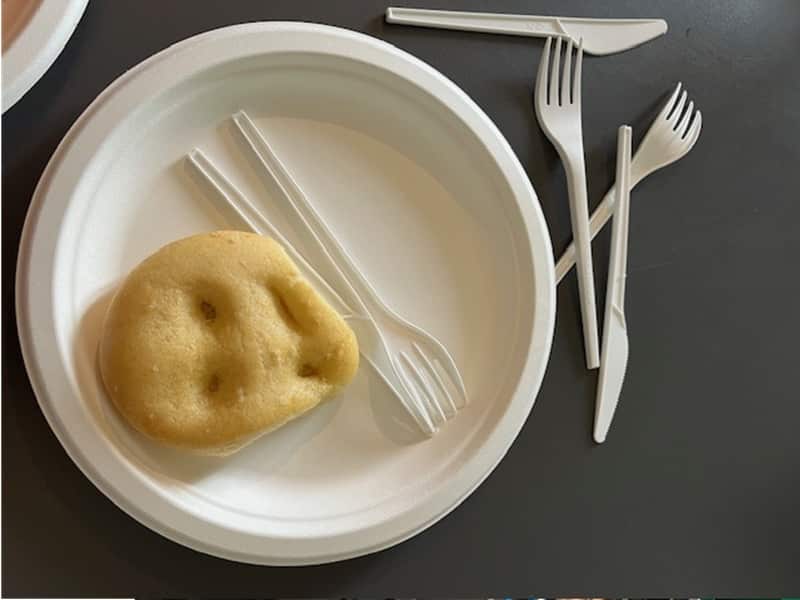
Plastic forks, knives, and spoons
-
Disposable plates
-
Plastic straws
-
Beverage cups made from plastic
-
Drink stirrers
-
Cotton swabs with plastic stems
The proposal also extends to food containers and beverage cups made from expanded polystyrene, commonly referred to as foam packaging.
Expanded polystyrene is widely used in takeaway food packaging due to its low cost and insulating properties. However, it is extremely difficult to recycle and often ends up in landfills, rivers, and marine environments.
By eliminating these materials, the Türkiye single-use plastic ban aims to dramatically reduce the volume of plastic waste entering the environment.
2. Encouraging Sustainable Alternatives
Alongside restrictions on plastic products, authorities plan to promote the adoption of environmentally friendly materials.
Businesses will be encouraged to replace disposable plastic items with alternatives such as:
-
Glass containers
-
Porcelain tableware
-
Wooden utensils
-
Cardboard and paper packaging
These materials are generally easier to recycle, reusable in many cases, and produce less long-term environmental damage.
The shift toward sustainable materials could also stimulate innovation within Türkiye’s packaging and consumer goods industries. Companies are likely to invest in biodegradable materials, compostable packaging, and reusable product systems.
3. Part of the National Zero Waste Movement
The Türkiye single-use plastic ban forms a central component of the country’s broader Zero Waste Movement.
This national initiative focuses on reducing waste generation, improving recycling infrastructure, and encouraging responsible consumption across industries and households.
Over the past several years, Türkiye has introduced several policies aimed at strengthening waste management. One of the most significant measures is the deposit return system for beverage containers.
This system incentivizes consumers to return bottles and cans for recycling, helping to increase collection rates and reduce litter.
The upcoming plastic ban represents another major step in the country’s transition toward a circular economy.
4. Reducing Carbon Emissions from Plastic Waste
Beyond waste reduction, the Türkiye single-use plastic ban is expected to deliver measurable climate benefits.
Government estimates suggest that eliminating disposable plastic products could prevent approximately 1.5 million tons of carbon dioxide equivalent emissions every year.
Plastic production relies heavily on fossil fuels, both as raw materials and energy sources. Reducing demand for single-use plastics therefore directly lowers emissions associated with manufacturing and waste processing.
In addition, cutting plastic waste reduces emissions generated through landfill decomposition and incineration.
5. Significant Cost Savings in Waste Management
Environmental benefits are only part of the expected impact. Authorities also anticipate substantial economic advantages from reducing disposable plastics.
The Türkiye single-use plastic ban could save nearly 1.5 billion Turkish lira annually in waste management costs.
Disposable plastics require extensive collection, transportation, and disposal infrastructure. When these materials enter waterways or natural environments, cleanup costs rise significantly.
By eliminating a large portion of single-use plastics at the source, the government aims to lower the financial burden on municipalities and waste management systems.
6. Rising Consumption Driving Policy Action
Recent data shows that Türkiye’s consumption of disposable plastics has grown rapidly in recent years.
According to the Turkish Statistical Institute, the country consumed more than 709,000 tons of single-use plastic products in 2022 alone. This includes plastic cups, takeaway food containers, disposable plates, straws, and cutlery.
The upward trend in plastic consumption has raised concerns among environmental policymakers.
Without intervention, plastic waste volumes could continue rising sharply, placing additional pressure on recycling systems and ecosystems.
The Türkiye single-use plastic ban is designed to reverse this trend by limiting the availability of disposable plastics in the first place.
7. Aligning with European Environmental Policy
Another key objective behind the regulation is alignment with international environmental standards.
The Türkiye single-use plastic ban closely mirrors the European Union’s Single-Use Plastics Directive introduced in 2019.
The EU directive restricts many of the same products targeted by the Turkish proposal, including plastic cutlery, straws, stirrers, and foam food containers.
Several European countries such as France, Germany, and Spain have already implemented strict limits or complete bans on disposable plastics.
By adopting similar measures, Türkiye strengthens regulatory compatibility with European environmental policy while supporting broader sustainability goals.
8. Strong Public Support for Reducing Plastic Waste
Public opinion appears to favor stronger action on plastic pollution.
A survey conducted during the preparation of the regulation revealed significant support for reducing plastic use in daily life.
Key findings include:
-
77.65 percent of respondents support reducing single-use plastics
-
60.02 percent support banning certain disposable plastic products entirely
These results indicate that the Türkiye single-use plastic ban reflects growing environmental awareness among consumers.
Public support could also help ease the transition for businesses adapting to new packaging and product requirements.
Implementation Timeline and Next Steps
The draft regulation is expected to be opened for consultation with public institutions, industry representatives, and civil society organizations in the coming weeks.
This consultation phase will allow stakeholders to provide feedback on implementation challenges, supply chain adjustments, and alternative materials.
After incorporating the feedback, authorities plan to finalize the regulation and implement the Türkiye single-use plastic ban before the end of the year.
If adopted, the policy will represent one of the most significant environmental reforms in Türkiye’s recent history, with far-reaching implications for waste management, packaging industries, and sustainable consumption.
More…