2026 Midterm Elections: Facing Gridlock and Threat to U.S. Congressional Control on November 3
2026 Midterm Elections Congress Control: What is at Stake on November 3
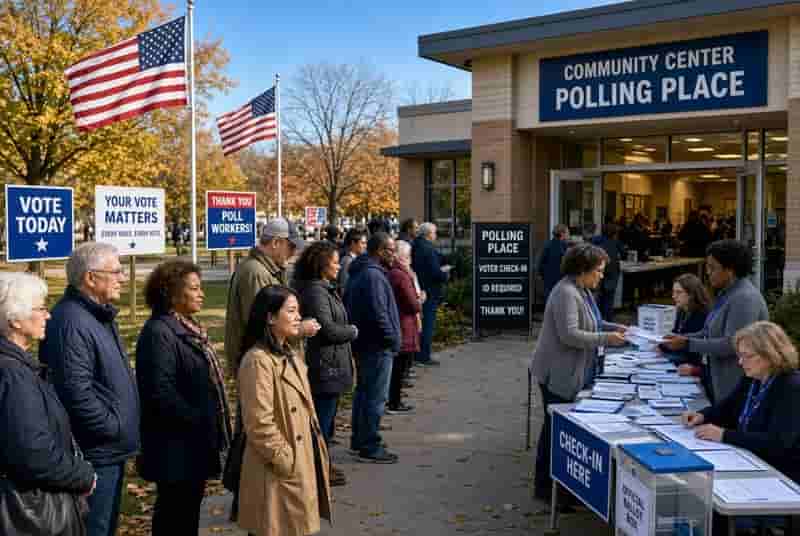
The midterm elections on November 3, 2026, will be very important because they will determine control of the U.S. Congress. Every two years, American voters shape the political landscape, but midterm contests held during a presidential term carry unique weight. On November 3, 2026, voters across all 50 states will cast ballots that decide whether the sitting administration retains a streamlined legislative pathway or faces a divided government capable of reshaping domestic legislation and international commitments.
With all 435 seats in the U.S. House of Representatives and more than a third of the U.S. Senate up for election, the outcome will redefine federal policy, legislative oversight, judicial confirmations, and international relations for years to come. Understanding why the 2026 midterm elections Congress battle matters requires evaluating the mechanics of congressional power, the key domestic battlegrounds driving the national discourse, and the far-reaching foreign policy consequences that impact international security and global trade. 2026 midterm elections Congress
The Strategic Importance of Controlling Congress
Congressional control dictates the flow of power in Washington. The political party holding the majority in the House of Representatives and the Senate sets the legislative calendar, appoints committee leadership, and decides which bills reach the floor for a vote.
When a single party controls both the executive branch and Congress, legislative priorities move swiftly. Conversely, a divided government introduces strategic negotiations, heightened oversight, compromise, or prolonged legislative gridlock. 2026 midterm elections Congress
Senate Power and Federal Appointments
The U.S. Senate holds exclusive authority over executive nominations, cabinet confirmations, and federal judicial appointments. A Senate majority aligned with the sitting administration ensures smooth confirmation pathways for judicial appointees and key administration officials.
If the opposition party secures the Senate majority on November 3, 2026, the administration will face intense scrutiny over judicial nominations and cabinet appointments, fundamentally changing executive decision-making. 2026 midterm elections Congress
House Power and the Purse
The House of Representatives holds the power to initiate revenue-raising measures and draft federal spending bills. Control of the House determines national budget priorities, tax policy direction, and legislative investigations into federal operations.
A shift in House leadership directly alters national fiscal strategies, regulatory frameworks, and statutory oversight over executive agencies. 2026 midterm elections Congress
The House of Representatives Battleground
Every seat in the U.S. House of Representatives—435 in total—is up for election on November 3, 2026. To secure a majority, a party must reach the 218-seat threshold.
Because many congressional districts are drawn to favor one party, the overall fight for House control comes down to a small percentage of competitive swing districts distributed across suburban, rural, and urban centers.
| Key Factor | Impact on House Races |
| Suburban Swing Districts | High voter turnout in suburban communities frequently determines seat shifts in key states. |
| Mid-Decade Redistricting | Adjusted congressional district boundaries alter partisan baselines across multiple states. |
| Economic Indicators | Inflation, employment figures, and regional economic stability influence independent voters. |
Key competitive districts in states like California, New York, Pennsylvania, and Texas serve as primary focal points. Slight shifts in voter sentiment across these battlegrounds can flip the legislative majority, demonstrating why every vote cast on November 3, 2026, holds substantial national weight. 2026 midterm elections Congress
The Senate Map and High-Stakes Contests
While the House is re-elected in its entirety every two years, Senate elections follow a staggered six-year cycle. In 2026, 33 regular Senate seats are contested, alongside special elections to fill unexpired terms.
The current partisan balance in the Senate is tightly held, meaning a net shift of just a few seats will flip control of the upper chamber.
Senate Majority Path (100 Total Seats):
├── Current Alignment: Tight Margin between Parties (53 Republicans / 47 Democrats)
├── Target threshold: 51 Seats for Majority (or 50 + Vice President tie-breaker)
└── 2026 Focus: High-tempo contests in key battleground states (Maine, Georgia, North Carolina, Ohio, Iowa)
Key Senate contests in states such as Maine, Ohio, Georgia, North Carolina, Iowa, and Alaska draw intense national attention. Senate campaigns require significant resource allocation, national fundraising, and clear policy messages on foreign relations, economic stability, and healthcare governance. 2026 midterm elections Congress
The Global Dimension: How Midterms Shape U.S. Foreign Policy
While midterm elections do not directly determine U.S. foreign policy—which remains primarily anchored in the executive branch under Article II of the Constitution—they exert substantial indirect influence. By altering the legislative majority, midterms can either strengthen or weaken the president’s international leverage, directly affecting international security, trade dynamics, and global alliances.
U.S. Foreign Policy Levers held by Congress:
├── Appropriations Power: Directs military, humanitarian, and economic aid funding
├── Trade & Tariff Oversight: Regulates international commerce and statutory duties
├── Statutory Sanctions: Mandates or restricts economic penalties on foreign entities
└── Advice and Consent: Senate oversight over treaties and diplomatic appointments
🇺🇦 Ukraine and European Defense Assistance
Military and economic aid to foreign allies relies directly on congressional appropriations.
-
Supportive Majority: When the presidential party controls Congress, foreign military financing and defense drawdown approvals move smoothly through legislative channels.
-
Opposition Majority: A shifting majority in either chamber subjects financial packages to tighter oversight, protracted debate, or demands for domestic spending compromises, forcing the administration to negotiate every assistance package.
🇷🇺 Strategy Toward Russia
Executive diplomacy guides day-to-day engagement with Moscow, but Congress sets statutory boundaries. Through defense spending authorization, mandatory statutory sanctions frameworks, and binding legislation on support for Ukraine, Congress limits executive flexibility and ensures lasting economic pressure on Russia. 2026 midterm elections Congress
🇮🇷 Policy Framework Regarding Iran
Congressional majorities exert decisive influence over regional posture in the Middle East through sanctions, military budgets, and statutory review mechanisms. A Congress favoring a harder line against Tehran often mandates stricter secondary sanctions targeting Iranian energy exports and financial networks, constraining executive diplomatic maneuvers.
🇪🇺 Trade Policies, Tariffs, and the European Union
Trade relations and industrial policy remain sensitive points for international partners, including the European Union and Italy. Although executive emergency powers allow rapid tariff adjustments, Congress holds underlying constitutional authority over foreign commerce. Escalations in tariff disputes or trade barriers directly impact European manufacturing, pharmaceutical, automotive, and agricultural exports to the United States. 2026 midterm elections Congress
🇳🇱 NATO Commitments and Transatlantic Stability
The United States remains the primary military backer of NATO, providing the bulk of alliance operational capabilities and funding. Congressional defense spending bills govern U.S. troop deployments in Europe and alliance infrastructure. A Congress committed to transatlantic cooperation reinforces alliance stability by embedding statutory protections against unilateral drawdown or force reductions.
🇨🇳 Strategic Competition with China
Unlike many domestic topics, policy regarding China enjoys broad bipartisan consensus in Washington. The midterms will not alter the fundamental trajectory of strategic competition in the Indo-Pacific; rather, they shape the tactical execution—such as specific semiconductor export restrictions, investment screening, supply chain security laws, and targeted tariffs. 2026 midterm elections Congress
Key Focal Points for International Observers After November 3, 2026
For international partners, European institutions, and Italian economic sectors, the post-election landscape following November 3, 2026, will turn on five critical indicators:
-
Foreign Aid Appropriations: The scale and timelines of foreign military financing, humanitarian support, and direct aid packages.
-
Sanctions and Executive Leeway: Legislative mandates regarding mandatory economic sanctions versus executive diplomatic discretion.
-
Tariff and Commercial Policy: The direction of U.S. trade legislation and its downstream consequences for EU exports.
-
Defense Allocations and Alliance Binding: Statutory commitments within annual defense bills safeguarding NATO infrastructure and European troop presence.
-
Supply Chain and Technology Legislation: Congressional action on semiconductor controls, technology transfers, and strategic supply chain independence.
Conclusion: Why November 3, 2026, Holds National and Global Weight
The midterm elections on November 3, 2026, will decide far more than internal committee assignments or party leadership in Washington. By determining control of the U.S. Congress, American voters will set the boundaries for domestic legislation, federal fiscal policy, and judicial appointments while signaling the direction of U.S. foreign policy across the globe.
Whether assessing domestic economic priorities or evaluating international stability from Europe to the Indo-Pacific, the outcome of the 2026 midterm elections Congress battle stands as the pivotal political event defining the future of American governance. 2026 midterm elections Congress
More…