Sustainable Automotive – Chemical Recycling: A Critical Solution to Plastic Waste—and Why Companies Must Act Now As packaging waste surges and sustainability demands intensify, chemical recycling offers a transformative opportunity—but time is running out for manufacturers to lead the charge 30-06-2025 - Archive
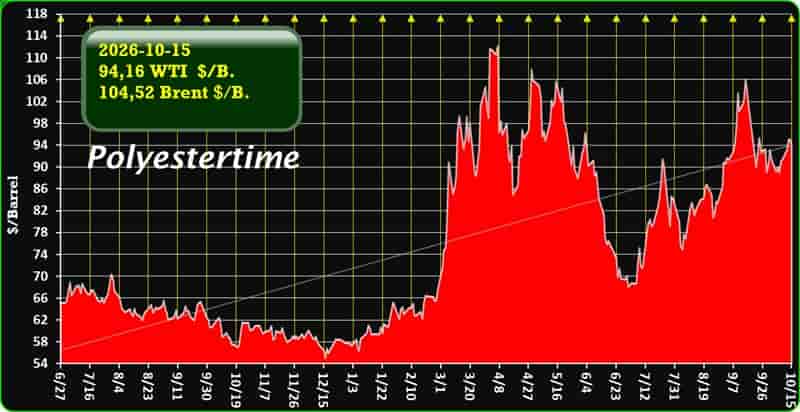
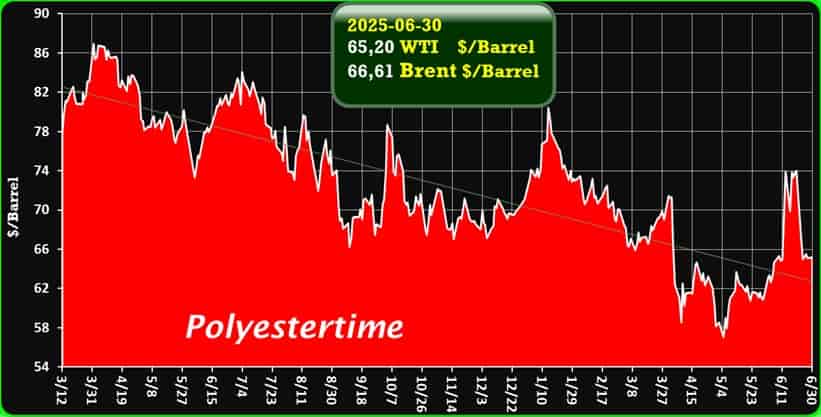
Crude Oil Prices Trend
? SK Chemicals and Durmont Team Up for Sustainable Automotive Carpets
In a powerful move toward greener automotive interiors, SK Chemicals, a South Korean leader in sustainable materials, has entered a strategic partnership with Durmont, one of Europe’s top automotive carpet manufacturers. The collaboration marks a pivotal step in the transition toward environmentally friendly car components by leveraging cutting-edge recycling technologies.
♻️ Closing the Loop with Chemically Recycled PET
At the heart of this partnership lies Skypet CR, a revolutionary chemically recycled PET (polyethylene terephthalate) resin developed by SK Chemicals. Unlike traditional mechanical recycling, which often degrades material quality, Skypet CR is created through a depolymerization process. This proprietary technology breaks down plastic waste into its fundamental molecular components, allowing for repeated recycling without quality loss. Sustainable Automotive
The result? A sustainable, high-performance resin that can match or exceed the characteristics of virgin materials—perfect for demanding automotive applications.
A European Leader Joins the Cause
Durmont, based in Austria and holding over 40% of the European automotive carpet market, will begin incorporating Skypet CR into its product line. The move will enable automakers across Europe to replace traditional materials like nylon with recycled alternatives—without compromising on durability or appearance.
This collaboration isn’t just a product upgrade. It’s a direct response to the growing demand in Europe for carbon-neutral and circular production systems. With EU regulations tightening around environmental impact, car manufacturers and suppliers alike are under increasing pressure to innovate sustainably. Sustainable Automotive
Korean Logistics Powering Global Supply Chains
Ensuring smooth and reliable delivery of Skypet CR to Durmont’s European facilities will be Paarang, a Korean logistics firm also involved in the deal. Paarang’s role includes supply chain management and coordination, ensuring that the recycled resin travels efficiently across continents while maintaining traceability and compliance with sustainability standards.
This three-way partnership reflects a new model of international cooperation—where material science, manufacturing, and logistics come together to solve global environmental challenges. Sustainable Automotive
Environmental Benefits: Beyond Just Recycling
The automotive industry is one of the most resource-intensive sectors, but innovations like Skypet CR offer real potential for change. By enabling the use of closed-loop recycling systems, SK Chemicals supports a dramatic reduction in plastic waste and lowers carbon emissions across the value chain.
“With rising attention on carbon neutrality and circular economies in Europe, our technology provides a sustainable yet high-performance solution for car interiors,” said Ahn Jae-hyun, CEO of SK Chemicals.
This partnership is a strong signal that the future of automotive design is being redefined—where eco-consciousness meets engineering excellence. Sustainable Automotive
What’s Next?
As SK Chemicals continues to expand its presence in the European market, expect more collaborations that aim to disrupt traditional material usage in favor of eco-friendly alternatives. Meanwhile, Durmont’s adoption of sustainable materials could become a blueprint for other OEMs and suppliers looking to align with EU green policies and consumer expectations.
For drivers and passengers, this evolution might be invisible. But beneath their feet, a quiet revolution is happening—one that promises less waste, cleaner production, and a greener planet.
Final Thoughts
This partnership is more than just a supply agreement. It’s a reflection of the future of industrial cooperation—where innovation, environmental responsibility, and global collaboration are no longer optional but essential. Sustainable Automotive
Stay tuned for more updates as SK Chemicals and its partners continue to reshape what sustainability looks like in the automotive world.
Electric Cars Revolutionized: The VarEVolt Battery That Charges in 18 Seconds
A Breakthrough in Electric Mobility
The electric vehicle (EV) market is on the cusp of a dramatic transformation, thanks to a groundbreaking innovation from British engineering firm RML Group. Introducing the VarEVolt battery — the world’s fastest-charging electric car battery capable of a full recharge in just 18 seconds. This revolutionary advance positions RML at the forefront of next-generation EV technology and offers a powerful alternative to traditional lithium-ion batteries.
What Makes the VarEVolt Battery So Special?
Unlike current EV batteries that take anywhere from 30 minutes to several hours to charge fully, the VarEVolt achieves a complete recharge in a record-breaking 18 seconds. This is made possible by an ultra-high charging rate of 200C — a metric that denotes the battery’s ability to charge 200 times faster than its own capacity. In practical terms, this makes it the highest power-density battery in the automotive sector, boasting a remarkable 6 kilowatts per kilogram (kW/kg). Sustainable Automotive
Such capability isn’t just theoretical. The VarEVolt has undergone rigorous real-world performance tests, including high-speed evaluations on the legendary Nürburgring circuit, confirming its suitability for high-performance and commercial EV applications alike.
Certified for Mass Production: A Turning Point
On June 2, 2025, RML Group reached a pivotal milestone. The company officially received Conformity of Production (CoP) certification for the VarEVolt battery system. This was granted following an extensive audit conducted by UCA, an independent quality assurance authority.
What does this mean? The certification confirms that RML’s production systems meet stringent quality control and safety requirements as laid out in UN ECE Regulation 100. With this approval, RML can now move forward with full-scale manufacturing and global supply for electric vehicle manufacturers seeking next-gen battery technology.
“This certification underscores our readiness to move beyond prototyping and niche volumes to supporting larger production contracts,” said James Arkell, Head of RML’s Powertrain Division. Sustainable Automotive
Why Power Density Matters
Power density — the amount of power a battery can deliver relative to its weight — is a crucial metric in the EV world. Higher power density means lighter batteries with better performance and more efficient use of space. At 6 kW/kg, the VarEVolt significantly surpasses conventional lithium-ion batteries, which typically offer around 1–2 kW/kg.
This enhanced density translates into major advantages:
- ⚡ Faster Acceleration: Higher discharge capabilities enable rapid power delivery to motors.
- ? Weight Reduction: Lighter battery packs improve vehicle efficiency and range.
- ?️ Performance Scalability: Suited for sports cars, racing, and commercial fleet electrification. Sustainable Automotive
Engineering Pedigree: Built by Experts
RML Group is no stranger to engineering excellence. The firm has already earned accolades for iconic builds such as the Short Wheel Base model and the road-going version of the Aston Martin Vulcan. With the VarEVolt, RML blends motorsport precision and scalable design to reshape the EV battery landscape.
The company’s deep experience in high-performance automotive systems ensures that the VarEVolt isn’t just fast — it’s also durable, safe, and ready for mass-market deployment.
Market Impact: Speed Meets Sustainability
One of the most significant barriers to EV adoption is charging time.
By reducing this to mere seconds, VarEVolt could dramatically reshape consumer expectations and infrastructure planning:
- ⏱️ Minimal Downtime: Drivers spend less time at charging stations.
- ? Grid Efficiency: Faster charge times mean lower peak loads per vehicle.
- ? Environmental Gains: Lower energy losses and reduced idle time improve overall efficiency. Sustainable Automotive
This makes VarEVolt especially appealing for ride-share fleets, logistics operators, and high-mileage commuters.
Regulatory Compliance and Safety
Gaining CoP under UN ECE Regulation 100 isn’t just a checkbox — it’s a demonstration of safety and consistency. This regulation covers electrical safety, thermal management, and manufacturing process control. RML’s successful audit confirms the VarEVolt can be mass-produced under strict conditions with reliable performance across all units.
In an industry where battery recalls and thermal runaway incidents are closely scrutinized, this certification is vital to building consumer and OEM trust. Sustainable Automotive
What’s Next for VarEVolt?
Now that VarEVolt has the green light, RML is gearing up to scale production for automotive partners worldwide. The focus will be on integrating the technology across various vehicle classes — from urban commuter EVs to long-range commercial vehicles and high-performance sports cars.
Meanwhile, RML is exploring strategic partnerships with EV manufacturers, charging infrastructure companies, and mobility-as-a-service providers to roll out this technology globally.
The Broader Industry Implications
The introduction of ultrafast-charging batteries like VarEVolt comes at a time when the EV sector is pushing toward more sustainable and user-friendly solutions. This shift reflects consumer demands for:
- ? Longer lifespan batteries
- ? Faster energy turnaround Sustainable Automotive
- ? Convenience on par with gasoline vehicles
If adopted widely, technologies like VarEVolt could reduce the need for massive battery packs, lower EV production costs, and simplify charging infrastructure requirements.
Final Thoughts: A New Era for EVs
The VarEVolt battery is more than just a technical feat — it’s a signal of what’s coming next. With mass production approved, the clock has started ticking on the old paradigm of hours-long EV charging. RML Group is showing that the future of mobility isn’t just electric — it’s instantaneous.
As the automotive world watches closely, one thing is clear: the EV landscape will never be the same again. Sustainable Automotive
?? India Slaps Anti-Dumping Duties on Plastic Machinery from China and Taiwan
Why India Is Taking Action on Imported Plastic Machinery
In a bold move to protect domestic manufacturing, the Indian government has officially imposed anti-dumping duties on plastic processing machinery imported from China and Taiwan. These duties, ranging from 27% to 63%, aim to level the playing field for Indian manufacturers struggling against unfairly priced imports.
The action stems from a comprehensive investigation led by the Directorate General of Trade Remedies (DGTR). The findings revealed that certain foreign manufacturers were “dumping” their products—selling machinery at prices significantly below market value in their home countries—causing significant harm to Indian producers. Sustainable Automotive
The Machinery Involved: What Products Are Affected?
The machinery subject to duties includes a wide range of equipment used in plastic production—especially injection moulding machines and related gear. These fall under the customs tariff codes 8477 10 00 and 8477 90 00, as defined in the Customs Tariff Act, 1975.
These machines are critical to industries ranging from packaging and consumer goods to automotive and medical devices. By targeting these specific HS codes, the government ensures that the policy addresses the most commonly dumped machinery types.
Key Findings from DGTR’s Investigation
The DGTR’s final report, published on March 27, 2025, identified three conclusive findings:
- Plastic processing machines from China and Taiwan were being sold at unfairly low prices in India. Sustainable Automotive
- This underpricing led to measurable material injury to India’s domestic industry.
- There was a clear causal link between dumped imports and the injury suffered by Indian manufacturers.
The findings triggered enforcement measures under India’s trade protection framework, culminating in duties to neutralize the damage.
Understanding Dumping and Its Impacts
In trade terminology, “dumping” refers to the practice of exporting goods at prices lower than their normal value, often below production cost. It distorts market competition and undermines local businesses that can’t match such unsustainable pricing.
Indian plastic machinery producers argued that this practice led to declining sales volumes, shrinking profit margins, and a loss of market share—all while foreign manufacturers continued expanding their footprint. Sustainable Automotive
Timeline of the Anti-Dumping Measures
- March 27, 2025: DGTR final report submitted.
- June 26, 2025: Department of Revenue issued formal notification of duties.
- June 28, 2025: Duties take effect across applicable imports.
These duties are not permanent but can be reviewed and extended depending on market dynamics and the continued threat of dumping.
The New Tariff Rates: Who Is Paying What?
The Department of Revenue assigned specific duty percentages to companies based on the extent of dumping identified. The rates apply to the CIF value (Cost, Insurance, Freight) of imported goods:
- Dongguan Fu Chun Shin Plastic Machinery (China): 48%
- Fu Chun Shin (Ningbo) Machinery (China): 48%
- Chen Hsong Machinery Group (China/Taiwan): 27% Sustainable Automotive
- Yizumi Precision Molding (China): 35%
- Husky Injection Molding (Shanghai): 48%
- All other unnamed producers from China and Taiwan: 63%
- Exporters from other countries shipping from China: 63%
These structured rates discourage companies from attempting to bypass duties by routing exports through third-party countries or subsidiaries.
The Domestic Industry’s Plea for Protection
Indian manufacturers had long been lobbying for relief, arguing that they operate under fairer cost structures and stricter regulatory constraints. They claimed it was impossible to compete with heavily subsidized or volume-discounted Chinese and Taiwanese products.
The All India Plastics Manufacturers’ Association (AIPMA) hailed the decision as a much-needed shield against market erosion. “This is a positive step toward restoring balance and encouraging local innovation,” said an AIPMA spokesperson. Sustainable Automotive
Global Trade Reactions
While India’s move is within WTO rules, the decision may strain trade relations with China and Taiwan. Both countries could appeal to dispute settlement mechanisms or retaliate with duties of their own.
For now, however, India’s action reflects a global trend: many countries are growing wary of overreliance on imports from specific nations, especially when it threatens domestic capability and employment.
What This Means for Importers and Distributors
Importers of plastic machinery must now factor in significantly higher costs when sourcing from the affected regions. Distributors may also face pricing adjustments, delivery delays, or a strategic shift toward suppliers in regions not covered by the duties.
Some Indian companies may turn to European, Japanese, or Korean manufacturers—albeit at higher base prices but without the punitive tariffs. Sustainable Automotive
Long-Term Outlook for India’s Plastic Industry
The government’s intervention could serve as a catalyst for local industry growth. Protected from dumping, Indian firms may find renewed motivation to invest in R&D, upgrade machinery, and enhance product quality.
Over time, this could reduce dependence on imports and create a more resilient manufacturing ecosystem.
Key Takeaways
- India has imposed anti-dumping duties on plastic machinery from China and Taiwan.
- Tariffs range from 27% to 63%, depending on the manufacturer.
- The goal is to protect Indian manufacturers from unfair trade practices.
- The duties apply to injection moulding and related plastic processing machinery.
- Importers must re-evaluate sourcing strategies due to higher landed costs.
♻️ Chemical Recycling: A Critical Solution to Plastic Waste—and Why Companies Must Act Now
As packaging waste surges and sustainability demands intensify, chemical recycling offers a transformative opportunity—but time is running out for manufacturers to lead the charge. Sustainable Automotive
The Plastic Waste Crisis: A Growing Global Threat
Plastic waste is piling up at unprecedented rates, overwhelming existing recycling infrastructures. Traditional methods like mechanical recycling can no longer keep pace, and much of the plastic we discard ends up in landfills or the ocean. The result? A worsening environmental emergency and growing public concern.
Enter chemical recycling—also known as advanced recycling. This innovative process offers a scalable, sustainable path to convert plastic waste into reusable raw materials, giving plastics a second life while supporting the circular economy. Yet despite its promise, adoption remains slow. Sustainable Automotive
What Is Chemical Recycling—and How Does It Differ from Mechanical Recycling?
Chemical recycling breaks plastic down into its molecular building blocks using advanced methods such as:
- ? Pyrolysis – heating plastic in the absence of oxygen to produce oils and gases
- ⚡ Gasification – converting waste into synthesis gas (syngas) for fuel or chemical production
- ? Depolymerization – breaking polymers back into monomers to create new plastic
The result is a feedstock that rivals virgin materials in quality—capable of being remade into high-performance packaging, textiles, or components. Sustainable Automotive
In contrast, mechanical recycling is a physical process that includes shredding, washing, melting, and remolding plastics. While effective for certain clean, single-type plastics, it struggles with:
- ⚠️ Contamination (e.g., food residue, adhesives)
- ? Loss of material quality with each cycle
- ? Inability to process complex plastic types like multilayer films
Chemical recycling bypasses these limitations, making it a superior solution for the increasingly complex waste stream of modern packaging.
The Types of Plastic Chemical Recycling Can Handle
One of chemical recycling’s greatest strengths is its versatility. It can process:
- ? Multi-layer packaging films Sustainable Automotive
- ? Colored and opaque plastics
- ? Food-contaminated or adhesive-laden materials
- ? Plastics that have already been through mechanical recycling
These materials are typically unsuitable for traditional methods and often end up incinerated or landfilled. Chemical recycling gives them renewed value as feedstock for new products—reducing demand for fossil-based resources in the process.
Rising Demand and Regulatory Pressure Are Driving Adoption
Governments around the world are tightening rules to reduce plastic pollution and promote sustainability. In both the UK and EU, regulations now mandate recycled content quotas for packaging, alongside taxes on virgin plastic use. The message is clear: the future is circular. Sustainable Automotive
Meanwhile, consumers are becoming more eco-conscious. Brands that fail to demonstrate responsible practices are at risk of losing public trust and market share. Today’s buyers—especially Gen Z and Millennials—are demanding transparency and accountability.
Investors are also watching closely. Environmental, Social, and Governance (ESG) performance has become a critical metric in decision-making. Companies embracing circular economy solutions, including chemical recycling, are viewed more favorably in capital markets. Those that fall behind may find funding opportunities scarce.
Chemical Recycling Is a Strategic Advantage for Plastics Manufacturers
As regulatory frameworks and consumer expectations evolve, chemical recycling is emerging as a strategic differentiator. Early adopters are:
- ✅ Securing lucrative sustainability partnerships
- ✅ Increasing their brand equity and visibility Sustainable Automotive
- ✅ Accessing green finance and ESG-aligned investments
- ✅ Meeting compliance requirements ahead of schedule
In short, chemical recycling is no longer a “nice-to-have.” It’s becoming a core business requirement for any company wishing to remain competitive in a sustainability-focused market.
Challenges in Scaling Chemical Recycling
While the potential is immense, the path to scale is not without hurdles. Key challenges include:
High Capital Costs
Establishing a chemical recycling facility requires substantial upfront investment. Technologies like pyrolysis and gasification are capital-intensive and still being optimized for industrial efficiency. Sustainable Automotive
Energy Use and Emissions
Some processes raise environmental concerns due to energy demands and potential emissions. However, continuous innovation is improving performance and reducing environmental impact.
Regulatory Uncertainty
In some regions, recycled outputs from chemical methods are not officially classified as “recycled content.” This limits their value under existing mandates. But this is changing—the European Commission and UK authorities are actively revising policies to recognize and encourage chemical recycling. Sustainable Automotive
Supply Chain Integration
Success requires collaboration across industries. Fortunately, this is happening. Joint ventures between waste management companies, plastics producers, and tech startups are making shared investment and infrastructure development feasible.
Industry Collaboration: The Key to Rapid Expansion
Partnerships are fueling the future of chemical recycling. These collaborations help to:
- ? Integrate recycling into existing manufacturing systems
- ? Share financial and operational risks
- ? Ensure a steady supply of feedstock and output demand Sustainable Automotive
As more facilities are built and processes improve, economies of scale will kick in—driving costs down and increasing adoption rates. The market is heading toward a tipping point, and the companies prepared to act now will lead the transition.
Why Now Is the Moment to Invest
The opportunity window is wide—but closing. First movers are already staking their claim in the sustainable plastics market. They’re earning trust, capturing market share, and establishing invaluable supply relationships.
Those who wait may find themselves locked out of future opportunities, facing regulatory penalties, and scrambling to catch up with more agile competitors. Inaction is increasingly risky—and expensive.
Conclusion: The Cost of Inaction Will Only Grow
Packaging waste is a global crisis—and chemical recycling offers one of the few scalable, sustainable solutions.
As governments legislate, consumers demand change, and investors pivot to ESG-aligned ventures, companies must adapt or face obsolescence. Sustainable Automotive
By investing in chemical recycling today, plastics manufacturers can:
- ? Enhance long-term operational resilience
- ? Contribute to a healthier planet
- ? Build future-proof business models
- ? Stay ahead of regulatory and market shifts
The future of plastics is circular—and chemical recycling is a gateway to that future. The time to act is now.