Shocking Success: How PET Bottle Recycling Germany Reached 98.1 Percent
Shocking Success: How PET Bottle Recycling Germany Reached 98.1 Percent
The World-Class Circular Economy Milestone
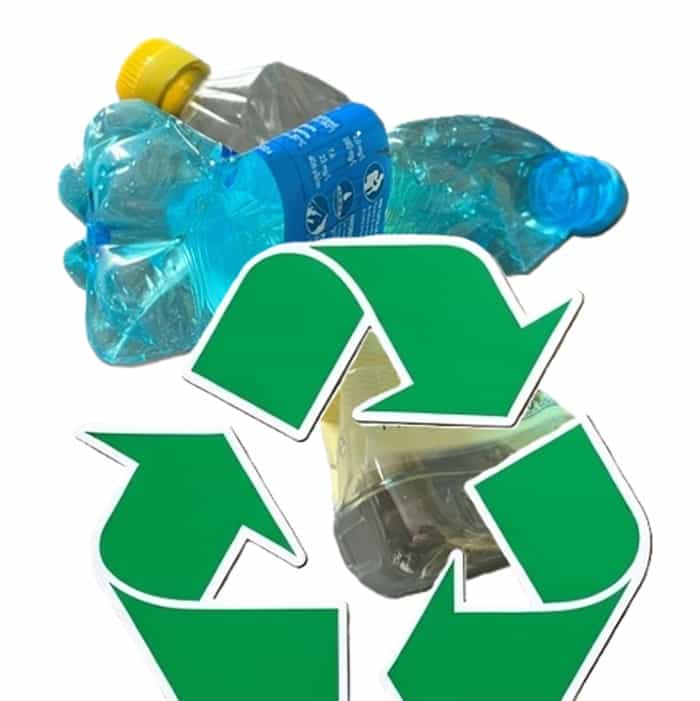
In an era where plastic waste management dominates global environmental policy discussions, Germany’s single-use beverage packaging ecosystem has delivered another major sustainability benchmark. Official empirical data compiled by the Gesellschaft für Verpackungsmarktforschung (GVM) and presented by Forum PET confirms that 98.1 percent of all PET beverage bottles consumed across Germany in 2025 were successfully directed into recycling streams.
Furthermore, recycled PET (rPET) accounted for 58.3 percent of the raw material utilized in domestic bottle and preform manufacturing. This achievement more than doubles the 25 percent minimum recycled content statutory floor established under Section 30a of the German Packaging Act (VerpackG), demonstrating that industrial supply chains can move well beyond minimum legal requirements when supported by well-designed closed-loop infrastructure.
This long-term analytical tracking model, updated biennially since 2013, provides twelve years of directly comparable material flow metrics. It clearly illustrates how structural collection networks, advanced mechanical reprocessing, and steady regulatory pressure can drive high-yield plastic recovery. PET bottle recycling Germany
Key Drivers Behind the 98.1 Percent Success Rate
The exceptional performance of the German recovery model relies on interconnected system mechanics designed to eliminate material leakage:
-
High-Capture Deposit Systems: Germany’s deposit return networks—managed primarily through Deutsche Pfandsystem GmbH (DPG) and PETCYCLE—captured 96.4 percent of deposit-bearing single-use PET bottles.
-
Aggressive Lightweighting and Efficiency: Total domestic PET bottle consumption fell to 363.3 thousand tonnes (roughly 16 billion bottles), representing an 11 percent weight reduction compared to 2023. This drop reflects shorter bottle neck finishes, thinner container walls, and the mandatory introduction of tethered caps.
-
Expanding Bottle-to-Bottle Reprocessing: Over 56.6 percent of recovered domestic material was processed back into food-grade regranulate for new beverage bottles, moving past secondary downcycling routes like synthetic fibers. PET bottle recycling Germany
Analyzing Material Flows and Deposit Efficiency
During 2025, total pure PET collected across all domestic routes reached 359.0 thousand tonnes, equivalent to an overall 98.8 percent return rate. The collection channels break down as follows:
-
335.1 thousand tonnes through deposit reverse vending and manual return points.
-
15.1 thousand tonnes of refillable (Mehrweg) PET bottles returned directly to beverage producers.
-
7.6 thousand tonnes recovered via municipal dual system packaging streams (“Yellow Bag” collection).
-
1.2 thousand tonnes gathered through retailer take-back systems for damaged barcodes.
Only 4.3 thousand tonnes—roughly 1.2 percent of consumed PET—escaped dedicated collection networks, with the vast majority remaining within municipal mixed household waste rather than environmental litter.
An essential methodological distinction highlights the distinction between net PET weight and gross packaging weight. Empirical sampling demonstrates that a returned beverage bottle weighs 1.6 to 2.7 times its pure PET resin content due to residual liquids, closures, and labels. For example, in a standard 0.5-liter bottle weighing 35.4 grams, pure PET accounts for only 22 grams, while caps (1.8g), labels (0.4g), and liquid residues make up the remaining mass. PET bottle recycling Germany
Economic Hurdles and Global Market Conditions
Despite historic return yields, maintaining closed-loop circularity faces market constraints. Recent international market reports from late 2026 show that while post-consumer polymer markets undergo price swings, virgin resin prices remain competitive. This price gap creates severe economic pressure for reprocessors and beverage manufacturers attempting to balance compliance costs against raw material expenditures. PET bottle recycling Germany
+-------------------------------------------------------+
|  GERMAN PET MATERIAL FLOW BREAKDOWN (2025 DATA)       |
+-------------------------------------------------------+
| Total PET Consumed:         363.3 kt                  |
| Total PET Collected:        359.0 kt (98.8% Return)   |
| Bottle-to-Bottle Share:     56.6% (210.1 kt)          |
| Films & Packaging Trays:    20.8% (77.3 kt)           |
| Textile Fibers:             6.4%  (23.7 kt)           |
| Other Applications:         16.2% (60.1 kt)           |
+-------------------------------------------------------+
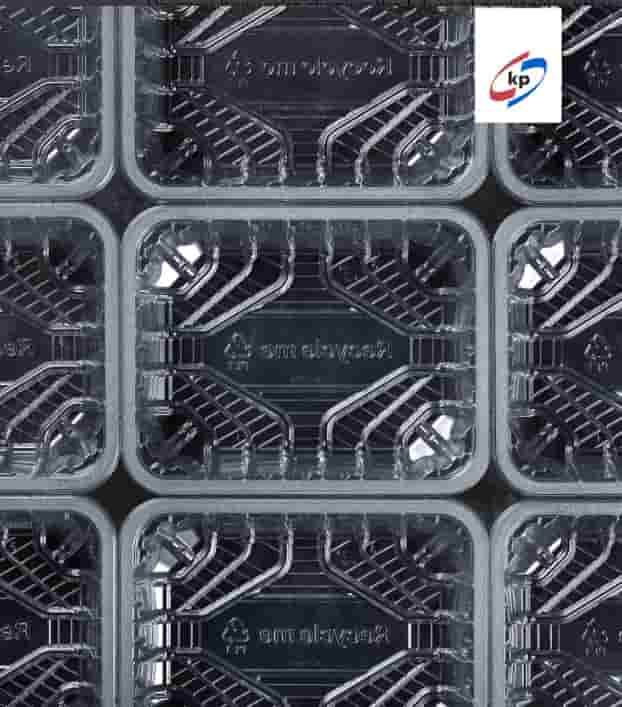
Because domestic processing capacity exceeds local collection volumes, German recyclers imported a net 25 thousand tonnes of post-consumer bottles to satisfy plant capacities. Out of 371.2 thousand tonnes of final reprocessed output, 210.1 thousand tonnes returned directly into new bottle production. However, rising feedstock costs and strong demand from secondary sectors—such as thermoformed PET trays—continue to test the economic viability of high-rPET bottle formulations. PET bottle recycling Germany
Twelve Years of Empirical Progress
The longitudinal data from 2013 through 2025 demonstrates a sustained industrial shift toward resource conservation:
-
Primary Recycling Rate: Increased from 93.6 percent to 98.1 percent (+4.5 percentage points).
-
Net Recycling Rate (Post-Loss): Advanced from 91.2 percent to 95.5 percent (+4.3 percentage points).
-
Bottle-to-Bottle Circularity: Grew from 32.1 percent to 56.6 percent (+24.5 percentage points).
-
Recycled Content in Bottling: Expanded from 24.2 percent to 58.3 percent (+34.1 percentage points).
Total bottle-to-bottle volume nearly doubled over this twelve-year window—climbing from 109 thousand tonnes to 210 thousand tonnes—even as overall PET resin consumption dropped from 470 thousand tonnes to 363 thousand tonnes due to source reduction and lightweighting. PET bottle recycling Germany
Global Policy Lessons for Deposit Systems
As European Union member states implement the overarching Packaging and Packaging Waste Regulation (PPWR), Germany’s operational maturity offers key insights for global policy execution:
-
Clean Feedstocks Determine Quality: Separate deposit collection prevents contamination from general household waste, preserving high-grade resin suitable for food-contact applications.
-
Collection Does Not Equal Closed Loops: High return rates do not guarantee 100 percent bottle-to-bottle recycling. Technical processing limits and cross-sector resin demand require clear market incentives for packaging producers. PET bottle recycling Germany
-
Data Uniformity Is Critical: Standardized accounting must distinguish between net polymer weights and overall returned container weights to allow accurate cross-border performance benchmarks.
Key Takeaway
The German PET recycling model demonstrates that high deposit return rates combined with voluntary corporate initiatives and statutory minimums can successfully decouple beverage packaging from virgin fossil fuels. Maintaining these achievements requires long-term alignment between sorting technology, market demand, and raw material economics. PET bottle recycling Germany
PET Recycling Market Crisis Exposes Gap Between Sustainability Goals and Economic Reality
Source:
GVM – Aufkommen und Verwertung von PET-Getränkeflaschen in Deutschland 2025 (final report, Mainz, August 2026); Forum PET