Plastics Washing – Powering Progress: The Evolving Landscape of EVs, Semiconductors & Battery Chemicals India’s electric vehicle sector is accelerating, supported by semiconductors and battery innovation—but challenges remain in infrastructure, affordability, and supply chains 20-08-2025
Plastics Washing
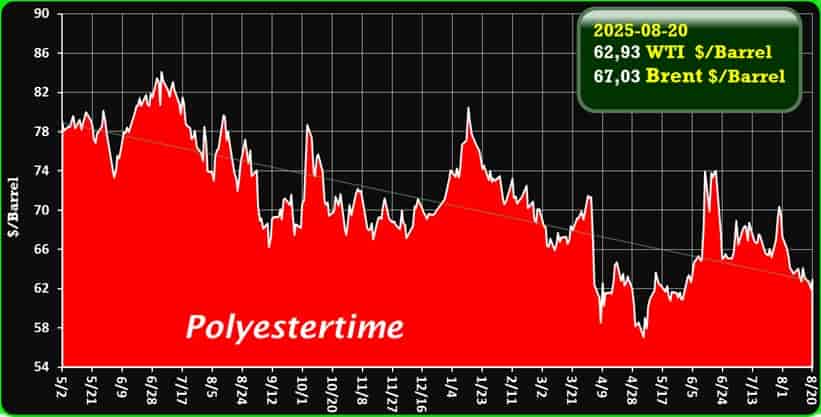
Crude Oil Prices Trend
ProAmpac Launches Recycle-Ready Polyolefin-Based Chunk Cheese Packaging
ProAmpac, a leader in sustainable packaging innovation, has officially launched its ProActive Recycle-Ready polyolefin-based packaging platform. Specifically engineered for high-speed chunk cheese applications, this breakthrough technology offers both sustainability and high performance, meeting the demanding needs of the dairy industry.
Key Takeaway: ProAmpac’s Recycle-Ready cheese packaging combines sustainability, product protection, and high-speed manufacturing compatibility—setting new benchmarks in dairy packaging. Plastics Washing
Why This Launch Matters
The dairy industry is under increasing pressure to balance sustainability with product safety and shelf appeal. Cheese packaging must deliver durability, clarity, and efficiency—all while meeting recyclability standards. ProAmpac’s new platform provides exactly that: a solution that does not force brands to choose between performance and environmental responsibility.
Clarity and Durability in Every Package
One of the standout features of ProAmpac’s Recycle-Ready films is their excellent visual clarity. On retail shelves, consumer perception is heavily influenced by how products look. Packaging that keeps cheese visible and appealing gives brands a competitive edge.
Additionally, these films offer robust puncture resistance. Plastics Washing
From the packaging line to transportation and retail display, cheese products encounter tough conditions. ProAmpac’s design ensures packaging integrity under pressure, preventing damage and spoilage.
Engineered for High-Speed Filling
Cheese production is a high-volume, high-speed process. ProAmpac’s films are designed to withstand the demanding environment of fast-paced filling lines. Benefits include:
- Low Seal Initiation Temperature: Ensures faster and more reliable sealing at lower temperatures.
- Seal-Through Contaminants: Advanced sealing technology prevents leaks even when minor product residues are present.
- Temperature Resistance: Maintains durability and seal integrity during rapid production cycles. Plastics Washing
These advantages help manufacturers minimize downtime, reduce waste, and ensure consistent product protection.
Tested for Real-World Distribution
Beyond production, packaging must survive the journey from plant to retail shelf. According to Ebrahim Jalali Dil, Global Senior Innovation leader at ProAmpac, these specialized films have passed rigorous transportation testing, proving their reliability in real-world supply chains. Their superior abrasion resistance further enhances performance during shipping and handling.
Tailored Barrier Options for Freshness Plastics Washing
Different cheeses have different moisture levels and preservation needs. ProAmpac addresses this by offering a range of barrier options tailored to specific cheese types. Whether a cheese requires higher moisture retention or extended shelf life, this platform adapts, providing flexibility for brands while maintaining freshness.
Designed with Recycling in Mind
The Recycle-Ready films are engineered for compatibility with existing polyethylene (PE) recycling streams. They can also incorporate post-consumer recycled (PCR) content, giving dairy brands an opportunity to close the loop and contribute to a circular packaging economy.
For cheese producers committed to sustainability, this platform provides a clear path toward reducing environmental impact without sacrificing quality or efficiency.
Meeting Brand Sustainability Goals
Today’s consumers demand more than great-tasting cheese—they want assurance that the products they buy are packaged responsibly. Plastics Washing
ProAmpac empowers brands to align with environmental targets while keeping operational efficiency intact. This innovation reflects the company’s long-standing commitment to responsible packaging solutions.
Where to Learn More
ProAmpac will showcase its sustainable packaging technologies at PACK EXPO, September 29–October 1, 2025, booth SL-15042. Attendees can explore first-hand how these Recycle-Ready solutions perform in real applications.
For additional information, visit ProAmpac.com or reach out via email at Marketing@ProAmpac.com.
Conclusion: A New Standard in Cheese Packaging Plastics Washing
ProAmpac’s Recycle-Ready polyolefin-based platform is more than just packaging—it represents a shift toward smarter, greener, and more resilient solutions for the dairy industry. By combining sustainability, durability, clarity, and high-speed manufacturing performance, this innovation gives cheese brands the tools they need to thrive in a competitive and eco-conscious marketplace.
As global demand for sustainable packaging grows, ProAmpac continues to lead the way, setting benchmarks that others in the industry will follow.
Zimmer America Recycling Solutions Revolutionizes Plastics Washing with ACES BLUETREAT ZLD System Plastics Washing
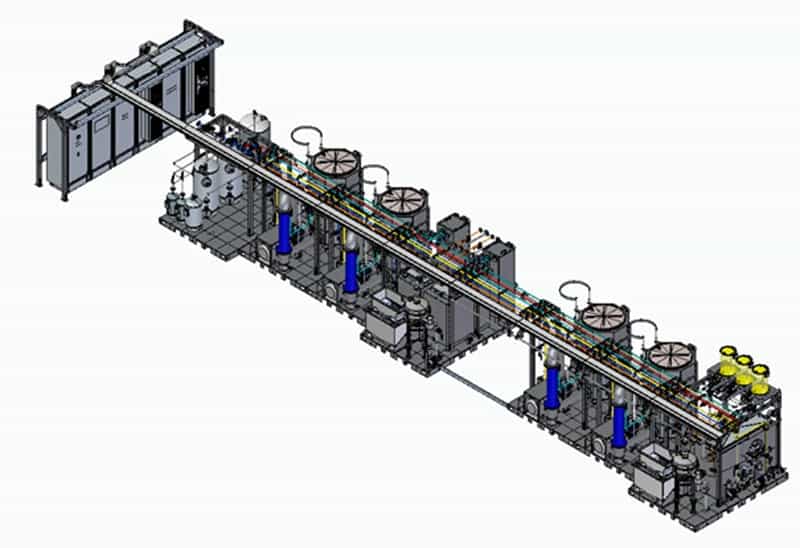
Zimmer America Recycling Solutions has unveiled the ACES BLUETREAT Zero Liquid Discharge (ZLD) Wastewater Recycling System, a groundbreaking innovation in plastics washing for recycling. Supplied by Germany-based ACES GmbH, this technology establishes a new industry benchmark for water conservation and sustainable recycling operations.
Why This Technology Matters
Plastic waste management is one of the defining environmental challenges of our time. Traditional plastics washing systems consume enormous amounts of fresh water and produce equally large volumes of wastewater. The BLUETREAT ZLD system changes this equation entirely by:
- Reducing fresh water consumption by millions of gallons annually.
- Eliminating wastewater discharge completely. Plastics Washing
- Improving cleaning performance through advanced multi-stage filtration.
- Minimizing environmental impact while lowering operational costs.
Quick Fact: The BLUETREAT ZLD system saves approximately 5.5 million gallons of water per year for a standard 2.5 ton/hour wash line.
How the BLUETREAT ZLD System Works
The innovation lies in its closed-loop water circulation. Unlike conventional systems that discharge wastewater into sewage, this solution continuously reuses and cleans the same water through multiple stages:
1. Dual-Loop Process
Two separate water loops ensure efficient cleaning:
- Loop One: Handles grinding and initial washing. Plastics Washing
- Loop Two: Focuses on post-washing for ultra-clean flakes.
2. Two-Phase Decanter
The heart of the system, the two-phase decanter, separates solids from liquids. This not only reclaims clean water but also captures microplastics, labels, adhesives, and other solid residues for responsible disposal.
3. Advanced Microfiltration
Before water reenters the washing cycle, it undergoes microfiltration to remove fine particles. The result is consistently clean water that enhances the effectiveness of plastics washing. Plastics Washing
Water Usage Comparison: Traditional vs. ZLD
| Operation | Annual Fresh Water Consumption | Annual Wastewater Discharge |
|---|---|---|
| 2.5 ton/hour wash line without ZLD | ≈ 5.8 million gallons | ≈ 5.8 million gallons |
| 2.5 ton/hour wash line with ZLD | ≈ 301,000 gallons (make-up water only) | Zero wastewater |
Fresh Water Savings: 5,500,000 gallons annually — equal to the yearly water use of over 50 U.S. households.
Environmental and Economic Benefits
The BLUETREAT ZLD system delivers a powerful dual benefit: protecting the environment and reducing costs for recyclers. Let’s break it down:
1. Environmental Impact Plastics Washing
- Water Conservation: Reduces reliance on municipal water systems.
- Pollution Prevention: Zero wastewater discharge means no harmful effluents reach rivers, lakes, or oceans.
- Microplastic Capture: Prevents tiny plastic particles from entering ecosystems.
2. Economic Savings
Water is not only an environmental issue but also a significant cost factor in recycling operations. By cutting consumption by over 5 million gallons annually, facilities save up to $100,000 per year, depending on local water and sewer rates. Plastics Washing
Why This Matters for the Recycling Industry
Recycling facilities are under growing pressure from regulators, environmental groups, and local communities to reduce water usage and pollution. The ZLD system positions recyclers as leaders in environmental compliance and sustainability. With increasing demand for recycled plastics, these improvements strengthen both reputation and profitability.
Key Features at a Glance
- Zero wastewater discharge through closed-loop technology.
- Annual fresh water savings exceeding 5.5 million gallons.
- Advanced decanter removes solids, microplastics, labels, and glue residues.
- Superior flake cleaning with dual-loop circulation.
- Potential cost savings of $100,000+ per year. Plastics Washing
Technical and Operational Advantages
Beyond environmental and financial benefits, the BLUETREAT system offers practical operational advantages:
- Consistency: Cleaner, high-quality flakes that improve downstream processing.
- Scalability: Adaptable for both mid-size and large recycling facilities.
- Reliability: German-engineered technology ensures durability and low maintenance.
Conclusion: A Sustainable Future for Plastics Recycling
The ACES BLUETREAT ZLD Wastewater Recycling System, deployed by Zimmer America, represents a major leap forward in plastics recycling. By eliminating wastewater discharge and slashing water usage by over 5 million gallons per year, it delivers both environmental and financial wins. In a world where water scarcity and pollution are critical concerns, this technology is more than a recycling upgrade—it’s a sustainability imperative. Plastics Washing
Recycling facilities that adopt ZLD systems not only future-proof their operations but also align themselves with global sustainability goals. With increasing demand for recycled plastics, this shift ensures that businesses can scale responsibly while protecting natural resources.
Zimmer America Recycling Solutions and ACES GmbH are redefining the future of plastics recycling — one gallon of water at a time. Plastics Washing
Brazil Will Not Reciprocate US Tariffs: Lula’s Strategy Explained
Date: August 20, 2025 | Markets: Agriculture, Biofuels, Chemicals, Crude Oil, Fertilizers, Metals, Oil Products, Petrochemicals
Introduction
Brazil’s President Luiz Inácio Lula da Silva has announced that the country will not impose reciprocal tariffs on US goods—a strategic decision that marks a shift from earlier threats to respond to Washington’s new 50% tariffs on Brazilian products.
Instead of escalating the trade dispute, Lula is opting for negotiation, credit support for small businesses, and multilateral diplomacy. The move is being closely watched by industries, investors, and global markets given the scale of Brazil’s trade with the United States. Plastics Washing
Lula’s Position: Negotiation Over Retaliation
Speaking after signing a decree to provide new credit lines for small businesses impacted by the tariffs, Lula explained:
“We are negotiators. We do not want, at first, to do anything that would worsen our relationship with the US.”
While Lula had previously suggested reciprocal tariffs as an option, his government is instead invoking a new economic reciprocity law designed to prioritize negotiation before resorting to countermeasures. This aligns with Brazil’s longer-term trade strategy of avoiding escalations that could harm its global market position. Plastics Washing
The Scope of US Tariffs
The US tariffs, effective since August 6, 2025, impact more than 35% of Brazilian exports to the US, covering industries from agriculture to petrochemicals. However, these exports represent only around 4% of Brazil’s total exports.
In addition, over 700 Brazilian products remain subject to 10% charges first imposed in April 2025. For many exporters, this creates uncertainty in pricing, competitiveness, and trade planning.
Brazil’s Trade Balance with the US
Brazil has long faced a trade deficit with the US. Over the past 15 years, the cumulative deficit exceeded $400 billion. In the first half of 2025 alone, the US enjoyed a trade surplus of $2.3 billion with Brazil—a more than seven-fold increase compared to the previous year. Plastics Washing
The US is currently Brazil’s second-largest trading partner after China, receiving more than $40 billion worth of Brazilian goods in 2024, including agricultural commodities, metals, and fuels.
Industry Voices Call for Caution
Lula’s decision mirrors the sentiment of key industry groups. The Confederation of National Industry (CNI) publicly urged restraint, stating that while there is “no technical or economic justification” for the US tariff hike, retaliation could create deeper risks.
A recent survey conducted by the American Chamber of Commerce (Amcham) revealed that 86% of Brazilian companies believe counter-tariffs would worsen bilateral tensions and shrink opportunities for negotiation. Plastics Washing
WTO Challenge and Global Diplomacy
Brazil intends to challenge the US tariffs at the World Trade Organization (WTO), accusing Washington of violating fundamental trade commitments, including the most-favored-nation principle and agreed tariff ceilings.
Simultaneously, Lula is expanding Brazil’s trade diplomacy. The government is in discussions with other BRICS nations—Brazil, Russia, India, China, and South Africa—to deepen trade relations. Collectively, BRICS accounts for nearly 40% of the global economy. Plastics Washing
New Opportunities Beyond the US
Lula emphasized a shift in focus: “Instead of crying over losses, we will seek winning somewhere else. The world is big and eager to negotiate with Brazil.”
In early 2026, Brazil plans to send a delegation of at least 500 business representatives to India to explore partnerships in trade, energy, critical minerals, and technology. This diversification effort is central to reducing dependence on US markets and building resilient global supply chains.
Conclusion
Brazil’s choice to avoid retaliatory tariffs against the US reflects a pragmatic blend of diplomacy, economic strategy, and global repositioning. While industries brace for short-term impacts, Lula’s government is betting on negotiation, WTO challenges, and stronger ties with emerging economies. Plastics Washing
For global trade watchers, this episode underscores a recurring theme: in a multipolar economy, resilience comes not from confrontation but diversification.

Powering Progress: The Evolving Landscape of EVs, Semiconductors & Battery Chemicals
EV Adoption: From Momentum to Mass Market
As the global economy shifts towards decarbonization and digital transformation, electric vehicles (EVs) are becoming a cornerstone of sustainable mobility. Worldwide EV sales are projected to surpass 17 million units in 2025, driven by rising fuel costs, climate policies, and government incentives. China and Europe lead adoption, but India and Southeast Asia are emerging as pivotal growth markets. Plastics Washing
In 2024, India’s passenger EV production surged by 22.5%, reaching about 125,500 units. The two-wheeler segment dominated with one million sales, showing strong consumer appetite for affordable electrified transport. Key government programs such as FAME II, PLI schemes, and state-level incentives are fueling this growth. At the same time, charging infrastructure and fleet electrification investments are expanding rapidly.
Semiconductors: The Digital Brains of EVs
Semiconductors power everything from EV battery management to advanced driver-assistance systems. EVs require up to three times more chips than internal combustion vehicles, intensifying the strain on global supply chains already hit by shortages post-2020.
India, the world’s second-largest semiconductor consumer, is projected to see demand soar to $110 billion by 2030. Yet, the country has long depended on imports from Taiwan, Korea, China, and the U.S. To address this, India launched the Semicon India initiative, attracting giants such as Micron, Tata, and Sahasra Semiconductors. Projects like Tata’s $11 billion fab in Gujarat mark a turning point. Plastics Washing
While fabrication capacity is nascent, India is already a leader in chip design, hosting R&D hubs for Intel, Qualcomm, MediaTek, and others. With 20% of global chip design engineers based in India, the country holds a strategic edge in the semiconductor value chain.
Battery Chemicals: Securing the Supply Chain
Battery chemicals—lithium, cobalt, nickel, and manganese—are at the heart of EV economics. Price volatility and geopolitical supply risks make them a critical bottleneck. At the same time, alternative technologies such as sodium-ion and solid-state batteries are gaining attention.
India’s battery chemical market, valued at $1.2 billion in 2022, is expected to grow 13–15% CAGR through 2030. To reduce import dependence, India is building refining capacity and forging mining partnerships in South America and Africa. Lithium-ion cell capacity is projected to leap from 18 GWh in 2023 to 145 GWh by 2030, supported by government PLI incentives and major private investments. Plastics Washing
Companies such as Reliance, Amara Raja, and Exide are building gigafactories, while Tata plans a $1.5 billion facility by 2026 to secure long-term supply of battery cells. International collaborations are also expanding, such as Hyundai’s partnerships with IITs for advanced battery research.
Strategic Deals & Industry Moves
India’s EV landscape is buzzing with partnerships, mergers, and investments. Highlights include:
- Tata Motors is ramping up local EV battery production to offset its market share decline (from 73% in 2023 to 62% in 2024). Plastics Washing
- JSW & SAIC Motor launched a $1.5 billion joint venture for MG EVs in India, with plans to invest $5 billion by 2030.
- Amara Raja partnered with China’s Gotion High Tech to produce lithium iron phosphate cells domestically.
- Exide Energy is collaborating with SVOLT for battery manufacturing, while Hyundai and Kia signed an MOU to secure supplies from Indian producers.
- Reliance Industries secured bids to manufacture 10 GWh of advanced chemistry cells under the PLI scheme.
Challenges on the Road Ahead
Despite progress, India’s EV ecosystem faces several roadblocks:
- Import Dependence: Over 70% of lithium-ion cell requirements are still imported, exposing India to price and geopolitical risks. Plastics Washing
- Manufacturing Gaps: Current domestic battery capacity (20 GWh) lags behind ambitious 2030 targets (145 GWh).
- High Costs: EVs remain 20–40% more expensive than traditional vehicles due to battery costs (35–45% of total EV price).
- Charging Infrastructure: With only 12,000 public charging stations—mostly in major cities—Tier 2 and Tier 3 adoption remains limited.
- Recycling Concerns: India lacks comprehensive policies and facilities for battery recycling, raising environmental risks.
- R&D & Workforce: A shortage of advanced research and skilled professionals could delay adoption of next-gen technologies. Plastics Washing
The Road to Synergy & Sustainability
India’s EV production is projected to jump 140% in 2025, reaching over 300,000 passenger vehicles. This growth is fueled by rising consumer demand, government incentives, and private investment in supply chains. Strategic global collaborations—such as partnerships with Australia, the U.S., and Bolivia for lithium processing—are helping India secure critical resources.
Semiconductors and battery chemicals are deeply interlinked with EV growth. India is positioning itself not just as a market, but also as a key global producer in chip design, packaging, and battery manufacturing. The first operational fabs and large-scale gigafactories will mark a pivotal milestone in the country’s industrial strategy.
Ultimately, the future of EVs in India depends on building an integrated ecosystem where policy, technology, and manufacturing converge. Plastics Washing
Cross-sector synergy—between automakers, chipmakers, and battery suppliers—will determine whether India can lead the global transition to clean mobility and sustainable energy.
? First Origin PET Caps Hit Stores with Power Hydration Launch
Origin Materials, Inc. has officially rolled out the first-ever PET bottle caps in partnership with Power Hydration, a new alkaline beverage brand. The pilot launch brings these recyclable caps to select California stores, marking a milestone for sustainability in beverage packaging. ?
Why it matters: For the first time, consumers can buy bottled beverages where both the bottle and the cap are made from PET, ensuring full recyclability without compromising on performance or design. Plastics Washing
? A Game-Changer for Beverage Packaging
Traditional beverage caps are often made from different plastics than the bottles themselves, making recycling less efficient. With Origin’s PET caps, the entire bottle—from base to closure—is a single, recyclable material. This breakthrough is a critical step toward a circular economy in packaging.
According to John Bissell, CEO of Origin Materials:
“We’re excited to announce our first PET caps on store shelves today. A commercially scalable PET cap on a PET bottle is an industry first, representing a significant step forward in the adoption of Origin’s cap platform and delivering on our vision of sustainability, improved recyclability, and better performance.”
? The Role of Power Hydration
Power Hydration is making its debut as a health-focused alkaline beverage brand. By embracing Origin’s innovation from the very beginning, the company positions itself as a pioneer in eco-conscious consumer goods. Plastics Washing
Co-founder George Kotzeff explained:
“Together, we are making beverages with recyclable PET caps available to consumers in stores. This milestone reinforces our commitment to sustainability, clean hydration, and innovation in packaging.”
? Why PET Caps Are a Big Deal
The beverage industry has long sought solutions to make packaging fully recyclable. PET bottles have been widely adopted, but caps made from different plastics often contaminate recycling streams. Origin’s innovation solves this problem at scale.
- ♻️ Full recyclability — bottle and cap made entirely from PET
- ✨ Transparency — caps match the clarity of PET bottles Plastics Washing
- ? Commercial scalability — ready for both small and large beverage brands
- ? Environmental leadership — aligns with sustainability commitments of global companies
? Pilot Launch in California
The PET caps are now available in select California retail stores through Power Hydration’s product line. The choice of California for the launch makes sense: the state is a leader in environmental regulation, recycling programs, and consumer demand for sustainable products. Plastics Washing
? Looking Ahead: The Future of Beverage Packaging
This pilot launch is just the beginning. Origin has already established a pipeline of customers that includes both large and small beverage companies. As adoption spreads, PET caps could become the new industry standard.
Key Takeaway: Origin’s PET caps are not just a one-off innovation—they represent the first step toward a broader industry shift where recyclability and sustainability are built in, not added on.
✅ Final Thoughts
Origin’s launch of PET caps with Power Hydration is more than just a product milestone—it’s a signal that the future of beverage packaging is transparent, recyclable, and scalable. Plastics Washing
For consumers, it means more eco-friendly choices. For brands, it’s an opportunity to innovate while staying aligned with global sustainability goals.
As this innovation scales, we may soon see PET caps on shelves worldwide ?—a true revolution in how beverages are packaged, consumed, and recycled.
Sutco® Powers Norway’s Recycling Future with Områ Plastics Sorting Plant
Separation and Sorting Technology Meets Digital Innovation
Introduction: A Leap Forward for Norway’s Circular Economy
Norway has taken a decisive step toward a more sustainable future with the launch of its most advanced plastic sorting facility to date.
Developed and commissioned by Sutco RecyclingTechnik GmbH, the new plant sits in Holtskogen Business Park in Tomter, just outside Oslo. Plastics Washing
This landmark facility represents not only a technical achievement but also a critical component of Norway’s broader environmental strategy.
The project—branded as Områ—brings together engineering excellence, digital monitoring, and powerful partnerships to push plastics recycling into a new era. With a maximum annual capacity of 90,000 tons, Områ is the first dedicated post-consumer plastics sorting plant of its kind in Norway, setting a new standard for Europe’s recycling infrastructure. Plastics Washing
Områ: A Joint Venture with a Shared Mission
The Områ plant is the result of a pioneering collaboration between TOMRA Feedstock and Plastretur.
Operating under a fresh brand identity, Områ symbolizes their joint commitment to advancing sustainable plastic recycling on an industrial scale.
Together, the companies aim to transform Norway’s recycling landscape, positioning the plant as the national hub for plastics recovery. Plastics Washing
“We’re using TOMRA’s most advanced sensor technology and machine learning capabilities to deliver feedstock material recyclers can actually use.”
– Joachim N. Amland, Senior Vice President, TOMRA Feedstock Plastics Washing
According to Karl Johan Ingvaldsen, CEO of Plastretur, Områ represents a bold realization of a national strategy:
“Our initiative to establish a national sorting facility for plastics is now becoming a reality.”
Sutco’s Role as EPC Partner
As the project’s Engineering, Procurement, and Construction (EPC) contractor, Sutco played a decisive role in bringing Områ from concept to reality.
Working alongside engineering consultant Mepex, TOMRA Feedstock, and Plastretur, Sutco oversaw every phase of the project—from design and planning to mechanical integration and commissioning. Plastics Washing
Sutco’s engineering expertise was crucial in blending high-capacity mechanical sorting systems with TOMRA’s sensor-based technologies. The result: the production of 11 high-purity plastic fractions suitable for both mechanical and chemical recycling. This versatility maximizes resource recovery and drastically reduces incineration.
Commissioning Milestones: From Cold Start to Live Operations
The plant’s journey began with a successful cold commissioning phase earlier this year, ensuring all systems were tested and calibrated. By April 25, the facility entered hot commissioning, processing real waste materials for the first time. Plastics Washing
This stage marked the transition from technical testing to operational reality.
Full-scale commercial operations are scheduled for November 2025. Once at peak capacity, Områ will play a transformative role in Norway’s waste management system, redirecting plastics away from incineration and into circular recovery streams.
ProDigit: Digital Backbone for Next-Level Efficiency
A standout feature of the Områ plant is its integration with Sutco’s proprietary ProDigit platform.
This modular, AI-assisted digital tool gives operators unprecedented visibility and control across the facility’s operations. Plastics Washing
- Real-time monitoring of material flow
- Energy usage tracking and optimization
- Live equipment performance dashboards
- AI-driven predictive maintenance
- Remote control capability with secure German server hosting
ProDigit’s smart connectivity ensures minimal downtime, optimized throughput, and readiness for future automation upgrades.
In essence, it’s the digital nervous system of one of Europe’s most advanced recycling plants. Plastics Washing
“The combination of intelligent mechanical engineering and digital precision via ProDigit positions this plant at the front-end of the circular economy.”
– Sutco
Strategic Importance: Anchoring Norway’s Circular Economy
Områ is more than a facility—it’s a cornerstone of Norway’s transition away from fossil-based resources. By recovering plastic packaging waste at industrial scale, the plant ensures valuable materials re-enter the economy instead of being lost through incineration.
The facility contributes directly to both Norway’s climate commitments and the European Union’s recycling targets.
Every ton of plastic diverted from incineration reduces greenhouse gas emissions while preserving resources for reuse. Plastics Washing
Looking Ahead: Global Relevance and Future Projects
Norway’s Områ project also serves as a blueprint for recycling innovation worldwide. Sutco, with its portfolio of over
500 international installations, is applying lessons from Områ to upcoming projects in Europe and beyond.
The combination of scalable engineering, digital oversight, and smart sorting sets the stage for a new generation of recycling plants capable of meeting the challenges of urbanization, climate change, and resource scarcity. Plastics Washing
About Sutco® RecyclingTechnik GmbH
Based in Bergisch Gladbach, Germany, Sutco® RecyclingTechnik GmbH is one of the world’s leading manufacturers of waste sorting and treatment plants. The company’s solutions focus on efficiency, reliability, and adaptability—qualities that are critical for the shift toward a circular economy. Plastics Washing
Sutco’s ProDigit platform reflects its commitment to digital innovation, allowing recycling plants to achieve both higher material recovery and greater operational resilience. With a proven track record across global markets, Sutco remains a driving force in sustainable infrastructure. Plastics Washing
Key Takeaways for Industry, Policy, and Technology Leaders
- Områ is Norway’s first national plastics sorting hub, with capacity for 90,000 tons per year.
- Sutco led EPC execution, integrating mechanical and sensor technologies for 11 high-purity fractions.
- ProDigit digital platform delivers real-time analytics, predictive maintenance, and remote operations.
- Strategic impact: reducing incineration, meeting EU recycling targets, and enabling circular economy growth. Plastics Washing
- Global relevance: Områ sets a replicable model for future plants worldwide.