Textiles Recycling – Restoring Faith in Textiles Recycling As it aims for rapid expansion in Europe, RE&UP Recycling Technologies is looking to show brands that textile recycling is not only possible, but scalable. The Myth: True Textile Recycling Isn’t Possible 21-08-2025
Textiles Recycling
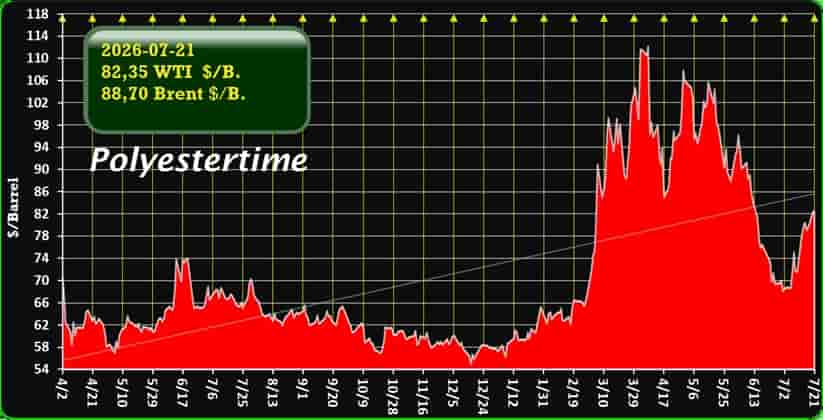
Crude Oil Prices Trend
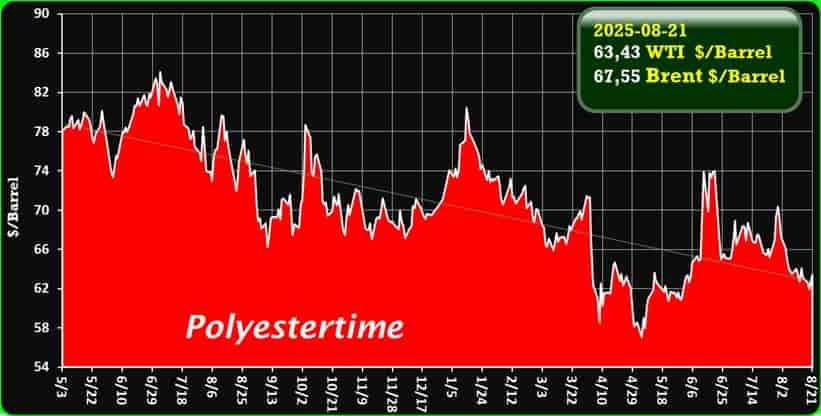
Trend Restoring Faith in Textiles Recycling
As it aims for rapid expansion in Europe, RE&UP Recycling Technologies is looking to show brands that textile recycling is not only possible, but scalable.
The Myth: True Textile Recycling Isn’t Possible
For years, the fashion and textile industries have faced skepticism about recycling textiles at scale. Many assumed that large-scale textile-to-textile recycling was a dream, not a reality. While the capability has long existed, the real challenge has always been scalability. Textiles Recycling
With tEPR legislation on the horizon in the European Union, pressure is mounting on brands and manufacturers to invest in recycling solutions that deliver at industrial scale.
Meet RE&UP Recycling Technologies
RE&UP Recycling Technologies, headquartered in Eindhoven, the Netherlands, with facilities in Turkey, is one of the few companies already proving that large-scale recycling is possible. The company has been operating for just over two years and specializes in recycling polyester, cotton, and polycotton blends—a crucial breakthrough since blended fabrics are notoriously difficult to recycle.
Today, RE&UP is running close to its 80,000 tonnes per year processing capacity. Its growth ambitions are bold: expanding to 200,000 tonnes by 2026 and achieving one million tonnes annually by 2030. To put this in perspective, the company has already more than tripled its capacity since opening in 2023. Textiles Recycling
Breaking Through Industry Skepticism
Despite these advances, RE&UP acknowledges that many brands remain skeptical. According to Keith O’Brien, a spokesperson for RE&UP:
“Some brands are cautious because of past experiences after a series of other recyclers and next-generation fibre producers didn’t scale as expected. When it comes to new fibres, brands need the technology to be scalable, cost-competitive, and operational—not just a pilot plant. This is what RE&UP can deliver.” Textiles Recycling
How RE&UP’s Recycling Process Works
The company’s recycling process is based on thermochemical separation. By using controlled heat and pressure, RE&UP is able to:
- Recover polyester and reform it into high-quality polyester chips for spinning into new fibers.
- Decolourise and refine cotton for reuse in textiles.
- Maintain a textile-to-textile loop, avoiding downcycling into lower-value products.
This is a step forward for sustainability because it allows textiles to retain their original value rather than being downgraded into insulation or industrial rags.
Textile Heritage: The Sanko Connection Textiles Recycling
RE&UP is part of the larger Sanko Textiles conglomerate, a group with over 100 years in the textile industry. This heritage gives RE&UP a unique edge: deep technical knowledge paired with proven industrial experience.
O’Brien explains:
“The combination of proven technology with deep textile heritage is what makes RE&UP unique. Our connection to the industry ensures that our solution is both technically sound and commercially viable.”
Brands Already on Board
ISKO, another member of the Sanko Group, is already incorporating RE&UP fibers into its denim and workwear fabrics, achieving up to 75% recycled content. Global sportswear brand Puma has also partnered with RE&UP through its Re:Fibre programme.
These partnerships signal a broader shift in the market. Brands increasingly recognize that sustainability is not just a compliance issue but a value driver. Studies show that consumers are willing to pay more for sustainable products, giving brands an incentive to embrace recycled textiles. Textiles Recycling
Scaling Across Europe—and Beyond
While RE&UP is currently focused on expansion in France and Spain, it has its sights set on the broader European market and eventually Asia. Although the UK is not currently on its list for facility development, the company is seeking brand partnerships and collaborations within the country to strengthen its presence.
Building Trust Through Transparency
Trust remains a central challenge in the recycling industry. To address this, RE&UP offers clients full closed-loop recycling and supports monitoring through tools like LCAs. This transparency helps brands verify sustainability claims, a crucial step for both regulatory compliance and consumer trust. Textiles Recycling
A New Generation of Textile Recycling
The textile industry has long struggled with waste, greenwashing, and lack of scalable solutions. RE&UP’s approach represents a new generation of recycling—one that is technologically advanced, commercially viable, and environmentally necessary.
As we look toward a more sustainable future, initiatives like RE&UP offer a reason for optimism. They show that textile-to-textile recycling can move beyond pilot projects and play a central role in the circular economy. Textiles Recycling

India Targets 10% of Global Green Hydrogen Demand by 2030
New Delhi, August 2025 — India is accelerating its push into the clean energy future, aiming to capture nearly 10% of global green hydrogen demand by 2030. Union Minister of State for Power and New & Renewable Energy, Shripad Naik, announced this ambitious target during the FICCI Green Hydrogen Summit 2025.
India’s Progress Under the National Green Hydrogen Mission
The country has already made strong strides toward its targets. Under the National Green Hydrogen Mission, production capacity of 862,000 tonnes per annum has been awarded to 19 companies. In addition, the government allocated 3,000 megawatts of electrolyser manufacturing capacity to 15 companies, signaling industrial expansion and future readiness. Textiles Recycling
Naik emphasized: We want to make India not only a major producer but also a global hub for green hydrogen export.
Global Market Ambitions
The worldwide demand for green hydrogen is expected to surpass 100 million metric tonnes by 2030. India’s strategy positions it as a reliable supplier to this growing market. The vision is not just about meeting domestic needs but also about establishing India as a leading exporter in clean energy solutions.
Renewable Energy as the Foundation
India’s renewable energy achievements provide the backbone for this hydrogen drive. As of June 2025:
- Solar: 119 GW Textiles Recycling
- Wind: 52 GW
- Large Hydro: 49 GW
- Nuclear: 8.78 GW
With a total renewable capacity of 237 GW, non-fossil fuel sources now make up more than 50% of India’s power generation capacity. Naik proudly noted that this key climate target was achieved five years ahead of schedule.
Future Targets
India is working toward a goal of 500 GW of non-fossil fuel capacity by 2030. To stay on track, the country must add around 50 GW of clean energy capacity annually.
Industry Leaders Express Optimism
At the summit, industry representatives highlighted recent milestones:
- Rajat Seksaria, Chair of FICCI Green Hydrogen Committee and CEO at Adani New Industries, praised the government’s support, citing:
- Production-linked incentive (PLI) schemes boosting investments.
- The world’s first green ammonia auction, creating real market demand. Textiles Recycling
- Consistent government policies enabling long-term confidence.
- Vipul Tuli, Chair of FICCI’s Renewable Energy CEOs Committee and Chairman of Sembcorp India, noted that in global tenders, green hydrogen has become cheaper than blue hydrogen. He emphasized, however, the importance of focusing on sustainable commitments rather than price competition alone.
International Collaboration
India’s green hydrogen ambitions are drawing global interest. The European Union (EU) pledged strong cooperation, with Dr. Ewa Suwara from the EU Delegation to India highlighting enhanced collaboration after the India-EU Green Hydrogen Forum in Rotterdam (May 2025). Textiles Recycling
Both sides agreed to establish a Hydrogen Task Force to serve as a high-level platform for strategies, partnerships, and implementation frameworks.
Policy Momentum Across Indian States
So far, 15 Indian states have notified their green hydrogen policies. These policies focus on:
- Land allocation for hydrogen hubs.
- Ensuring water availability. Textiles Recycling
- Facilitating renewable power banking.
- Encouraging innovation and industry development.
Other states are actively developing similar frameworks to boost participation.
Industry Reports and Strategic Insights
During the summit, Naik released the FICCI-EY Green Hydrogen Report: India’s Green Hydrogen Ecosystem. The report emphasizes:
- The critical role of demand from hard-to-abate industries such as steel, refining, aviation, and fertilizers.
- Priority use cases and procurement models for green hydrogen adoption.
- Cost dynamics shaping competitiveness. Textiles Recycling
- Practical recommendations to stimulate long-term demand.
Key Takeaways
- India targets 10% of global green hydrogen demand by 2030.
- 862,000 tonnes annual capacity already awarded under the National Mission.
- 237 GW of renewable capacity achieved, with over 50% from non-fossil sources.
- International support, especially from the EU, is strengthening momentum.
- Industry leaders stress the importance of demand creation and policy consistency. Textiles Recycling
Conclusion
India is not only advancing its renewable energy capacity but also making a bold statement in the global green hydrogen race. With strong government backing, state-level policies, international cooperation, and private sector enthusiasm, the country is well on track to becoming a green hydrogen powerhouse by 2030.
Sustainable Innovation: Unifi’s New Botanical and Circular Yarn Solutions
AMY Peppermint, Repreve Takeback, and ThermaLoop Insulation – advancing sustainability in textiles.
Introduction
Sustainable innovation in textiles is accelerating, with brands and manufacturers seeking eco-friendly alternatives that combine performance, durability, and circular design.
Unifi, Inc., headquartered in Greensboro, North Carolina, has taken another bold step in this direction with the launch of three pioneering products:
AMY Peppermint yarn, Repreve Takeback, and ThermaLoop insulation. Textiles Recycling
Key takeaway: Unifi’s latest yarn technologies focus on reducing waste, replacing traditional chemical treatments with botanical alternatives, and closing the loop in the textile lifecycle.
AMY Peppermint: A Botanical Alternative to Antimicrobial Treatments
Traditional antimicrobial treatments often rely on synthetic chemicals or heavy metals, which can raise environmental and health concerns. Unifi’s AMY Peppermint yarn offers a sustainable alternative by using peppermint oil – a naturally sourced botanical extract known for its deodorising properties. Textiles Recycling
How It Works
AMY Peppermint provides long-lasting freshness that is embedded directly into the yarn, ensuring odour control throughout the product’s lifecycle. Unlike topical treatments that wash out over time, this yarn sustains performance through 50 home launderings.
Certifications and Traceability
To meet growing consumer demand for transparency and accountability, AMY Peppermint is:
- Fully traceable via Unifi’s FiberPrint technology. Textiles Recycling
- Certified by U-Trust, GRS (Global Recycled Standard), and SCS for recycled content.
- Available in both virgin polyester and Repreve recycled polyester.
Applications Across Industries
The versatility of AMY Peppermint makes it suitable for a wide range of industries:
- Apparel: Activewear, athleisure, and everyday fashion.
- Footwear: Linings, uppers, and insoles with lasting freshness.
- Home textiles: Bedding, upholstery, and curtains.
- Transportation: Automotive interiors requiring odour control.
Expanding the AMY Portfolio
AMY Peppermint is part of Unifi’s broader AMY anti-odour portfolio, which also includes yarns infused with silver and zinc oxide technologies. By combining natural botanicals with advanced material science, Unifi empowers brands to design for comfort, performance, and sustainability simultaneously. Textiles Recycling
Repreve Takeback: Closing the Loop on Textile Waste
Beyond botanicals, Unifi is tackling one of fashion’s biggest challenges: textile waste. With the Repreve Takeback program, Unifi introduces a circular polyester made entirely from waste textiles – excluding additives, colorants, and low-melt polymers.
Key Features
- 100% made from textile waste – transforming discarded fabrics into new high-performance materials. Textiles Recycling
- Available in filament, staple fibre, and solution-dyed colours.
- Includes white-dyeable high-performance filament for greater flexibility in fashion and textiles.
This initiative supports Unifi’s ambitious goal: to recycle the equivalent of 1.5 billion T-shirts worth of textile waste by 2030.
ThermaLoop Insulation: Performance Meets Circularity
Insulation is another critical area where sustainability and performance must intersect. Unifi’s ThermaLoop insulation is now made entirely from textile waste, evolving from its previous 50% recycled content. Textiles Recycling
Product Formats
ThermaLoop is engineered for high thermal efficiency and comfort, available in:
- Down-like fibre – soft, lightweight, and versatile.
- Fibreball – mimics the loft and warmth of down clusters.
- Padding – ideal for outerwear and technical gear.
Why These Innovations Matter
Unifi’s launches are not just about product performance; they represent a broader industry shift toward circularity and natural solutions. Consumers increasingly demand transparency, eco-certifications, and sustainable production methods – and brands must adapt quickly to meet those expectations. Textiles Recycling
Benefits for Brands
- Sustainability: Lower environmental impact and reduced reliance on virgin resources.
- Performance: Long-lasting odour control and thermal efficiency without compromising quality.
- Marketing value: Certifications and traceability add credibility in a competitive sustainability market.
Benefits for Consumers
- Healthier alternatives: Reduced exposure to synthetic antimicrobials and chemicals. Textiles Recycling
- Durability: Products that maintain freshness and warmth over time.
- Confidence: Verified eco-labels that provide assurance of sustainability claims.
Conclusion
Unifi’s latest launches – AMY Peppermint, Repreve Takeback, and ThermaLoop insulation – showcase how sustainability, performance, and innovation can coexist in modern textiles. From botanical freshness powered by peppermint oil to full-circle recycling of textile waste, these solutions address pressing industry challenges while empowering brands and consumers alike.
As Eddie Ingle, CEO of Unifi, put it: “AMY Peppermint gives brands a powerful tool to deliver freshness and performance through the power of nature.” This philosophy is at the heart of Unifi’s mission to build a more sustainable textile future. Textiles Recycling
Learn more about Unifi’s sustainable innovations.
UW-Madison Researchers Map Out a Promising Future for Solvent-Based Plastics Recycling
From STRAP to global collaboration, scientists at the University of Wisconsin-Madison are leading innovations that could transform plastic recycling into a sustainable, multibillion-dollar industry.
The Global Plastics Challenge
In the century since synthetic plastics were developed, they have become the world’s most common engineered material. Today, plastics are found in everything—from food packaging and automobiles to medical implants and electronics. Yet the ability to recycle them has lagged far behind. Textiles Recycling
Each year, the world produces about 400 million tons of plastic. Shockingly, less than 9% is ever recycled. Current industrial methods are limited, inefficient, and often degrade the quality of plastic instead of truly restoring it. Without innovation, plastic waste will continue to grow as a global environmental crisis.
Why Current Recycling Falls Short
Most recycling today relies on mechanical methods: plastics are ground, melted, and reshaped. While useful for some single-layer plastics, mechanical recycling has critical limitations:
- It breaks down long polymer chains, creating weaker materials.
- It can only handle a narrow range of plastics, excluding films, multilayer packaging, and complex waste streams.
- It cannot remove additives like colors, fillers, or chemical contaminants.
- It leads to “downcycling”—plastic bottles become lower-quality products that cannot be recycled again. Textiles Recycling
This approach cannot deliver the closed-loop recycling system the world urgently needs.
The Rise of Solvent-Based Recycling
Enter solvent-based recycling, also called dissolution recycling. This innovative method chemically dissolves plastics, separates out contaminants, and preserves the original polymer chains. The result? Recovered resins that are nearly identical to virgin plastics.
Unlike mechanical recycling, solvent-based processes can:
- Remove dyes, fillers, and other additives (“deep cleaning” plastics).
- Separate and recycle mixed plastics, including multilayer films and electronic waste.
- Create high-quality polymers that can be reused in the same applications—closing the loop from bottle to bottle, package to package. Textiles Recycling
This technology represents a leap forward in both environmental impact and economic potential.
UW-Madison’s STRAP Breakthrough
At the University of Wisconsin-Madison, chemical engineers are pioneering a process known as Solvent-Targeted Recovery and Precipitation (STRAP). First proposed in 2019 by then-undergraduate Jesse Banick, STRAP grew from an idea into a patented method through years of research led by Professor George Huber and his team.
Using carefully selected solvents, STRAP can dissolve and separate polymers from complex plastics like multilayer packaging. The technique has shown promise in creating nearly virgin-quality resins ready for reuse in new products.

From Lab to Industry
The UW-Madison team has already proven STRAP at the lab scale. Now, they are moving toward pilot projects. In 2026, they plan to launch a facility at Michigan Technological University capable of processing 55 pounds of plastic per hour.
The next big challenge is scaling up. Industrial reactors must handle contaminants ranging from colorants to titanium dioxide, while maintaining cost-effectiveness and safety. If successful, STRAP could become a blueprint for solvent-based recycling plants worldwide.
Global Momentum in Solvent-Based Recycling
UW-Madison is not alone in this race. Around the world, several initiatives are pushing solvent-based recycling toward commercial reality:
- CreaSolv – Developed by the Fraunhofer Institute in Germany.
- UpSolv – A Canadian company innovating in Montreal. Textiles Recycling
- PureCycle – A U.S. company targeting polypropylene recycling.
- APK Newcycling – Based in Germany, specializing in multilayer plastics.
Rather than seeing these efforts as competition, UW-Madison researchers encourage collaboration. “There’s enough plastic waste for everyone,” says Professor Reid Van Lehn. Estimates suggest solvent-based recycling could grow into a $25 billion annual industry in North America, Europe, and Japan alone.
Challenges Ahead
Despite its promise, solvent-based recycling must overcome hurdles before it can scale globally:
- Contaminants: Removing pigments, fillers, and toxic additives requires precise chemistry. Textiles Recycling
- Cost and Efficiency: Industrial systems must recycle plastics at scale without prohibitive energy or solvent costs.
- Industry Adoption: Manufacturers must be convinced that solvent-based recycling is both profitable and sustainable.
Research supported by the U.S. Department of Energy is helping address these challenges. With continued funding, partnerships, and technological progress, solvent-based recycling could reshape the plastics economy.
Why This Matters
The global plastics crisis is not just about waste—it’s about sustainability, resource conservation, and climate change. Virgin plastic production is energy-intensive and fossil fuel–dependent. By replacing it with recycled polymers, solvent-based technologies like STRAP could:
- Reduce greenhouse gas emissions associated with plastic production.
- Preserve valuable resources by closing the material loop. Textiles Recycling
- Provide manufacturers with high-quality, sustainable inputs.
- Help meet national and global recycling targets.
Looking Forward
As STRAP and similar technologies move toward commercialization, the potential impact is enormous. With the right policies, investments, and industry adoption, solvent-based recycling could be a cornerstone of a circular plastics economy.
“Dissolution recycling is a viable technology worth adopting,” says PhD student Charles Granger. “Even at this early stage, it promises both significant environmental benefits over virgin plastic production and strong economic potential.” Textiles Recycling
Key Takeaways for Businesses and Policymakers
For leaders in manufacturing, policy, and sustainability, the rise of solvent-based recycling carries major implications:
- Businesses can reduce costs and carbon footprints by investing in recycled polymers.
- Governments can accelerate adoption through funding, tax incentives, and recycling mandates.
- Consumers benefit from a cleaner environment and access to sustainable products. Textiles Recycling
Conclusion
The plastics problem is massive, but so is the opportunity. Solvent-based recycling—led by innovations like UW-Madison’s STRAP process—offers a pathway to transform waste into value. By building partnerships and scaling technologies, researchers and industry leaders can create a cleaner, more sustainable future.
Zeppelin Systems at K 2025: Sustainable Solutions for Plastics & Rubber
October 8–15, 2025 · Düsseldorf, Germany
Zeppelin Systems, a global leader in plant engineering for bulk and raw materials, will present its portfolio of future-ready, networked, and sustainable solutions at K 2025, the world’s leading trade fair for the plastics and rubber industry. The company will exhibit under the official trade fair motto: “The Power of Plastics! Green – Smart – Responsible.” Textiles Recycling
Why Plastics Still Matter
Plastics remain a vital material due to their versatility, durability, and cost-effectiveness. Zeppelin Systems has long been a trusted partner for the plastics industry, supporting the entire value chain: manufacturing, processing, reprocessing, and recycling. Their engineering solutions cover:
- Storage and conveying
- Mixing, dosing, and weighing
- Automation and digital integration
- Comprehensive service and lifecycle support
Key Theme for K 2025: “Rethink Plastics for a Smarter Future.” Zeppelin Systems will showcase solutions that combine sustainability with high performance, ensuring plastics remain valuable in a circular economy.
The TriplePlus Strategy
At the core of Zeppelin Systems’ presentation lies the TriplePlus principle:
- Protect Resources — Preserve valuable raw materials and reduce waste.
- Simplify Processes — Streamline workflows through digital integration.
- Optimize Results — Deliver measurable improvements in productivity, quality, and sustainability. Textiles Recycling
Driving the Circular Economy
Zeppelin Systems plays a leading role in plastics recycling, helping strengthen the circular economy with technologies that span almost the entire process chain. From storage and conveying to compounding and deodorization, their solutions help transform waste into valuable raw materials.
Fluff-TEC®: Efficiency for Light Fractions
Handling lightweight materials such as films, fleeces, or fibers can be challenging. Zeppelin’s Fluff-TEC® technology compacts these materials into a homogeneous, free-flowing mass. This makes downstream processing easier and significantly reduces storage volume. Textiles Recycling
Fresh-TEC®: Cleaner Recyclates
Another innovation is Fresh-TEC®, a deodorization process that removes volatile organic compounds using air flushing. This ensures recycled plastics meet high safety and quality standards — even for FDA and EFSA-certified applications.
Digitalization for Smarter Processes
Digital innovation is central to Zeppelin’s mission. The company offers scalable, customized plant concepts tailored to specific raw materials and customer goals. Whether handling powders, granules, or liquids, Zeppelin integrates digital tools such as:
- 3D scans for precision planning
- FEED studies for feasibility and cost analysis
- End-to-end process automation Textiles Recycling
These solutions create transparent, reliable, and waste-free workflows, supporting a “zero waste, zero emissions” vision aligned with the fair’s theme.
People at the Center: Optimized Results
Sustainability is not just about materials — it’s about people too. Zeppelin Systems prioritizes operator safety, process efficiency, and energy savings. Their engineering combines:
- Advanced automation for consistent results
- Low energy consumption for reduced costs Textiles Recycling
- Safety-focused designs protecting employees and communities
From project design to installation and beyond, Zeppelin provides global service and support. Customers benefit from high plant availability, reduced downtime, and strong productivity.
Customer Promise: “We Create Solutions!” Zeppelin delivers German engineering quality worldwide, backed by short response times and a reliable service network.
Event Details
Attendees can experience Zeppelin Systems’ innovations firsthand at K 2025:
- When: October 8–15, 2025
- Where: Düsseldorf, Germany
- Hall 10, Stand C14
More information is available on the official Zeppelin Systems website.
Conclusion
Zeppelin Systems is not only shaping the future of plastics processing but also redefining sustainability and efficiency for the industry. Textiles Recycling
With their TriplePlus approach, innovative technologies like Fluff-TEC® and Fresh-TEC®, and a strong commitment to digitalization, they are setting a benchmark for a smarter, cleaner, and more responsible plastics industry. Visitors to K 2025 can explore how these solutions help build a sustainable circular economy — and why Zeppelin Systems is a trusted global partner in plant engineering.
Korozo’s Sustainable Flexible Packaging Solutions at FachPack 2025
Date: 23–25 September 2025 | Location: Nürnberg, Germany | Hall 4, Stand 343
Korozo Group is set to make a strong statement at FachPack 2025, presenting innovative sustainable flexible packaging solutions designed for fresh, frozen, and dried food applications. With a focus on recyclability, performance, and circularity, Korozo demonstrates how packaging can balance consumer demand, food safety, and sustainability. Textiles Recycling
Why Flexible Packaging Matters in 2025
Packaging has become a central issue for both brands and consumers. In Europe and globally, the appetite for proteins—meat, fish, and dairy—is steadily rising. This creates pressure on food manufacturers to ensure packaging not only keeps products safe and fresh but also aligns with evolving environmental standards.
According to Kemal Yurum, Protein Segment Market Manager at Korozo, “Consumers expect packaging that maximizes protection, extends shelf life, enhances retail appeal, and is convenient. At the same time, it must be resource-efficient and recyclable.”
Innovations Showcased at FachPack 2025
Korozo will highlight a range of advanced flexible packaging solutions at its FachPack booth, including:
- Next-generation stand-up pouches
- High-performance thermoforming films
- Enhanced barrier packaging for freshness
- Recyclable and circular options Textiles Recycling
These solutions cater to proteins, bakery products, confectionery, frozen goods, and snacks, addressing the packaging needs of both retailers and consumers.
KoroRCY: Driving Circular Packaging Forward
At the heart of Korozo’s innovation is KoroRCY, a proprietary PE-based laminating film integrated into pouches, films, and flow packs. This technology allows brands to move toward recyclable and circular packaging without compromising barrier performance or convenience.
KoroRCY is already being used by many European brands to build mono-material structures compatible with existing PE recycling systems. Textiles Recycling
The result is packaging that is resource-efficient, highly functional, and designed for circularity. Textiles Recycling
MDO-PE with PCR Content: Meeting EU PPWR Requirements
Korozo is also introducing MDO-PE mono-material packaging structures containing more than 30% post-consumer recycled (PCR) content. These align with the European Union’s Packaging and Packaging Waste Regulation (PPWR), which mandates 35% PCR for non-food contact applications by 2030.
This proactive step demonstrates Korozo’s commitment to regulatory compliance and future-proof solutions for the packaging industry. Textiles Recycling
Industry Leadership and Sustainability Vision
Dr. Betul Turel Erbay, Chief Innovation and Sustainability Officer at Korozo, emphasizes the company’s role in driving circular packaging: “We are positioning ourselves at the center of the circular packaging value chain. Innovations like KoroRCY enable the industry to transition to sustainable and circular solutions while fulfilling our promise: Delivering Sustainability, Pack by Pack.”
With PPWR implementation just around the corner, Dr. Erbay highlights the urgency: “Brands and retailers must act now to ensure compliance. FachPack 2025 is the ideal platform for the industry to take stock, embrace opportunities, and step forward toward a sustainable future.” Textiles Recycling
Takeaways for the Packaging Industry
Korozo’s participation at FachPack 2025 underscores several key industry takeaways:
- Sustainability is no longer optional—it is central to consumer trust and regulatory compliance.
- Recyclable mono-materials and PCR content integration are essential steps toward circularity.
- Innovation and regulation must go hand in hand, with proactive solutions ahead of legal deadlines.
- Digital storytelling enhances industry visibility and ensures alignment with semantic search and AI-driven discovery.