Sustainable packaging – Breakthrough Mono-Material Metallized Retort Packaging by BOBST, Brückner and Mitsui Chemicals Sets New Sustainable Standard for Recyclable High-Barrier Food Packaging Innovation 30-10-2025
Sustainable packaging – A breakthrough in sustainable packaging: an industry-first mono-material metallized retort solution
BOBST, Brückner and Mitsui Chemicals reveal how the unique milestone was achieved. The packaging industry has made great strides in recent years towards more sustainable recycle-ready packaging.
From the development of new mono-material polymer-based packaging materials, and alternative fiber or plant-based packaging, to the application of more advanced recycling technologies, great progress has been made in the journey towards a truly circular economy.
However, important gaps remain. One significant example is the lack of mono-material recyclable retort solutions for the food and beverage industry. Retort packaging is a type of durable, flexible pouch, which undergoes a high-temperature sterilization process after being filled and sealed – making the food commercially sterile and shelf-stable. It has the great benefit of enabling food to be stored at room temperature for extended periods without refrigeration. Sustainable packaging
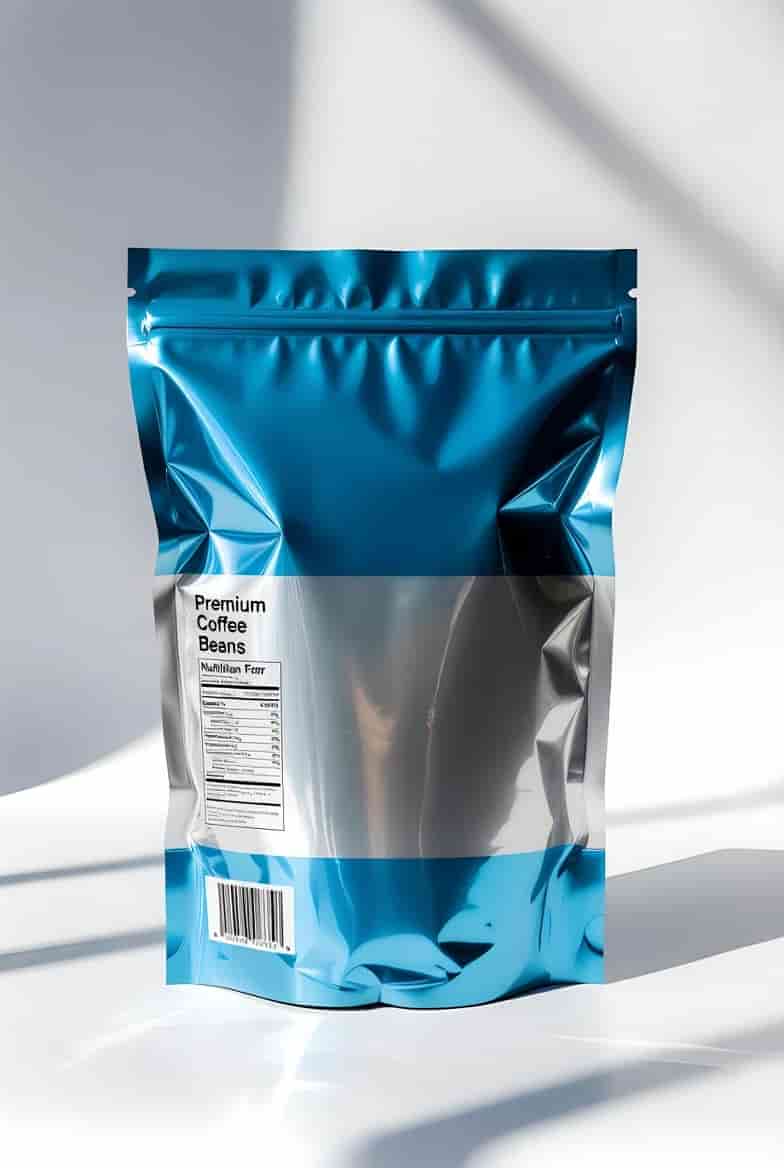
Because retort pouches must protect food from oxygen and moisture ingress and withstand high heat exposure during the sterilization process, they are typically made of multiple layers bonded together, such as polyethylene terephthalate (PET), aluminum foil, and polypropylene (PP) to form a laminate structure. However, this makes retort packaging almost impossible to recycle.
Until now.
K 2025 saw the announcement of a significant breakthrough. Three industry leaders – BOBST, Brückner and Mitsui Chemicals – have joined forces to create a world first: a mono-material, recyclable, retort solution with high barrier properties based on opaque metallization. Sustainable packaging
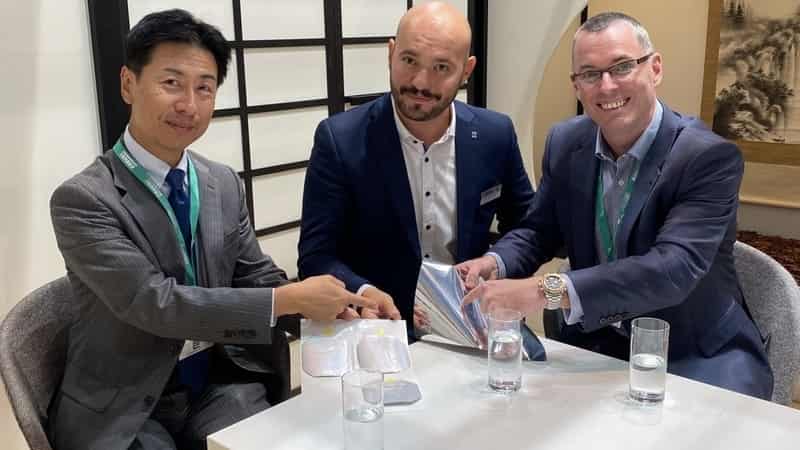
At K 2025, Nick Copeland, R&D Director, Barrier solutions at BOBST, Willi Lindemann, Specialist Inline Coating, New Technologies at Brückner, and Anrika Heermant, Senior Specialist at Mitsui Chemicals Europe, discussed how the new solution was developed and the potential impact it could have for the packaging industry.
Can you introduce what the new solution is and why it’s so important?
Nick: It’s a novel mono-material retort solution with high barrier properties based on special opaque metallization, which will be easily recyclable in existing recycling streams. It’s important because recyclable retort packaging is one of the final key challenges in sustainable flexible packaging. Together, we have achieved a very important milestone, demonstrating that our solution can withstand the retort process and maintain high barrier qualities. Now, if we can take this solution through the final stages of development, it could have a significant impact for the packaging industry and on wider sustainability targets. Sustainable packaging
Why is it so challenging to develop a recyclable retort solution?
Anrika: Up until now, it has only been possible to maintain a high barrier in retort solutions using a composite layer structure consisting of polyester, aluminum foil, and various other materials. The most challenging part of producing a mono-material retort solution is maintaining the barrier qualities after the retorting process, which happens under really high temperatures. Sustainable packaging
Willi: The perception in the industry was that it couldn’t be done. It was generally assumed that metalized films could not be used for retort purposes without corrosion, because the high temperatures involved would lead to water ingress. The other challenge with moving to mono-material polypropylene is the risk of shrinkage, which would have a negative impact on the barrier properties. So, there was a lot to contend with.
Can you talk about the innovation involved and how each partner contributed to this success?
Nick: Ultimately, we needed to create an ultra-thin, stretchable, heat-resistant barrier primer in combination with advanced opaque metallization. When we talk about in-line coated ultra-thin layers and state of the art extrusion and orientation technology, that is exactly what Brückner can bring to the table. When it comes to advanced metallization, BOBST has significant expertise in this area. And Mitsui has the capabilities and innovation to be able to develop a novel heat-resistant primer. So together, we had exactly the right expertise to develop this solution. Sustainable packaging
Willi: Brückner was responsible for the inline coating technology. We know that achieving a very thin metal receptive layer can be the key to sustainable barrier packaging. Through our innovative technology, we can stretch the primers and create very thin layers. We needed to find exactly the right hardness of the coating material to ensure it was both stretchable and could withstand the retort conditions. Ultimately, we found a solution with ideal structure.
Nick: The reels produced by Brückner in Germany on the inline coating pilot line were then delivered to Manchester in the UK for BOBST’s vacuum coating technology. We utilized the BOBST EXPERT K5 vacuum metallizer with AluBond® technology, which is a novel vacuum metallizing technology with three key benefits – it improves the barrier, improves the adhesion, and maintains the surface energy over time. So, the combination of the extremely thin inline coating together with extremely thin metallization achieves the high barrier performance, but on really thin layers, maximizing the percentage of mono-material in the structure. It was also very beneficial being able to test the inline-coated metallized material in our Competence Center in Manchester with our process experts available on hand. Sustainable packaging
Anrika: At Mitsui, we contributed two key materials to the solution. The first is a water-based polyurethane dispersion called TAKELAC™. We provided a top coating grade, which enhances the barrier performance and protects the Alubond® layer. And a newly developed TAKELAC™ Primer grade, which provides the heat resistance suitable for retort applications. In addition, we provide ADMER™, which is a grafted polyolefin resin with good adhesion qualities. Sustainable packaging
More…