Plastic-eating bacteria – Deep-Sea Bacteria with Specialized M5 Motif Show How Nature’s Evolving to Break Down Plastic and Offer Game-Changing Recycling Potential 05-11-2025
Plastic-eating bacteria – Introduction
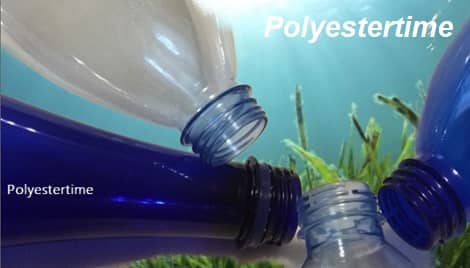
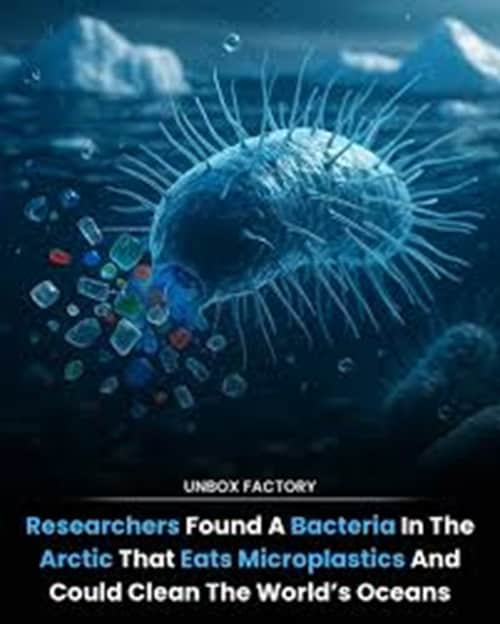
Deep beneath the surface of the world’s oceans, plastic-eating bacteria have been discovered that challenge long-held assumptions about plastic persistence in nature. A major study by scientists at King Abdullah University of Science and Technology (KAUST) found that microbes equipped with a special enzyme feature—known as the M5 motif—can break down polyethylene terephthalate (PET) plastic, the material used in bottles and textiles. KAUST Discovery+2repository.kaust.edu.sa+2
How the Discovery Came About
For years PET was considered nearly indestructible in natural environments. Then in 2016 a bacterium from a Japanese recycling plant was shown to consume PET using a PETase enzyme. But the question remained: had similar mechanisms evolved in the ocean? The KAUST research team used artificial intelligence modeling, genetic screening, and lab tests to identify that the M5 motif is a structural signature of truly functional PET-degrading enzymes. Bacteria carrying this M5 motif were shown to efficiently degrade PET in laboratory experiments.
The Role of the M5 Motif
The M5 motif acts like a fingerprint: when present in a PETase enzyme it marks capacity to break down PET. The team found that microbes carrying the complete M5 motif could digest PET samples. The genetic activity of these M5-PETase genes was found throughout oceans—especially in zones polluted with plastic. The discovery reveals that nature is adapting to human synthetic-material waste at a molecular level. repository.kaust.edu.sa+1
Widespread Presence in the Oceans
In the global survey, researchers examined over 400 ocean samples from surface gyres to depths nearly 2 km. They found functional PET-degrading enzymes (with the M5 motif) in nearly 80 % of the waters tested. This suggests that plastic-eating bacteria are not rare anomalies but widespread emergent recyclers in marine ecosystems. ScienceDaily
Implications for Ecology and Pollution
The fact that these plastic-eating bacteria are common signals a surprising adaptation: microbes tuning into human-made carbon sources in carbon-scarce marine environments. Yet, the researchers caution that this natural process is far too slow to offset the massive volume of plastic entering the oceans each year. By the time plastics reach the deep sea, damage to marine life and ecosystems is already significant. KAUST Discovery+1
Potential for Real-World Recycling Applications
While nature’s plastic-eating microbes cannot clean the seas quickly, the discovery of the M5 motif offers a blueprint for engineered solutions. Scientists believe these naturally evolved enzymes can be optimised in the lab for use in recycling plants or even home-scale systems. The key lies in replicating the structural traits that function under real environmental conditions, not just in test tubes. SciTechDaily+1
Why This Matters
The emergence of plastic-eating bacteria in marine environments underlines that plastic pollution is not just a human waste problem but a driver of microbial evolution. For industry and recycling sectors the findings open a new frontier: leveraging biological systems designed by nature to target synthetic materials. Understanding and harnessing the M5 motif could accelerate the shift toward circular-plastic systems.
Summary of Key Points
-
Ocean surveys found plastic-eating bacteria in nearly 80 % of samples.
-
The M5 motif in PETase enzymes distinguishes functional plastic-degrading microbes.
-
Nature is adapting to human plastic pollution, but the pace is too slow to rely on alone.
-
The discovery opens pathways for engineered enzyme applications in recycling systems.
-
This research shifts the narrative: plastic pollution isn’t just waste—it’s driving evolutionary change.