Tall oil residues – Ground-Breaking EU Grant Empowers Neste to Transform Forestry Waste into Clean Fuels With Its SCOOP Technology, Marking Major Circular Economy Milestone 13-11-2025
Tall oil residues – Introduction
The European Commission has selected 61 large-scale clean-technology projects for funding, drawn from 359 applications, and among them is Neste Corporation’s SCOOP (Sustainable Co-Processing of Challenging Raw Materials) project.
Neste’s SCOOP initiative will develop a novel co-processing technology that uses crude tall oil — a residual by-product generated during pulp production from pinewood — which is eligible under the EU Renewable Energy Directive (Annex IX A) for use in advanced biofuels.
What the SCOOP Project Covers
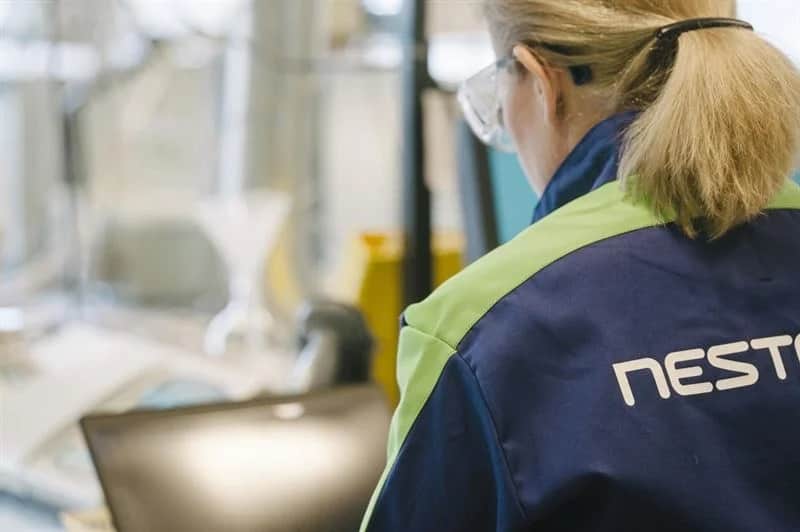
The core of the SCOOP project is to adapt the refinery processes at Neste’s Porvoo site in Finland so that tall oil residues can be co-processed into high-quality renewable fuels and feedstock for the polymers and chemicals industries.
This co-processing technology aims to significantly strengthen the circular economy by unlocking new raw-material streams beyond conventional bio-feedstocks. The innovation opens potential for scaling the deployment of renewable raw materials that were previously under-utilised. Tall oil residues
Funding and Strategic Importance
Funding for the SCOOP project comes from the EU Innovation Fund, supplied via revenues from the EU Emissions Trading System (EU ETS). ChemXplore+1
The announcement underscores Europe’s ambition to accelerate clean-technology deployment and strengthen its leadership in net-zero solutions. Valtioneuvosto+1
Although Neste has secured the funding approval stage, final investment decisions for modifying the Porvoo refinery have yet to be taken. Cision News+1
Why This Matters for Industry and Environment
Tall oil is generated during the pulp-and-paper process and has typically found limited end uses.
By incorporating it into a refinery co-processing route, Neste’s technology could redirect a waste or residue stream toward value-added renewable products.
This matters both for resource efficiency (circular economy) and greenhouse-gas reduction, since renewable-feedstock pathways often present lower carbon intensities than fossil-derived alternatives.
For the chemicals and polymers industry, the ability to integrate new raw-material sources means that product value chains can become less dependent on virgin fossil feedstocks and more oriented toward sustainable inputs.
Implementation and Next Steps
With the project selected, Neste and the European Climate, Infrastructure and Environment Executive Agency (CINEA) will move into the grant-agreement preparation phase, which includes finalising budget, timetable, technical deliverables and legal responsibilities. Neste+1
Once the investment decision is made, the Porvoo refinery will need to adapt its operational infrastructure and integrate the new co-processing technology. At that point, operations could commence converting tall oil and other challenging renewable raw materials into advanced biofuels and polymer feedstock. Tall oil residues
Implications for the Circular Economy
The SCOOP project represents a strategic step in transitioning heavy-industry refining toward circular-economy models. By leveraging residues like tall oil instead of relying solely on agricultural bio-feedstocks, the pathway reduces competition for land, food and other resources. Tall oil residues
Moreover, as the technology is deployed at scale, it may enable refiners and chemical producers to access more diversified renewable raw-material streams, improving resilience and lowering overall carbon footprints of their products.
Challenges & Considerations
As with all pioneering technologies, several considerations remain:
-
The capital investment decision must still be taken, so timelines for full deployment remain uncertain.
-
Integrating new co-processing methods into a functioning refinery may require careful engineering, operational adaptation and rigorous safety/environmental controls. Tall oil residues
-
Supply-chain logistics for tall oil and other challenging raw materials need to scale to match the refinery input needs and maintain economic viability.
-
Market demand for the resulting renewable fuels and feedstock must align with supply to realise full commercial value.
Conclusion
Neste’s SCOOP project, backed by the EU Innovation Fund, exemplifies how industrial decarbonisation and circular-economy thinking can intersect. If successful, the co-processing technology could transform forestry-residue streams into advanced biofuels and polymer feedstock, helping Europe drive toward net-zero and reduce reliance on virgin fossil feedstocks.
It is a development worth watching for companies, policymakers and investors interested in the future of green industrial technologies and sustainable raw-material innovation. Tall oil residues
Enzyme-based Plastic Recycling – “Epoch Fuels Breakthrough Recycling”