Recyclable RFID Tags Gain RecyClass Approval for PET Bottles
Recyclable RFID Tags Gain RecyClass Approval for PET Bottles
Avery Dennison has secured RecyClass Technology Approval in Europe for its AD CleanFlake RFID tags, marking an important development for companies seeking to combine digital product identification with recyclable PET packaging.
Announced on July 16, 2026, the approval covers compatibility with the European mechanical recycling stream for PET bottles. Avery Dennison describes the technology as the first RFID solution to be recognized both by RecyClass in Europe and through Association of Plastic Recyclers Design Recognition in North America.
The achievement addresses a longstanding packaging-design challenge: RFID labels contain components that can interfere with material recovery when they are not designed to separate effectively during recycling.
Why RFID can complicate PET recycling
RFID technology allows an individual product to carry a unique digital identity. Brands and retailers can use it to improve inventory visibility, authenticate products, manage logistics and collect more accurate supply-chain information.
However, an RFID label is more complex than a conventional printed label. It normally includes an inlay, antenna, chip, adhesive and supporting materials. If these elements remain attached to a PET bottle during recycling, they may reduce the quality of the recovered plastic.
The AD CleanFlake solution is designed to address this problem at the label-construction level rather than requiring a separate removal step by the consumer.
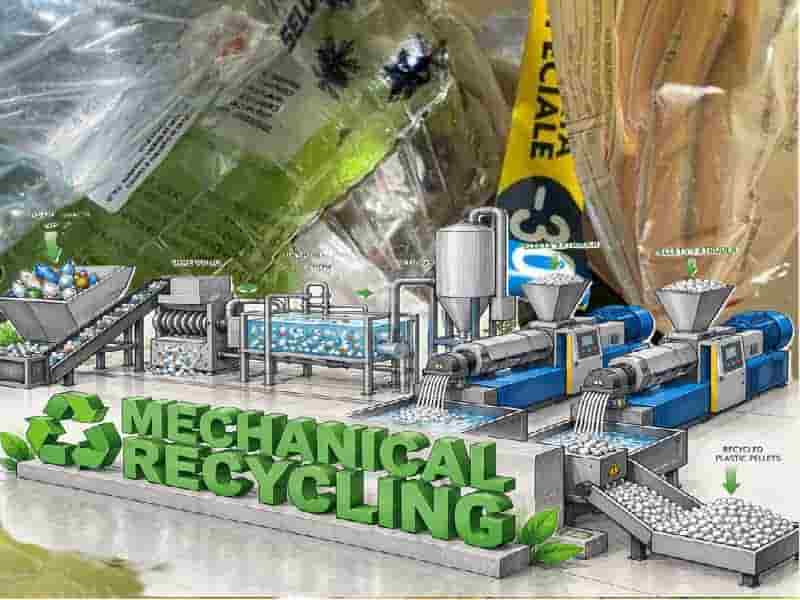
During the PET recycling process, the CleanFlake adhesive deactivates and allows the label and RFID components to separate from the bottle material. According to Avery Dennison, this process helps prevent adhesive and metallic components from contaminating the recovered PET flakes.
The resulting PET can then remain available for further material recovery, subject to the design and condition of the complete package and the requirements of the recycling facility handling it.
What RecyClass approval confirms
RecyClass evaluates packaging technologies using standardized testing procedures intended to reproduce European recycling processes at laboratory scale. Testing is conducted by recognized independent facilities and overseen by RecyClass technical committees.
The assessment does not simply consider whether a product contains PET. It examines how a particular label, adhesive or packaging component behaves within a defined recycling stream.
Documentation published by RecyClass shows that Avery Dennison CleanFlake constructions have been assessed for their effect on the quality of recycled PET bottles. The approval remains tied to the tested materials, specifications and conditions. Changes to the approved technology may require a new technical assessment.
This distinction is important. A RecyClass Technology Approval supports business-to-business claims concerning the compatibility of a technology with a specific recycling stream. It is not automatically equivalent to recyclability certification for every finished consumer package that might use the technology.
Bottle geometry, closures, inks, additional labels and other packaging components can still influence the recyclability of the complete product.
One construction for multiple markets
The combination of European and North American recognition could simplify packaging development for multinational brands.
Instead of developing fundamentally different RFID label structures for separate regions, companies may be able to adopt a more consistent construction across international supply chains, provided that each final packaging application satisfies the relevant regional requirements.
That consistency can help reduce material complexity while making packaging specifications and recycling-related data easier to manage across markets.
It may also lower one of the barriers to broader RFID adoption. Until now, companies interested in item-level digital identification have had to balance the operational advantages of RFID against concerns about its effect on recycling.
A label specifically engineered for separation offers a route to use RFID without treating circular packaging and digital traceability as opposing objectives.
Relevance to European packaging rules
The approval comes as businesses prepare for stricter European packaging requirements under the Packaging and Packaging Waste Regulation.
The regulation is intended to increase packaging circularity, improve recyclability and reduce unnecessary material use across the European Union. Against that background, technologies that have undergone recycling-stream testing can provide useful technical evidence during packaging selection and development.
RecyClass has also updated its evaluation methodology for labels and adhesives used on PET bottles, following work involving recyclers, label producers, adhesive manufacturers and other packaging specialists.
This reflects the growing attention being paid to components that may represent only a small proportion of a package’s weight but can still affect sorting, washing and the quality of recycled material. recyclable RFID tags
What the approval means for brands
For packaging teams, the development offers three potential advantages.
First, it provides an RFID option developed specifically for compatibility with PET bottle recycling.
Second, recognition in both Europe and North America may support more consistent packaging specifications across international product portfolios.
Third, the technology can connect physical products with digital records while retaining a design-for-recycling approach.
Possible applications include inventory management, product authentication, automated stock counts, supply-chain traceability and the connection of packaging to digital product information.
The approval should not, however, be interpreted as a guarantee that every bottle carrying an AD CleanFlake RFID tag will be recyclable in every collection system. Local infrastructure, package design and compliance with the approved construction remain relevant.
Digital identification moves closer to circular packaging
The significance of the AD CleanFlake approval extends beyond a single RFID product.
Packaging is increasingly expected to perform several roles at once. It must protect the product, communicate with consumers, support supply-chain operations, provide reliable data and remain compatible with recycling systems.
Meeting all of these requirements requires technologies to be evaluated as parts of a complete material system.
By engineering the RFID tag to separate during mechanical PET recycling, Avery Dennison is demonstrating how connected packaging features can be incorporated earlier in the design-for-recycling process.
For brand owners, the central message is not that digital technology has no environmental impact. It is that smart packaging components can be redesigned and independently assessed so that they are better aligned with established recycling operations.
More…