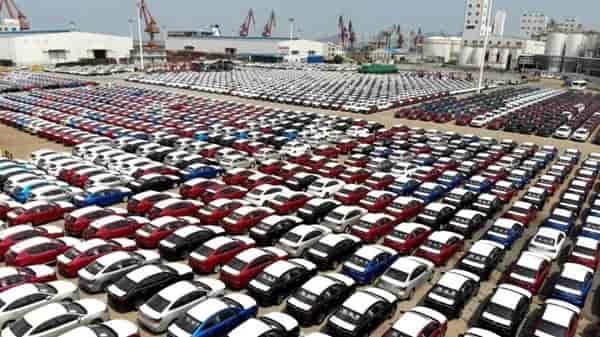
Chinese automakers drive innovation, reshaping the industry by rapidly building EV factories across Europe, strengthening competition, supply chains, and the future of mobility worldwide 02-01-2026
Chinese automakers
Chinese Automakers Move Beyond Exports to Global Production
Chinese automakers are rapidly transforming their global strategy. While Chinese cars have already gained a strong foothold in international markets, a new phase is now underway. Instead of relying solely on exports, Chinese manufacturers are increasingly opening production plants abroad, including across Europe.
This shift marks a decisive change in the global automotive landscape. Chinese automakers are positioning themselves as long-term players by producing electric vehicles closer to consumers, aligning with local regulations, and responding directly to regional market demands.
Why Local Production Matters for Chinese Automakers
The move toward overseas manufacturing is driven by several strategic factors. First, demand for electric vehicles continues to grow sharply, particularly in Europe, where governments are actively encouraging sustainable mobility. Second, producing vehicles locally helps reduce logistics costs and exposure to tariffs and import duties.
Local production also allows Chinese automakers to better comply with strict environmental and industrial regulations. By manufacturing electric vehicles within Europe, companies can more easily meet emissions standards, sourcing requirements, and policy incentives tied to domestic production.
As a result, Chinese automakers are embedding themselves more deeply into regional automotive ecosystems rather than remaining external suppliers.
BYD Leads the Expansion into Europe
BYD stands out as one of the most visible examples of this global expansion. The company announced the opening of a factory in Hungary, marking its first major production site in Europe. This facility represents a strategic gateway into a market where electric vehicle adoption is accelerating rapidly.
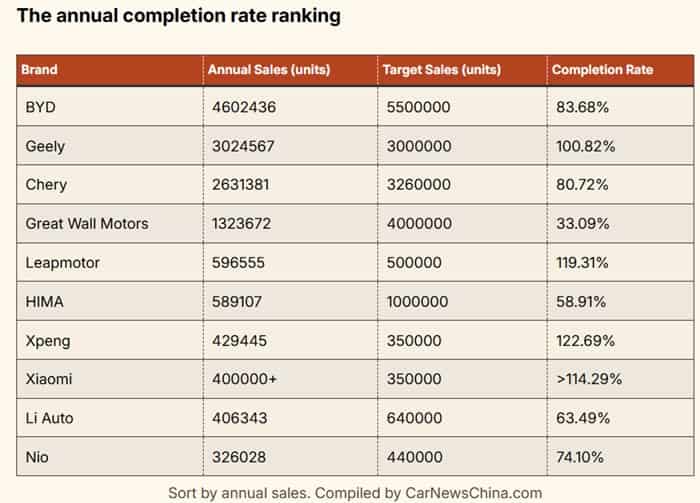
BYD’s decision follows strong sales momentum. In 2025, the company recorded a 30.3% increase in electric vehicle sales, driven largely by growth in fully electric models. Establishing European production allows BYD to lower costs, improve delivery times, and offer more competitive pricing to European consumers.
The Hungary plant signals BYD’s ambition to become a mainstream electric vehicle brand across the continent rather than a niche importer.
Geely Strengthens Its European Footprint
Geely, another major Chinese automaker, is pursuing a similar strategy. With the inauguration of a production facility in Hungary, Geely aims to solidify its presence in the European electric vehicle market.
The company has experienced remarkable growth, recording a 234.7% increase in sales during the first nine months of 2025 and reaching an 8.8% market share. The European plant is expected to focus primarily on battery electric vehicles, including the Geome Xingyuan, which became the best-selling model in China in 2025.
By manufacturing locally, Geely is adapting its production to European market preferences while reinforcing its global competitiveness.
More Chinese Automakers Enter the European Market
BYD and Geely are not alone in expanding production across Europe. Changan has already begun construction of a plant in Spain designed to meet growing demand for electric vehicles and plug-in hybrids. The company increased its electric vehicle sales in China by 21% in 2025 and is now preparing a European rollout centered on competitive pricing.
Dongfeng, supported by the Chinese government, is planning a production facility in Russia for electric and hybrid vehicles. Although politically complex, this location still places Dongfeng within the broader European automotive sphere.
Meanwhile, SAIC has announced plans to open a plant in Poland dedicated to producing battery electric vehicles for the European market.
SAIC and the Strategic Role of MG
SAIC’s expansion is closely linked to its ownership of the British brand MG. By leveraging MG’s established recognition in Europe, SAIC is strengthening its foothold in the European electric vehicle industry.
Producing vehicles locally under a familiar European brand allows SAIC to bridge the gap between Chinese manufacturing expertise and European consumer trust. This approach accelerates market penetration while supporting compliance with European industrial policies.
Xpeng Represents a New Generation of Chinese Brands
Newer Chinese brands are also moving quickly. Xpeng has opened its first European production center in the Netherlands, marking a major step in its international strategy.
This facility supports the introduction of Xpeng’s battery electric vehicles to European customers, with further expansion into additional countries already planned. In the first three quarters of 2025, Xpeng increased its electric vehicle sales by 213.6%, underscoring the rapid growth driving its overseas ambitions.
Xpeng’s European production highlights how both established and emerging Chinese automakers are converging on the same global strategy.
A Lasting Shift in the Global Automotive Landscape
The expansion of Chinese automakers into Europe and other regions reflects a broader transformation of the global automotive industry. By building factories abroad, Chinese companies are not only increasing market access but also reshaping supply chains, employment patterns, and competitive dynamics.
This strategy strengthens their resilience against trade barriers while reinforcing their role in the global transition to electric mobility. As Chinese automakers deepen their international presence, their influence on pricing, innovation, and sustainability standards is set to grow.
The era of Chinese automakers as export-only players is ending. In its place emerges a new reality where Chinese companies are becoming integral contributors to the global automotive ecosystem.
More…