YKK Tests Recycled Zipper Tape for Luxury Fashion
YKK Tests Recycled Zipper Tape Made From Discarded Clothing
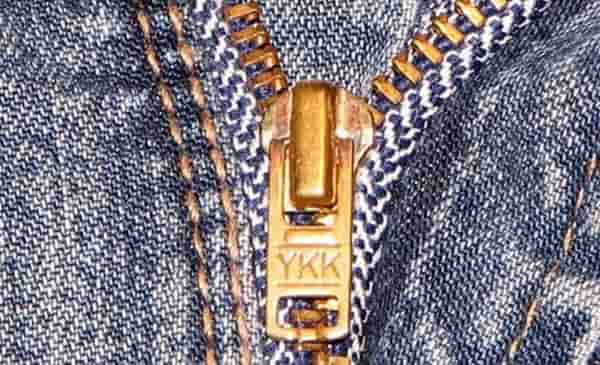
A zipper may represent only a small part of a garment, but its combination of fabric, metal and other components can make clothing more difficult to recycle.
YKK is now examining whether discarded textiles can be returned to this often-overlooked component. The Japanese fastening manufacturer has developed an experimental EXCELLA zipper with nonwoven tape made partly from used clothing and other textile waste.
The concept was created with fashion designer Yuima Nakazato and Seiko Epson Corporation. It appeared in Nakazato’s “INFERNO” Autumn/Winter 2026–27 couture collection, presented in Paris on July 8, 2026. YKK publicly announced the project on July 13.
The development does not yet represent a commercial product launch. Instead, it demonstrates how recovered clothing fibres might be used in a technically demanding, high-value fashion component.
From unwanted clothes to zipper tape
The experimental tape was produced from nonwoven sheets created using Epson’s Dry Fiber Technology.
Rather than relying on a conventional water-intensive fibre-separation process, the technology mechanically breaks used textiles into fibres without water during the defibration stage. The recovered fibres can then be formed into new sheets.
This distinction is important. The claim relates specifically to fibre formation and should not be interpreted as proof that every stage of producing the material or zipper has no water footprint.
For the EXCELLA concept, the resulting nonwoven material was used as zipper tape for the first time, according to YKK.
Zipper tape is the fabric positioned along both sides of the fastening elements. It must remain dimensionally stable while tolerating repeated opening, closing, bending and sewing.
Using a relatively rigid nonwoven sheet in place of conventional woven tape therefore required more than simply substituting one material for another.
Engineers had to redesign the assembly process
YKK said its established manufacturing methods could not be applied directly to the recovered-fibre material.
The development team had to adjust how the polished metal elements were attached to the tape. It also selected a slider suited to the characteristics of the nonwoven sheet and worked to maintain practical opening and closing performance.
These adaptations illustrate one of the central difficulties in textile-to-textile recycling: a recycled material must do more than contain recovered fibres. It must also meet the mechanical, visual and manufacturing requirements of its intended application.
That challenge is particularly significant for EXCELLA, YKK’s premium zipper series. Its individual metal elements are polished to create the refined appearance expected in luxury clothing and accessories.
The project therefore combines a visibly high-end component with material recovered from garments that might otherwise have entered lower-value recycling streams.
Couture provides a testing ground
The recycled zipper tape was incorporated into pieces from Yuima Nakazato’s “INFERNO” collection.
Couture offers designers and suppliers an environment in which experimental materials can be tested through highly specialised garments before industrial-scale production is considered.
The collection was shown in Paris on July 8, with YKK confirming the collaboration several days later. Recent industry reporting has also described the zipper as a concept developed jointly by YKK, Epson and Nakazato rather than a product already available across YKK’s catalogue.
Nakazato’s work has repeatedly examined the environmental and social consequences of clothing disposal. The designer has paid particular attention to garments exported from consumer markets and accumulated in countries including Kenya.
For this collaboration, that wider concern was translated into a specific design question: can fibres from unwanted clothing be incorporated into a luxury fastening component?
Why zippers matter to textile circularity
Efforts to make fashion more circular often focus on a garment’s primary fabric. Trims such as zippers, buttons, labels, coatings and decorative elements receive less attention, even though they can affect recyclability.
A polyester garment fitted with metal fasteners and components made from several polymers may require disassembly or additional sorting before its materials can be recovered.
The composition of a zipper can also influence whether the entire garment is suitable for fibre-to-fibre recycling.
Improving the recycled content of zipper tape does not solve these problems on its own. The metal elements, slider, coatings, thread and end stops must still be considered when assessing the complete product.
Nevertheless, using discarded textile fibres in a functional trim could create an additional destination for recovered material and encourage manufacturers to evaluate every component of a garment. recycled zipper tape
A higher-value use for recovered fibres
Much of today’s textile waste is still exported, incinerated, landfilled or converted into lower-grade products such as insulation, padding and cleaning materials.
These applications can divert waste from disposal, but they do not necessarily return fibres to clothing or other products with equivalent value.
The YKK concept investigates a different pathway. It places recovered textile material in a premium component intended for couture garments.
This does not yet demonstrate that recycled zipper tape can be manufactured economically at scale. YKK has not announced a commercial release date, production volume or verified environmental assessment for the concept.
Its significance instead lies in showing that discarded clothing can potentially be engineered for a specialised use requiring both functionality and a high-quality appearance.
Building on YKK’s recycled-material strategy
The EXCELLA experiment is not YKK’s first project involving textile waste.
The company already produces NATULON Fiber Sourced zipper tape using recycled polyester derived from discarded clothing and other textile waste. It has also developed variants designed to increase the proportion of recycled material used across zipper components.
In April 2026, YKK reported that products in its broader NATULON zipper series had reached 56% of its global zipper sales by the end of fiscal 2025. NATULON includes several types of recycled-material zipper and is not limited to products sourced from discarded clothing.
The experimental EXCELLA design takes a different technical route. Instead of turning textile waste into conventional recycled polyester yarn, it uses regenerated nonwoven sheets as the physical zipper tape.
That approach could expand the possible applications for fibres that are unsuitable for conventional yarn production.
Dry processing could broaden material options
Epson originally developed Dry Fiber Technology through expertise associated with its printing operations.
The process separates and reforms fibrous materials without water during defibration. It has been investigated for applications involving paper, clothing fibres and other recovered materials.
Avoiding water at this particular stage may be valuable in regions where water use, wastewater treatment or wet-processing infrastructure creates environmental and economic constraints.
However, meaningful comparisons with conventional zipper tape will require complete data covering energy consumption, fibre yield, additives, durability, manufacturing waste and end-of-life recovery.
Neither the concept announcement nor recent reporting provides a full lifecycle assessment. Claims that the zipper is categorically more sustainable than every conventional alternative would therefore be premature.
Durability will be a critical test
A circular product must remain functional for an appropriate period.
If a zipper fails before the garment fabric, replacing the entire item may create more waste and offset some of the benefits associated with recycled content. Any future commercial version will consequently need to satisfy demanding tests for opening cycles, tensile strength, dimensional stability and resistance to laundering or cleaning.
Material consistency could present another challenge. Used clothing varies in fibre composition, colour, finishing chemicals and condition. Producing uniform nonwoven sheets from changing feedstock will require effective collection, identification and quality-control systems.
The concept’s performance in a couture collection is an initial demonstration, not proof that it can immediately meet the production volumes and specifications required by the wider clothing market.
What happens next
YKK says it will use the knowledge gained from the collaboration to support further development of the EXCELLA range and respond to changing requirements among luxury fashion companies.
The next meaningful indicators will be whether the company progresses from a concept to pilot production, publishes performance data or introduces the material as a commercial option.
Information about the proportion of recovered textile content would also help buyers assess the product more accurately. YKK currently describes the nonwoven tape as being partially derived from used clothing and other textile materials but does not disclose a precise percentage in its announcement.
A lifecycle assessment comparing the concept with standard EXCELLA tape would provide further evidence regarding water, energy, emissions and material recovery.
A small component with wider implications
YKK’s recycled zipper tape will not resolve the fashion industry’s textile-waste problem by itself.
It does, however, show why circular design must extend beyond a garment’s most visible fabric. Fasteners and other trims influence product durability, material separation and the feasibility of recycling an entire item.
The collaboration also demonstrates the value of connecting different parts of the supply chain. Nakazato supplied the design context, Epson contributed its fibre-forming technology and YKK adapted its fastening expertise to an unfamiliar material.
If the concept eventually proves durable, scalable and environmentally preferable, it could offer recovered clothing fibres a higher-value application while encouraging fashion brands to examine the circularity of every component they use.
For now, the experimental EXCELLA zipper should be understood as a promising technical demonstration—not yet as a finished solution to textile-to-textile recycling.
Key facts
Product: Concept EXCELLA zipper with nonwoven recycled zipper tape
Material source: Used clothing and other discarded textile materials
Project partners: YKK Corporation, Seiko Epson Corporation and Yuima Nakazato
Material technology: Epson Dry Fiber Technology
First fashion application: YUIMA NAKAZATO “INFERNO” couture collection
Collection presentation: July 8, 2026, in Paris
YKK announcement: July 13, 2026
Commercial status: Experimental concept; no general release announced
Sources and verification
This article is based principally on YKK Corporation’s official announcement published on July 13, 2026. The timing, collaborators and concept status were cross-checked against recent specialist textile and fashion-industry coverage published between July 13 and July 14, 2026.
Alliance Fibres Expands into Textile-to-Textile Recycling with T2T Polyester Fibres
More…