South Korea Backs AI Recycling for Textiles and Tyres
South Korea recycling tech
South Korea Invests in AI Recycling for Textiles and Tyres
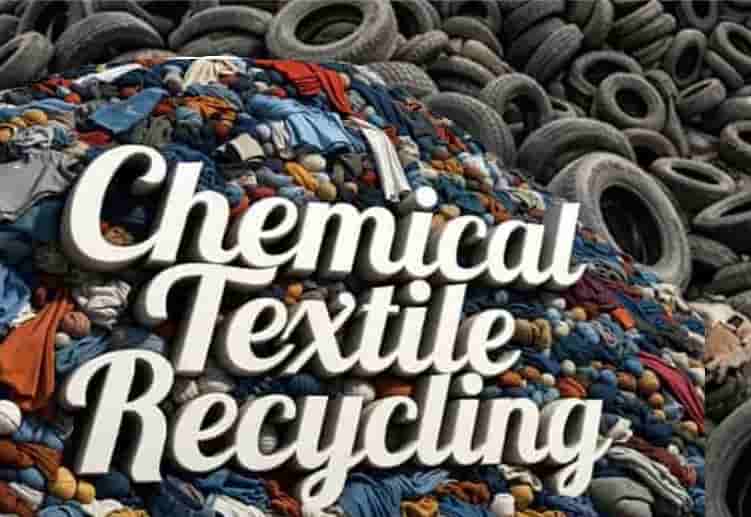
South Korea is committing KRW 73 billion, approximately EUR 42.8 million, to a five-year research programme intended to transform discarded clothing and end-of-life tyres into higher-quality industrial raw materials.
Running from 2026 through 2030, the initiative will combine artificial intelligence, automated sorting, material recovery and advanced tyre-processing technologies. Its wider objective is to move recycling away from exports, fuel production and other relatively low-value applications.
The programme is being led by South Korea’s Ministry of Climate, Energy and Environment in partnership with the Korea Environmental Industry and Technology Institute. It will allocate KRW 25 billion to textile-related technologies and KRW 48 billion to tyre recycling and commercialisation.
Why South Korea is targeting difficult waste streams
Clothing and tyres contain mixtures of materials that are difficult to separate and recover without losing quality.
Discarded garments can combine polyester, nylon, cotton, elastane, dyes, coatings, buttons and metal zippers. These components complicate both mechanical and chemical recycling.
According to the South Korean government, much of the clothing collected through domestic collection systems is currently exported. Some of what remains is converted into construction products rather than returned to textile manufacturing.
Waste tyres present a different problem. More than 60% are currently used as thermal feedstock, including solid-fuel applications. Some recovered material is processed into recycled carbon black, but performance and durability limitations have restricted its use in new tyres to comparatively small proportions.
South Korea recycling tech researchers will therefore concentrate on recovering materials that are consistent enough to re-enter demanding manufacturing processes.
AI could improve textile identification
A central part of the textile programme is an automated system capable of sorting garments and textile waste by fibre composition.
The government has set a target of more than 95% sorting and classification accuracy. Artificial intelligence will be combined with material-recognition technologies to distinguish between different fibres and identify items that require separate processing.
Reliable identification is essential because mixed or incorrectly classified fibres can reduce the strength, colour consistency and overall quality of recycled material.
Researchers will also develop processes for turning sorted textile waste into usable feedstock. Potential applications include:
-
fibres and raw materials for new clothing;
-
automotive interior components;
-
construction materials;
-
civil-engineering products.
The more ambitious goal is to keep suitable fibres within productive supply chains rather than immediately downcycling them into applications from which they are unlikely to be recovered again.
From discarded clothes to new manufacturing inputs
Automated sorting alone will not establish a closed-loop textile system. The recovered material must also satisfy manufacturers’ technical requirements.
The programme will consequently examine the complete pathway from collection and identification to processing and product manufacture. This includes dealing with blended fibres, accessories, contamination and variations in fabric condition.
Commercial viability will be another important test. A technically effective recycling process will have limited impact unless it can operate at industrial volumes and produce material at a predictable price and quality.
The government expects the research to strengthen South Korea’s domestic recycling infrastructure while creating more valuable uses for collected textiles.
Tyre recycling aims for higher-quality carbon black
The larger share of the funding will support tyre recycling.
End-of-life tyres contain rubber compounds, steel, textile reinforcement and carbon-based materials. Pyrolysis can break down the rubber in a low-oxygen environment and recover products that include oil, gas and recovered carbon black.
However, recovered carbon black can contain impurities or have properties that differ from the highly controlled grades used in tyre manufacturing. This can limit how much manufacturers are able to incorporate without affecting safety, durability or performance.
South Korea’s programme will work on improved shredding, pretreatment and pyrolysis processes to produce more consistent recycled material.
Targeting more than 15% recycled carbon black
The current programme aims to develop tyre-manufacturing technology capable of using more than 15% recycled carbon black.
South Korea’s ministry says existing quality constraints can make it difficult to exceed approximately 5% in new tyre production. Raising that threshold would represent an important step towards genuine tyre-to-tyre recycling.
Success will depend not only on the quantity recovered but also on particle characteristics, purity, consistency and the material’s effect on tyre performance.
The programme therefore covers both sides of the value chain: production of higher-quality recycled feedstock and its practical incorporation into new tyres.
Commercial deployment is part of the programme
The initiative is not limited to laboratory research.
The government wants the resulting technologies to be demonstrated, commercialised and adopted throughout the recycling industry. This emphasis should help researchers address operational factors such as energy consumption, process stability, material traceability and production costs.
It could also encourage closer cooperation between waste collectors, recyclers, technology developers and manufacturers.
By connecting material recovery with actual product specifications, South Korea is attempting to reduce a common circular-economy problem: recovered materials that exist in theory but cannot consistently meet the requirements of industrial customers. South Korea recycling tech
Preparing exporters for European ecodesign rules
The investment also has a trade and regulatory dimension.
The European Union’s Ecodesign for Sustainable Products Regulation entered into force on 18 July 2024. It provides a legal framework through which product-specific requirements can be established for durability, circularity, environmental performance and product information.
Textiles and tyres have been identified among the priority product groups in the EU’s 2025–2030 ecodesign working plan. Preparatory work is continuing before detailed requirements are finalised.
South Korea’s ministry expects subordinate EU rules for clothing and tyres to be adopted during the first half of 2027, with implementation anticipated in the second half of 2028. These dates remain part of a developing regulatory process and could change as European institutions complete the relevant measures.
Products manufactured outside the European Union will still need to meet applicable ecodesign requirements when they are placed on the EU market.
Better material data will become increasingly important
Future European requirements may extend beyond the physical composition of a product.
Work is underway on the EU Digital Product Passport, which is intended to make standardised product information accessible through identifiers and data carriers. The European Commission is developing rules governing the information infrastructure, access rights and supporting registry.
For South Korean manufacturers, this means that technical advances in recycled content may need to be supported by reliable data on material origin, composition, processing and environmental performance.
The new recycling programme could therefore provide value beyond waste treatment. It may help companies build the material knowledge and traceability systems required to compete in markets with stricter sustainability rules.
A shift from waste disposal to material production
The significance of the programme lies in its focus on output quality.
Recycling rates alone do not reveal whether recovered materials are replacing virgin resources or merely moving into lower-grade applications. By setting targets for sorting accuracy and recycled carbon black content, South Korea is linking public investment to measurable industrial outcomes.
The initiative will still face major challenges. Mixed textiles remain difficult to process, while recycled tyre materials must satisfy strict performance and safety requirements. Commercial plants must also prove that they can operate economically at scale.
Nevertheless, the programme reflects a clear change in direction. Clothing and tyres are no longer being treated simply as waste streams requiring disposal. They are increasingly being approached as sources of secondary raw materials for manufacturing.
If the technologies reach commercial scale, South Korea could reduce dependence on low-value recycling, strengthen domestic material supplies and give exporters an earlier route towards compliance with emerging European product rules.
Key facts
Total investment: KRW 73 billion, approximately EUR 42.8 million
Programme period: 2026–2030
Textile technology funding: KRW 25 billion
Tyre technology funding: KRW 48 billion
Textile sorting target: More than 95% accuracy
Tyre manufacturing target: More than 15% recycled carbon black
Lead organisations: Ministry of Climate, Energy and Environment and the Korea Environmental Industry and Technology Institute
Sources and methodology
This report is based primarily on the South Korean Ministry of Climate, Energy and Environment’s official programme announcement dated 2 July 2026. Regulatory context was checked against current European Commission information and the EU-supported preparatory study on tyre ecodesign.
Textile Recycling Breakthrough Industrial Validation Success
More…