Oil Prices and Iran War: Why Brent and WTI Are Rising
Oil prices Iran war
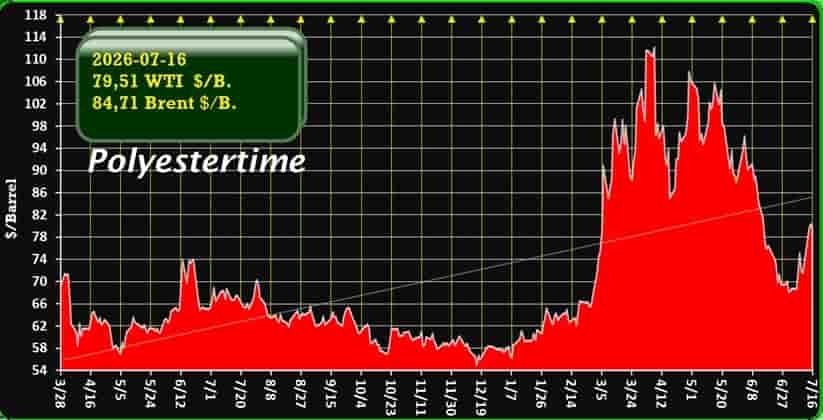
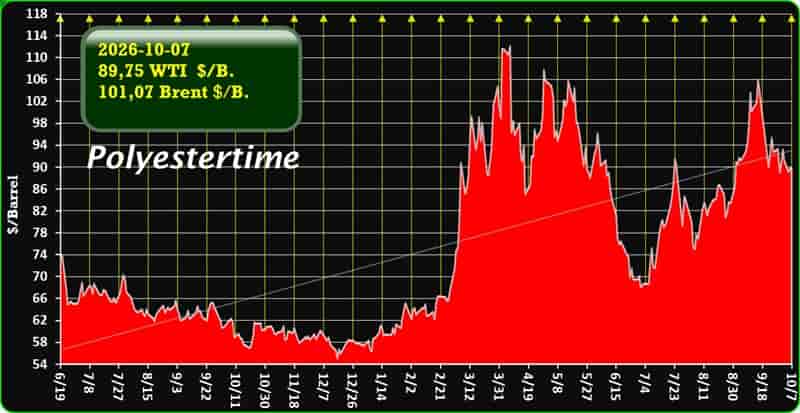
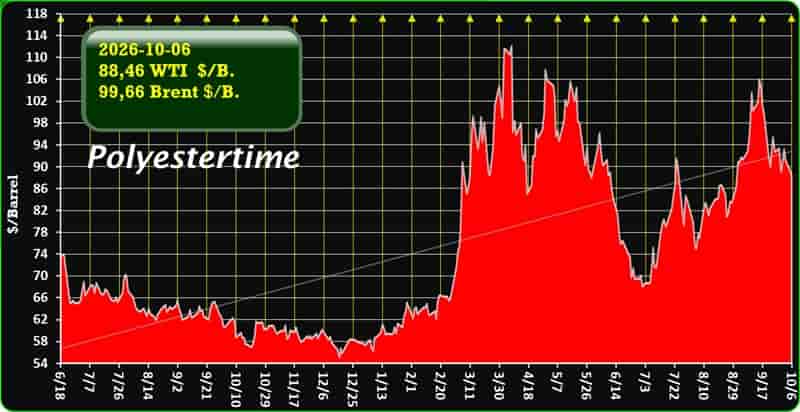
Oil Prices and Iran War: Why Brent Is Near $84 and WTI Near $79
Updated July 16, 2026
Brent crude is trading at approximately $84 a barrel, while West Texas Intermediate, or WTI, is close to $79 a barrel. The renewed rise in oil prices reflects mounting concern that the US-Iran war could further disrupt shipping and energy exports through the Strait of Hormuz.
The latest military escalation has increased the geopolitical risk premium built into crude prices. However, the market is not responding only to battlefield developments. Traders are also weighing recovering oil supplies, weaker demand, global inventories and the possibility of renewed diplomatic negotiations.
Oil prices at a glance
At the time of writing:
-
Brent crude: approximately $84 per barrel
-
WTI crude: approximately $79 per barrel
-
Brent-WTI spread: approximately $5 per barrel
-
Market conditions: highly volatile and sensitive to military news
These figures should be treated as an approximate snapshot rather than a fixed closing price. Oil futures can change rapidly as new information emerges.
Why oil prices are rising
The immediate driver is the renewed escalation between the United States and Iran.
US forces have expanded their strikes against Iranian targets, while Iran has responded with missile and drone attacks in the region. The latest exchanges have severely weakened the interim agreement that had reduced hostilities and supported a partial recovery in commercial traffic through the Strait of Hormuz.
This deterioration matters to oil markets because the conflict is occurring close to one of the world’s most important energy corridors.
The International Energy Agency describes the Strait of Hormuz as the principal export route for oil produced by Saudi Arabia, the United Arab Emirates, Kuwait, Qatar, Iraq, Bahrain and Iran. A prolonged disruption could restrict physical exports and make much of the world’s spare oil-production capacity harder to access.
Oil prices are therefore rising partly because buyers are paying an additional premium for the possibility of future supply losses.
The Strait of Hormuz remains the central risk
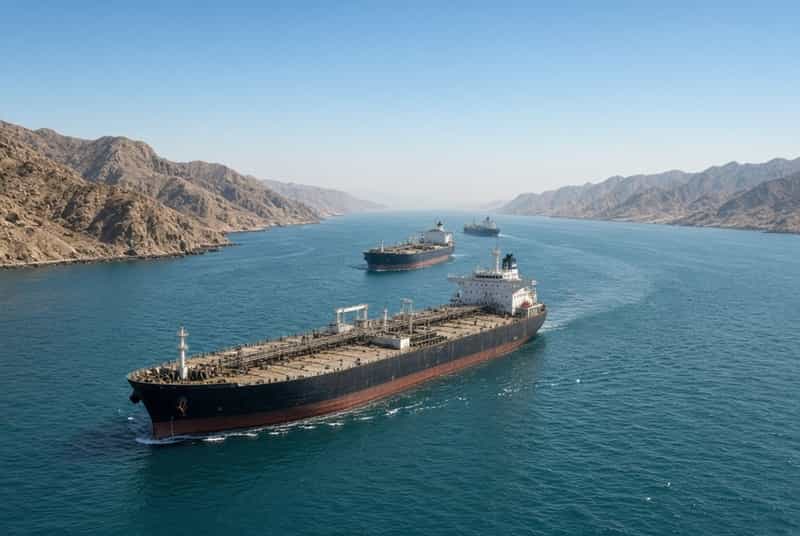
The Strait of Hormuz connects the Persian Gulf with the Gulf of Oman and international shipping routes. Before the war, it handled a substantial share of global oil and liquefied natural gas trade.
Iran effectively closed the strait when the war began on February 28, 2026. The resulting interruption sent energy and other commodity prices sharply higher. Although shipping flows later began to recover under an interim agreement, renewed attacks and restrictions have once again made passage uncertain.
The problem is not limited to a formal closure.
Commercial shipping companies may delay voyages even when a route is technically open. Threats involving missiles, drones, mines, seizures or naval confrontations can increase insurance premiums, reduce tanker availability and discourage crews and operators from entering the area.
Consequently, oil prices may rise before an actual supply shortage appears in official data.
Why Brent is trading above WTI
Brent is the leading international oil benchmark and is more directly exposed to disruptions affecting seaborne crude supplies.
WTI is the principal US benchmark. It is influenced more heavily by American production, pipeline capacity, refinery demand and domestic inventories.
When the main threat concerns exports from the Persian Gulf, Brent often carries a larger geopolitical premium. This helps explain why Brent is currently trading about $5 above WTI.
The spread can widen further when international supplies become harder to obtain. It can narrow when shipping conditions improve or when US crude inventories decline more rapidly than expected.
Why oil is not trading at its previous wartime highs
The current prices remain elevated, but they are well below the peaks recorded during the most severe phase of the disruption.
The IEA reported that crude benchmarks declined sharply in June as the interim US-Iran agreement supported a recovery in oil flows through the Strait of Hormuz. North Sea prices had fallen to around $68 a barrel by early July before the latest escalation reversed part of that decline.
Several factors have prevented prices from returning immediately to their earlier highs.
First, some oil flows and production have recovered from the initial shock. Second, producers outside the most affected areas have adjusted supply. Third, high prices have reduced consumption in some markets.
The IEA estimates that global oil demand fell sharply during the second quarter of 2026 as consumers and governments reacted to the energy shock.
This creates a tension within the market: geopolitical risks are pushing prices higher, while weaker demand and recovering production are limiting the increase.
What the EIA expects
The US Energy Information Administration’s July outlook offers a comparatively bearish baseline.
The agency reported that Brent averaged approximately $85 a barrel in June, down from its May average and substantially below the April 2026 peak. It forecasts Brent to average around $74 a barrel during the third quarter of 2026, assuming increasing supply and continued inventory accumulation.
That forecast is not a guarantee.
It is based on assumptions about shipping, production, inventories and the duration of the conflict. A major new disruption in the Strait of Hormuz could quickly invalidate the lower-price scenario.
The difference between the current price near $84 and the EIA’s quarterly forecast near $74 illustrates how much uncertainty is embedded in the market.
Three possible oil-price scenarios
1. De-escalation and reopening
A credible ceasefire, safer tanker passage and a sustained recovery in Gulf exports could remove part of the geopolitical premium.
Under this scenario, Brent could move closer to the EIA’s forecast range as traders focus again on rising inventories and weak demand.
2. Prolonged but contained conflict
If military strikes continue without causing a major additional loss of exports, oil prices may remain volatile around elevated levels.
Brent could continue trading at a premium to WTI, with prices responding sharply to every announcement concerning shipping, negotiations or regional attacks.
3. Severe supply disruption
A wider conflict, sustained closure of the strait or serious damage to export infrastructure would create the most bullish scenario for oil.
The physical loss of Gulf supplies would be difficult to replace rapidly. The International Energy Agency warns that disruption in the area affects not only existing exports but also access to much of the world’s spare production capacity.
In that situation, prices could rise substantially above their current levels. The scale of the increase would depend on the volume and duration of the disruption.
What higher oil prices mean for consumers
Higher crude prices generally increase the cost of producing petrol, diesel, aviation fuel, heating oil and petrochemical products.
The effect does not appear immediately or equally in every country. Retail prices are also shaped by taxes, refining margins, exchange rates, transport costs and government policies.
Countries that import most of their energy are particularly exposed. A stronger US dollar can amplify the impact because crude oil is generally priced in dollars.
Persistently expensive energy can also make inflation harder to control. Businesses face higher freight, manufacturing and agricultural costs, which may eventually be passed on to consumers.
What investors and businesses should monitor
The most important indicator is not the number of military strikes by itself. It is whether the conflict reduces the amount of oil that can be produced, insured, loaded and transported.
Key developments include:
-
Commercial tanker traffic through the Strait of Hormuz
-
Attacks on ports, pipelines, refineries or export terminals
-
Changes in maritime insurance and freight costs
-
Iranian and US statements about blockades or shipping rules
-
Progress toward a verifiable ceasefire
-
US and global oil inventories
-
OPEC+ production decisions
-
Demand trends in China, India, Europe and the United States
Weekly price movements should be interpreted alongside these physical market indicators.
Oil-price outlook
With Brent near $84 and WTI near $79, the oil market is pricing in meaningful disruption risk but not a complete and prolonged loss of Gulf exports.
The current balance remains fragile.
A diplomatic breakthrough could send prices lower because supply is recovering and official forecasts point toward growing inventories. A further military escalation could have the opposite effect, particularly if commercial shipping through the Strait of Hormuz declines again.
For now, the Strait of Hormuz remains the single most important variable. As long as its security is uncertain, oil prices are likely to remain volatile and highly responsive to developments in the US-Iran war. oil prices Iran war
Frequently asked questions
Why are oil prices rising during the US-Iran war?
Prices are rising because the conflict threatens oil production and shipping through the Strait of Hormuz. Traders add a geopolitical risk premium when they believe future supplies may be interrupted.
Why is Brent more expensive than WTI?
Brent reflects international seaborne oil conditions and is more exposed to Middle Eastern supply risks. WTI is more closely connected to the US domestic market.
Could Brent rise above $100 again?
It is possible under a severe supply-disruption scenario, but it is not certain. The outcome would depend on how much production or shipping is lost and how long the disruption lasts.
Could oil prices fall despite the war?
Yes. Prices could decline if tanker traffic recovers, negotiations reduce the threat to supplies, global inventories rise or economic weakness lowers oil demand.
Why is the Strait of Hormuz so important?
It is the main export route for several major Gulf oil and gas producers. Alternative pipelines can move only part of the volume normally transported through the strait.
Editorial note: Oil prices change continuously. The benchmark figures in this article are approximate levels observed on July 16, 2026 and should not be interpreted as investment advice.
US-Iran War Pushes Oil Prices Higher
More…