Game-Changing Closed-Loop Battery Recycling Breakthrough Powers General Motors Electric Fleet
Game-Changing Closed-Loop Battery Recycling Breakthrough Powers General Motors Electric Fleet
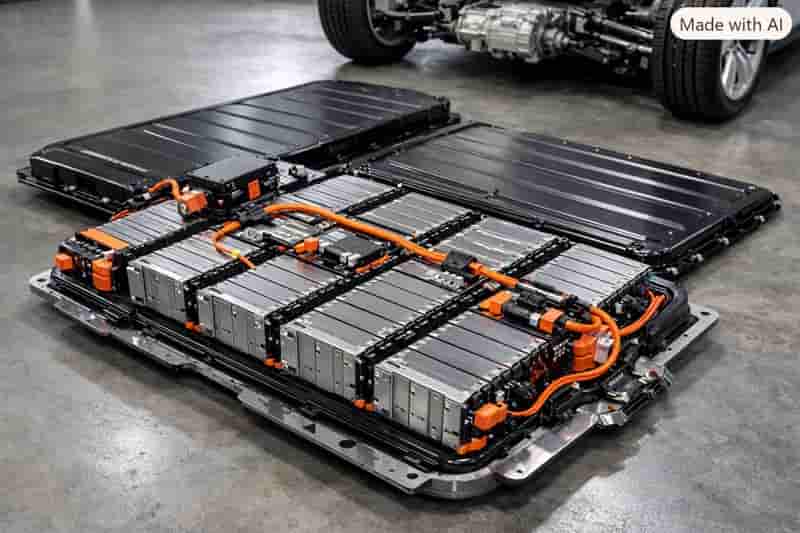
Lithium-ion batteries serve as the beating heart of the global electric vehicle (EV) revolution. Packed with high-value critical minerals—such as nickel, cobalt, manganese, and lithium—these power packs enable long-range zero-emission driving. However, extracting raw minerals from primary mining operations carries heavy environmental costs, energy consumption, and supply chain vulnerabilities. To solve this challenge, General Motors (GM) has officially launched a pioneer closed-loop EV battery recycling pilot program, proving that end-of-life battery materials can be fully restored to power factory-new vehicles.
The milestone initiative demonstrates that critical battery materials do not lose their performance integrity when reclaimed through modern hydrometallurgical and mechanical recovery systems. By building a self-sustaining circular supply chain right inside North America, automakers can keep valuable resources circulating indefinitely while protecting production against raw material price spikes.
What Is Closed-Loop EV Battery Recycling?
Closed-loop battery recycling is a circular manufacturing system designed to recover critical minerals from spent batteries and process them back into high-grade precursor raw materials. Unlike conventional downcycling—where reclaimed materials end up in lower-grade industrial applications—closed-loop networks return battery-grade elements back into the primary battery cell supply chain.
In this closed circle, spent battery modules undergo careful dismantling and mechanical shredding to yield a concentrated intermediate powder known as black mass. Advanced chemical refining then extracts individual metallic salts, allowing engineers to formulate new Cathode Active Material (CAM) that matches or exceeds virgin mined quality.
Why Automakers Are Rapidly Adopting Circular Battery Models
Leading automotive manufacturers are turning toward closed-loop recycling systems due to four main structural drivers:
-
Environmental Sustainability: Traditional mining for cobalt and lithium involves land disturbance, significant water use, and notable carbon emissions. Hydrometallurgical recovery cuts down the life-cycle carbon footprint of battery manufacturing dramatically.
-
Cost Optimization and Supply Stability: Raw mineral prices fluctuate based on geopolitical events and mining constraints. Recycling domestic battery scrap cushions automakers against market volatility.
-
Regulatory Compliance: Environmental protection agencies and global policy standards, such as the EU Battery Regulation, increasingly enforce strict recycled-content quotas and extended producer responsibility rules.
-
Brand Reputation and Consumer Trust: Eco-conscious buyers demand clean supply chains. Demonstrating full lifecycle stewardship strengthens consumer trust in electric mobility.
Inside GM’s Closed-Loop Battery Pilot Program
GM’s pilot program successfully demonstrates the operational viability of circular battery manufacturing at scale. Working alongside battery management leader Cirba Solutions, GM collected 80 end-of-life electric vehicle battery packs. These units were safely transported to specialized recycling facilities in Ohio, where they were processed into high-purity black mass.
Through advanced chemical refining, the recovered black mass yielded over 12 metric tons of new Cathode Active Material (CAM) containing 100 percent recycled nickel, cobalt, and manganese. This recycled CAM was then delivered to Ultium Cells—GM’s joint venture with LG Energy Solution—to manufacture commercial-grade EV cells.
Finally, GM assembly teams integrated these recycled-content cell modules into production vehicles, including GMC Sierra EVs built at Factory ZERO and Spring Hill assembly centers. These vehicles have completed final inspection and represent the first commercial fleet powered by fully circular cathode materials. Closed-Loop Battery Recycling
Strengthening Domestic Supply Chains for the Electric Future
With nearly 14 million electric vehicle batteries expected to reach their end-of-life globally by 2040, building scalable domestic recycling infrastructure is vital. Hydrometallurgical processes now achieve recovery rates up to 95 percent for nickel, cobalt, and manganese, along with up to 80 percent for lithium.
As Kurt Kelty, GM’s Vice President of Battery and Sustainability, and program leads emphasize, proving that recycled battery materials perform identically to virgin minerals secures national energy security, lowers production costs over time, and establishes a blueprint for sustainable transportation worldwide.
More…