Driving Sustainability: Envalior and Secara Seek Automotive Partners for Closed-Loop PA6 Recycling
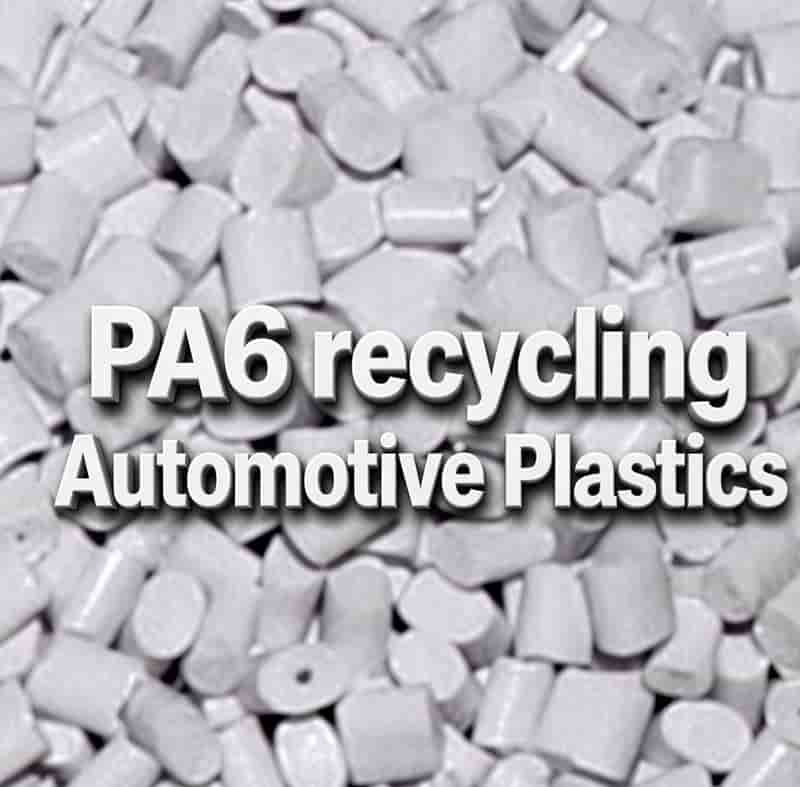
Closed-loop PA6 recycling
Driving Sustainability: Envalior and Secara Seek Automotive Partners for Closed-Loop PA6 Recycling
The automotive industry stands at a critical crossroads. With tightening environmental regulations, shifting consumer expectations, and an urgent mandate to reduce lifecycle carbon emissions, automotive original equipment manufacturers (OEMs) and Tier 1 suppliers are under immense pressure to overhaul their material supply chains. A landmark development in this space is the strategic collaboration between Envalior, a global leader in engineering materials, and Secara, a pioneering clean-tech innovator. Together, these companies are actively seeking forward-thinking automotive partners to scale closed-loop PA6 (Polyamide 6) recycling.
This partnership addresses one of the most stubborn hurdles in the circular economy: transforming complex, end-of-life vehicle (ELV) plastic waste into high-performance, virgin-quality engineering plastics without sacrificing safety, durability, or design freedom. By utilizing advanced chemical recycling and aligning directly with incoming European regulations, this initiative is poised to reshape how high-performance polymers are sourced, utilized, and reborn within modern mobility. closed-loop PA6 recycling
The Regulatory Catalyst: Understanding the EU End-of-Life Vehicles Regulation
To fully grasp why the search for automotive partners is accelerating so rapidly, one must look at the regulatory landscape taking shape in Europe. The European Commission has officially adopted the End-of-Life Vehicles Regulation (ELVR), a sweeping legislative framework designed to make the automotive sector fully circular. closed-loop PA6 recycling
Under the terms of the ELVR, regulatory compliance mandates that at least 15% of all plastic used in the manufacturing of new vehicles must originate from recycled sources within six years of the regulation taking full effect. Even more challenging for traditional recycling supply chains, this requirement scales up to 25% after a decade.
Crucially, the legislation introduces a stringent sub-quota: 20% of this required recycled content must be sourced directly from closed-loop applications. This means the plastic cannot simply come from upcycled post-consumer packaging or unrelated bottle waste; it must be recovered directly from end-of-life vehicles or from structural components removed during a vehicle’s operational lifecycle.
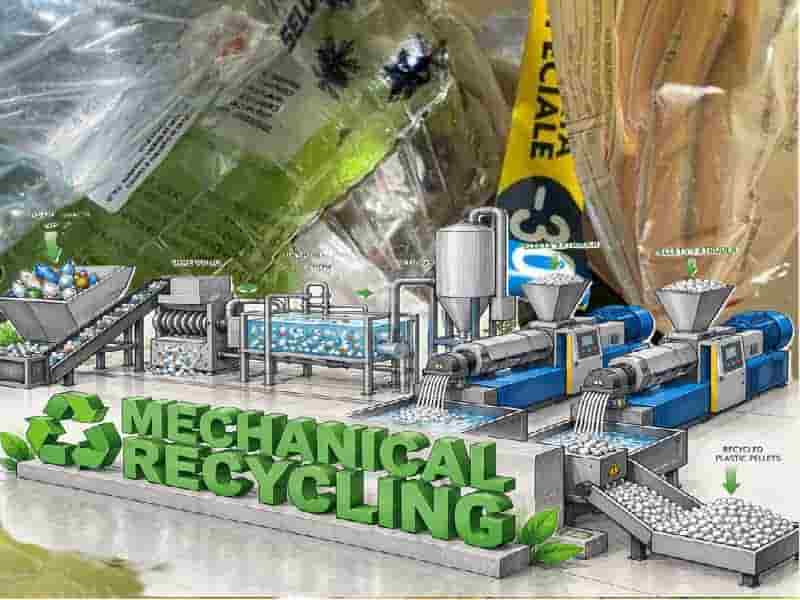
For demanding technical applications under the hood and throughout the cabin, standard mechanical recycling methods often fall short. Mechanical recycling degrades polymer chains over multiple cycles and struggles to eliminate stubborn contaminants, making it nearly impossible to meet the strict structural and safety tolerances required for modern vehicles. This regulatory reality has forced the industry to look beyond conventional boundaries, establishing the vital necessity for advanced chemical recycling pathways. closed-loop PA6 recycling
Overcoming Complexity: Secara’s Catalytic Depolymerization Breakthrough
At the heart of this collaborative effort is Secara’s proprietary technology, which tackles the historically difficult challenge of processing mixed industrial and automotive waste streams. End-of-life vehicle plastics are rarely pure; they are typically loaded with reinforcing agents, glass fibers, flame retardants, colorants, and various chemical impurities that ruin standard recycling batches.
Secara has bypassed these traditional obstacles through a novel catalytic depolymerization process. Instead of trying to melt and remold degraded plastic composites, Secara’s technology selectively targets and breaks down technical polymers into their fundamental molecular components.
By successfully breaking down complex, contaminated industrial mixed-waste streams, the process yields drop-in quality monomers—specifically caprolactam—for PA6 production. According to Secara leadership, this recovery route bridges the gap between commercial viability and extreme technical purity. It provides a scalable platform that can handle contaminated automotive plastics and transform them into raw materials that perform identically to fossil-derived virgin feedstocks. closed-loop PA6 recycling
Envalior’s Role: Seamless Integration into Existing Manufacturing Lines
While chemical innovation is a vital first step, the true test of any sustainable material is its ability to integrate seamlessly into existing industrial ecosystems. Envalior—formed through the union of high-performance materials powerhouses—brings deep engineering expertise and market access to the table.
Through this partnership, the caprolactam recovered by Secara is designed as a true “drop-in” raw material. This means it can be fed directly into Envalior’s established PA6 polymerization processes without requiring any modifications to manufacturing equipment, product designs, or lengthy re-qualification procedures.
For automotive OEMs and Tier 1 suppliers, this is a game-changer. Adopting circular materials usually entails massive capital expenditures to recalibrate machinery or redesign components to account for variable material properties. By eliminating these friction points, Envalior and Secara are drastically shortening the time-to-market for sustainable automotive components. This initiative directly supports Envalior’s overarching CARES sustainability strategy, reinforcing the company’s commitment to decarbonizing supply chains and achieving ambitious environmental goals without compromising material performance. closed-loop PA6 recycling
The Call for Ecosystem Collaboration and Industry Partnerships
Developing advanced recycling technologies in a vacuum is not enough; creating a genuine closed-loop economy requires active coordination across the entire automotive value chain. This is why Envalior and Secara are actively reaching out to automotive partners, including vehicle manufacturers, tier-suppliers, and dismantlers.
A successful closed-loop framework relies on a predictable, steady stream of end-of-life vehicle parts flowing back into the recycling loop, matched with a guaranteed off-take market for the resulting circular compounds. By forging strategic partnerships now, stakeholders can pilot programs, validate material performance under real-world stress conditions, and secure compliance well ahead of enforcement deadlines. closed-loop PA6 recycling
Industry showcases, such as the Fakuma trade show, have served as major platforms for both companies to demonstrate these drop-in PA6 solutions to global automotive players, sparking deep interest from engineers and procurement leaders alike.
Looking Ahead: The Future of Circular Engineering Plastics
As the automotive sector transitions deeper into an era defined by electric mobility, lightweighting, and strict environmental accountability, the materials we choose matter more than ever. Structural components, connectors, housings, and under-the-hood elements built from high-performance polyamides must maintain absolute reliability under extreme thermal and mechanical loads.
The joint initiative by Envalior and Secara proves that circularity and high performance are no longer mutually exclusive. By uniting cutting-edge chemical depolymerization with century-strong engineering materials expertise, they provide a viable, scalable roadmap for compliance and sustainability. closed-loop PA6 recycling
For automotive brands looking to future-proof their vehicle lineups, eliminate regulatory risks, and meet aggressive corporate carbon-reduction targets, partnering in closed-loop PA6 recycling is an essential step forward. The technology is ready, the regulatory framework is set, and the pathway to true automotive circularity is wide open.
Automotive Plastic Recycling: Is Recycling Car Plastics Really Worth It?
More…