EU PET Resin Imports Face Massive Trade Investigation Risk
EU PET Resin Imports Face Massive Trade Investigation Risk
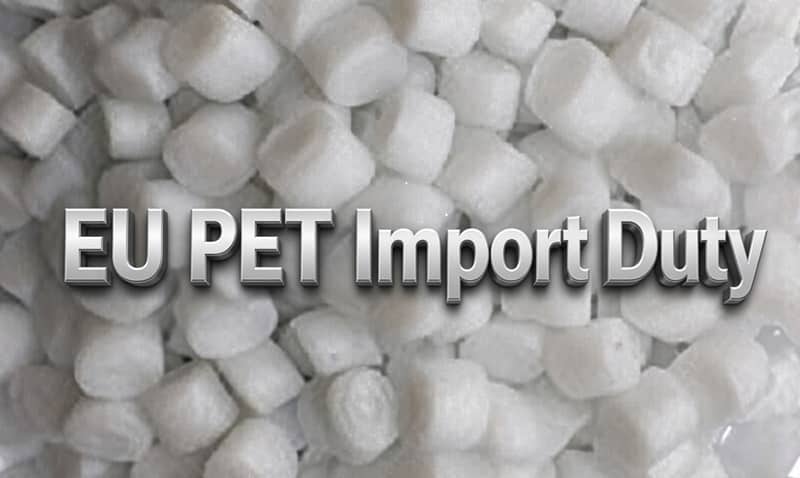
The European Commission has officially launched a broad safeguard investigation into rising imports of polyethylene terephthalate (PET) resin and key upstream chemical precursors. Triggered by an unprecedented influx of foreign chemical shipments, the probe aims to determine whether global overcapacities are inflicting severe financial and structural injury on domestic producers across the European Union. EU PET resin imports
PET resin serves as a critical raw material for primary industrial sectors, including beverage packaging, textiles, construction materials, and advanced manufacturing applications. If the Commission confirms that EU manufacturers face serious damage due to foreign market pressures, temporary emergency restrictions could soon apply to foreign imports across the entire block. EU PET resin imports
Escalating Overcapacity Triggers Emergency European Probe
European chemical manufacturers are grappling with severe market disruption. Official trade figures indicate that combined imports of PET resin and its core feedstocks surged from 2.12 million tonnes in 2021 to 2.70 million tonnes in 2025—a sharp 27% increase. During this same timeline, foreign imports expanded their share of total EU consumption from 27% up to 40%, while the ratio of imports relative to local European production leaped from 30% to 62%. EU PET resin imports
This surge is largely driven by massive international overcapacity and supply chain disruptions elsewhere, which lead foreign suppliers to divert excess volume into European markets. EU-based producers face high energy and operational costs, leaving them vulnerable to undercut pricing from overseas suppliers.
EU Import Growth Metrics (2021 vs. 2025)
------------------------------------------------------
Total Imports:         2.12M Tonnes  --> 2.70M Tonnes (+27%)
EU Consumption Share:  27%           --> 40%
Ratio to EU Production: 30%          --> 62%
Scope of Covered Materials Across the Value Chain
Unlike targeted trade actions that focus on specific countries, a WTO-aligned safeguard investigation evaluates market impact across all external import sources simultaneously. The European Commission’s inquiry spans four key segments of the PET production value chain:
-
Polyethylene Terephthalate (PET) Resin: Covers virgin PET, recycled PET (rPET), and PET glycol formulations with a viscosity number of 78 ml/g or higher (CN code 3907 61 00).
-
Terephthalic Acid (TA): Essential raw chemical input and related salts used directly in industrial polymerization (CN code 2917 36 00).
-
Mono-Ethylene Glycol (MEG): Key liquid reactant required for manufacturing polyester fibers and packaging resins (CN code 2905 31 00).
-
Purified Isophthalic Acid (PIA): Specialized chemical modifier used to enhance clarity and strength in structural resins (CN code ex 2917 39 85). EU PET resin imports
Overlapping Anti-Dumping Measures and Trade Enforcement
This broad safeguard investigation builds upon a network of existing EU trade protection measures targeting individual exporting nations:
-
China: Subject to definitive anti-dumping duties on finished PET resin imports.
-
India: Subject to ongoing anti-subsidy duties on PET exports.
-
South Korea & Mexico: Active anti-dumping duties apply to imports of terephthalic acid.
-
Saudi Arabia & United States: Anti-dumping duties currently restrict imports of mono-ethylene glycol. EU PET resin imports
While anti-dumping and anti-subsidy duties penalize unfair pricing or state subsidies from specific nations, a general safeguard measure addresses total import volumes regardless of country origin.
Regulatory Timeline and Industry Next Steps
The initiation of this investigation starts a strict regulatory countdown under European trade law:
-
Party Registration: Interested parties, including international exporters, importers, and industrial buyers, must register with the European Commission to present initial views.
-
Questionnaire Submissions: Detailed market questionnaires and evidence submissions must be completed and filed within 21 days of formal initiation.
-
Provisional Decisions: If preliminary findings indicate severe economic harm requiring fast intervention, provisional tariff-rate quotas or emergency import duties can be enacted within 200 days.
-
Final Ruling: Definitive safeguard measures require a qualified majority vote by EU Member States and must conclude within nine to eleven months. EU PET resin imports
Downstream Consequences for Supply Chains and Sustainability
If the European Commission imposes emergency quotas or blanket import tariffs, the impact will ripple beyond primary chemical refiners. Major consumer packaging manufacturers, beverage producers, textile makers, and automotive component suppliers will face shifting cost structures and potential raw material shortages. EU PET resin imports
Furthermore, inclusion of recycled PET (rPET) in the scope highlights the delicate balance between domestic market defense and Europe’s broader green transition goals. As regulatory deadlines approach, supply chain managers must reassess sourcing strategies to manage trade friction across European borders.
More…
Critical UK PET Import Duty Proposal Threatens Packaging Supply Chains