The Shocking Truth: Which Country Contributes the Most Plastic to the Ocean?
Which Country Contributes the Most Plastic to the Ocean?
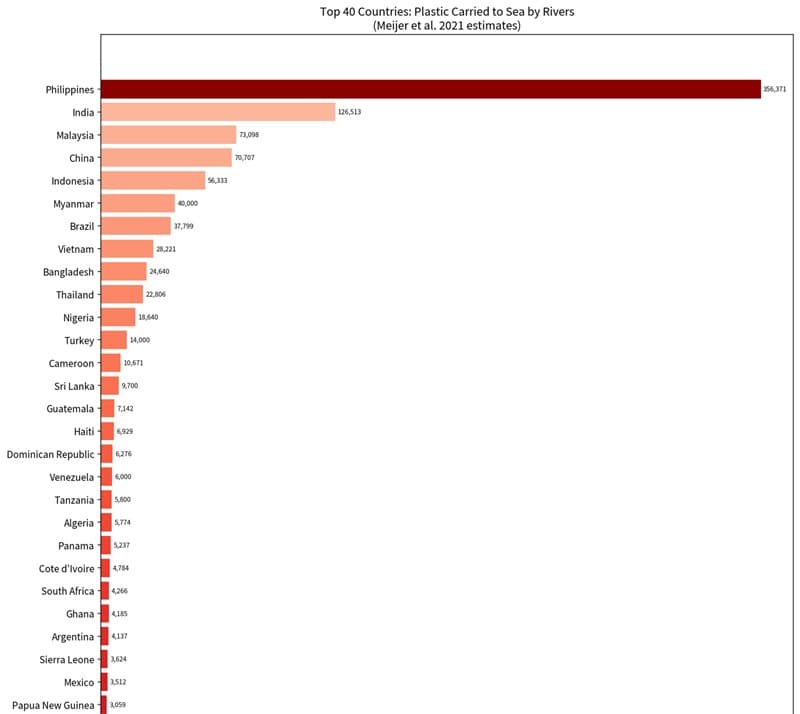
The Philippines is the single largest contributor of riverborne plastic waste entering the world’s oceans, accounting for roughly 356,000 metric tons annually—over one-third of all river-based marine plastic globally.
While Asia as a whole accounts for roughly 81% of ocean plastic emissions, recent 2026 environmental reports and regulatory shifts reveal a far more complex picture. Blaming a single nation overlooks the systemic failures of global waste trade, corporate overproduction, and stalled international diplomacy. ocean plastic pollution countries
Top 5 Countries Contributing Plastic to the Ocean
When researchers measure plastic entering the ocean directly from rivers and coastlines, five nations stand out as the primary geographic bottlenecks. Together, these five countries contribute roughly 70% of all riverine ocean plastic:
| Rank | Country | Estimated Annual Ocean Plastic Input | Primary Contributing Factors |
| 1 | Philippines | ~356,000 metric tons | Over 7,000 islands, dense coastal populations, and heavy reliance on single-use sachets. |
| 2 | India | ~126,000 – 130,000 metric tons | Massive population scale and rapid urbanization outpacing municipal waste collection. |
| 3 | Malaysia | ~73,000 metric tons | High coastal population density combined with years of importing foreign plastic scrap. |
| 4 | China | ~70,000 – 71,000 metric tons | Largest global producer of virgin plastics, though domestic river leakage has declined due to infrastructure upgrades. |
| 5 | Indonesia | ~56,000 metric tons | Archipelagic geography where seasonal monsoon rains flush uncollected waste from waterways into the sea. |
Note on Data Methodology: Rankings vary depending on whether studies measure total mismanaged land waste or direct river-to-ocean leakage. For example, while India generates the highest total volume of mismanaged macroplastic emissions on land (over 9.2 million tons), the Philippines leaks more directly into the sea due to its thousands of short, fast-flowing coastal rivers. ocean plastic pollution countries
Why Geography and Infrastructure Drive the Crisis
Environmental scientists stress that high ocean leakage in Southeast Asia is not caused by higher individual consumption. In fact, the average resident in the United States or Europe generates three to four times more plastic waste per person than a resident in India or the Philippines. ocean plastic pollution countries
Instead, three structural factors drive the crisis:
-
Archipelagic Geography: Nations like the Philippines and Indonesia consist of thousands of islands. Millions of people live within a few miles of the coast or along riverbanks, meaning uncollected trash has almost zero distance to travel before reaching saltwater.
-
The “Sachet Economy”: In lower- and middle-income nations, multinational consumer brands sell everyday goods—from shampoo to cooking oil—in tiny, multi-layered single-use plastic pouches. These sachets have virtually no recycling value and easily blow into storm drains. ocean plastic pollution countries
-
Missing Municipal Collection: Over two billion people worldwide lack access to basic trash collection. Without formal landfills or recycling plants, communities rely on open dumping near waterways.
Recent News and Sharp Criticism Over Global Inaction
In late 2026, frustration among environmental scientists, conservationists, and developing nations reached a boiling point, accompanied by pointed criticism of wealthy nations and fossil fuel lobbyists.
The EU’s November 2026 Plastic Waste Export Ban
For decades, high-income nations kept their own coastlines clean by shipping millions of tons of low-grade plastic scrap to Southeast Asia and Turkey—a practice critics condemn as “waste colonialism”. On November 21, 2026, the European Union officially enforced a sweeping ban prohibiting the export of plastic waste to non-OECD countries.
While environmental groups welcomed the ban as long overdue, analysts noted that European nations exported over 1 million tons of plastic waste annually right up until the deadline, shifting massive environmental burdens onto countries like Malaysia, Indonesia, and Vietnam that lacked the capacity to process it. ocean plastic pollution countries
Stalled UN Global Plastics Treaty Talks
Negotiations for a legally binding UN Global Plastics Treaty have faced severe backlash throughout 2026. Following the collapse of talks in Geneva and the release of watered-down negotiating texts in August 2026, health and environmental experts issued scathing assessments. Critics warned that heavy lobbying from petrochemical-producing nations stripped out mandatory caps on virgin plastic production and controls on toxic chemical additives. As one policy analyst noted following the deadlock, leaving production unchecked guarantees that global plastic waste will triple by 2060 regardless of how many beach cleanups occur. ocean plastic pollution countries
Island Nations Demand Packaging Reform at COP31
During the COP31 climate summit in November 2026, representatives from small island developing states sharply criticized global consumer goods corporations. Island leaders argued that multinational brands flood vulnerable coastal markets with unrecyclable packaging while leaving local taxpayers to fund the cleanup. Alongside a November 2026 report from Common Seas, island coalitions demanded mandatory Extended Producer Responsibility (EPR) schemes to force packaging manufacturers to finance waste infrastructure directly. ocean plastic pollution countries
Deep-Sea and Riverine Revelations
New scientific warnings in late November 2026 further underscored the urgency of stopping river leakage. Marine biologists reported that plastic debris sinking below 200 meters is actively disrupting deep-sea bioluminescent organisms—a critical communication and survival mechanism in the deep ocean. Simultaneously, river-interception initiatives expanded into the Americas in November 2026 after surveys revealed over 2,000 pieces of plastic litter per kilometer along parts of the Caribbean coastline, proving that riverine plastic leakage is a rapidly expanding global threat. ocean plastic pollution countries
Moving Beyond Blame to Real Solutions
Pointing fingers at the Philippines, India, or Indonesia ignores the global supply chain driving the crisis. Solving ocean plastic pollution requires coordinated action across borders:
-
Cap Virgin Plastic Production: Global production exceeds 460 million metric tons annually, with less than 10% recycled. Reducing unnecessary single-use packaging at the manufacturing stage is the most effective way to stop marine leakage.
-
Enforce Waste Export Bans: Following the EU’s November 2026 lead, all high-income nations must stop exporting unrecyclable plastic waste to developing regions.
-
Fund Local Collection Infrastructure: Investing directly in river barriers, municipal waste collection, and fair wages for informal waste pickers in top-emitting river basins yields the highest immediate reduction in ocean plastic. ocean plastic pollution countries
More…