Avantium Delays FDCA Flagship Plant Start-Up to 2026 After Titanium Weld Issues Raise Costs and Push Back Commercial Bio-Plastics Production – Polymers and Petrochemicals prices 26-01-2026
Avantium – Full price table (19/01/2026 →26/01/2026)
| ITEM | 19/01/2026 | 26/01/2026 | +/− |
|---|---|---|---|
| Bottle grade PET chips domestic market | 6,040 yuan/ton | 6,450 yuan/ton | +410 |
| Chinese bottle-grade PET chips FOB export price | 812 $/ton | 835 $/ton | +23 |
| LDPE CFR Est China | 1,000 $/ton | 995 $/ton | -5 |
| PET Semidull — Fiber chips | 5,750 yuan/ton | 6,050 yuan/ton | +300 |
| PET Bright — Fiber chips | 5,800 yuan/ton | 6,100 yuan/ton | +300 |
| Pure Terephthalic Acid PTA domestic market | 4,970 yuan/ton | 5,365 yuan/ton | +395 |
| Pure Terephthalic Acid PTA FOB China | 655 $/ton | 675 $/ton | +20 |
| Monoethyleneglycol (MEG) South China | 3,820 yuan/ton | 3,930 yuan/ton | +110 |
| Monoethyleneglycol (MEG) CFR China | 447 $/ton | 458 $/ton | +11 |
| Paraxylene PX FOB Taiwan market | 856 $/ton | 900 $/ton | +44 |
| Paraxylene PX FOB South-Korea market | 857 $/ton | 901 $/ton | +44 |
| Paraxylene PX FOB EU market | 841 $/ton | 877 $/ton | +36 |
| Polyester filament POY 150D/48F domestic market | 6,700 yuan/ton | 6,850 yuan/ton | +150 |
| Recycled Polyester filament POY domestic market | 5,900 yuan/ton | 5,950 yuan/ton | +50 |
| Polyester filament DTY 150D/48F domestic market | 7,850 yuan/ton | 8,050 yuan/ton | +200 |
| Polyester filament FDY 68D/24F | 7,700 yuan/ton | 7,850 yuan/ton | +150 |
| Polyester filament FDY 150D/96F domestic market | 6,950 yuan/ton | 7,100 yuan/ton | +150 |
| Polyester staple fiber 1.4D 38mm domestic market | 6,625 yuan/ton | 6,620 yuan/ton | -5 |
| Caprolactam (CPL) domestic market | 9,200 yuan/ton | 9,450 yuan/ton | +250 |
| Caprolactam (CPL) CFR China | 1,20 $/ton | 1,070 $/ton | -130 |
| Nylon 6 chips overseas market | North America ~ $2.47 /kg – $2.93 /kgEurope ~ $2.36 /kg
Northeast Asia ~ $1.42 /kg – $1.74 /kg Southeast Asia ~ $1.62 /kg – $1.81 /kg Middle East ~ $1.50 /kg – $1.88 /kg |
North America2.51$/kg Europe 2.41$/kg Northeast Asia 1.45$/kg Southeast Asia1.66$/kg Middle East 1.60$/kg
|
– |
| Nylon 6 chips conventional spinning domestic market | 9,700 yuan/ton | 9,950 yuan/ton | +250 |
| Nylon 6 chips high speed spinning domestic market | 10,050 yuan/ton | 10,350 yuan/ton | +300 |
| Nylon 6.6 chips domestic market | 14,700 yuan/ton | 14,700 yuan/ton | – |
| Nylon6 Filament POY 86D/24F domestic market | 11,400 yuan/ton | 11,400 yuan/ton | – |
| Nylon6 Filament DTY 70D/24F domestic market | 13,700 yuan/ton | 13,700 yuan/ton | – |
| Nylon6 Filament FDY 70D/24F | 12,100 yuan/ton | 12,100 yuan/ton | – |
| Spandex 20D domestic market | 26,700 yuan/ton | 26,700 yuan/ton | – |
| Spandex 30D domestic market | 26,200 yuan/ton | 26,200 yuan/ton | – |
| Spandex 40D domestic market | 23,000 yuan/ton | 23,000 yuan/ton | – |
| Adipic Acid China domestic market | 7,300 yuan/ton | 7,450 yuan/ton | +150 |
| Adipic Acid Europe market | 1,820 $/ton | 1,820 $/ton (+100?) | – |
| Benzene domestic market East China | 5,575 yuan/ton | 5,875 yuan/ton | +300 |
| Benzene CFR China | 670 $/ton | 718 $/ton | +48 |
| Ethylene South East market | 700 $/ton | 685 $/ton | -15 |
| Ethylene NWE market CIF | 766 $/ton | 776 $/ton | +10 |
| Acrylonitrile (ACN) domestic market | 7,150 yuan/ton | 7,400 yuan/ton | +250 |
| Acrylonitrile ACN Southeast Asia | 1,112 $/ton | 1,050 $/ton | -62 |
| Acrylic staple fiber (ASF) CFR China | 13,160 yuan/ton | 13,200 yuan/ton | +40 |
| VSF viscose staple fiber | 12,650 yuan/ton | 12,650 yuan/ton | – |
| PP Powder domestic market | 6,475 yuan/ton | 6,495 yuan/ton | +20 |
| Naphtha overseas market | 514 $/ton | 532 $/ton | +18 |
| Phenol domestic market (Jinan Dezheng / Yanshan Petrochemical, Shandong) | 5,865yuan/ton | 6,150 yuan/ton | +285 |
| Recycled PET | 4,050 yuan/ton | 4,150 yuan/ton | +100 |
Avantium Delays FDCA Flagship Plant Start-Up to 2026 After Titanium Weld Issues Raise Costs and Push Back Commercial Bio-Plastics Production
Avantium updates timeline for FDCA Flagship Plant in Delfzijl
Avantium has announced a revised start-up timeline for its FDCA Flagship Plant located in Delfzijl, the Netherlands, marking a significant delay in the company’s flagship bio-based chemicals project. The company now expects to complete plant start-up by mid-2026, with commercial sales under existing offtake agreements beginning in the second half of 2026.
The updated schedule follows the discovery of construction-related piping issues involving titanium welds during commissioning. These issues, identified as a potential safety and reliability risk, require additional remediation work before the plant can be safely and consistently operated at industrial scale.
The FDCA Flagship Plant is a cornerstone of Avantium’s strategy to commercialize FDCA, or furandicarboxylic acid, a key building block for next-generation bio-based plastics such as polyethylene furanoate (PEF). As such, the delay has implications not only for Avantium but also for downstream partners in packaging, textiles, and consumer goods seeking alternatives to fossil-based plastics. Avantium
Commissioning progress and current operational status
Despite the revised timeline, Avantium reports continued progress across several core systems within the FDCA Flagship Plant. Utilities are fully operational, and the sugar dehydration unit, a critical upstream process step in FDCA production, has already been successfully started.
Current commissioning efforts are concentrated on the oxidation and purification units. These units are essential for converting intermediate products into high-purity FDCA suitable for polymer-grade applications. It was during the commissioning of these systems that the titanium weld issues were identified.
Further inspections conducted after the initial findings revealed that the scope of the weld remediation was broader than first anticipated. As a result, the previously communicated start-up schedule was deemed no longer achievable without compromising safety and long-term operational reliability.
Titanium weld issues and safety considerations
The identified issues relate specifically to certain titanium welds in the plant’s piping systems. Titanium is commonly used in chemical processing environments where corrosion resistance is critical, particularly in oxidative and acidic conditions such as those present in FDCA production.
However, titanium welding requires highly specialized procedures and strict quality control. Deviations in welding quality can lead to structural weaknesses, increasing the risk of leaks or failures during high-temperature or high-pressure operation. Avantium
Avantium has stated that the weld issues represent a potential safety risk for both start-up and ongoing operations. Addressing these concerns thoroughly is therefore a prerequisite for bringing the FDCA Flagship Plant into commercial service.
Financial impact and additional capital expenditure
The remediation of the titanium welds is expected to result in an additional €7 million in capital expenditure. This increase comes on top of the already substantial investment required to build and commission the FDCA Flagship Plant, which is one of the first industrial-scale facilities of its kind globally.
Avantium is currently reviewing its contractual and legal options to determine whether compensation can be secured for part or all of the unexpected costs and delays. This review may involve construction contractors, equipment suppliers, or other parties involved in the execution of the project.
While no conclusions have yet been announced, the company has indicated that it is actively exploring all available avenues to mitigate the financial impact.
Revised start-up and commercialization timeline
Under the revised plan, Avantium aims to complete the full start-up of the FDCA Flagship Plant by mid-2026. This includes the successful commissioning of all process units, validation of product quality, and stabilization of continuous operations. Avantium
Commercial sales of FDCA are expected to begin in the second half of 2026, in line with existing offtake agreements already signed with strategic partners. These agreements are designed to support early market adoption of FDCA and PEF in applications such as bottles, films, fibers, and food packaging.
The company has emphasized that the delay does not alter the fundamental market demand for FDCA-based materials but rather reflects the technical complexity of scaling up novel chemical processes.
Strategic importance of FDCA and PEF
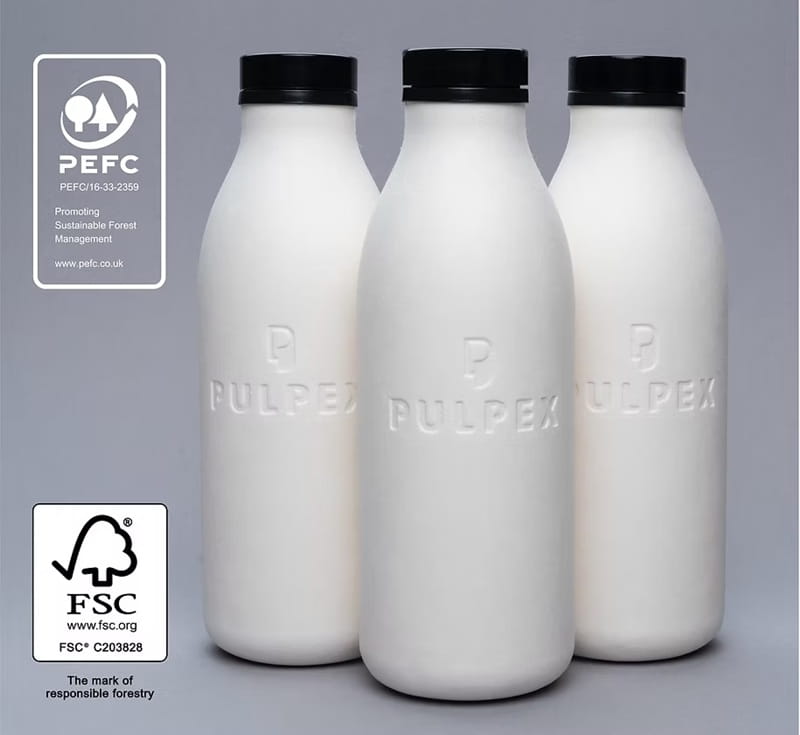
FDCA is widely regarded as one of the most promising bio-based platform chemicals. When polymerized with monoethylene glycol, it forms polyethylene furanoate, a bio-based polyester that offers superior barrier properties compared to conventional PET.
PEF can significantly reduce carbon emissions when produced from renewable feedstocks and has attracted interest from global brand owners seeking to meet sustainability and circular economy targets.
The FDCA Flagship Plant in Delfzijl is intended to demonstrate the technical and economic viability of FDCA production at industrial scale. Its successful operation is therefore critical for unlocking future licensing opportunities and potential capacity expansions.
Operational focus and quality assurance
According to Avantium, the weld repair program is now well underway, providing a clear basis for the remaining commissioning and start-up activities. The company is prioritizing safety, reliability, and product quality as it moves through the next phases of the project.
This approach reflects lessons learned from other first-of-a-kind chemical plants, where early operational challenges often lead to more robust and resilient long-term performance once resolved.
Avantium has reiterated that it will not compromise on quality or safety standards in order to accelerate timelines, particularly given the strategic importance of the FDCA Flagship Plant for its long-term business model.
Implications for partners and the bio-based plastics market
For partners and customers awaiting FDCA deliveries, the delay represents a temporary setback. However, many industry observers note that cautious and thorough commissioning is preferable to rushed start-ups that can result in prolonged outages or reputational damage.
The broader bio-based plastics market continues to evolve rapidly, with increasing regulatory pressure on single-use plastics and growing consumer demand for sustainable materials. FDCA and PEF remain well-positioned within this landscape, despite near-term project delays.
Avantium’s transparency in communicating the challenges and revised timelines may help maintain stakeholder confidence during this period.
Outlook for Avantium and next steps
Looking ahead, Avantium’s immediate priorities include completing the titanium weld remediation, finalizing commissioning of the oxidation and purification units, and preparing the plant for stable, continuous operation.
The company’s leadership has expressed confidence that the current plan provides a realistic and achievable path toward start-up by mid-2026. Once operational, the FDCA Flagship Plant is expected to serve as a reference facility for future projects and partnerships worldwide.
While the delay adds cost and complexity, it also underscores the technical rigor required to bring innovative bio-based chemical technologies to market at scale.
Conclusion
The updated start-up timeline for Avantium’s FDCA Flagship Plant highlights both the challenges and the importance of industrializing next-generation bio-based chemicals. Titanium weld issues uncovered during commissioning have necessitated additional remediation work, increased capital expenditure, and a revised schedule extending into 2026.
At the same time, steady progress in commissioning and a clear remediation plan suggest that the project remains fundamentally on track. For the bio-based plastics sector, the long-term significance of FDCA and PEF remains unchanged, even as near-term expectations are recalibrated.
More…