US tariffs on India – India’s Dead Economy Returns as US 50 Percent Tariffs Cripple Textile Exports, Trigger Job Losses, Factory Shutdowns, and Political Accountability Debate 26-01-2026
US tariffs on India
The phrase dead economy has re-entered India’s political and economic debate as new concerns emerge over the impact of US 50 percent tariffs on India’s textile exporters
The renewed controversy highlights rising economic uncertainty, growing employment risks, and mounting pressure on one of the country’s most critical manufacturing sectors.
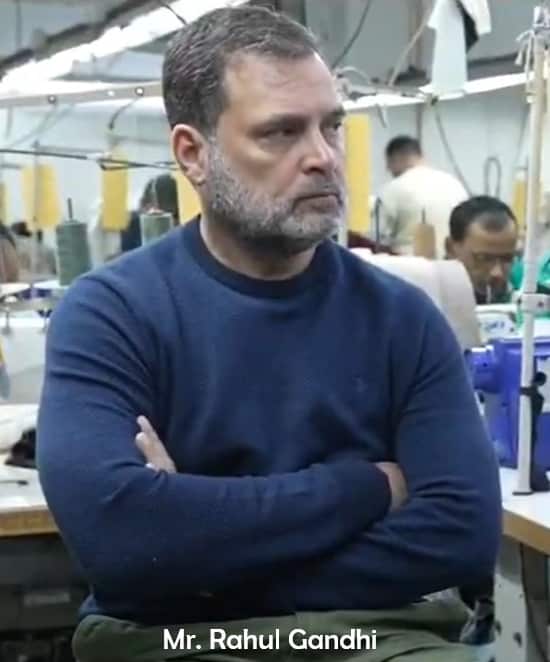
Congress leader Rahul Gandhi has intensified criticism of the central government, arguing that the tariffs imposed by the United States are directly contributing to job losses, factory shutdowns, and shrinking export orders across the textile industry. His remarks reflect broader anxieties about India’s ability to shield labour-intensive sectors from global trade shocks. US tariffs on India
India’s textile industry is the second largest employer in the national economy after agriculture. It supports more than 4.5 crore jobs directly and sustains millions more through allied activities such as spinning, dyeing, logistics, and retail distribution. Any sustained disruption to this sector has immediate social and economic consequences.
According to exporters, the imposition of 50 percent US tariffs has sharply reduced the competitiveness of Indian garments in the American market. Buyers are cutting orders, renegotiating prices, or shifting sourcing to countries with more favourable trade access. Margins have tightened significantly, leaving exporters with little room to absorb rising costs. US tariffs on India
Smaller and mid-sized manufacturers are among the worst affected. Unlike large exporters, they lack the financial resilience to withstand sudden tariff increases and prolonged uncertainty. Several units have reduced production capacity, delayed wage revisions, or temporarily halted operations to limit losses.
The dead economy narrative has gained further momentum as reports of factory closures increase across major textile hubs such as Haryana, Tamil Nadu, Gujarat, and Uttar Pradesh. Reduced procurement from international buyers has forced many units to operate far below capacity, directly impacting tailors, machine operators, and contract workers. US tariffs on India
Job losses in the textile sector are not confined to urban industrial zones. The ripple effects extend to semi-urban and rural clusters where garment manufacturing often provides the primary source of non-agricultural employment. Declining orders translate into fewer shifts, irregular income, and rising financial stress for households dependent on textile wages.
Global competition has intensified the crisis facing India’s textile exporters. Alongside US tariffs, exporters are grappling with falling apparel prices in Europe and aggressive competition from Bangladesh and China. Bangladesh benefits from preferential trade access in several Western markets, while China continues to leverage scale, automation, and state-backed industrial support. US tariffs on India
These structural disadvantages compound the pressure on Indian exporters already dealing with higher tariffs, rising compliance costs, and volatile currency movements. The result is a steady erosion of price competitiveness in key export destinations.
Rahul Gandhi has framed the issue as a failure of accountability, arguing that the government has neither provided relief measures nor articulated a clear strategy to protect exporters and workers. Critics contend that the lack of targeted policy intervention reinforces perceptions of economic drift and weak industrial governance.
The revival of the dead economy debate also reflects wider concerns about manufacturing stagnation, slowing consumption growth, and limited job creation. While headline macroeconomic indicators suggest stability, sector-level stress reveals deeper structural vulnerabilities within the economy.
The tariff dispute unfolds at a critical moment in India-US relations. New Delhi and Washington remain engaged in complex negotiations to resolve longstanding trade disagreements spanning energy, agriculture, technology, and geopolitics. Progress has been slow, reflecting the strategic weight of the issues involved. US tariffs on India
Relations have been under strain since the United States imposed cumulative tariffs of 50 percent on a broad range of Indian exports. These measures are linked not only to trade imbalances but also to geopolitical considerations, including India’s ties with Russia and its role within BRICS.
For the textile sector, the outcome of these negotiations is crucial. Industry leaders warn that without tariff relief or compensatory support, India risks losing long-established market share to competitors with more favourable trade terms and lower cost structures. US tariffs on India
The textile industry holds a unique position in India’s economic framework. It blends traditional craftsmanship with modern manufacturing and provides large-scale employment to women and semi-skilled workers. This makes it central to inclusive growth and social stability.
Indian textiles are globally valued for quality, design, and artisanal heritage. However, prolonged uncertainty threatens to undermine these strengths. Exporters are delaying investments in technology upgrades, sustainability initiatives, and skill development due to unpredictable trade conditions.
Policy experts argue that India must urgently secure a trade arrangement with the United States that places Indian businesses and workers at the centre. This includes tariff rationalisation, export incentives, and transitional support for affected manufacturers. US tariffs on India
Beyond trade negotiations, structural reforms remain essential. Improving logistics efficiency, easing regulatory burdens, and expanding access to affordable credit could enhance the sector’s resilience against future external shocks. US tariffs on India
The return of the dead economy debate underscores a broader policy challenge. As global trade becomes increasingly fragmented and protectionist, India’s ability to protect employment-intensive industries like textiles will play a decisive role in shaping its economic trajectory in the years ahead.
More…