Battery recycling market – Global Battery Recycling Booms Amid EV Growth, Policy Pressure and China’s Dominance, Turning Critical Mineral Shortages into a Strategic Clean Energy Opportunity 23-12-2025
Battery recycling market
Global Battery Recycling: Racing to Secure the Minerals Powering the EV Era
The global battery recycling industry has moved from a niche environmental service to a strategic pillar of the clean energy transition. Driven by explosive growth in electric vehicles (EVs), tightening regulations, and concerns over critical mineral supply, battery recycling is now a rapidly expanding, multi-billion-dollar market. While China dominates global capacity today, policy mandates and technological innovation are reshaping the competitive landscape in the United States, Europe, Korea, and Japan.
A Market Expanding at Speed
Battery recycling has grown in lockstep with the rise of lithium-ion batteries used in EVs, consumer electronics, and grid storage. In 2024, the global battery recycling market was valued at more than $25 billion, according to estimates cited by BloombergNEF and other market analysts. Lithium-ion battery recycling alone is projected to approach $24 billion by 2030, reflecting both rising battery volumes and higher recovery value from critical metals. battery recycling market
Geographically, Asia-Pacific led the market in 2024, with China at the center, followed by significant activity in South Korea and Japan. China currently accounts for around 80% of global battery recycling capacity, supported by its massive EV market, integrated battery supply chain, and early investment in recycling infrastructure. Industry observers expect China’s dominance to continue through the decade, even as other regions accelerate investment. battery recycling market
EVs and Critical Minerals Drive Demand
The single biggest driver of battery recycling growth is the EV boom. Global EV sales hit record levels in 2023 and 2024, according to the International Energy Agency, and millions of batteries will reach end-of-life over the next decade. Recycling is increasingly viewed not just as a waste solution, but as a strategic source of raw materials.
Lithium-ion batteries contain valuable and often supply-constrained minerals, including cobalt, nickel, copper, and lithium. Mining these materials is capital-intensive, geopolitically sensitive, and environmentally contentious. Recycling offers a way to reduce dependence on new mining while stabilizing supply chains—an issue that became especially urgent during recent commodity price spikes and geopolitical disruptions.
Governments are responding accordingly. The European Union’s new Battery Regulation, adopted in 2023 and now entering its implementation phase, sets mandatory recovery targets for lithium, cobalt, nickel, and copper, as well as minimum recycled content requirements for new batteries later this decade. These rules are pushing manufacturers and recyclers to invest in more advanced recovery technologies. battery recycling market
From Smelting to Advanced Chemistry
Historically, much of battery recycling relied on pyrometallurgy—high-temperature smelting that recovers some metals but often loses lithium and aluminum and consumes large amounts of energy. As regulations tighten and economics shift, the industry is moving toward hydrometallurgy, which uses chemical solutions (such as acids and peroxides) and solvent extraction to recover metals more efficiently and at higher purity.
Hydrometallurgical processes can produce battery-grade metal sulfates suitable for direct reuse in new cathodes, a key requirement under EU rules and emerging US standards. Companies in China, Korea, Japan, Europe, and North America are racing to refine these techniques, lower costs, and scale up production. battery recycling market
This technological shift marks a transition from basic material recovery to closed-loop recycling, where recovered materials feed directly back into battery manufacturing—an essential step for long-term sustainability.
Regional Competition Intensifies
While China maintains a commanding lead, regional competition is intensifying.
- United States: The Inflation Reduction Act (IRA) has made battery recycling strategically important by tying EV tax credits to domestic or allied-country sourcing of battery materials. As a result, several US recyclers and automakers have announced investments in new recycling plants, aiming to create a domestic supply of lithium, nickel, and cobalt.
- European Union: Beyond the Battery Regulation, extended producer responsibility (EPR) laws are forcing manufacturers to finance collection and recycling. This is accelerating capacity build-out in countries such as Germany, France, and Scandinavia, often in partnership with automakers. battery recycling market
- Korea and Japan: Both countries are leveraging advanced chemical processing expertise and strong battery industries to remain competitive, focusing on high-purity recovery and technology leadership rather than sheer scale.
Despite these efforts, challenges remain. Outside China, recyclers face fragmented battery supply chains, higher labor and energy costs, and difficulties securing sufficient feedstock in the near term. Scaling advanced processing technologies profitably remains one of the industry’s biggest hurdles. battery recycling market
How Battery Recycling Works
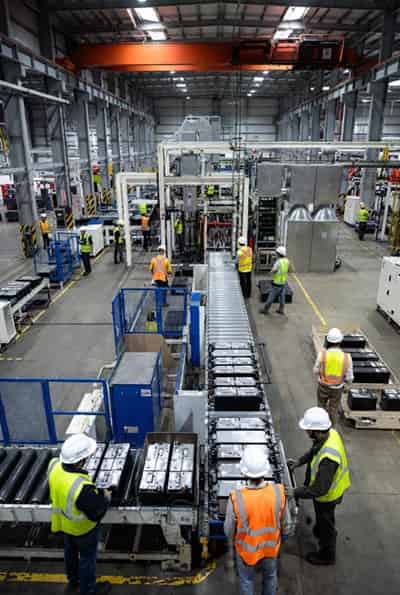
At its core, the battery recycling process follows four main steps:
- Collection: Spent batteries are gathered through retailers, automakers, municipal centers, and industrial partners.
- Sorting: Batteries are classified by chemistry, such as lithium-ion or nickel-metal hydride.
- Processing: Batteries are dismantled and treated using pyrometallurgical or hydrometallurgical methods to extract metals.
- Re-use: Recovered materials are refined and reused in new batteries or other industrial products.
A Strategic Industry for the Energy Transition
Battery recycling is no longer just about waste management—it is about resource security, industrial competitiveness, and climate goals. As EV adoption accelerates and governments impose stricter rules, the industry will play a critical role in ensuring a sustainable supply of minerals for future batteries. battery recycling market
China’s early lead has set the pace, but policy pressure and innovation are narrowing the gap elsewhere. The coming decade will determine whether the global battery recycling industry can scale fast enough—and cleanly enough—to support the electrified future it underpins. battery recycling market
Recycled Quantities, Market Value, and Future Forecasts
Current Recycled Volumes and Capacity
- In 2023, global lithium-ion battery recycling capacity reached approximately 1.6–1.7 million tons per year, with the majority of that capacity located in Asia, particularly China, which accounts for roughly 70–80% of total global capacity. Europe and North America lag behind with significantly smaller installed capacity. GlobeNewswire+1
- By 2029, industry analysts forecast total global recycling capacity expanding dramatically to over 11 million tons annually as new facilities come online in China, Europe, the U.S., and beyond. Interact Analysis
- Emerging first-wave volumes of spent batteries are already significant. According to the International Energy Agency (IEA), by 2030 the volume of end-of-life EV batteries could reach around 100 GWh per year, and by 2040 close to 1.3 TWh per year, meaning recyclers will have vast quantities of valuable feedstock. Eni
Market Value Today
- Estimates for the total battery recycling market in 2024 vary depending on the source and scope of analysis but consistently place it in the multi-billion-dollar range. One widely cited market report valued the global lithium-ion battery recycling industry at about $7.3 billion in 2024. GlobeNewswire
- Other reporting finds that, depending on how the market is defined (e.g., including second-life reuse services, collection infrastructure, and advanced processing), figures for 2024 can range from $5.4 billion to over $7 billion, reflecting both EV and consumer battery streams. Fortune Business Insights
Forecast Growth Through 2030 and Beyond
2030 Market Value Forecasts
- By 2030, major market analysts forecast strong expansion due to EV battery retirements, regulatory requirements for recycled content, and investment in advanced recycling technologies. battery recycling market
- One projection estimates the global lithium-ion battery recycling market will grow to around $23.9 billion by 2030, at a compound annual growth rate (CAGR) of about 22 % from 2024–2030. GlobeNewswire
- Another widely cited forecast suggests growth from roughly $6.5 billion in 2025 to about $24.1 billion by 2032. Fortune Business Insights
Longer–Term Outlook (2040–2045)
- Looking further ahead, specialized research firms project deep expansion of the recycling sector through mid-century. For example, industry tracker IDTechEx forecasts that the lithium-ion battery recycling market could be worth around $52 billion by 2045, driven by surging volumes of retired EV and stationary storage batteries. IDTechEx
- As retirements of EVs accelerate post-2030, recycled materials are expected to supply an increasing share of critical metals for new batteries. Some industry estimates suggest recycled feedstock could account for 25 % or more of usable materials for cell production in some regions by the early 2030s. Global Growth Insights
Recycled Material Outputs and Recovery
- Recycling efficiency for key battery materials is improving rapidly. Many modern facilities report metal recovery rates exceeding 80 %–95 % for nickel, cobalt, copper and in some cases lithium, depending on the recycling process and chemistry. Global Growth Insights
- Recovery rates are expected to improve further as hydrometallurgical and direct recycling technologies scale, enabling purer outputs suitable for reuse in new battery cathodes and precursors. battery recycling market
Summary
The battery recycling industry is not just growing in dollar terms, but in actual physical throughput:
- Global recycling capacity could expand from ~1.7 Mt/year in 2023 to over 11 Mt/year by 2029.
- Current market value estimates for 2024 range from about $5–7 billion, with forecasts suggesting $24 billion+ by 2030 and potentially $50 billion+ by 2045.
- End-of-life battery volumes are poised to surge in the 2030s and 2040s, turning recycled material into a core feedstock for future batteries.
These figures reinforce the view that battery recycling will be central to securing critical minerals, meeting regulatory requirements, and enabling a truly circular battery economy in the decades ahead. battery recycling market