Bottles soft-drink – Atomic Processor Breakthrough: 32-Bit Chip Built with Monomolecular Semiconductor Chinese researchers have achieved a significant milestone by creating the first 32-bit processor based on the RISC-V architecture, utilizing molybdenum disulfide (MoS2) instead of silicon. MoS2, a two-dimensional material similar to graphene but with semiconductor properties, exists as a single-molecule-thick sheet 07-04-2025 - Archive
Bottles soft-drink
| Polyestertime | |||
| ITEM | 31/03/2025 | 07/04/2025 | +/- |
| Bottle grade PET chips domestic market | 6,050 yuan/ton | 5,700 yuan/ton | -350 |
| Bottle grade PET chips export market | 787 $/ton | 780 $/ton | -7 |
| LDPE CFR Est China | 1,130 $/ton | 1,110 $/ton | -20 |
| PET Semidull Fiber chips
PET Bright |
6,020 yuan/ton
6,030 yuan/ton |
5,790 yuan/ton
5,800 yuan/ton |
-230
-230 |
| Pure Terephthalic Acid PTA domestic market
Bottles soft-drink |
4,865 yuan/ton | 4,560 yuan/ton |
-305 |
| Pure Terephthalic Acid PTA FOB China | 620 $/ton | 625 $/ton | +5 |
| Monoethyleneglycol MEG South China | 4,490 yuan/ton | 4,450 yuan/ton |
-40 |
| Monoethyleneglycol MEG CFR China | 520 $/ton | 525 $/to | +5 |
| Paraxylene PX FOB Taiwan market | 835 $/ton | 791 $/ton |
-44 |
| Paraxylene PX FOB Korea market | 825 $/ton | 781 $/ton | -44 |
| Paraxylene PX FOB EU market | 841 $/ton | 820 $/ton | -21 |
| Polyester filament POY 150D/48F domestic market | 6,850 yuan/ton | 6,750 yuan/ton |
-100 |
| Recycled Polyester filament POY domestic market | 6,700 yuan/ton | 6,550 yuan/ton | -150 |
| Polyester filament DTY 150D/48 F domestic market | 8,150 yuan/ton | 7,900 yuan/ton | -250 |
| Polyester filament FDY 68D24F | 7,950 yuan/ton | 7,800 yuan | -150 |
| Polyester filament FDY 150D/96F domestic market
Bottles soft-drink |
7,150 yuan/ton | 7,050 yuan/ton | -100 |
| Polyester staple fiber 1.4D 38mm domestic market | 6,850 yuan/ton | 6,720 yuan/ton | -130 |
| Caprolactam CPL domestic market | 9,825 yuan/ton | 9,975 yuan/ton |
+150 |
| Caprolactam CPL CFR China | 1,390 $/ton | 1,340 $/ton | -50 |
| Nylon 6 chips overseas market | North America: $2.93/kg
Europe: $2.36/kg Northeast Asia: $1.74/kg Southeast Asia: $1.81/kg Middle East: $1.88/kg |
North America: $2.82/kg Europe: $2.29/kg Northeast Asia: $1.72/kg Southeast Asia: $2.04/kg Middle East: $1.83/kg
|
– |
| Nylon 6 chips conventional spinning domestic market | 10,750 yuan/ton | 10,900 yuan/ton | +150 |
| Nylon 6 chips high speed spinning domestic market | 11,350 yua/ton | 11,350 yuan/ton | – |
| Nylon 6.6 chips domestic market | 16,700 yuan/ton | 16,400 yuan/ton | -300 |
| Nylon6 Filament POY 86D/24F domestic market | 13,300 yuan/ton | 13,150 yuan/ton | -150 |
| Nylon6 Filament DTY 70D/24F domestic market | 15,900 yuan/ton | 15,750 yuan/ton | -150 |
| Nylon6 Filament FDY 70D/24F | 14,700 yuan/ton | 14,500 yuan/ton | -200 |
| -Spandex 20D domestic marke | 27,700 yuan/ton | 27,500 yuan/ton | -200 |
| Spandex 30D domestic market | 27,200 yuan/ton | 27,000 yuan/ton | -200 |
| Spandex 40D domestic market | 24,200 yuan/ton | 24,000 yuan/ton | -200 |
| Adipic Acid China domestic market | 7,750 yuan/ton | 7,750 yuan/ton | – |
| Benzene domestic market East China | 6,700 yuan/ton | 6,800 yuan/ton | +100 |
| Benzene CFR China | 837 $/ton | 839 $/ton | +2 |
| Ethylene South East market | 920 $/ton | 920 $/ton | – |
| Ethylene NWE market CIF | 883 $/ton | 861 $/ton | -22 |
| Acrylonitrile ACN domestic market | 8,900 yuan/ton | 9,000 yuan/ton | +100- |
| Acrylonitrile ACN overseas market | 1,420 $/ton |
1,420 $/ton |
– |
| Acrylic staple fiber ASF CFR China | 14,700 yuan/ton | 14,700 yuan/ton | – |
| VSF viscose staple fiber | 13,450 yuan/ton | 13,450 yuan/ton | – |
| PP Powder domestic market | 7,100 yuan/ton | 7,110 yuan/ton | +10 |
| Naphtha overseas market | 609 $/ton | 545 $/ton | +64 |
| Phenol domestic market
Jinan Dezheng Chemical Co., LtdYanshan Petrochemical Shandong Province |
7,527 yuan/ton | 7,017 yuan/ton | -510 |
recycled PET = 4,500 yuan/ton — 4,400 yuan/ton -100
Bottles soft-drink
Atomic Processor Breakthrough: 32-Bit Chip Built with Monomolecular Semiconductor
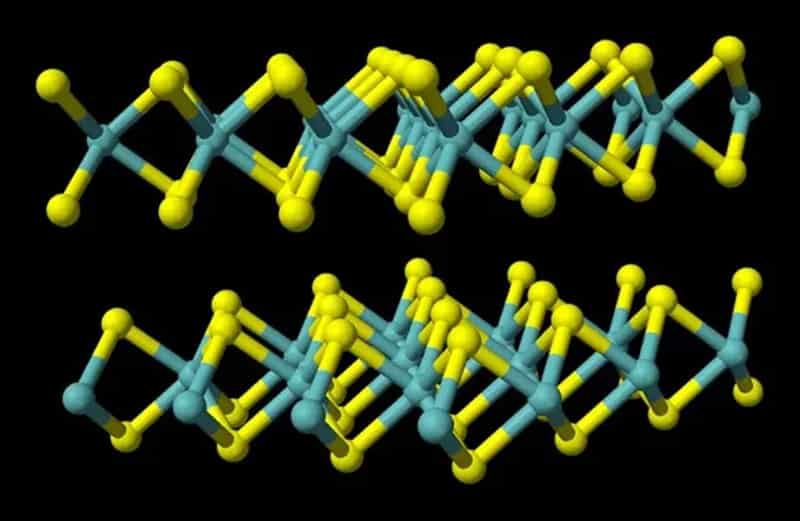
Chinese researchers have achieved a significant milestone by creating the first 32-bit processor based on the RISC-V architecture, utilizing molybdenum disulfide (MoS2) instead of silicon. MoS2, a two-dimensional material similar to graphene but with semiconductor properties, exists as a single-molecule-thick sheet.
Leveraging recent advancements in large-scale MoS2 production on sapphire substrates, the team built the RV32-WUJI processor. While currently operating at kilohertz speeds and performing single-bit additions, the integration of nearly 6,000 transistors allows it to execute the complete 32-bit RISC-V instruction set. Bottles soft-drink
The use of a 2D material is the key innovation. These materials have bonds predominantly on a single plane. MoS2’s slightly off-plane bonds create a zig-zag structure, making it atomically thin. Its electronic properties arise directly from molecular orbitals, unlike bulk materials. While graphene is highly conductive, MoS2 is a semiconductor.
The team focused on silicon-compatible fabrication. A challenge was doping, used in silicon to adjust transistor threshold voltage, which is not applicable to a single molecule. Thus, all RV32-WUJI transistors are n-type. Researchers overcame this by using aluminum and gold for connections, modulating threshold voltages based on metal and embedding material.
Machine learning aided in identifying optimal material combinations for transistor operation. The design uses “depletion” inverters, with 18 of 25 tested logic gates proving functional. The kilohertz clock speed is limited by the chip’s longest path. Fabrication yield was high (99.9% overall, 99.8% chip-level), though complex sections like 64-bit registers had lower yields (7%). Bottles soft-drink
The processor executes the full RISC-V instruction set, including the decoder. Simplifications include bit-by-bit 32-bit addition requiring 32 cycles and internal buffers. Despite limitations, it demonstrates the feasibility of complex “beyond silicon” hardware for niche applications like ultra-low-power sensors, with potential for broader use with further advancements.
U.S. May Spare Some Plastic Resins from Tariffs Amid Trade Concerns
President Donald Trump’s April 2 announcement of a new reciprocal tariff plan includes a notable exemption for certain plastic resins, suggesting a deliberate effort to shield export-oriented materials from retaliatory actions by global trade partners. The exemption, detailed in an annex listing around 1,000 products, specifies that imports of resins such as polyethylene (PE), polypropylene (PP), and polyethylene terephthalate (PET) “shall not be subject” to the new duties. Other exempted materials include various grades of nylon, polytetrafluoroethylene (PTFE), polylactic acid (PLA), and types of polyvinyl chloride (PVC). Bottles soft-drink
This move may reflect the U.S. government’s intent to protect the competitiveness of its plastics and chemical manufacturing sectors, which are heavily reliant on exports. Plastic resins, in particular, have become a stronghold of the U.S. economy, driven by the cost advantages of shale gas-based feedstock. In 2023 alone, U.S. plastic resin exports generated a $23.8 billion trade surplus, according to the Plastics Industry Association. This success, however, has made the sector a target for retaliatory tariffs in response to U.S. duties on other goods, such as steel and aluminum.
In reaction to the tariff plan, the European Union identified approximately $5.9 billion in U.S. plastic resins and plastic products as potential targets for retaliation. About 15 percent of American polyethylene production was exported to EU countries in the same year. Similarly, early reports of Canadian countermeasures also indicated plastic resins might be on their retaliation list. Bottles soft-drink
The Canadian plastics industry cautiously welcomed the exemption of some resins. Greg Moffatt, President and CEO of the Chemistry Industry Association of Canada (CIAC), praised the decision as an acknowledgment of the deeply integrated nature of North American supply chains. However, he also emphasized that the broader impact of tariffs remains a serious concern.
“While this exemption is a positive step, we are aware of the fluidity of these tariff decisions,” Moffatt said. “These exemptions do not mitigate the broader challenges tariffs have introduced for manufacturers, suppliers, and downstream industries. CIAC remains concerned about the lasting economic implications and urges policymakers to prioritize trade stability to ensure North America’s chemistry and plastics sector remains competitive.” Bottles soft-drink
Tariffs, Moffatt noted, tend to disrupt supply chains, raise operational costs, and introduce uncertainty into industries that depend on long-term planning and regulatory consistency. These concerns are echoed across the U.S. plastics and chemical manufacturing sectors, which depend heavily on stable and predictable trade relations.
The American Chemistry Council (ACC), representing a broad spectrum of chemical manufacturers, refrained from issuing a detailed response but confirmed it was closely reviewing the administration’s actions. In 2024, the U.S. chemical sector achieved a $28 billion trade surplus and supported approximately 200,000 jobs, underscoring its economic importance.
In a statement, ACC said it aims to collaborate with the administration to create a trade environment that supports domestic growth while minimizing supply chain vulnerabilities. “ACC wants to work constructively with the administration on a pro-growth trade agenda that decreases America’s supply chain vulnerabilities while negotiating new measures that benefit domestic production and jobs,” the statement read. Bottles soft-drink
“Together, we can advantage U.S.-based production and exports by addressing unfair trading practices and expanding science-based regulatory approaches that will continue to grow our competitiveness.”
The Society of Chemical Manufacturers and Affiliates (SOCMA) also weighed in, although it did not specifically address the resin exemptions. SOCMA highlighted a more general concern about escalating raw material costs and global sourcing challenges. Many of the specialty chemicals its members rely on are not readily available within the U.S. at the required scale, making them particularly vulnerable to supply chain disruptions caused by tariffs. Bottles soft-drink
“These sudden shifts are occurring in the context of complex, global supply chains and long-standing customer commitments,” SOCMA stated. “We urge the administration to take a strategic, sector-informed approach—one that ensures affordable input access, promotes resilient supply chains, and leverages the unique value of the specialty chemical sector.”
Despite the exemptions, the broader landscape remains volatile. With global partners signaling their intent to retaliate, and tariff policies shifting rapidly, both U.S. and Canadian industry leaders are pressing for a more consistent and collaborative approach to trade. The exemptions for certain resins may offer short-term relief, but they do not resolve the underlying uncertainty introduced by broader protectionist policies. Bottles soft-drink
The plastics sector’s trade surplus with key partners further underscores its strategic role. In 2023, the U.S. recorded a $7.7 billion resin trade surplus with Mexico and a $4.4 billion surplus with China. These figures stand in contrast to other segments of the industry—such as plastic products, molds, and machinery—which continued to post trade deficits globally.
As international trade tensions evolve, industry associations are urging policymakers to maintain the momentum in supporting competitive U.S. exports while ensuring that sudden policy changes do not undermine established supply chains.
In the end, while the exemptions signal a recognition of the sector’s value, stakeholders stress the need for a long-term strategy rooted in predictability, cooperation, and economic stability. Bottles soft-drink