Cygnet Texkimp’s 500kg Creel Targets Carbon Fiber Efficiency
Cygnet Texkimp’s 500kg VHD Creel Aims to Raise Carbon Fiber Efficiency
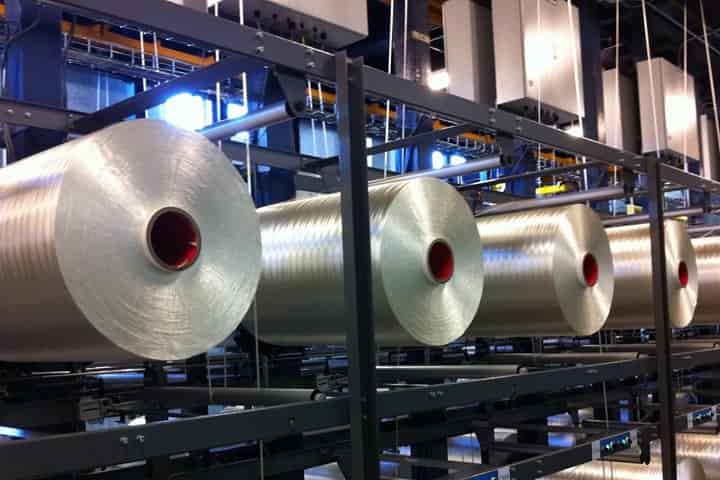
Cygnet Texkimp has introduced a 500-kilogram very heavy duty creel designed to improve efficiency in carbon fiber production by allowing larger PAN precursor packages to be unwound into manufacturing lines.
The Northwich, U.K.-based fiber handling and composites technology specialist says the system has been developed as part of an industry collaboration focused on reducing downtime and supporting higher-volume carbon fiber manufacturing. The company’s official announcement says the new creel is intended to handle 500kg PAN precursor bobbins, compared with the 350kg packages that have been widely used across the industry for more than a decade.
Why larger PAN packages matter
In carbon fiber production, PAN precursor fiber must be unwound continuously and fed into downstream processing lines. Every package change can interrupt production, add handling time and create an opportunity for process variation.
By increasing bobbin capacity from 350kg to 500kg, Cygnet Texkimp’s VHD creel is designed to extend run time between package changes. That means fewer interruptions, longer continuous production cycles and a clearer route to improved line utilization.
For manufacturers under pressure to scale output, this type of equipment upgrade matters because it targets a practical bottleneck: how efficiently precursor fiber can be supplied to the line before oxidation and carbonization stages.
A response to higher-volume carbon fiber demand
Carbon fiber demand continues to be shaped by sectors that need lightweight, high-strength materials, including aerospace, automotive, wind energy, pressure vessels and industrial applications. MarketsandMarkets notes that demand is being supported by lightweighting needs across aerospace and defense, automotive, wind energy, pressure vessels and other industrial sectors.
That growth is increasing attention on the production equipment behind the fiber itself. While much of the industry discussion focuses on new precursor chemistry, alternative feedstocks or carbonization energy reduction, creel technology is a more immediate operational lever. It does not change the chemistry of PAN-based carbon fiber production, but it can help manufacturers run existing or new lines more efficiently.
Supporting higher tow counts and faster line speeds
Cygnet Texkimp says the 500kg VHD creel also supports the potential to process higher tow count fibers, including 24K and 48K tows, and to enable faster line speeds by increasing PAN precursor bobbin size and weight.
This is significant because large-tow carbon fiber is often associated with industrial-scale applications where cost, throughput and repeatability are critical. Larger tow formats can help manufacturers address high-volume markets, but they also place greater demands on unwinding, tension control and fiber handling systems.
The creel is equipped with electronic tension control using a closed-loop dancer arm mechanism. According to Cygnet Texkimp, this is intended to maintain near-constant fiber tension as packages unwind into the process. carbon fiber efficiency
Reducing downtime without compromising control
The main production advantage of the 500kg creel is not simply that it holds a heavier package. Its value depends on whether larger packages can be handled safely, unwound consistently and integrated into production without introducing new variability.
Cygnet Texkimp’s solution uses an operator-managed lifter-loader system to move PAN fiber packages from the winding system onto the creel. The company also says bespoke handling solutions with a higher degree of automation can be incorporated where required.
That flexibility is important for producers with different levels of automation, plant layouts and throughput targets. In high-volume production environments, package handling, operator ergonomics and tension stability all influence whether larger bobbins deliver real productivity gains.
Why this matters for carbon fiber competitiveness
PAN precursor remains central to most carbon fiber production. Recent technical and market analyses continue to identify precursor cost and processing efficiency as major factors in the economics of carbon fiber manufacturing. PatSnap’s 2026 precursor technology review says PAN precursor accounts for a major share of carbon fiber production cost, while alternative precursor routes remain an active area of research.
Against that background, the 500kg VHD creel should be viewed as an incremental but commercially meaningful process improvement. It does not solve every cost challenge in carbon fiber manufacturing, but it addresses a specific operational issue: keeping production lines running longer between interruptions.
For producers expanding capacity or building sovereign manufacturing capability, equipment that reduces stoppages and supports higher-volume processing can strengthen the business case for new carbon fiber lines.
A practical step toward more efficient production
Cygnet Texkimp says more than 70 of its VHD creels are already operating globally and processing more than 24,000 bobbins of fiber. The company also describes its VHD creel technology as being used for the unwinding of PAN in carbon fiber manufacture, with more than 18,000 spindles in operation globally.
The new 500kg version builds on that installed base by targeting longer runs, fewer package changes and better suitability for higher-volume production strategies.
For carbon fiber manufacturers, the message is clear: productivity improvements will not come only from new materials or new furnaces. They will also come from the less visible equipment that keeps precursor moving through the line consistently, safely and with minimal interruption.
Bottom line
Cygnet Texkimp’s 500kg VHD creel gives carbon fiber producers a practical route to improved line efficiency. By reducing PAN precursor package changeovers, supporting longer continuous runs and offering controlled unwinding for heavier bobbins, the system addresses one of the everyday production challenges behind carbon fiber scale-up.
As demand for lightweight, high-performance materials grows, equipment that improves carbon fiber efficiency could become increasingly important for manufacturers seeking higher output, lower downtime and more resilient supply chains.
China Expands High-End Carbon Fiber Production Capacity
More…