Embossed Label-Free PLA Water Bottle Design Unlocks Powerful Circular Packaging Performance with Simplified Recycling, Lower Carbon Footprint, and Scalable Closed-Loop Innovation – Polymer Price Trends 24-02-2026
Circular packaging – Full price table (16/02/2026 →24/02/2026)
| ITEM | 16/02/2026 | 24/02/2026 | +/− |
|---|---|---|---|
| Bottle grade PET chips domestic market | 6,250 yuan/ton | 6,350 yuan/ton | +100 |
| Chinese bottle-grade PET chips FOB export price | 840 $/ton | 840 $/ton | – |
| LDPE CFR Est China | 1,015 $/ton | 1,015 $/ton | – |
| PET Semidull — Fiber chips | 5,920 yuan/ton | 6,020 yuan/ton | +100 |
| PET Bright — Fiber chips | 5,950 yuan/ton | 6,050 yuan/ton | +100 |
| Pure Terephthalic Acid PTA domestic market | 5,140 yuan/ton | 5,285 yuan/ton | +145 |
| Pure Terephthalic Acid PTA FOB China | 665 $/ton | 655 $/ton | -10 |
| Monoethyleneglycol (MEG) South China | 3,820 yuan/ton | 3,830 yuan/ton | +10 |
| Monoethyleneglycol (MEG) CFR China | 442 $/ton | 438 $/ton | -4 |
| Paraxylene PX FOB Taiwan market | 877 $/ton | 902 $/ton | +25 |
| Paraxylene PX FOB South-Korea market | 878 $/ton | 903 $/ton | +25 |
| Paraxylene PX FOB EU market | 881 $/ton | 881 $/ton | – |
| Polyester filament POY 150D/48F domestic market | 7,050 yuan/ton | 7,100 yuan/ton | +50 |
| Recycled Polyester filament POY domestic market | 6,050 yuan/ton | 6,050 yuan/ton | – |
| Polyester filament DTY 150D/48F domestic market | 8,150 yuan/ton | 8,200 yuan/ton | +50 |
| Polyester filament FDY 68D/24F | 7,950 yuan/ton | 8,000 yuan/ton | +50 |
| Polyester filament FDY 150D/96F domestic market | 7,250 yuan/ton | 7,300 yuan/ton | +50 |
| Polyester staple fiber 1.4D 38mm domestic market | 6,625 yuan/ton | 6,625 yuan/ton | – |
| Caprolactam (CPL) domestic market | 9,925 yuan/ton | 9,925 yuan/ton | – |
| Caprolactam (CPL) CFR China | 1,120 $/ton | 1,175 $/ton | +55 |
| Nylon 6 chips overseas market | North America 2.65 $/kg
Europe 2.425 $/kg Northeast Asia ~ $1.45 /kg – $1.74 /kg Southeast Asia 1.785 $/kg Middle East 1.68 $/kg |
North America 2.675 $/kg Europe 2.400 $/kg Southeast Asia 1.800 $/kg Middle East 1.73 $/kg Northeast Asia 1.585 $/kg
|
– |
| Nylon 6 chips conventional spinning domestic market | 10,550 yuan/ton | 10,650 yuan/ton | +100 |
| Nylon 6 chips high speed spinning domestic market | 10,950 yuan/ton | 11,050 yuan/ton | +100 |
| Nylon 6.6 chips domestic market | 15,400 yuan/ton | 15,400 yuan/ton | – |
| Nylon6 Filament POY 86D/24F domestic market | 11,900 yuan/ton | 11,900 yuan/ton | – |
| Nylon6 Filament DTY 70D/24F domestic market | 14,200 yuan/ton | 14,200 yuan/ton | – |
| Nylon6 Filament FDY 70D/24F | 12,700 yuan/ton | 12,700 yuan/ton | – |
| Spandex 20D domestic market | 26,700 yuan/ton | 26,700 yuan/ton | – |
| Spandex 30D domestic market | 26,200 yuan/ton | 26,200 yuan/ton | – |
| Spandex 40D domestic market | 23,000 yuan/ton | 23,000 yuan/ton | – |
| Adipic Acid China domestic market | 8,400 yuan/ton | 8,400 yuan/ton | – |
| Adipic Acid Europe market | 1,750 $/ton | 1,750 $/ton | – |
| Benzene domestic market East China | 6,100 yuan/ton | 6,000 yuan/ton | -100 |
| Benzene CFR China | 765 $/ton | 800 $/ton | +35 |
| Ethylene South East market | 685 $/ton | 685 $/ton | – |
| Ethylene NWE market CIF | 724 $/ton | 725 $/ton | +1 |
| Acrylonitrile (ACN) domestic market | 7,350 yuan/ton | 7,350 yuan/ton | – |
| Acrylonitrile ACN Southeast Asia | 1,050 $/ton | 1,100 $/ton | +50 |
| Acrylic staple fiber (ASF) CFR China | 13,160 yuan/ton | 13,160 yuan/ton | – |
| VSF viscose staple fiber | 12,650 yuan/ton | 12,650 yuan/ton | – |
| PP Powder domestic market | 6.650 yuan/ton | 6,650 yuan/ton | – |
| Naphtha overseas market | 545 $/ton | 563 $/ton | +18 |
| Phenol domestic market (Jinan Dezheng / Yanshan Petrochemical, Shandong) | 6,500 yuan/ton | 6,600 yuan/ton | +100 |
| Recycled PET | 4,150 yuan/ton | 4,150 yuan/ton | – |
Embossed Label-Free PLA Water Bottle Advances Circular Packaging Efficiency
Circular packaging is increasingly defined by design simplicity, material purity, and system-level integration. A newly developed embossed, label-free PLA water bottle demonstrates how removing conventional labels can significantly improve recycling efficiency while supporting scalable circular packaging systems.
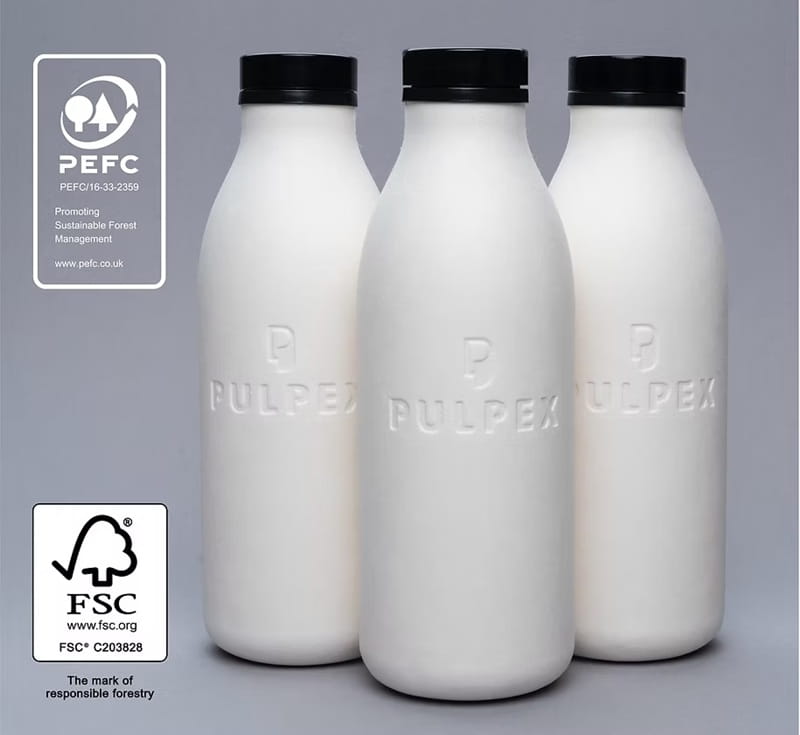
Designed for the South Korean market, this innovative bottle replaces traditional adhesive labels with embossed branding integrated directly into the bottle wall. The result is a packaging solution engineered from the outset to streamline recycling, enhance material recovery, and maintain strong shelf presence.
By combining material innovation with thoughtful design, the project highlights how circular packaging performance can be strengthened without compromising brand recognition or industrial practicality.
Why Label Removal Matters for Circular Packaging
Conventional beverage bottles often rely on plastic or paper labels attached with adhesives. While functional for marketing, labels frequently create contamination challenges during recycling. They require additional separation processes, increase operational costs, and can reduce the quality of recycled output.
The embossed PLA bottle eliminates this obstacle entirely.
Brand identification is molded directly into the structure of the bottle, removing the need for adhesives, sleeves, or secondary materials. This approach allows the bottle to enter recycling streams without pre-treatment for label removal, improving material purity and reducing processing complexity.
For recycling facilities, cleaner input streams translate into higher-quality recycled material. For brands, this represents a practical way to enhance circular packaging performance while simplifying end-of-life management.
Designed for Closed-Loop PLA Recycling
The embossed bottle is manufactured from Luminy PLA, a biobased plastic engineered for recycling and composting. More importantly, the bottle has been developed to integrate into a closed-loop PLA recycling system established through collaboration between TotalEnergies Corbion and Sansu under the i’m eco initiative.
In this system, post-consumer PLA bottles are collected and pre-processed before undergoing chemical recycling via hydrolysis. This process breaks polylactic acid down into its original building block, lactic acid monomer. The recovered monomer is then repolymerized to produce recycled Luminy PLA, also known as rPLA, with consistent performance characteristics.
By aligning bottle design with recycling infrastructure, the initiative reinforces the foundations of circular packaging at scale.
Hydrolysis: Enabling High-Quality Material Recovery
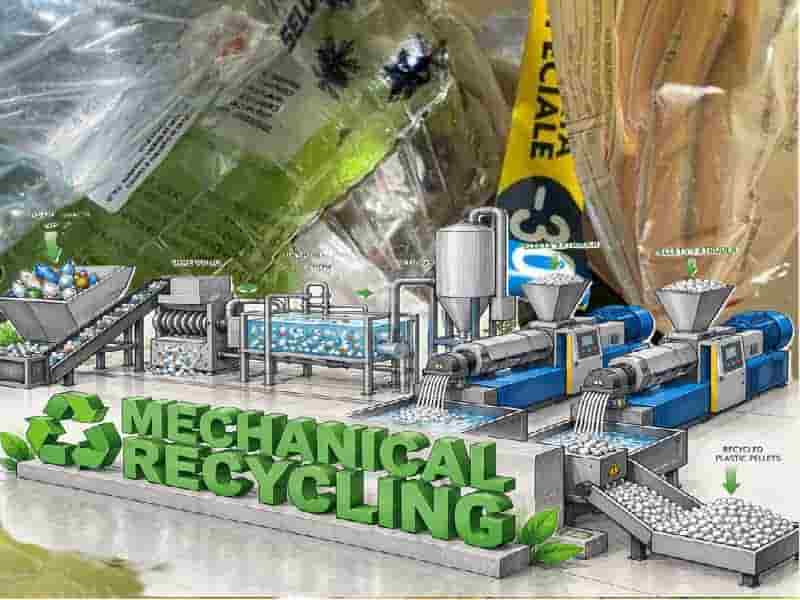
Traditional mechanical recycling can degrade polymer properties over time. Chemical recycling through hydrolysis, however, enables PLA to return to its molecular starting point.
This process ensures that recycled Luminy PLA maintains material integrity comparable to virgin resin. As a result, recycled content can be reintegrated into new bottles without compromising strength, clarity, or processability.
For circular packaging systems, maintaining consistent material performance is critical. Brands require assurance that sustainability gains do not undermine product safety, durability, or consumer acceptance.
The embossed, label-free PLA water bottle demonstrates how material science and packaging design can operate together to protect both environmental and commercial objectives.
Verified Carbon Performance Through LCA
Environmental claims increasingly require independent verification. Recent Life Cycle Assessment results for Luminy PLA provide additional credibility to the circular packaging model.
According to the latest data, virgin PLA delivers a significantly lower carbon footprint compared with many conventional fossil-based plastics. When recycled PLA is incorporated, carbon-neutral or even carbon-negative material options become achievable, depending on the proportion of recycled content used.
These findings strengthen the environmental case for PLA-based circular packaging systems. They also align with growing regulatory and consumer demand for measurable carbon reduction in packaging materials.
Maintaining Shelf Appeal Without Labels
One potential concern with label-free packaging is reduced brand visibility. The embossed bottle addresses this challenge through structural branding integrated directly into the bottle wall.
The embossed logo preserves product recognition and visual differentiation on retail shelves while eliminating secondary materials. This design approach proves that circular packaging does not require aesthetic compromise.
In fact, embossing can enhance tactile engagement and convey premium positioning, adding brand value while improving recyclability.
By removing labels at the design stage, the bottle simplifies the packaging architecture, reducing complexity across the value chain.
Collaboration as a Driver of Circular Packaging Innovation
The development of the embossed PLA water bottle began in 2021 through collaboration between TotalEnergies Corbion and Sansu. Early recycling trials validated the technical feasibility of integrating front-end packaging design with back-end chemical recycling systems.
The commercial launch of the label-free bottle marks the transition from pilot phase to market implementation.
This partnership illustrates a broader lesson for the packaging industry: circular packaging requires coordinated development across materials science, product design, waste collection, and recycling technology.
When these elements are aligned, scalable circular solutions become achievable.
Supporting Regulatory and Market Shifts
Global markets are increasingly focused on recyclability standards, extended producer responsibility schemes, and minimum recycled content mandates. At the same time, consumers are demanding packaging solutions with lower carbon footprints and clearer sustainability credentials.
The embossed, label-free PLA water bottle responds directly to these converging pressures.
By simplifying recyclability, reducing contamination risks, and enabling closed-loop recovery, the design strengthens compliance readiness while supporting broader circular economy goals.
As regulatory frameworks evolve, packaging systems that embed circularity at the design stage will likely gain competitive advantage.
A Practical Model for Future Circular Packaging
The significance of this embossed PLA bottle extends beyond a single product launch. It demonstrates a replicable model for circular packaging:
-
Simplify material composition
-
Eliminate unnecessary components
-
Align design with recycling infrastructure
-
Validate environmental performance through LCA
-
Maintain functional and branding requirements
This integrated strategy transforms circular packaging from an abstract ambition into an operational reality.
By combining embossed label-free design with advanced PLA recycling technology, the initiative provides a clear example of how packaging innovation can reduce carbon impact, improve recycling efficiency, and preserve commercial value simultaneously.
For brands, recyclers, and policymakers, the message is clear: circular packaging succeeds when material science, product design, and recovery systems are engineered together from the beginning.
More…