Reju’s Bold Circular Textile Recycling Breakthrough in Lacq Signals Major French Industrial Revival and Sustainable Polyester Innovation Leadership in Europe 16-02-2026
Reju selects Lacq for flagship circular textile recycling hub in France
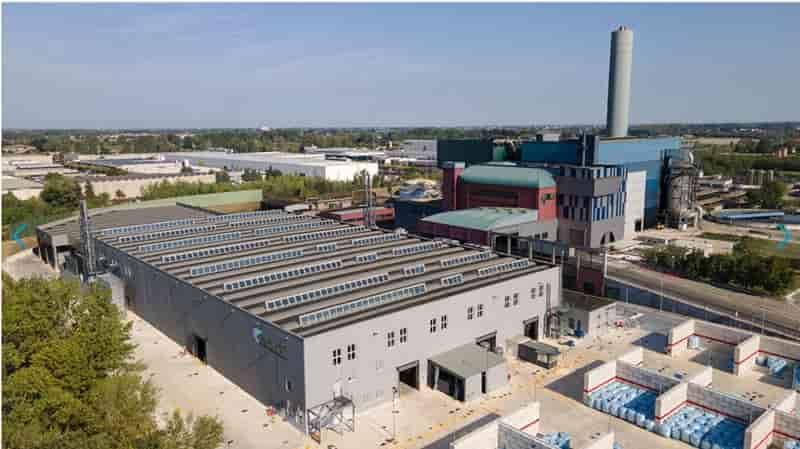
France is set to strengthen its position in the circular textile recycling sector as Reju confirms Lacq, in the Pyrénées-Atlantiques region, as the location for its first industrial-scale Regeneration Hub. The facility will be developed on the Induslacq industrial platform and represents a major milestone for the European circular economy.
Reju, a France-based textile-to-textile regeneration company owned by Technip Energies, is scaling up its proprietary technology to address one of the fashion industry’s most pressing sustainability failures: textile waste. The new Lacq hub will convert post-consumer polyester textiles into regenerated raw materials, accelerating the shift toward circular textile recycling at industrial scale.
A global textile waste crisis demanding industrial solutions
Each year, an estimated 121 million tonnes of textiles are discarded globally. Despite growing awareness of sustainability challenges, only 1% of used textiles are recycled into new garments. The vast majority ends up in landfills or is incinerated, contributing to greenhouse gas emissions, microplastic pollution, and resource depletion. circular textile recycling
Polyester, one of the most widely used fibers in fashion, presents a particular challenge. Derived from fossil fuels, it dominates global textile production but is rarely recycled back into equivalent-quality fibers. Most recycling efforts result in downcycling rather than true fiber-to-fiber regeneration.
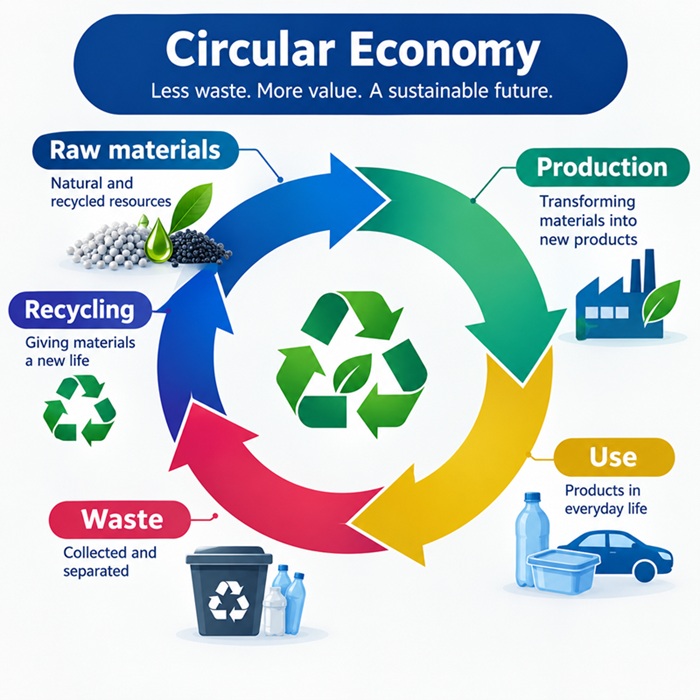
This is where circular textile recycling becomes critical. Instead of treating waste as an endpoint, the model aims to transform discarded garments into new raw materials with equivalent performance, closing the loop on polyester production. circular textile recycling
How the Lacq Regeneration Hub works
The Lacq facility will deploy Reju’s proprietary depolymerization technology. This process breaks down post-consumer polyester into rBHET (regenerated bis(2-hydroxyethyl) terephthalate), a purified intermediate material.
The rBHET can then be repolymerized into Reju PET, a regenerated polyester suitable for new textile production. Unlike mechanical recycling, which degrades fiber quality over time, chemical depolymerization allows for high-quality output, enabling genuine circular textile recycling.
By transforming textile waste into regenerated feedstock, the Lacq hub aims to:
-
Reduce dependence on virgin fossil-based raw materials
-
Lower lifecycle carbon emissions
-
Enable textile-to-textile traceability
-
Strengthen European circular supply chains
This approach positions France at the forefront of next-generation textile regeneration technologies.
Economic impact: jobs and regional development
Beyond environmental gains, the Lacq Regeneration Hub is expected to deliver tangible economic benefits. According to project estimates:
-
80 direct jobs will be created at the facility
-
More than 300 indirect jobs will emerge across the regional value chain
The project will be hosted on the Induslacq platform, owned by TotalEnergies, leveraging existing industrial infrastructure and logistics networks.
Chemparc, the regional development agency supported by public authorities and industry stakeholders, has highlighted the strategic importance of the project. The initiative aligns with Nouvelle-Aquitaine’s ambition to accelerate low-carbon industrial development while reinforcing the Lacq Basin’s role as a competitive chemical and materials hub.
The investment also reinforces France’s broader industrial strategy focused on reshoring advanced manufacturing and strengthening sustainable industrial ecosystems.
Strategic alignment with France’s circular economy agenda
France has adopted ambitious circular economy policies aimed at reducing waste, improving resource efficiency, and promoting industrial decarbonization. The Lacq project directly supports these national priorities.
By industrializing circular textile recycling, Reju contributes to:
-
The reduction of landfill-bound textile waste
-
The development of domestic recycling capacity
-
Lower carbon intensity in textile production
-
Increased material sovereignty in Europe
The project remains subject to final board approval from Technip Energies, but it signals strong institutional and industrial backing for long-term deployment.
Part of a broader European and global expansion
The Lacq hub is not an isolated initiative. It forms part of Reju’s broader strategy to build scalable regeneration infrastructure across major industrial regions.
Key projects include:
-
Regeneration Hub Zero in Frankfurt
-
The Chemelot site in the Netherlands
-
A planned U.S. facility at Eastman Business Park in Rochester, New York
Together, these hubs aim to establish an interconnected network capable of scaling circular textile recycling across Europe and North America.
This geographic diversification strengthens resilience in textile supply chains and supports global brands seeking traceable, low-carbon polyester alternatives.
Closing the loop on polyester at scale
One of the greatest barriers to textile circularity has been scalability. While pilot projects and laboratory breakthroughs have demonstrated technical feasibility, few companies have moved into full industrial deployment.
The Lacq Regeneration Hub represents a shift from experimentation to industrialization. By combining Technip Energies’ engineering capabilities with Reju’s proprietary process, the project aims to deliver commercial-scale volumes of regenerated polyester.
If successful, this model could:
-
Reduce virgin polyester demand
-
Lower emissions associated with textile manufacturing
-
Create new circular industrial ecosystems
-
Provide brands with certified regenerated materials
Industrial-scale circular textile recycling could redefine how polyester is produced and consumed across Europe.
Why this matters for the future of sustainable fashion
The fashion industry faces mounting regulatory pressure and investor scrutiny over environmental performance. Extended producer responsibility schemes, carbon reporting requirements, and sustainability disclosure frameworks are intensifying across the European Union.
Industrial projects like Lacq demonstrate how infrastructure investment can move sustainability from marketing claims to measurable impact.
By building a domestic regeneration hub, France strengthens its strategic autonomy in recycled materials while reducing reliance on imported virgin polymers. At the same time, brands gain access to high-quality regenerated PET compatible with existing manufacturing systems.
This convergence of environmental urgency, regulatory momentum, and technological maturity makes Lacq a potentially transformative development for the textile sector.
Conclusion: France positions itself as a circular textile leader
Reju’s decision to establish its first industrial-scale Regeneration Hub in Lacq marks a significant milestone for both France and the European textile industry. By advancing chemical depolymerization technology and scaling circular textile recycling, the project addresses one of the fashion sector’s most entrenched sustainability challenges.
If fully approved and implemented, the Lacq hub could serve as a blueprint for future textile regeneration infrastructure worldwide—demonstrating that circularity, industrial competitiveness, and job creation can advance together.
More…