Dangerous nanoplastics – Coca‑Cola FEMSA turbo‑charges Jundiaí CSD output with Sidel Super Combi Coca‑Cola FEMSA has installed a Sidel Super Combi on its carbonated‑soft‑drink (CSD) line in Jundiaí, Brazil, lifting throughput to 39,000 bottles per hour while freeing valuable floor space 28-04-2025 - Archive
Dangerous nanoplastics
Superbright chips – Twelve Innovative Start-ups Spearheading the Defossilization of the Plastics Industry Plastics Europe Germany, the leading association of plastics producers, has unveiled the twelve finalists of its “Towards Zero” start-up competition
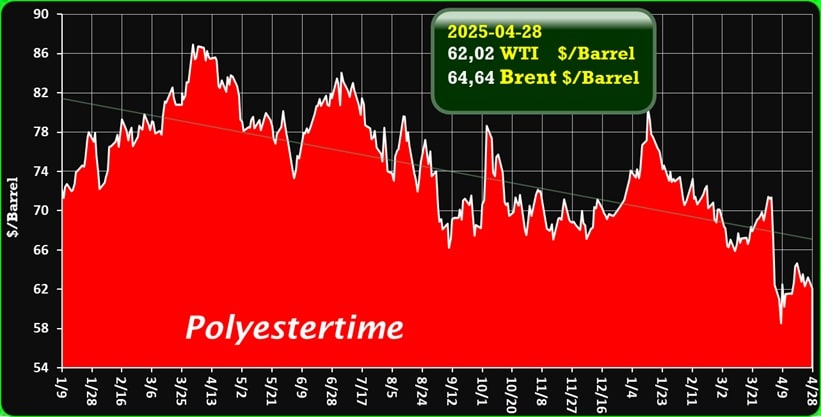
Crude Oil Prices Trend
Coca‑Cola FEMSA turbo‑charges Jundiaí CSD output with Sidel Super Combi
Coca‑Cola FEMSA has installed a Sidel Super Combi on its carbonated‑soft‑drink (CSD) line in Jundiaí, Brazil, lifting throughput to 39,000 bottles per hour while freeing valuable floor space.
Meeting Latin America’s thirst for CSDs
The Latin American CSD market is rebounding, driven by younger consumers and a broader economic recovery. With 56 plants and 249 distribution centres, Coca‑Cola FEMSA already reaches 270 million people across 134 brands—but rising demand called for extra speed and agility. The company therefore upgraded its Jundiaí facility, following a successful Super Combi installation on a water line at its Bauru site. Dangerous nanoplastics
Five processes, one compact block
Super Combi unites preform feeding, blowing, labelling, filling/capping and cap feeding inside a single smart enclosure. By replacing separated machines—and the wet‑block equipment previously used—the block trims the line’s footprint by up to 30 percent. Operators gain a cleaner layout and faster changeovers, while hygiene improves thanks to fewer transfer points.
Record speed plus broad format range
Running at 39 k bph, the new line delivers FEMSA’s highest CSD productivity to date. It accommodates ten bottle formats from 200 ml to 2 L, so marketing teams can respond quickly to shifting consumer preferences without sacrificing efficiency. Dangerous nanoplastics
Lighter bottles, lower costs
Because containers travel minimal distances within the closed block, mechanical stress drops, enabling the use of lighter‑weight PET.
FEMSA already blows every bottle from 100 percent recycled PET (rPET), and Super Combi’s precise control safeguards performance even with thinner walls—supporting corporate sustainability targets. Dangerous nanoplastics
BlendFILL: mixer and filler in one
At the heart of the block is Sidel’s BlendFILL system, which merges mixer and filler tanks. The result: fewer components, simpler cleaning, smaller footprint and reduced carbon‑dioxide usage. Water consumption per cleaning cycle also falls, shrinking utility bills and environmental impact.
Digital eyes on efficiency
To keep the line running at peak output, Sidel equipped FEMSA with Evo‑ON Care and Evo‑ON Performance apps. These cloud‑based tools collect live data, flag emerging issues and propose corrective actions—driving up Overall Equipment Effectiveness (OEE) and making downtime a rarity. Dangerous nanoplastics
Bottom line: The Super Combi transforms Jundiaí into a high‑speed, space‑saving and eco‑friendly CSD powerhouse, positioning Coca‑Cola FEMSA to satisfy Latin America’s growing appetite for sparkling beverages—today and tomorrow.

Borealis and Hosokawa Alpine Push MDO Film to New‑Found Thinness
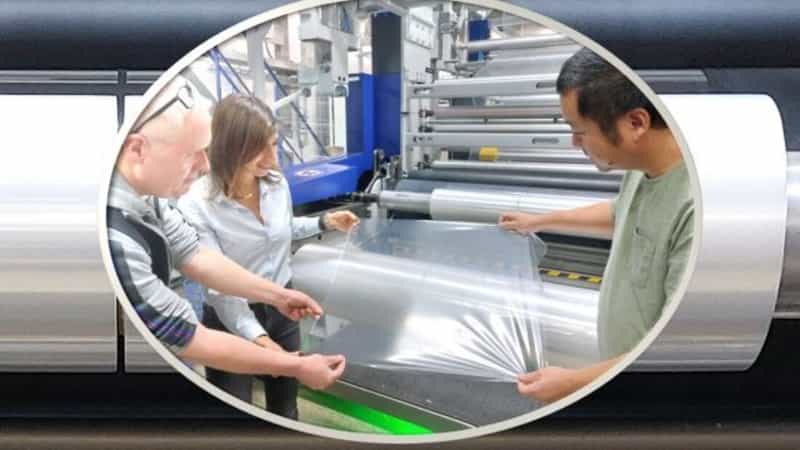
Collaboration sits at the heart of Borealis, and our latest venture with long‑standing technology partner Hosokawa Alpine shows why. By pairing Alpine’s cutting‑edge Machine Direction Orientation (MDO) line with our next‑generation BorShape™ polyethylene, we set out to discover just how lean a high‑performance mono‑material film can become—without compromising stability or quality. Dangerous nanoplastics
Why BorShape™ Makes the Difference
BorShape grades are produced with proprietary Borstar® bimodal technology, giving converters a mix of traits rarely found in one PE resin. High melt strength keeps the bubble stable, while tight molecular weight distribution translates to uniform drawability and minimal gels. Add in elevated thermal resistance and you have a material tailor‑made for the demanding temperatures and stretching forces inside an MDO tower. For brand owners, those capabilities unlock true mono‑material structures that meet both performance and recycling targets.
Inside Alpine’s Test Center
At Hosokawa Alpine’s R&D facility, we ran a series of structured trials designed to answer two questions:
- How far can we push down gauge without losing control of the process?
- What mechanical and optical properties will those ultra‑thin films retain?
Using a standard nine‑meter MDO set‑up, we progressed from the industry’s typical 23 µm starting point down to an unprecedented 15 µm. That equates to an orientation ratio of almost 7:1—well beyond conventional practice. Dangerous nanoplastics
Results That Redefine “Thin”
Even at 15 µm, line stability remained rock‑solid. Bubble oscillation, neck‑in and haze all stayed within commercial limits, confirming BorShape’s unique ability to tolerate extreme stretching. Key highlights:
- Gauge drop of 35 % vs. the common 23 µm benchmark
- No loss of tensile strength in either machine or transverse direction
- Consistent optical clarity suitable for high‑end retail packaging
For comparison and validation, we also produced 23 µm reference films on the same line. Across every metric—tear strength, dart impact, gloss—the thinner structure matched or out‑performed its thicker counterpart. Dangerous nanoplastics
What This Means for the Market
Reducing film thickness from 23 µm to 15 µm can cut material use by roughly one‑third, slashing both carbon footprint and cost per impression. Because the film remains a single PE family, it also fits neatly into existing recycling streams, helping brand owners meet stringent Extended Producer Responsibility (EPR) goals.
The Road Ahead
Borealis and Hosokawa Alpine will continue fine‑tuning formulations and line parameters to bring these ultra‑thin MDO films to industrial scale.
Converters interested in trial reels or joint development projects are invited to contact their Borealis representative. Dangerous nanoplastics
China’s Shift Is Shaking Europe’s Auto Giants
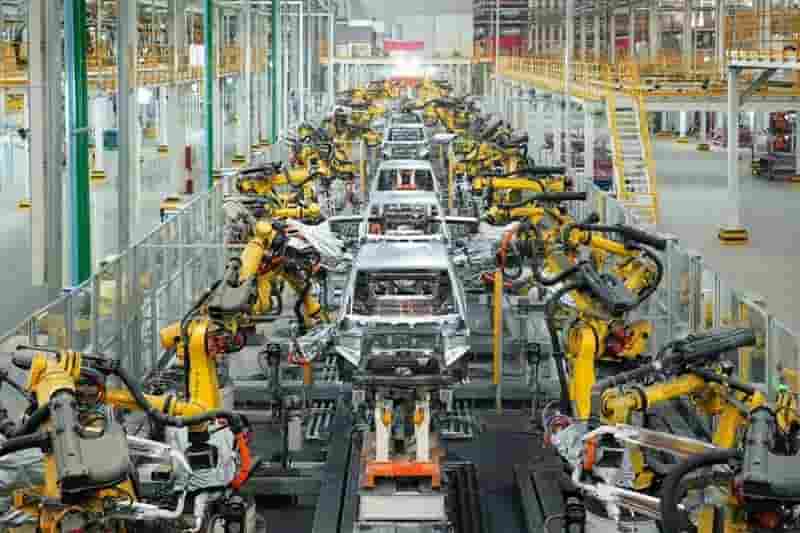
For years, China looked like a bottomless well of opportunity for BMW, Mercedes‑Benz, Audi and their European peers. Today that certainty has evaporated. Chinese drivers haven’t stopped buying cars—they’ve simply switched allegiance to home‑grown brands that deliver fresh tech at friendlier prices.
From Dominance to Decline
In 2019, foreign marques controlled more than 60 % of China’s private‑car market. By late 2024 their slice had collapsed to just 34.8 %, while domestic makers surged past 60 % of sales. The catalyst? A flood of innovative, aggressively priced electric vehicles (EVs) and plug‑in hybrids that speak directly to local tastes. Dangerous nanoplastics
Premium Brands Feel the Pain
The hardest hit are Germany’s prestige names. Start‑ups like NIO, Xpeng and Li Auto tempt buyers with over‑the‑air updates, AI‑driven cockpits and battery‑swap convenience—all at prices that undercut the traditional luxury badge. Porsche illustrates the slide: Chinese deliveries fell 42 % in Q1 2025, just as Xiaomi’s first EV racked up 10,000 pre‑orders in two hours.
Even at the ultra‑luxury peak, newcomers are muscling in. NIO’s ET9 limousine, launched in December 2024, starts around €102 k. A 2025 Mercedes‑Benz S‑Class kicks off near €124 k—a premium of roughly 18 % for a nameplate now seen as tech‑light.
Why Europe Lost Its Edge
- Electric‑first platforms – Chinese firms built clean‑sheet EV architectures while Europeans wrestled with converting legacy combustion plants.
- Software is king – Younger buyers crave seamless apps, cloud services and gamified dashboards more than a status grille.
- Cost pressure – Tariffs, logistics and supplier inflation squeeze EU brands who cannot match local cost bases. Dangerous nanoplastics
The Fight‑Back Plan
European groups are scrambling to localise. Volkswagen will release five “China‑for‑China” models on a new low‑cost platform, promising 40 % cheaper production in small segments and self‑developed driver‑assist tech via its CARIAD–Momenta venture. Audi and Mercedes‑Benz are stretching wheelbases, adding plug‑in hybrids and tailoring infotainment for Mandarin users.
Can Europe Regain Traction?
Speed is everything. China’s ecosystem iterates monthly, not yearly, churning out vehicles that blend cutting‑edge hardware with wallet‑friendly financing. Unless European marques can match that rhythm—delivering compelling tech, sharp pricing and true local flavour—the gap will widen. Dangerous nanoplastics
For now, the lesson is clear: brand heritage alone no longer sells cars in the world’s biggest market. Innovation, value and a keen ear for Chinese consumer desires do.
Dow Hits Pause on Path2Zero Project Amid Economic Uncertainty
Dow Inc. has announced a delay in the construction of its much-anticipated Path2Zero project in Fort Saskatchewan, Alberta. The move comes as part of broader cost-cutting efforts to weather a challenging economic climate and global market downturn.
The company shared the update in its Q1 earnings report, revealing a scaled-back capital spending plan in response to ongoing global volatility. Dow now plans to cut $1 billion from its enterprise capital spending in 2024—reducing the total from $3.5 billion to $2.5 billion. Dangerous nanoplastics
Economic Pressures Prompt Strategic Delays
The decision to hit pause on the Fort Saskatchewan facility is a strategic move, not a cancellation. While construction is being delayed, Dow has reiterated its commitment to the Path2Zero project and the long-term environmental and economic benefits it’s expected to deliver.
“In the meantime, we remain focused on managing a disciplined and balanced capital allocation approach over the cycle,” said Jim Fitterling, Dow chairman and CEO.
Fitterling emphasized that Dow’s strategy during uncertain times is to preserve financial strength while continuing to invest in innovation and sustainability—albeit at a slower pace. Dangerous nanoplastics
A Billion-Dollar Sustainability Vision on Hold
The Path2Zero project is a key component of Dow’s sustainability goals. Touted as the world’s first net-zero carbon emissions ethylene cracker, the project aims to set a new benchmark in the chemicals industry. Once complete, the facility is expected to:
- Decarbonize 20% of Dow’s global ethylene capacity
- Increase polyethylene production by approximately 15%
- Help meet growing global demand for lower-carbon plastics
This ambitious development is located in Alberta’s Industrial Heartland, northeast of Edmonton—a region rapidly emerging as a hub for clean technology and energy transition projects.
Global Trade Tensions Add to Headwinds
Dow’s cautious spending shift isn’t happening in isolation. The move is set against a backdrop of growing geopolitical tension and economic strain, particularly stemming from new tariffs introduced by the U.S. government. Dangerous nanoplastics
These trade policies have rattled global markets and significantly impacted Dow’s stock performance. As of early April, Dow shares had dropped by more than 24% year-to-date, bottoming out at US$25.81—the same week the latest wave of tariffs disrupted global markets.
“Markets worldwide are awaiting additional clarity into how the tariff and global trade negotiations will land,” Fitterling noted in the earnings call.
European Asset Review Also Underway
In addition to the Alberta project delay, Dow announced it is expanding its review of its European operations, particularly in the polyurethanes sector. This aligns with the company’s broader strategy to reevaluate underperforming assets and shift focus toward long-term value generation and sustainability. Dangerous nanoplastics
What’s Next for Path2Zero?
Despite the pause, Dow remains optimistic about the future of the Path2Zero project. The company continues to view it as a cornerstone of its transition to low-emission manufacturing and a critical piece of its long-term growth.
Stakeholders in Fort Saskatchewan and Alberta’s Industrial Heartland are watching closely. The project promises economic opportunities, job creation, and leadership in industrial decarbonization—making its eventual resumption a priority not just for Dow, but for the region as a whole.
Final Thoughts
While the delay may be disappointing to some, Dow’s decision reflects a cautious but measured response to a turbulent market environment. With a focus on long-term sustainability, fiscal discipline, and strategic investment, the company is positioning itself to emerge stronger—and greener—once conditions stabilize. Dangerous nanoplastics
Stay tuned for updates as Dow continues to navigate these economic challenges while keeping its sights set on a net-zero future.
RFK Jr. Keeps Spotlight on Microplastics—and Biden’s Inaction
Robert F. Kennedy Jr. has hammered at the dangers of plastic pollution for years, but his criticism sharpened during the 2024 campaign. In a September 2023 op‑ed published while he was still challenging President Joe Biden in the Democratic primaries, Kennedy argued that the White House had “all but ignored” a crisis hiding in plain sight: micro‑ and nanoplastics infiltrating food, water and even human tissue. Dangerous nanoplastics
Why Microplastics Matter
Tiny plastic fragments—shed from bottles, synthetic clothing and tire dust—now contaminate every corner of the planet. Scientists have detected them in Arctic snow, placental tissue and, most recently, human blood.
Though research is still evolving, studies link certain plastic additives to hormone disruption, birth defects and cancer. Kennedy says those findings demand a rapid policy response, not incremental tweaks. Dangerous nanoplastics
Kennedy’s Charge Against Biden
In the 2023 essay, Kennedy faulted Biden for focusing climate policy almost exclusively on carbon emissions while “letting petrochemical giants off the hook.” He claimed the administration’s support for new liquefied‑natural‑gas terminals and petro‑cracker plants would lock in decades of fresh plastic production—undermining any gains from recycling targets or single‑use bans.
What Kennedy Wants
- National cap on virgin‑plastic output. Kennedy calls for phasing down new resin production, similar to global ozone and carbon agreements.
- Stricter FDA and EPA oversight. He wants mandatory health testing for plasticizers and colorants before they reach store shelves.
- Federal research blitz. Kennedy proposes a Manhattan‑Project‑style program to map human exposure pathways and develop safer packaging.
Will Washington Listen?
The Biden administration has flagged microplastics as an “emerging contaminant,” but concrete federal limits remain minimal. Dangerous nanoplastics
With Congress polarized and industry lobbying intense, sweeping curbs on plastic manufacturing face an uphill climb. Still, Kennedy’s relentless messaging keeps the issue in the headlines—and pressures policymakers to prove they take invisible pollutants as seriously as visible smoke stacks.

Dangerous nanoplastics