Decarbonization – Transforming the Petrochemical Industry for a Sustainable Future APIC 2025 brought together key industry leaders under the theme “Ensuring a Transformed World Prosperity – Action for Planet with Innovation and Collaboration” 02-06-2025 - Archive
EU Recycling – UK TRA Recommends Extending Anti-Subsidy Measures on Indian PET Imports The United Kingdom’s Trade Remedies Authority (TRA) has advised that countervailing measures on polyethylene terephthalate (PET) imports from India remain in place for another five years
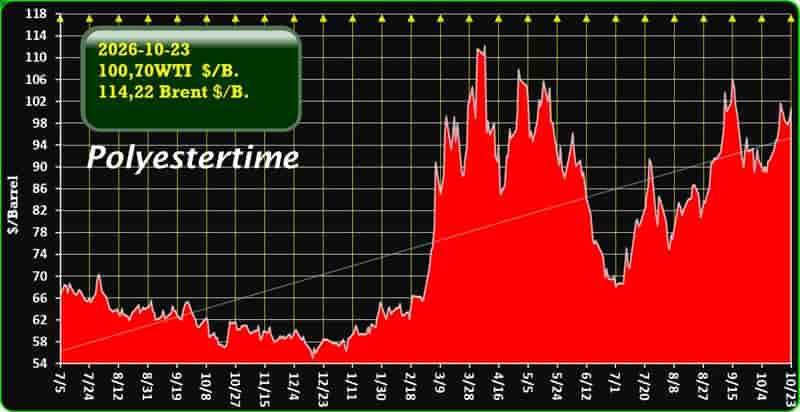
Crude Oil Prices Trend

? HH Chemical Launches BIODEX®: A Game-Changer in Bio-Based Material Innovation
HH Chemical has unveiled BIODEX®, the world’s first fully integrated bio-based materials brand designed to transform how industries approach sustainability and performance. From renewable raw materials to consumer-ready products, BIODEX® creates a closed-loop ecosystem built to serve the modern demand for greener, smarter, and more efficient solutions.
? From Biomass to Finished Products: A Fully Integrated Ecosystem
What sets BIODEX® apart is its end-to-end platform that seamlessly connects green sourcing with high-performance applications. The brand supports every stage of the bio-material lifecycle—starting from renewable feedstocks and progressing through monomer creation, polymer processing, fiber spinning, and textile finishing, all the way to consumer garments. Decarbonization
With this closed-loop system, BIODEX® is not just a product line—it’s a shift in how sustainability can be implemented at scale across multiple industries.
A Versatile Portfolio for Modern Industries
The BIODEX® range includes:
- High-performance monomers
- Advanced elastomers and polymer chips
- Fibers and functional fabrics
- Customizable garments for direct consumer applications
Industries served include textiles and apparel, automotive, aerospace, personal care, and biomedical sectors—empowering them to meet high-performance standards while significantly lowering their environmental footprint. Decarbonization
BIODEX®: Greener, Softer, and More Elastic
At its core, BIODEX® offers three standout attributes:
- Greener: Made from renewable raw materials and fully recyclable.
- Softer: Offers superior comfort, even in sensitive or direct-to-skin applications.
- More Elastic: Maintains shape and flexibility without compromising breathability.
Compared to conventional petroleum-based polymers like nylon, BIODEX® delivers up to 73% lower carbon emissions during production. This performance-plus-sustainability balance is a significant leap forward in materials science. Decarbonization
? Environmental Impact Meets Premium Performance
One of BIODEX®’s most disruptive qualities is its ability to combine high-end functionality with measurable sustainability benefits. It beats synthetic fibers in:
- Softness
- Elastic recovery
- Moisture management
- Shape retention
All while being fully recyclable at end-of-life. This dual advantage helps companies align with ESG goals without sacrificing performance or aesthetics.
“The launch of BIODEX® represents a major breakthrough in bio-based materials science and reflects our deep commitment to global consumer well-being and environmental stewardship under the ESG framework.”
— Leo Wang, Co-Founder and General Manager, HH Chemical
Solving Long-Standing Challenges in Sensitive Applications
BIODEX® is already replacing traditional materials in sensitive categories like women’s lingerie and swimwear. These products have historically relied on synthetic foams that raise both health and environmental concerns. BIODEX® provides a safer, breathable, cost-effective, and recyclable alternative, inclusive of all skin tones and body types.
By doing so, it offers not just environmental improvements—but also social impact through inclusive design. Decarbonization
Bridging Research and Market: A Singaporean Innovation Story
BIODEX® was co-developed by HH Chemical and the National University of Singapore (NUS) as part of the SINERGY (Singapore Consortium for Synthetic Biology) initiative. Using palm oil byproducts as a base and a proprietary biosynthesis process, the team turned lab-grade science into a commercially scalable, patent-backed platform in just a few years.
This collaboration underscores the power of public-private partnerships in driving sustainable innovation from the lab bench to mass-market adoption.
Expanding into Circular Economy Frontiers
BIODEX® is actively branching into healthcare, sustainable packaging, and industrial applications—offering end users and B2B partners new ways to reduce waste and reimagine product design. Its circularity-ready design aligns perfectly with evolving global carbon neutrality goals. Decarbonization
The goal? To serve as a catalyst that connects science, industry, and sustainability in a single, transformative material solution.
About HH Chemical
HH Chemical is a global pioneer in bio-based materials innovation, offering comprehensive capabilities across the entire value chain—from R&D and polymer engineering to commercial deployment. Its flagship PDO (1,3-Propanediol) and PTT (polytrimethylene terephthalate) platforms are fully commercialized and deployed at scale to deliver sustainable, high-performance materials for modern industries.
The European PVC industry is at a critical juncture in its sustainability journey. At the recent VinylPlus Sustainability Forum 2025 (VSF2025) held in Paris, industry leaders gathered to evaluate progress and recalibrate efforts to meet the ambitious VinylPlus 2030 goals.
This annual forum brought together over 200 delegates from 23 countries, including representatives from public bodies, environmental organizations, policymakers, academics, architects, recyclers, and stakeholders across the entire PVC value chain. Decarbonization
What Is VinylPlus?
VinylPlus is the European PVC industry’s voluntary commitment to improving its sustainability performance over a ten-year period, running from 2021 to 2030. The program focuses on environmental responsibility, circular economy practices, stakeholder engagement, and transparency.
New Strategy for a Changing World
This year’s forum carried the theme: “For a Future-Proof Value Chain.” In her opening address, Charlotte Röber, CEO of VinylPlus, outlined the updated strategic direction the program is adopting in response to external environmental, economic, and social challenges. Decarbonization
“We need to ensure that our transition is not only green but also just,” said Röber. “To build a future-proof supply chain, we need to involve everyone: workers, communities, institutions and businesses.”
She emphasized the importance of inclusive action to create a resilient society, backed by sound science and stronger national stakeholder networks. The industry is currently undergoing a mid-term review to refine its targets and adapt to the evolving regulatory landscape and market dynamics. Decarbonization
? A Dip in Recycling Performance
The latest VinylPlus Progress Report 2025 reveals a mixed picture. In 2024, the industry recycled 724,638 tonnes of PVC waste—a slight decrease from 737,645 tonnes in 2023 (-1.8%) and a significant drop from 813,266 tonnes in 2022.
This trend poses a challenge to reaching the future recycling targets of:
- 900,000 tonnes/year by 2025
- 1 million tonnes/year by 2030
Breakdown of Recycled Material
Of the total recycled PVC in 2024:
- 61.4% came from pre-consumer waste
- 38.6% came from post-consumer waste Decarbonization
Primary recycling sources included:
- Window profiles: 396,000 tonnes (55%)
- Flooring: 117,000 tonnes (16%)
- Cables: 92,400 tonnes (13%)
- Flexible PVC: 54,400 tonnes (7.5%)
- Pipes: 33,460 tonnes (4.6%)
- Other rigid materials: 30,300 tonnes (4.2%)
?Where Does Recycled PVC Go?
The main applications for recycled PVC were:
- Window profiles: 40%
- Flooring: 25%
- Traffic management: 15%
- Pipes: 11%
Market and Economic Headwinds
One of the core challenges discussed during the forum was the European PVC sector’s weakening competitiveness compared to other global regions. A combination of high energy costs, rising ethylene prices, labor expenses, and carbon pricing burdens have significantly impacted the market. Decarbonization
Adding to the pressure, PVC demand remained sluggish in 2024, particularly in the construction industry—the largest consumer of PVC products.
Circularity vs Competitiveness: False Dichotomy?
During panel discussions, experts highlighted the often-perceived conflict between economic success and environmental sustainability. Many agreed this trade-off is no longer valid. Instead, circularity, competitiveness, and social inclusion must be pursued together to create a resilient European industrial base.
A Call for Collaboration
Carsten Heuer, Vice-President of VinylPlus, closed the forum with a strong call for unity across sectors and institutions. Decarbonization
“The PVC industry can play a major role in the European economic recovery and be a key player in the transition of the European Clean Industry Deal,” Heuer stated. “We are ready to strengthen our commitment to transparent and effective cooperation with all stakeholders.”
He stressed that only through inclusive partnerships can the industry build a future-proof value chain and meaningfully contribute to a more sustainable Europe.
Looking Ahead: Achieving 2030 Goals
Although the path to 2030 has proven more difficult than anticipated, the VinylPlus initiative remains a powerful example of voluntary industry-led transformation. The challenges—both environmental and economic—underscore the importance of renewed focus, innovation, and collaboration. Decarbonization
To succeed, the PVC industry must double down on recycling technologies, policy engagement, and market diversification while ensuring no one is left behind in the transition.

? Indorama Ventures Champions Circular Innovation at APIC 2025
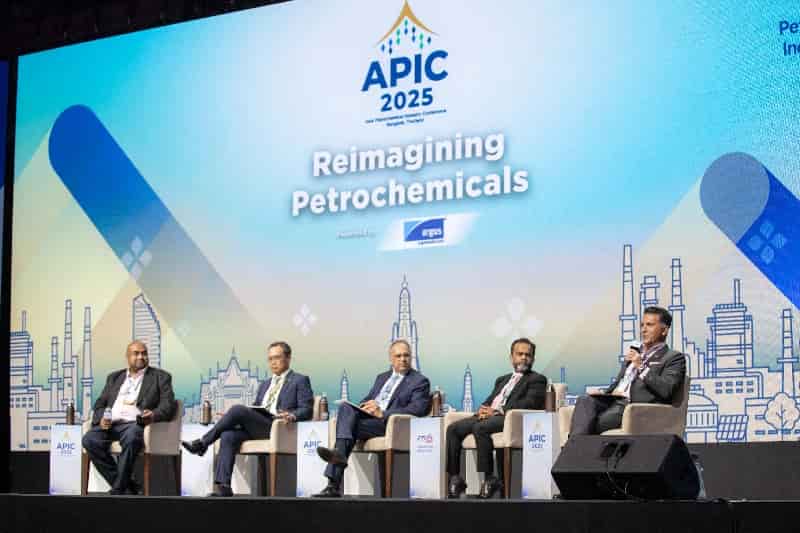
Indorama Ventures Public Company Limited, a global leader in sustainable chemical production, spotlighted its commitment to driving circular innovation and long-term collaboration at the Asia Petrochemical Industry Conference (APIC) 2025, held this year in Bangkok, Thailand.
? Transforming the Petrochemical Industry for a Sustainable Future
APIC 2025 brought together key industry leaders under the theme “Ensuring a Transformed World Prosperity – Action for Planet with Innovation and Collaboration.” This year’s conference emphasized the petrochemical sector’s vital role in accelerating global growth while advancing sustainability goals in an era of structural transformation.
Aligned with this vision, Indorama Ventures showcased its forward-thinking approach, highlighting its ongoing mission to deliver indispensable chemistry through innovative, circular, and sustainable solutions. Decarbonization
As global dynamics shift, the company remains a steady force in fostering resilience and relevance across the value chain.
A Call for Industry-Wide Collaboration
“The Future Won’t Be Written in Isolation”
In his keynote address, Aloke Lohia, Group CEO of Indorama Ventures, urged the industry to embrace collaboration at every level. He emphasized that cooperation across the supply chain is essential for building a robust future that benefits both people and the planet:
“Our global diversity gives us the agility to meet change with confidence and to remain dependable no matter the environment. It is this quiet strength that makes us a partner you can rely on — for today and for what lies ahead. The future of our industry won’t be written in isolation. It will be shaped, once again, through collaboration. Through shared purpose. Through indispensable chemistry.” Decarbonization
This message of unity and shared innovation resonated deeply with APIC attendees, many of whom face increasing pressure to adapt to climate targets, ESG regulations, and changing consumer expectations.
? Sustainability at the Heart of Indorama Ventures
Driving Circularity Through Action
At the heart of Indorama Ventures’ strategy is its commitment to circularity — a system in which resources are reused and waste is minimized. The company continues to invest in advanced recycling technologies, renewable feedstocks, and closed-loop manufacturing processes across its global operations. Decarbonization
In line with the United Nations Sustainable Development Goals (SDGs), Indorama Ventures has developed several strategic programs to support responsible consumption and production. These include:
- Recycling expansion: With PET bottle-to-bottle recycling plants operating in Asia, Europe, and the Americas, the company is scaling up its impact across continents.
- Decarbonization roadmap: Indorama Ventures is actively reducing its carbon footprint through renewable energy sourcing, emissions tracking, and energy-efficient innovations.
- Community engagement: The company supports educational outreach programs and environmental partnerships to build awareness and drive behavioral change. Decarbonization
? Innovation as a Strategic Driver
Investing in Tomorrow’s Technologies
Innovation remains a cornerstone of Indorama Ventures’ long-term business model. From smart material development to AI-powered production efficiencies, the company is harnessing cutting-edge tools to shape the future of petrochemicals — one that balances profitability with planetary health.
The company’s R&D teams continue to explore new ways to integrate sustainable feedstocks, such as bio-based raw materials, while optimizing recycling streams to meet global demand for sustainable packaging and industrial inputs. Decarbonization
Global Presence, Local Impact
With over 140 manufacturing sites in more than 30 countries, Indorama Ventures is uniquely positioned to bring global insights into local action. Its diverse workforce and expansive operations allow the company to implement best practices across markets — driving consistency, quality, and environmental stewardship worldwide.
Through partnerships with suppliers, regulators, and customers, the company reinforces its belief that sustainability is not a destination, but a journey — one best traveled together.
Looking Ahead: A Future Fueled by Purpose
As the petrochemical sector undergoes rapid evolution, Indorama Ventures stands out as a company not only adapting to change but leading it. By embracing a purpose-driven approach grounded in collaboration and innovation, the company is redefining what it means to be a responsible industry leader. Decarbonization
With eyes on the horizon and feet firmly on the ground, Indorama Ventures is committed to building a world where chemistry empowers sustainable growth — for today’s industries and tomorrow’s generations.
About Indorama Ventures
Indorama Ventures Public Company Limited is a global chemical producer with a focus on sustainability, recycling, and circular economy principles. The company is a world-class manufacturer of PET, fibers, packaging, and chemicals used in consumer goods and industrial applications. Decarbonization
Learn More
Visit the official website at www.indoramaventures.com
? Why PET Bottle Chip Plants Are Still Running at High Capacity Despite Market Fluctuations
The PET (polyethylene terephthalate) bottle chip market has recently displayed an interesting contradiction: while prices have been on the rise, actual trading volumes are declining. After a wave of price hikes, weaker transactions have driven a mild price correction since last weekend. Yet, PET bottle chip manufacturers are holding firm on operating rates. What’s driving this persistence in production?
Key Reasons Behind High PET Plant Operating Rates
Despite market signals suggesting a pullback, PET bottle chip facilities continue to operate at elevated capacity levels. Here are the top three reasons explaining this trend:
1️⃣ Strong Shipments in Q2 Fueling Production Decarbonization
The second quarter traditionally marks a peak season for both domestic and international PET chip shipments. With solid order books—especially for exports—already in place, manufacturers are committed to fulfilling deliveries. Even amid weaker spot sales, earlier contractual obligations demand sustained production to meet logistics timelines.
2️⃣ Older Low-Cost Orders Still Support Marginal Profits
Although the spot market’s current profitability appears limited due to squeezed processing spreads, many plants are still benefiting from prior orders placed when raw material costs were lower. These legacy contracts provide just enough margin to justify maintaining high output, cushioning producers from immediate financial impact.
3️⃣ Inventory Pressure Has Shifted Downstream
Another key factor: PET chip inventory pressure has gradually moved away from producers to traders and downstream buyers. Decarbonization
This redistribution reduces short-term storage stress on factories. Some producers are even using off-site warehousing and time-delay strategies to manage stockpiles, helping to keep their own production lines active.
⚠️ But Is This Sustainable?
While the current high run rate strategy is working for now, its long-term sustainability is uncertain. Industry analysts expect some volatility between late May and mid-June, particularly as changes in processing fees and market sentiment may lead to adjustments in average factory operating rates. It’s likely that a correction will eventually take place, especially if profitability continues to decline. Decarbonization
? Limited Impact of Raw Material Futures Rally
A brief upswing in raw material futures initially provided hope for a more positive market outlook. However, its real-world impact was muted. Most traders and end-users had already stocked up during previous low-price periods, so the subsequent price rally didn’t stimulate much additional purchasing.
What Sparked the Rally?
The short-lived futures rally was likely triggered by two key developments:
- Reduced tariff-related concerns following U.S.-China trade discussions
- Improved market fundamentals, including plant maintenance and high polyester operating rates Decarbonization
However, this optimism was short-term. As cash flow challenges mount for downstream polyester producers, calls for output cuts have started to emerge. In response, raw material futures prices are beginning to decline once again.
Outlook for Polyester Operating Rates and Exports
Even though actual implementation of production cuts is still pending, polyester operating rates remain high. Nevertheless, the export-driven support seen in recent months could begin to fade. Orders for other polyester products have slowed, hinting at a possible deceleration in overseas demand.
That said, there’s still some optimism. If overseas buyers continue to restock, it may provide a short-term lifeline for domestic polyester consumption.
Market players should keep a close watch on export activity in the coming weeks to assess demand strength. Decarbonization
Final Thoughts: Monitor for Mid-Year Volatility
In summary, while PET bottle chip producers are currently maintaining high operating rates due to strong Q2 shipments, legacy profits, and shifting inventory burdens, the sustainability of this strategy is in question. Between late May and mid-June, we could see operational adjustments due to market shifts and processing fee pressures.
Meanwhile, the broader polyester and raw material landscape remains in flux. Short-term optimism from futures rallies is unlikely to drive lasting momentum without fundamental recovery in downstream demand and export growth. Decarbonization
For businesses in the polyester and PET industries, now is the time to stay agile, monitor international trade trends, and prepare for potential production recalibrations in the coming months.