China PP Prices Fall as Cost Support Collapses in June
China PP Prices Fall Sharply as Cost Support Collapses in June
China’s polypropylene market ended June under strong downward pressure, with falling feedstock costs, cautious downstream buying and ample spot availability combining to push prices lower.
According to SunSirs data, the benchmark price for China PP drawing-grade material stood at 7,566.67 RMB per ton on June 30. Public market data also showed continued weakness into early July, with polypropylene trading near 7,136–7,172 CNY per ton on July 2, extending the month-long decline.
The fall marks a clear shift from the first half of June, when the domestic PP market was relatively stable. In the second half of the month, however, the market broke lower as cost-side support weakened quickly and buyers became increasingly reluctant to build inventories.
Crude Oil Weakness Removes Cost Support
One of the main drivers behind the decline was the sharp change in crude oil sentiment.
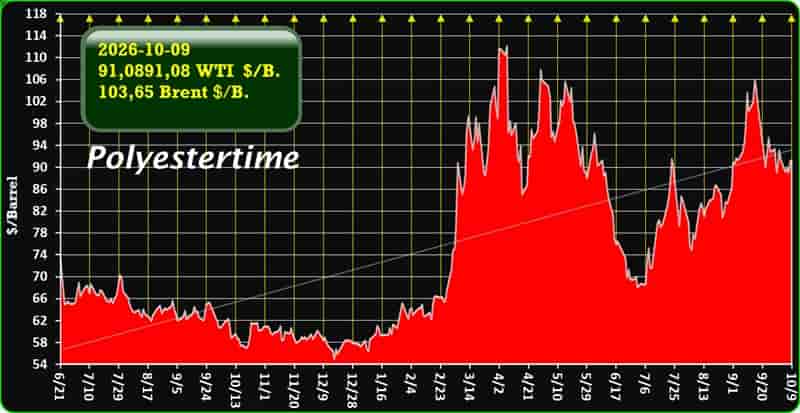
Earlier concerns around Middle East supply risk had helped support energy-linked markets. But recent signs of easing tension around the Strait of Hormuz and continuing U.S.-Iran talks reduced the geopolitical risk premium in oil prices. Brent crude fell toward the low-$70-per-barrel range, while WTI also moved lower as traders focused on improving supply conditions and reduced immediate disruption risk.
For polypropylene, this matters because crude oil influences the broader petrochemical chain. When oil weakens, pressure often moves downstream into naphtha, propylene and finally PP resin. In June, that chain reaction became one of the clearest bearish signals for China’s PP market.
Propylene Also Moves Lower
Propylene, the key upstream raw material for polypropylene, followed the weaker tone in energy markets.
SunSirs reported earlier in June that China’s propylene market was already showing a soft pattern, with loose supply-demand conditions and weaker pricing momentum. As propylene prices declined, PP producers lost an important layer of cost support.
At the same time, the restart of some upstream units increased available supply in the feedstock market. That added pressure to spot propylene prices and made it harder for PP producers to defend higher resin offers. China PP prices
Supply Remains Manageable but Not Tight Enough
On the supply side, China’s PP industry continued to experience planned maintenance during June. Several production units remained offline or reduced, keeping the overall operating rate relatively low.
Even so, this was not enough to reverse the market trend. Spot availability was still generally sufficient, and inventory levels remained comfortable for buyers. The market was therefore not facing the kind of tightness that would normally support a sustained price rebound.
The expectation that more production units could resume operations also weighed on sentiment. Buyers had little reason to rush into new purchases when additional supply was likely to return and prices were still moving downward.
Demand Enters Seasonal Lull
Demand was another weak point.
Polypropylene consumption in China is currently in a seasonal slowdown. Downstream converters, especially smaller and micro-sized enterprises, showed limited improvement in operating rates. Larger processors continued to buy, but mainly on a steady and needs-based basis.
This created a cautious trading atmosphere. Many buyers followed a “buy only when needed” strategy, avoiding inventory accumulation while prices were falling. In a declining market, purchasing managers often delay orders because they expect better prices later.
The result was limited spot activity, small-volume transactions and weak support from end-use demand.
Market Outlook: Weak Momentum Still Dominates
The short-term outlook for China PP prices remains cautious.
The market is being shaped by three bearish forces: weaker crude oil, lower propylene costs and slow downstream demand. Although production operating rates are not high, supply is not tight enough to offset the loss of cost support.
Unless crude oil rebounds sharply or downstream demand improves, China’s PP market may continue to trade with a weak bias. Buyers are likely to remain selective, focusing on immediate production needs rather than stockbuilding.
For producers and traders, the key indicators to watch in July will be crude oil direction, propylene price movements, plant restart schedules, inventory levels and the pace of downstream order recovery.
For now, the market signal is clear: China PP prices are under pressure because the cost base has weakened faster than demand can absorb available supply.
More…