Revolutionary EU Vehicle Recycling Rules Force Automakers to Ditch Virgin Plastics
Revolutionary EU Vehicle Recycling Rules Force Automakers to Ditch Virgin Plastics
The European Union has officially entered a new era of industrial circularity. Entering into force on August 13, 2026, Regulation 2026/1738—commonly known as the End-of-Life Vehicles (ELV) Regulation—replaces two-decade-old directives to transform how cars are designed, maintained, dismantled, and recovered across the bloc.
European environmental policymakers are targeting one of the manufacturing sector’s largest resource consumers. Rather than treating retired automobiles as waste, the new legislation establishes binding closed-loop mandates to retain strategic raw materials like plastics, aluminum, and rare earths inside European supply chains.
Mandatory Recycled Plastic Quotas Start in 2032
For the first time in EU history, car manufacturers face strict legal minimums for secondary plastic usage:
-
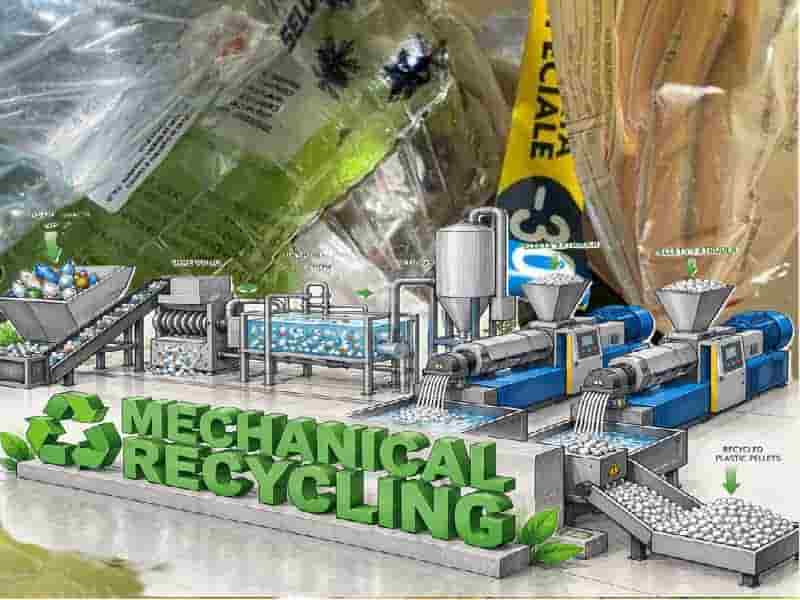
15% Recycled Plastic (2032): Every new vehicle type approved from September 1, 2032, must contain at least 15% recycled plastic by weight derived from post-consumer waste.
-
25% Recycled Plastic (2036): The required threshold jumps to 25% for new type-approvals starting September 1, 2036.
-
20% Closed-Loop Requirement: To ensure real circularity, at least 20% of the recycled plastic used to hit these targets must come directly from scrapped vehicles or parts removed during maintenance.
Certain materials, such as tire elastomers and specific thermosetting plastics, are excluded from the calculation weight. However, the European Commission retains authority to grant temporary exemptions if recycled plastic feedstock faces severe market shortages or extreme price spikes. EU vehicle recycling rules
Designing Cars for Fast Disassembly and Reuse
To meet these targets, car manufacturers must rethink vehicle architecture from the drafting table. Starting in 2032, new vehicle designs must not hinder the swift removal of key components. High-value components—specifically electric vehicle batteries, battery packs, and traction motors—must be easily removable without destructive cutting.
| Phase / Target Year | Regulatory Requirement | Core Impact on Automakers |
| August 2026 | Regulation Enters into Force | Legal framework replaces legacy 2000/2005 directives. |
| September 2028 | Operational Framework Applies | Technical rules for calculation methods take effect. |
| September 2029 | Extended Producer Responsibility | OEMs share financial costs for vehicle collection & processing. |
| September 2031 | Strict Export Controls | Non-roadworthy cars banned from export outside the EU. |
| September 2032 | 15% Recycled Plastic Mandate | Mandatory design-for-disassembly and closed-loop plastic integration. |
| September 2036 | 25% Recycled Plastic Mandate | Maximum secondary content quota across all new type-approvals. |
Manufacturers will also be required to provide clear digital dismantling guides to authorized treatment facilities, enabling workshops and recyclers to salvage parts for refurbishing or high-purity recycling before the rest of the chassis hits the shredder.
Expanding Beyond Plastics: Steel, Aluminum, and Rare Earths
Plastics represent only the first phase of Europe’s automotive material reset. The regulation paves the way for binding recycling quotas on structural metals and critical minerals:
-
Glass & Steel: Feasibility studies are scheduled to set minimum recycled content requirements.
-
Aluminum: The EU framework calls for establishing mandatory recycled aluminum quotas no later than August 2033.
-
Critical Raw Materials: Permanent magnets containing rare earths (such as neodymium and dysprosium) must be recoverable to secure Europe’s green transition against global supply chain volatility.
Cracking Down on Missing Vehicles and Illegal Exports
An estimated 10 to 12 million vehicles reach the end of their operational life in Europe every year, yet millions previously vanished from official records through illegal scrapping or unvetted exports.
To stop the export of environmental waste under the guise of second-hand cars, strict new export conditions take effect in September 2031. Vehicles exported outside the EU must be fully roadworthy and verified via electronic cross-checks between customs and registration databases. Non-roadworthy wrecks will be barred from leaving European borders, ensuring they remain in local treatment facilities to feed Europe’s recycling economy.
By tying manufacturing standards directly to end-of-life recovery, the EU’s vehicle recycling rules establish a template for the global automotive industry—proving that sustainable design is no longer an option, but a mandatory license to operate.
Automotive Plastic Recycling: Is Recycling Car Plastics Really Worth It?
More…