Breakthrough $60M Plant Drives Africa’s Food-Grade Plastic Revolution
Food grade rPET Nigeria
Breakthrough $60M Plant Drives Africa’s Food-Grade Plastic Revolution
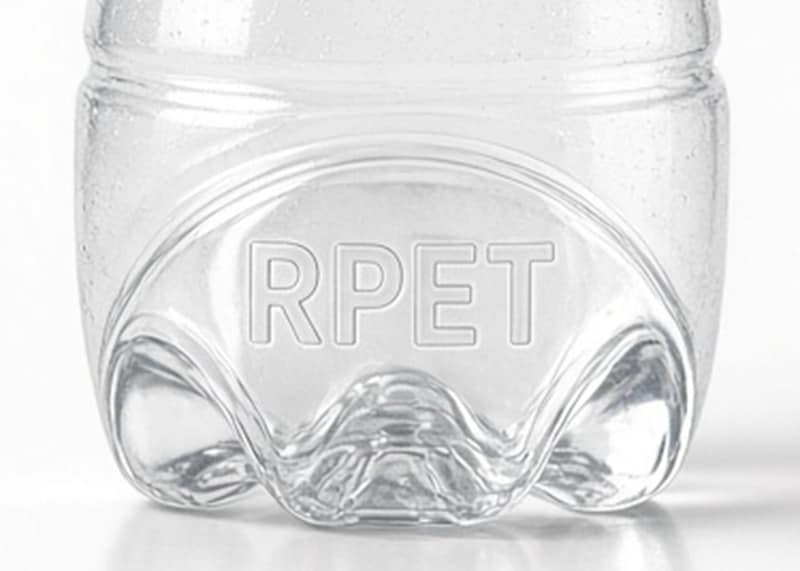
Nigeria is taking a historic stride toward environmental recovery and industrial transformation with the official commissioning of Africa’s largest food-grade recycled polyethylene terephthalate (rPET) processing facility. Located in Mowe, Ogun State, the landmark $60 million plant built by Polysmart Packaging Limited heralds a major shift in how the continent manages plastic waste, tackles climate challenges, and strengthens domestic manufacturing. food grade rPET Nigeria
As industrialization expands across West Africa, discarded plastics have historically clogged urban drainage systems, polluted waterways, and strained municipal landfills. Polysmart’s multi-million-dollar investment creates a high-tech infrastructure capable of converting post-consumer waste into premium, food-contact-approved packaging materials. This bottle-to-bottle circular manufacturing system directly supports Nigeria’s green economic transformation. food grade rPET Nigeria
                     +---------------------------------------+
                     | 100,000 Tonnes PET Waste Processed    |
                     +-------------------+-------------------+
                                         |
                                         v
                     +-------------------+-------------------+
                     | Polysmart $60M Advanced rPET Plant    |
                     +-------------------+-------------------+
                                         |
                   +---------------------+---------------------+
                   |                                           |
                   v                                           v
+------------------+------------------+     +------------------+------------------+
| 60,000 Tonnes Food-Grade rPET       |     | 20,000 Tonnes Recycled Plastics |
+------------------+------------------+     +------------------+------------------+
                   |                                           |
                   v                                           v
+------------------+------------------+     +------------------+------------------+
| Local Food & Beverage Packaging     |     | Industrial & Non-Food Goods      |
+-------------------------------------+     +----------------------------------+
Massive Capacity and Foreign Exchange Relief
The state-of-the-art facility is built to process up to 100,000 tonnes of post-consumer PET bottles every year—a volume equal to approximately 6.5 billion discarded plastic bottles. At full operating capacity, the Mowe plant will generate 60,000 tonnes of high-grade, food-contact rPET alongside 20,000 tonnes of other repurposed plastic polymers annually. food grade rPET Nigeria
| Plant Benchmark Metric | Operational Impact & Target Value |
| Total Facility Investment | $60 Million USD |
| Annual Raw Bottle Input | 100,000 Tonnes (~6.5 Billion Bottles) |
| Food-Grade rPET Output | 60,000 Tonnes / Year |
| Other Recycled Polymers | 20,000 Tonnes / Year |
| Annual Forex Savings | ~$72 Million USD via Import Substitution |
| Direct & Indirect Employment | 1,000 Direct Jobs; 50,000+ Value Chain Jobs |
Beyond its environmental benefits, the plant acts as a vital buffer for Nigeria’s foreign exchange reserves. Nigeria currently consumes roughly 600,000 tonnes of virgin PET resin every year, relying heavily on expensive foreign imports. By offering local food and beverage packaging companies a high-quality domestic alternative, Polysmart estimates the project will save Nigeria approximately $72 million annually in foreign exchange costs. food grade rPET Nigeria
Furthermore, recent capital market disclosures show that Polysmart cleared ₦5.7 billion across four Commercial Paper series while executing this expansion. This financial milestone highlights the commercial viability and investor confidence surrounding scalable green infrastructure in West Africa. food grade rPET Nigeria
Job Creation Across the Circular Value Chain
The economic impact of the Ogun State plant extends far beyond its factory walls. Polysmart estimates that operations will create approximately 1,000 direct positions inside the facility and over 50,000 indirect jobs across Nigeria’s broader recycling ecosystem.
  [ Community Waste Collection ]
               │
               ▼
   [ 250 Nationwide Aggregation Hubs ]
               │
               ▼
   [ Polysmart Processing Facility ]
               │
               ▼
  [ Local Food & Beverage Packaging ]
To guarantee a steady supply of recyclable raw materials, Polysmart is significantly expanding its collection logistics. Building upon its existing network of 25 collection hubs across eight states, the company plans to establish 250 aggregation centers across all 36 states within two years.
This expanding infrastructure integrates waste pickers, local aggregators, logistics operators, and micro-entrepreneurs into a formalized green economy. Recent circular economy initiatives in Nigeria—such as UNIDO-Japan supported hubs in Lekki, Yaba, and Abuja—demonstrate how localized collection sites inject steady income directly into surrounding communities while diverting tons of waste from drainage channels. food grade rPET Nigeria
Global Standards and Regulatory Alignment
A primary technical hurdle in food-contact recycling is ensuring that recovered materials meet strict health, purity, and safety guidelines. The Mowe facility addresses this by integrating advanced sorting, washing, and decontamination technology from leading European equipment producers, including EREMA, SOREMA, and TOMRA.
  +-------------------+      +-------------------+      +-------------------+
  |   TOMRA Optical   | ---> |  SOREMA Washing   | ---> |   EREMA Decon     |
  |     Sorting       |      |   & Purification  |      |  Extrusion Units  |
  +-------------------+      +-------------------+      +-------------------+
These processing systems ensure the final rPET output complies with international safety standards established by the United States Food and Drug Administration (US FDA) and the European Food Safety Authority (EFSA).
This local supply of certified food-grade rPET arrives at an ideal moment for consumer goods manufacturers. With the National Environmental Standards and Regulations Enforcement Agency (NESREA) introducing tighter plastic waste management guidelines and Extended Producer Responsibility (EPR) mandates, consumer brands must incorporate higher percentages of recycled content into their packaging. Polysmart’s output allows local packaging firms to meet these strict environmental requirements without depending on international supply lines. food grade rPET Nigeria
A Sustainable Blueprint for Africa
Reflecting on the journey since the enterprise began in 2013, Wasiu Balogun, Group Managing Director and CEO of Polysmart Group, emphasized the transformative nature of the project.
“When we started this journey in 2013, many people told us that world-class, food-grade recycling could not be built in Nigeria. Today, with deep gratitude, we can say that it has been built here by Nigerians, for Nigeria and for Africa. We are not only recycling plastic; we are restoring dignity to our environment and creating opportunity for our people.”
— Wasiu Balogun, Group Managing Director and CEO, Polysmart Group
By uniting advanced European engineering, domestic capital market backing, nationwide collection networks, and progressive environmental policies, Nigeria is setting a clear benchmark for sustainable industrial manufacturing. The commissioning of the Mowe facility proves that environmental remediation and economic profitability can work hand in hand, turning plastic waste into a long-term resource for Africa’s economic development. food grade rPET Nigeria
Revolutionary AI Plastic Recycling Facility Hits Major Milestone in Austria
More….