Food Packaging – Euro Area Industrial Production Rises in July 2025 Overview of July 2025 Industrial Production Eurostat’s latest data shows that seasonally adjusted industrial production in the euro area rose by 0.3% in July 2025 compared with June 20-09-2025
Food Packaging
Japanese Scientists Develop Eco-Friendly Plastic Ingredient Using Bacteria
Plastic is everywhere in modern life — from packaging to electronics — but its environmental cost is staggering. Producing traditional plastics relies heavily on petroleum, releases greenhouse gases, and contributes to the growing problem of global pollution.
In an exciting development, researchers from Kobe University in Japan have discovered a cleaner and more sustainable way to create a crucial plastic ingredient using bacteria. Their work could help reduce the need for petroleum-based plastics and pave the way for more biodegradable materials. Food Packaging
The Plastic Pollution Crisis
Plastics have long been a double-edged sword. They are lightweight, durable, and versatile — but these same qualities make them persist in the environment for centuries. Each year, millions of tons of plastic waste enter oceans and landfills, harming wildlife and polluting ecosystems.
Efforts to recycle or replace plastics with greener alternatives have often stumbled on high costs or limited performance. The search for sustainable solutions has become urgent as production and demand continue to rise globally.
Breakthrough: PDCA as a Cleaner Plastic Ingredient
The Japanese team’s breakthrough centers on a compound called pyridinedicarboxylic acid (PDCA). While PDCA is not a complete substitute for all plastics, it can replace certain harmful ingredients like terephthalic acid, which is used in PET plastics such as bottles and food containers. Food Packaging
Unlike petroleum-based components, PDCA is biodegradable and nitrogen-based, offering a greener path forward. Its adoption could significantly lower the environmental footprint of plastic production.
How Scientists Engineered Bacteria to Produce PDCA
Traditionally, producing PDCA has been difficult and polluting. Older methods created toxic chemical waste and had very low yields, making them impractical for industrial use.
The Kobe University researchers solved this by genetically modifying Escherichia coli (E. coli) bacteria.
They fed the bacteria glucose — a simple sugar — and added special enzymes to guide the cells into producing PDCA through a clean, biological pathway. Food Packaging
“Our group approached the challenge from a new angle,” explains bioengineer Tanaka Tsutomu. “We aimed to harness cellular metabolism to assimilate nitrogen and build the compound from start to finish.”
This method boosted PDCA production by seven times compared to earlier techniques, while eliminating the toxic byproducts that once made the process so hazardous.
Overcoming Production Challenges
The path wasn’t without obstacles. While the new system removed previous toxins, it introduced a new harmful byproduct during production. To counter this, the researchers added pyruvate to the process, which successfully suppressed the unwanted compound.
However, the team cautions that scaling this method to industrial levels may introduce new challenges. Food Packaging
Biological systems behave differently at larger scales, and fine-tuning the process will be essential to make it commercially viable.
Environmental and Industrial Impact
If refined and adopted widely, this technique could reshape how plastics are produced. Replacing petroleum-based inputs with a biodegradable, biologically sourced ingredient like PDCA could:
- Cut greenhouse gas emissions from plastic manufacturing
- Reduce toxic waste and industrial pollution
- Encourage circular, sustainable production systems
- Support global efforts to lower plastic waste Food Packaging
Because PDCA is compatible with many existing plastic production systems, it may be easier for manufacturers to adopt compared to entirely new materials.
The Future of Eco-Friendly Plastics
This research, published in the journal Metabolic Engineering, is a promising step toward a more sustainable plastics industry. While more work is needed to make the process scalable, the results show that biological engineering can unlock new ways to create greener materials.
Ultimately, combining such innovations with better recycling systems and reduced plastic consumption could help the world move away from its heavy reliance on fossil fuel–based products. Food Packaging

Euro Area Industrial Production Rises in July 2025
Overview of July 2025 Industrial Production
Eurostat’s latest data shows that seasonally adjusted industrial production in the euro area rose by 0.3% in July 2025 compared with June. Across the EU as a whole, industrial production increased by 0.2% during the same period.
This modest rebound comes after declines in June, when production fell by 0.6% in the euro area and 0.4% across the EU. The July figures hint at a stabilizing industrial landscape amid lingering uncertainty in energy markets and global trade.
Sector-Level Performance
The recovery in July was not evenly distributed across sectors. Several categories recorded positive growth, while energy output continued to lag. Food Packaging
Euro Area Sector Growth
- Intermediate goods: +0.5%
- Capital goods: +1.3%
- Durable consumer goods: +1.1%
- Non-durable consumer goods: +1.5%
- Energy: -2.9%
The sharp fall in energy production contrasts with steady gains in consumer and capital goods. This divergence suggests that industrial demand is recovering, while energy supply dynamics remain volatile. Food Packaging
EU-Wide Trends
Across the entire European Union, sector trends were broadly similar. Gains in most categories were tempered by a 2.1% decline in energy production. This energy drop has been linked to seasonal factors and ongoing structural shifts in the EU’s energy mix.
Country-Level Insights
Industrial performance varied widely among EU Member States in July 2025, highlighting different stages of post-slowdown recovery.
| Country | Monthly Change (%) |
|---|---|
| Croatia | +2.6 |
| Hungary | +2.1 |
| Slovenia | +2.1 |
| Estonia | -5.5 |
| Malta | -4.7 |
| Sweden | -3.9 |
Central and Eastern European economies such as Croatia, Hungary, and Slovenia led the growth chart, while Estonia, Malta, and Sweden saw the steepest contractions. This split indicates varying resilience to shifting demand and cost pressures. Food Packaging
Annual Trends and Growth Patterns
On a year-over-year basis, industrial production grew by 1.8% in both the euro area and the EU compared to July 2024. This marks one of the strongest annual upticks seen in recent quarters.
The annual growth was supported by strong capital goods output, signaling that businesses are renewing investments despite ongoing global headwinds.
Broader Economic Context
The July rebound fits into a wider narrative of gradual recovery across Europe. Industrial activity has been under pressure from several factors:
- High energy costs and supply constraints Food Packaging
- Sluggish demand in key export markets
- Lingering supply chain disruptions
- Monetary tightening and higher borrowing costs
Despite these challenges, modest gains suggest that the worst of the slowdown may be easing. Analysts point to easing inflation and early signs of stronger household demand as positive signals.
Future Outlook for the Euro Area
Looking ahead, economists expect gradual, uneven growth through the remainder of 2025. Continued investment in green technologies, infrastructure, and supply chain modernization could help offset weaknesses in energy output. Food Packaging
However, any resurgence in energy prices or renewed geopolitical tensions could quickly dampen industrial momentum. Close monitoring of energy market volatility will be critical.
Key Takeaways
- Euro area industrial production rose 0.3% in July, following a 0.6% drop in June.
- Growth was broad-based across goods categories except for energy, which fell sharply.
- Croatia, Hungary, and Slovenia posted the strongest monthly gains among Member States.
- Annual production rose 1.8% in both the euro area and the EU versus July 2024. Food Packaging
- Energy remains the biggest drag on overall industrial performance.

Vertical PET Preform Molding: Nissei ASB’s K2025 Breakthroughs
Introduction
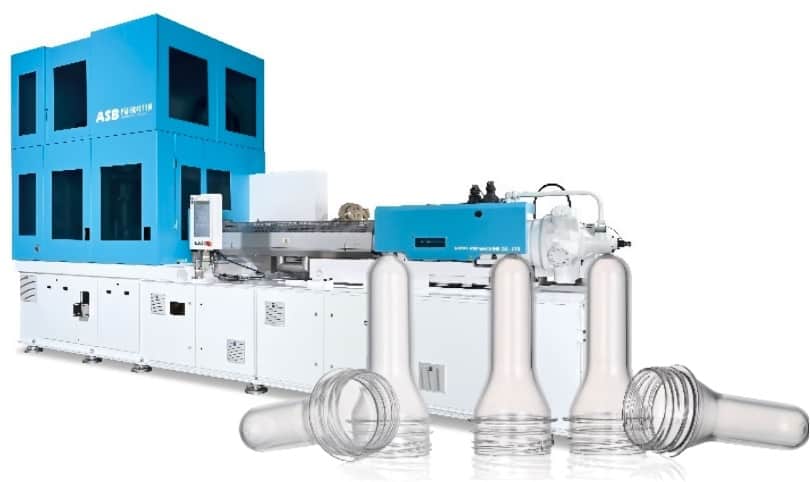
Nissei ASB, a leading Japanese manufacturer of PET molding equipment, is set to unveil four cutting-edge machines at K2025 in Düsseldorf. Three of these models are making their global debut, each designed to redefine how PET preforms and beverage bottles are produced. Food Packaging
Among these innovations is a brand-new vertical preform molding machine aimed at helping manufacturers achieve higher efficiency, lower costs, and more sustainable production—all while maintaining a compact footprint ideal for space-limited facilities.
Vertical Preform Molding
The PM-90/111N represents a new approach to PET preform production by using a vertical clamping system derived from Nissei ASB’s PF36 series. Food Packaging
This architecture delivers a 30% reduction in floor space compared to conventional horizontal presses.
The machine accommodates molds with 12 to 36 cavities, enabling output of around 20,000 preforms per hour in 10-gram (500 ml) formats using 100% recycled PET (rPET). Products exit the line already cooled, further streamlining downstream processes.
In addition to its compact footprint, the PM-90/111N delivers approximately 40% lower capital investment costs and consumes 20% less energy, helping manufacturers lower their total cost of ownership while reducing environmental impact. Food Packaging
Hybrid Press
Another debut at K2025 is the ASB-70DPH/50E hybrid press, which blends servo-assisted actuation with a traditional hydraulic clamping system. This configuration brings together the precision and quiet operation of electric drives with the robust power of hydraulics.
The result is an estimated 25% energy savings and significantly lower maintenance needs, making it attractive for manufacturers seeking both operational efficiency and cost-effectiveness. Food Packaging
Notably, the new preform conditioning stage supports the production of complex, non-cylindrical shapes, expanding cavity capability from 5 to 7. At K2025, Nissei ASB will showcase this using oval “trigger” detergent bottles made from HDPE, ideal for packaging bleach or chlorine.
1.5-Step Double-Blow Molding
The HSB12-4N/111N is another world-first from Nissei ASB. This system combines 1.5-step double-blow molding with Heat-Set thermal treatment to create reusable, refillable PET bottles with superior performance. Food Packaging
The Heat-Set process increases crystallinity, reduces internal stress, and enhances thermal and environmental stress resistance—all while enabling lighter bottle weights. At K2025, it will demonstrate the production of 2-liter, 90-gram bottles for carbonated drinks using up to 30% rPET. Food Packaging
This innovation addresses the growing demand for sustainable, durable beverage packaging that can withstand returnable systems and repeated washing cycles.
Integrated 1.5-Step System
Completing the lineup is the PF36/36-600, a 1.5-step system that integrates the strengths of one- and two-stage molding. It features 36 injection cavities and 12 blow molding cavities in a compact footprint.
The machine produces 500 ml bottles at rates up to 18,000 units per hour, using a 3:1 blow-to-injection ratio to achieve faster cycles, greater efficiency, and reduced operational costs. Food Packaging
Compared to conventional two-stage systems, the PF36/36-600 takes up just one-third the space and uses 20% less energy, reusing heat from injection to power the blow stage. It’s driven by a hybrid mix of hydraulic, pneumatic, and servo components coordinated by the Vision1 control system, which supports OPC UA connectivity for smart factory integration and remote monitoring.
Future Outlook & Industry Impact
Nissei ASB’s showcase at K2025 highlights the company’s commitment to sustainable innovation. By reducing energy consumption, space requirements, and material usage, these new systems directly address the industry’s twin goals of cost-efficiency and environmental responsibility. Food Packaging
The focus on rPET compatibility and lighter-weight designs also aligns with global trends toward circular packaging economies. Manufacturers adopting these technologies can expect not only lower operational costs but also stronger positioning in markets increasingly governed by environmental regulations and consumer demand for sustainable packaging.
As the industry shifts toward smarter, more connected production lines, Nissei ASB’s inclusion of OPC UA-enabled controls positions these machines to thrive in the era of digital manufacturing and AI-driven optimization. Food Packaging
ExxonMobil freezes €100M chemical recycling investments in Europe
A concise recap of the decision and its rationale.
- Projects paused: Two chemical recycling investments in Rotterdam (NL) and Antwerp (BE), each ~80,000 t/yr.
- Investment value: About €100 million combined.
- Reason: ExxonMobil says the EU draft regulation on calculating recycled content when using mass balance would allocate far fewer credits to integrated petrochemical sites than to standalone recyclers. Food Packaging
- Effect: ExxonMobil believes its integrated plants would receive less than half the credits compared with standalone facilities, weakening investment incentives for integration into existing petrochemical hubs.
- Status: The EU regulation is in public consultation and may change before finalization.
Why ExxonMobil cares
Integrated petrochemical sites mix recycled feedstock with virgin inputs across complex production lines. When recycled content credits are allocated through mass balance, how regulators count the recycled share has a direct impact on the commercial viability of investments — especially large-scale projects that rely on partial substitution rather than fully segregated recycled streams. Food Packaging
Implications
- Short-term slowdown of some Europe-focused recycling investments by large petrochemical players.
- Potential policy adjustments if the consultation addresses allocation concerns.
- Stronger incentives may remain for standalone recycling facilities with direct traceability under the draft rules.
Want a plain-English explainer?
Scroll to the right column for a simple breakdown of mass balance and why it’s controversial. Food Packaging
Background & context
ExxonMobil’s paused projects are part of a wider approach to scale up chemical recycling globally (including sites in the United States and Asia). Chemical recycling converts hard-to-recycle plastics back into processable feedstock for chemical plants. Regulators across the EU are trying to set rules that ensure credibility and avoid greenwashing while encouraging investment in circular value chains.
What happens next?
- EU public consultation will gather industry and stakeholder feedback.
- Companies like ExxonMobil may lobby for allocation methods that give integrated facilities fairer crediting. Food Packaging
- Policy outcomes will affect where future investments flow — standalone recyclers vs integrated petrochemical hubs.
GreenMantra Scores $10M Loan from Closed Loop to Expand Ontario Chemical Recycling
Overview
GreenMantra Technologies, a Canada-based producer of specialty waxes and polymer additives from recycled plastics, has received a $10 million loan from the Closed Loop Infrastructure Group. The financing will support equipment purchases and increased processing capacity at GreenMantra’s Brantford, Ontario facility, enabling roughly a 50% rise in specialty product output. Food Packaging
What the loan will fund
The funds are earmarked for new equipment and process upgrades to expand throughput of GreenMantra’s depolymerization conversion
technology. The company converts what it calls “hard to recycle” polyethylene (PE) and polypropylene (PP) into high-value additives used in roofing, construction materials and other speciality applications. Food Packaging
Closed Loop previously supported GreenMantra in 2017 with a $3 million equity investment and the company also received $3.8 million from
the Canadian government earlier this year under a green manufacturing initiative.
About chemical (molecular/advanced) recycling
Chemical recycling—also called molecular or advanced recycling—describes a range of technologies that break plastics down to molecular building blocks for reuse in new products. Proponents say it complements mechanical recycling by handling mixed, contaminated or difficult feedstocks that mechanical systems cannot process economically. Food Packaging
Why Closed Loop is investing
Closed Loop Infrastructure Group positions chemical recycling as one part of a diversified strategy to improve plastics recovery across North America. Its Circular Plastics investment strategy targets projects that improve PE and PP recovery and is backed by industry partners including Dow and LyondellBasell.
“Optimizing plastics recovery in North America requires diversified solutions—including mechanical and molecular recycling technologies…
These solutions must work collaboratively and meet standards for economic viability and environmental and human health impact.”
Closed Loop’s track record includes an Advanced Recycling Innovator Program launched in 2020 and loans to both chemical and mechanical recycling projects (for example, a $10M loan to Eureka Recycling for an MRF upgrade). Food Packaging
GreenMantra: origin, customers and next steps
Founded 15 years ago to manufacture specialty performance additives, GreenMantra supplies roofing manufacturers and departments of transportation among other customers. The company says increasing commercial capacity will help it meet growing demand and “keep valuable resources in circulation.”
CEO Domenic Di Mondo said the loan will help the company pursue near-term geographic expansion and scale its product lines to new markets.
Closed Loop confirmed its continued support, noting GreenMantra’s resilient business model and a technically proven process with a clear path to scale. Food Packaging
Sector risks and criticism
As investment flows into chemical recycling, critics and some environmental groups raise concerns about emissions, feedstock transparency and the ability of the technology to deliver large-scale recycling outcomes. Some firms in the sector (for example Brightmark) have faced financial challenges, and regulators and investors are scrutinizing environmental claims more closely. Food Packaging
Closed Loop itself funds both molecular and mechanical recycling projects, signaling an industry shift toward mixed solutions rather than a single technological fix.
Conclusion
The $10M Closed Loop loan positions GreenMantra to expand capacity and pursue regional growth while highlighting how private capital is targeting both molecular and mechanical recycling projects. As the sector scales, performance, transparency, and regulatory scrutiny will determine which technologies deliver climate and circular-economy benefits at scale. Food Packaging

Nextloop Wins FDA Approval to Use 100% Recycled PP in Food Packaging
FDA Approval Marks a Milestone
Nextloop has secured a major regulatory greenlight: the U.S. Food and Drug Administration (FDA) has issued a Letter of No Objection (LNO) confirming that its proprietary recycling process for polypropylene (PP) meets the strict requirements for direct food contact. Food Packaging
This means Nextloop’s recycled polypropylene (rPP) can now be used in food packaging at levels up to 100% across all food types, and under Conditions of Use A through H—covering the full spectrum from high-heat sterilization to frozen storage.
Scientific Validation of the Technology
“This marks a defining moment for food-grade recycled polypropylene,” said Professor Edward Kosior, founder and managing director of Nextek. “It validates the scientific rigour of our technology and provides brand owners and converters with complete confidence to use Nextloop rPP in direct food-contact packaging with all food types over a very wide range of usage conditions.” Food Packaging
The FDA’s decision affirms that Nextloop’s process can reliably produce food-grade rPP provided the input feedstock originates from compliant food-contact articles. This represents a critical breakthrough for circular packaging innovation and plastic waste reduction.
Parallel Review with the EFSA
While the FDA has already given its approval, Nextloop is also undergoing evaluation by the European Food Safety Authority (EFSA). EFSA’s approval process typically takes around two years. Food Packaging
In the meantime, Nextloop is permitted to place its food-grade rPP resin on both the EU and UK markets. This dual-path strategy positions the company to scale globally while awaiting formal EU clearance.
What Is the Nextloop Initiative?
Launched in October 2020, Nextloop is an industry-wide collaboration created by sustainability consultancy Nextek. Its mission is to close the loop on food-grade PP by transforming post-consumer packaging waste into high-quality recycled content.
The initiative has brought together more than 50 stakeholders—including brand owners, resin suppliers, packaging manufacturers, universities, and industry associations—all working toward a shared goal of circular polypropylene packaging. Food Packaging
Nextek, founded in 2004 by Professor Edward Kosior, leads the Nextloop effort. Over the past five years, the group has pioneered innovative marker and decontamination technologies to make food-safe PP recycling commercially viable at scale.
How the Technology Works
The Nextloop system relies on two core innovations: PolyPPRISM marker sorting technology and PPristine decontamination technology. Together, they enable the recovery and purification of food-grade PP from mixed post-consumer streams.
Step 1: Sorting with PolyPPRISM
PolyPPRISM uses invisible tracers to identify and separate food-grade PP items from mixed packaging waste. This allows precise sorting of a wide variety of packaging—from yogurt pots and butter tubs to coffee pouches and even detergent bottles—irrespective of the plastic type or appearance. Food Packaging
Step 2: Decontaminating with PPristine
Once separated, the PP is processed through Nextloop’s patented PPristine decontamination system. This step removes any potential contaminants, ensuring the recycled polymer meets the rigorous purity standards required for food-contact use in the UK, EU, and U.S.
Step 3: Converting into Food-Grade rPP
Finally, the purified polymer is pelletized into high-quality food-grade rPP. This material can then be used to produce new food packaging with up to 100% recycled content—without compromising on safety or performance. Food Packaging
Impact on the Packaging Supply Chain
By unlocking access to food-grade rPP, Nextloop could reshape the polypropylene supply chain. Until now, PP has been one of the least recycled major food packaging plastics due to contamination risks and lack of viable separation technologies.
The FDA approval gives packaging producers and brand owners the assurance they need to adopt recycled PP at scale. This has the potential to reduce reliance on virgin fossil-based plastics, cut carbon emissions, and help companies meet ambitious sustainability targets. Food Packaging
The development also strengthens the business case for investing in PP recycling infrastructure and circular systems across the packaging industry.
Future Outlook and Industry Implications
With both regulatory approval and industry collaboration behind it, Nextloop is well positioned to scale production and accelerate adoption of food-grade rPP across global markets. Food Packaging
As EFSA’s decision approaches, momentum is expected to build further.
The breakthrough could serve as a blueprint for other material streams, demonstrating how science-led innovation can unlock safe, circular solutions for hard-to-recycle plastics.
For brands, the opportunity is twofold: strengthen ESG credentials by cutting plastic waste and gain first-mover advantage in sustainable packaging innovation.
Key Takeaways
- Nextloop has received FDA clearance to use 100% recycled PP in food packaging. Food Packaging
- The technology relies on PolyPPRISM sorting and PPristine decontamination to ensure food safety.
- EFSA review is ongoing, but EU and UK markets are already open for Nextloop rPP.
- This marks a major step toward a circular economy for polypropylene packaging.
More…