Pyrolysis Oil – Coolbrook Achieves Breakthrough in Circular Materials: Large-Scale Pilot Successfully Cracks Plastic Waste Pyrolysis Oil Coolbrook, a transformational technology and engineering company, has announced a major milestone in the transition to circular materials 19-09-2025
Pyrolysis Oil
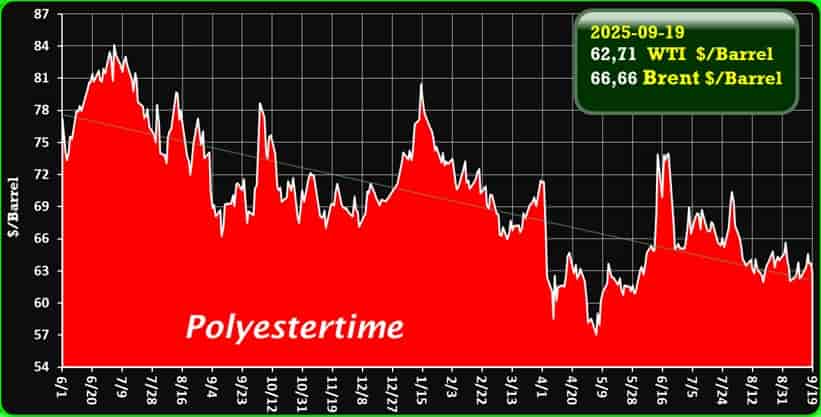
Crude Oil Prices Trend
Starlinger PP cap-to-cap recycling process cleared by FDA
Executive summary
The U.S. Food and Drug Administration (FDA) has issued a No Objection Letter (NOL) for Starlinger’s polypropylene (PP) cap-to-cap recycling process when run on the recoSTAR dynamic system. This clearance covers the manufacture of beverage bottle caps made from 100% recycled post-consumer PP and extends to a range of conditions of use — including hot-fill applications. Pyrolysis Oil
What the NOL covers
The NOL explicitly applies to bottle caps for beverages and is granted for Conditions of Use C through H (common FDA categorization of intended use environments). In practice, this means caps produced from 100% post-consumer recycled PP processed on the approved Starlinger line can be used in many beverage filling contexts, including those that require resistance to elevated temperatures.
Approved technical configuration
The approved manufacturing configuration combines several Starlinger components designed to remove contaminants and volatile compounds from post-consumer plastics.
| Component | Function |
|---|---|
| recoSTAR dynamic extruder | Core recycling extruder that remelts and homogenizes PCR (post-consumer recyclate). |
| C-VAC degassing module | High-efficiency degassing to remove entrained gases and low-MW volatiles. |
| PCUplus unit | Final polishing stage that reduces odor and extracts residual VOCs (volatile organic compounds). Pyrolysis Oil |
Together these elements create a food-grade recyclate suitable for cap production without downcycling — a key technical step toward closed-loop beverage packaging.
Industry impact and circularity
Starlinger’s clearance builds on earlier FDA approvals: the company received an NOL in 2021 for HDPE bottle-to-bottle and cap-to-cap recycling. With this PP approval, beverage manufacturers and recyclers can more confidently return polypropylene bottle caps to the recycling stream and reuse them for the same purpose.
The practical effect is stronger circularity for caps made from PP. Where caps once often faced downcycling into lower-grade products, this NOL enables reuse in high-value applications — reducing virgin polymer demand and improving material efficiency in beverage packaging supply chains. Pyrolysis Oil
From Starlinger
“In the beverage industry, PP and HDPE are the materials mostly used for plastic bottle caps. Already in 2021 we got the FDA LNO for our HDPE bottle-to-bottle and cap-to-cap recycling processes. Now we can close the loop also for beverage bottle caps made of polypropylene so that they can be returned to the recycling stream and be reused without downcycling.” — Paul Niedl, Commercial Head of Starlinger recycling technology
Learn more
For technical specifications, case studies, and certification documents, visit Starlinger’s recycling site:
Plastipak & Clean Tech Join PLASTICS’ “Recycling Is Real” Campaign
Overview
Plastipak and Clean Tech — Plastipak’s recycling affiliate — are featured in the Plastic Industry Association’s (PLASTICS) advocacy initiative Recycling Is Real. The campaign aims to demystify recycling by showing policymakers and the public how plastics, especially PET bottles, are collected, processed and remade into new bottles every day.
Recycling Is Real supplies accessible content to help elected officials and policymakers understand recycling’s role within the circular economy, supporting informed decisions about investments and regulations that affect communities and local recycling infrastructure. Pyrolysis Oil
What the Video Shows
The campaign includes a short documentary-style video that follows the bottle-to-bottle journey at Plastipak and Clean Tech facilities. It focuses on process steps, material flows and the team members who operate the lines — making the case that modern plastics recycling is systematic, scalable and job-creating.
Visuals emphasize cleanliness, automated sorting and quality control steps that enable bottle-grade resin to re-enter manufacturing. Short captions and facility b-roll make the content suitable for rapid social sharing and policy briefings alike.
Why It Matters
Keeping plastics in the circular economy reduces landfill pressure, preserves resources and supports local jobs. The video gives elected officials concrete examples they can cite when evaluating recycling budgets and permitting decisions. Pyrolysis Oil
For communities, clear examples of bottle-to-bottle recycling turn abstract sustainability goals into tangible outcomes — showing how a used bottle can be remade and reused rather than discarded.
Voices from the Industry
“Plastipak has been leading the way in bottle-to-bottle recycling for decades. When we started our recycling affiliate, Clean Tech, back in 1989, the goal was simple — keep plastics in the circular economy, out of landfills, and create good jobs in our communities.”
PLASTICS’ President and CEO, Matt Seaholm, added that the campaign makes the effectiveness of recycling evident to both lawmakers and the public, helping bridge the gap between policy and practice.
Quick Links
Visit the organizations: Plastipak • Clean Tech • PLASTICS (The Plastics Industry Association)
Click to view the Recycling Is Real video featuring Plastipak and Clean Tech (embedded above).
Leonardo Localizes Helicopter Component Production with Italy’s Isoclima
Overview of the agreement
Leonardo Helicopters signed a supply agreement with the Veneto-based Isoclima group to produce transparent systems for its rotorcraft platforms. The initial scope includes a polycarbonate windshield and a heated glass windshield designed for extreme-condition missions such as search and rescue.
Production is scheduled to begin next year, shifting some production capacity that had been imported into Italy.
The deal targets the AW139 and AW189 helicopter models and is the first publicly announced result of Leonardo’s “Growing Together” initiative. Pyrolysis Oil
Strategic context: “Growing Together” and the Veneto aerospace network
“Growing Together” is Leonardo’s program to reinforce domestic supplier relationships and reduce dependence on foreign sources for mission-critical parts. The Isoclima contract is linked to a Veneto Region initiative to build a Regional Aerospace Innovation Network that accelerates local collaboration.
Regional and national stakeholders see this deal as a blueprint for a broader vertical flight supply chain that keeps strategic manufacturing and know-how inside Italy while boosting local innovation capacity. Pyrolysis Oil
What the leaders said
“In the aerospace sector, Veneto continues to successfully look to the future,” said Luca Zaia, President of the Veneto Region, underscoring the region’s role in fostering high-quality technological partnerships.
Gian Piero Cutillo, Managing Director of Leonardo’s Helicopters Division, called the agreement “the beginning of a journey” that will expand national supply chains and strengthen Italy’s strategic capabilities.
Liviana Forza, CEO of Isoclima, highlighted the company’s materials expertise and advanced processing technologies as the foundation for developing highly precise transparent systems for aerospace applications. Pyrolysis Oil
Isoclima — quick facts
| Headquarters | Specialization | Production Sites | Employees | 2024 Revenue |
|---|---|---|---|---|
| Este (Padua), Italy | High-performance transparent materials (glass, technical polycarbonate) | 7 (Italy, Croatia, Mexico, USA) | ≈ 1,000 | ≈ €150M |
Isoclima’s portfolio spans automotive, aerospace, defense, architecture, marine, and rail — positioning it to adapt materials and processes specifically for helicopter transparency systems.
Implications for the Italian aerospace supply chain
Localizing production of mission-critical components like windshields shortens lead times, improves control over quality, and increases resilience during supply disruptions.
Having a domestic supplier for thermal and polycarbonate transparent systems means faster iteration cycles and more direct coordination with Leonardo’s engineering teams.
Strategically, the agreement serves as an anchor: it is expected to attract further suppliers into a national vertical flight supply chain and stimulate regional cluster growth around aerospace manufacturing competencies. Pyrolysis Oil
Coolbrook Achieves Breakthrough in Circular Materials: Large-Scale Pilot Successfully Cracks Plastic Waste Pyrolysis Oil
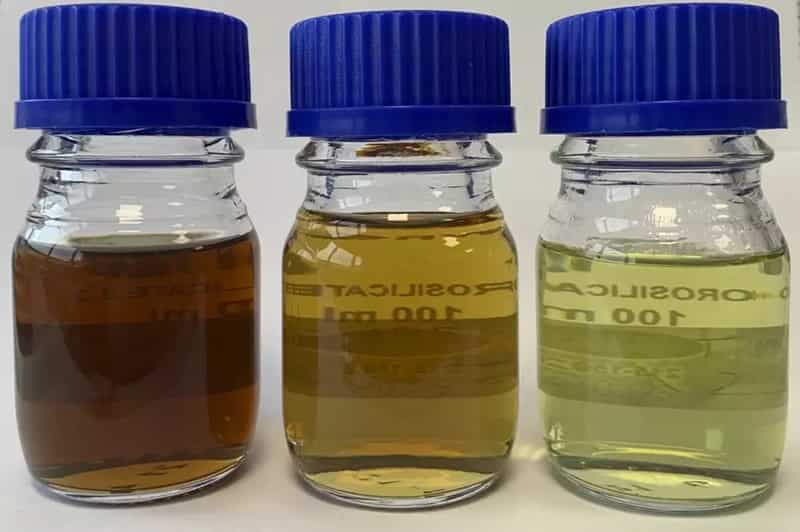
Coolbrook, a transformational technology and engineering company, has announced a major milestone in the transition to circular materials. At its large-scale pilot facility, the company has successfully cracked 100% plastic-waste-derived pyrolysis oil (py-oil) using its groundbreaking RotoDynamic Reactor™ (RDR) technology.
This achievement marks the first time globally that py-oil from plastic waste has been cracked directly—without blending with fossil-based feedstocks—while still producing high yields of valuable building blocks like ethylene and propylene.
Breakthrough in Pyrolysis Oil Cracking
Pyrolysis oil, made by breaking down end-of-life plastics, has long been considered a key link in closing the loop for plastic recycling. However, its complex composition has made it challenging to process effectively at scale. Pyrolysis Oil
Coolbrook’s successful pilot run proves that the RDR can crack this challenging feedstock directly, paving the way for a future where discarded plastic becomes a valuable raw material rather than waste.
“This is a critical milestone for advancing circular plastics,” said a Coolbrook spokesperson. “It shows that full-scale electrified cracking of waste-derived feedstocks is not only possible, but efficient.”
The RotoDynamic Reactor™ Technology
The RotoDynamic Reactor™ (RDR) is an electrified cracking technology that uses high-speed rotating machinery to heat and break down hydrocarbons without burning fossil fuels. This enables extremely high temperatures and fast reaction times, all powered by renewable electricity. Pyrolysis Oil
Unlike traditional steam crackers that rely on combustion-based furnaces, the RDR’s design eliminates direct CO2 emissions while improving energy efficiency. Its ability to reach over 1000 °C in milliseconds opens the door to cleaner, more flexible chemical production.
Impact on Circular Plastics & Recycling
By cracking 100% py-oil, Coolbrook has demonstrated a viable route to transform plastic waste into virgin-quality olefins—the essential building blocks for new plastics. This could dramatically reduce reliance on fossil naphtha, lower greenhouse gas emissions, and improve traceability of recycled materials.
Such a shift could also accelerate global progress on circularity targets. Instead of incineration or landfill, more plastic waste could be captured, converted, and reintroduced into the production cycle as valuable raw materials. Pyrolysis Oil
Building on Previous Pilot Success
This new achievement builds on earlier breakthroughs at Coolbrook’s pilot plant in Brightlands, the Netherlands. There, the company demonstrated the ability to heat gases like air, steam, nitrogen, and methane to over 1000 °C using only renewable electricity.
Coolbrook has also successfully cracked naphtha at the same pilot facility, achieving significantly higher olefin yields than conventional furnaces. The new py-oil results confirm that the company’s electrified turbomachinery platform can be extended from traditional feedstocks to challenging circular materials.
Expert Insights from Coolbrook
“Cracking 100% pyrolysis oil directly without the need for dilution simplifies operations and enhances traceability of circular materials,” said Dr. Tuomas Ouni, Head of Process Development at Coolbrook.
“Using the RDR also improves ethylene and propylene yields compared to conventional furnaces, without increasing coking.
These results show the potential of the RDR to drive both decarbonisation and circularity in the petrochemical industry.” Pyrolysis Oil
The EU-Funded eLECTRO Project
The successful py-oil tests were conducted under the eLECTRO project, funded by the EU’s Horizon Europe programme. This ambitious initiative aims to create an electrified, circular pathway for converting mixed plastic waste into light olefins.
The project integrates advanced waste pre-treatment, electrified pyrolysis, and Coolbrook’s RDR-based cracking to demonstrate a scalable and low-carbon model for the future of plastics and petrochemicals. By using electricity instead of combustion, the approach significantly cuts greenhouse gas emissions while supporting a circular economy.
Waste streams from the Republic of Korea and Indonesia will also be tested to validate the technology’s global scalability.
For more information, visit electro-project.eu.
About Coolbrook
Coolbrook is a transformational technology and engineering company focused on decarbonizing heavy industries such as petrochemicals, chemicals, iron and steel, and cement. Its revolutionary rotating technology merges space science, turbomachinery, and chemical engineering to replace the burning of fossil fuels in industrial processes.
The company has developed two key applications:
- RotoDynamic Reactor™ (RDR™): Enables 100% CO2-free olefin production by electrifying the cracking process.
- RotoDynamic Heater™ (RDH™): Provides carbon-free process heating for iron and steel, cement, and chemical production.
Once deployed at scale, these technologies could reach temperatures up to 1700 °C and cut up to 2.4 billion tons of CO2 annually—equivalent to roughly 30% of heavy industry’s emissions. Pyrolysis Oil
Learn more at coolbrook.com.
About the eLECTRO Project
Globally, less than 10% of plastic waste is recycled. The rest is incinerated or sent to landfills, creating environmental and climate challenges. The EU-funded eLECTRO project (Grant Agreement 101058412) is working to change that.
Its approach combines:
- An innovative modular extruder for pre-treating plastic waste
- An electrically heated pyrolysis reactor to convert waste into pyrolysis oil
- Coolbrook’s RDR technology to crack the pyrolysis oil into virgin-quality olefins
By linking the waste and petrochemical industries, eLECTRO aims to demonstrate a sustainable, circular, and scalable solution for producing olefins and polyolefins with a low carbon footprint.
Visit electro-project.eu for project updates.
Korea Will Require Beverage Bottles to Use Recycled Plastic from 2026
Background of the Mandate
South Korea is taking a major step toward circular packaging. At a Cabinet meeting, the government decided to require producers of bottled water and nonalcoholic beverages to include recycled plastic in their packaging starting in 2026.
This policy aims to reduce plastic waste, cut carbon emissions, and stimulate demand for recycled PET — a material widely used for beverage bottles worldwide. Until now, beverage firms had no obligation to purchase recycled content, which hindered the creation of a domestic “bottle-to-bottle” recycling system. Pyrolysis Oil
Key Requirements of the Law
According to the Ministry of Environment, the law sets a minimum threshold for recycled content:
- At least 10% of the PET used in beverage bottles must come from recycled sources.
- The rule applies to companies that use more than 5,000 metric tons of PET bottles per year.
- The law takes effect on January 1, 2026.
Initially, only the largest producers will be affected, but the requirement is expected to expand to smaller companies in the coming years.
Companies Affected
Out of approximately 200 beverage producers operating in Korea, about 10 major firms will be directly affected by the new rule at launch. These include:
- Coca-Cola Korea
- Lotte Chilsung Beverage
- Jeju Development Corp. (producer of Samdasoo mineral water)
These firms will need to secure reliable supplies of food-grade recycled PET and adapt their production lines to incorporate the material safely. Pyrolysis Oil
Why Korea Introduced This Mandate
Previously, obligations to use recycled plastic applied only to plastic producers, not to beverage companies. This created a mismatch: Korea collected and processed large amounts of used PET, but bottlers had no incentive or requirement to buy recycled resin for new bottles.
As a result, much of the recycled PET was downcycled into textiles or other non-food uses, while bottling plants continued to rely on virgin plastics. The new law aims to close this loop and ensure used bottles are turned back into new ones — reducing both landfill waste and reliance on new petroleum-based materials.
Safety and Quality Concerns
One of the main reasons for slow progress toward “bottle-to-bottle” recycling has been safety. Food-grade PET must meet strict standards to prevent chemical migration or contamination, and recycled plastics can vary in purity depending on their source and processing method.
“Recycled PET bottles may not always appear completely transparent, but there is no issue with their quality,” — Environment Ministry official, via The Korea Herald. Pyrolysis Oil
The Environment Ministry has conducted research showing that even colored PET bottles are safe for reuse if processed through government-approved recycling steps. These steps include:
- Sorting collected bottles by material and color
- Washing and removing labels or contaminants
- Shredding and remelting PET into pellets
- Testing for chemical safety to ensure no harmful substances migrate into drinks
The Ministry of Food and Drug Safety helped develop these standards, which are designed to guarantee food-contact safety and prevent any effect on taste, smell, or bottle clarity.
Early Adoption: Seoul’s Arisu Water
Seoul’s municipal water brand, Arisu, has already embraced this transition. Since April 2023, Arisu has been bottled in containers made with recycled plastic, proving that recycled PET can safely be used in food and beverage packaging at scale.
The success of this initiative serves as a real-world model for other beverage companies preparing to meet the 2026 mandate.
How Korea Compares Internationally
The Korean government has emphasized that this mandate aligns with international trends toward sustainable packaging. Several regions have already set recycled-content targets:
| Region | Target | Target Year |
|---|---|---|
| European Union | 30% recycled PET in bottles | by 2030 |
| Germany | 30% recycled PET in bottles | by 2030 |
| United Kingdom | 30% recycled PET in bottles | by 2026 |
| South Korea | 10% (initial); 30% planned | 2026 (initial); 2030 (goal) |
By setting a clear timeline, Korea is joining this global shift and signaling to the market that investment in recycling infrastructure will pay off.
Future Expansion and Timeline
The Ministry of Environment has said the new requirement will gradually be extended to more companies. Within the next few years, firms producing more than 1,000 tons of PET bottles annually will also fall under the mandate. Pyrolysis Oil
By 2030, the recycled content requirement is expected to rise from 10 percent to 30 percent. This phased approach gives the industry time to scale up supply, upgrade processing lines, and address technical challenges while moving steadily toward full circularity.
Key Takeaways
- Starting January 1, 2026, major beverage companies in Korea must use at least 10% recycled PET in their bottles.
- The law aims to reduce plastic waste, cut carbon emissions, and close the loop on PET bottle recycling.
- Government research confirms recycled PET can be safe and food-grade when processed correctly.
- Korea’s move aligns with international sustainability trends and could drive major investment in domestic recycling capacity. Pyrolysis Oil
For beverage producers, the next 18 months offer a critical window to build supply chains, secure certified recycled PET, and prepare production lines for compliance.
RecyClass Certification Now Covers ~60% of Europe’s Plastics Recycling Capacity
Overview
Belgium-based RecyClass has expanded its Recycling Process Certification to cover roughly 60% of Europe’s installed plastics recycling capacity. The certification now functions as the market benchmark for traceable recycling processes and alignment with established standards. Pyrolysis Oil
In practical terms, this means the majority of recycled plastics processed across European facilities are now traceable under a consistent, third-party-verified scheme — reducing uncertainty for brand owners, converters and regulators alike.
Numbers by stream (2024 snapshot)
RecyClass reports the following coverage at the stream level for 2024:
| Polymer / Stream | Approx. certified share |
|---|---|
| HDPE / PP | 58% |
| End-of-life vehicles (ELV) / WEEE | 62% |
| LLDPE | 70% |
| PET | 75% |
Certification network & auditor capacity
To scale verification, RecyClass now collaborates with seven recognized and 11 accredited third-party certification bodies. The expanded network provides over 120 trained auditors capable of issuing Recycling Process Certificates across Europe.
“The continued growth of this certification scheme is a clear indicator that RecyClass’ efforts to drive plastics circularity are delivering real impact.” — Paolo Glerean, RecyClass Chairman Pyrolysis Oil
This third-party model helps keep certification impartial and traceable — a core requirement for supply chain transparency and procurement teams requesting certified feedstock or recycled-content claims.
Why this matters for circularity and buyers
When a single certification covers the majority of installed capacity, it reduces fragmentation: procurement teams face fewer verification regimes, auditors can coordinate standards, and regulators can map recycling supply chains more easily.
For brand owners and converters, certified recycling processes reduce reputational and compliance risk when making recycled-content claims — especially where alignment to European standards (such as EN 15343:2007) is required.
How recyclers can apply
Recyclers interested in certification should consult RecyClass directly. The organisation provides guidelines, eligibility criteria and a list of the accredited certification bodies that carry out audits. Pyrolysis Oil