Breakthrough Biofillers: How Hemp Waste Dramatically Strengthens Eco-Friendly Plastics
Hemp hurd bioplastic reinforcement
Breakthrough Biofillers: How Hemp Waste Dramatically Strengthens Eco-Friendly Plastics
Biodegradable plastics made from thermoplastic starch (TPS) and poly(butylene adipate-co-terephthalate) (PBAT) have long promised an eco-friendly cure for single-use packaging and agricultural mulch films. Because these polymers naturally break down in soil, they eliminate the lingering microplastic pollution typical of traditional petroleum-based synthetics. However, their real-world adoption has hit a persistent barrier: standard biodegradable films tear easily under physical strain and struggle to keep out moisture and oxygen.
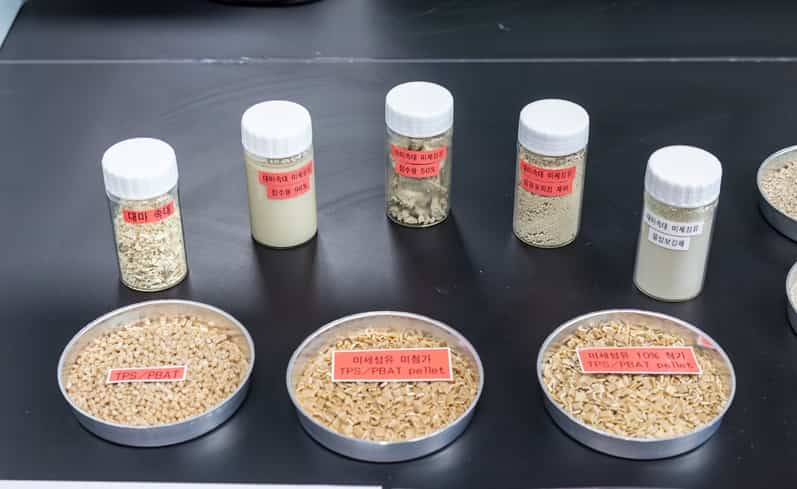
To solve this vulnerability, a scientific research team led by Dr. Hoyong Kim at the Korea Research Institute of Chemical Technology (KRICT) announced a breakthrough in processing microfibrillated cellulose derived from agricultural waste. Published in the Chemical Engineering Journal, the team successfully developed an affordable technique to convert discarded hemp hurd—the woody interior of industrial hemp stalks—into a high-performance bioplastic reinforcement filler. The resulting composite material boosts tensile strength by 26.2% while simultaneously lowering moisture and gas permeability. hemp hurd bioplastic reinforcement
The Hidden Potential in Discarded Hemp Stalks
Industrial hemp is cultivated globally and within localized economic zones, such as Andong in South Korea, primarily for the strong fibers contained in its outer bark. These outer fibers are spun into textiles, leaving behind the woody interior known as hemp hurd. Making up roughly 70% of the plant’s total stem weight, hemp hurd has historically been treated as low-value agricultural residue or discarded outright.
While commercial wood pulp or virgin cotton cellulose can be processed into microscopic fibers to reinforce materials, these conventional sources require costly chemical separation and refining. Repurposing hemp hurd as a primary feedstock offers a dual solution: it diverts tons of agricultural waste from landfills while providing bioplastic manufacturers with an abundant, low-cost raw material. Furthermore, the processing principles established by KRICT can be extended to other widespread crop residues, such as soybean stalks and rice straw, broadening the scope of agricultural circular economies. hemp hurd bioplastic reinforcement
Solving the Hornification Bottleneck in Fiber Drying
Despite the theoretical benefits of plant-derived cellulose, converting raw crop residues into effective structural fillers presents a complex chemical hurdle known as hornification. When cellulose microfibrils are extracted and dried using conventional industrial methods, the removal of water causes adjacent microscopic fibers to cluster tightly together. Strong hydrogen bonds snap the fine fibrillar structure shut, forming coarse, dense clumps.
When these aggregated fiber clumps are mixed into bioplastic formulations, they cannot disperse evenly throughout the polymer matrix. Instead of absorbing and distributing mechanical stress across the material, the clumps act as structural fault lines that cause the film to tear under low tension. Advanced industrial drying techniques like freeze-drying or spray-drying can prevent hornification, but their massive energy footprint and expensive equipment render them impractical for cost-sensitive, large-scale production.
The Two-Step Strategy: Moisture Control and Surface Treatment
To maintain microscopic fiber dispersion without resorting to expensive drying equipment, the KRICT team developed a precise two-step physicochemical conditioning technique that works within standard industrial oven drying.
First, the researchers targeted the natural moisture boundary of plant fibers known as the Fiber Saturation Point (FSP). At the FSP—which occurs around a 30% moisture content in plant matter—free liquid inside the fiber pores has evaporated, but bound water inside the cell walls remains intact. When moisture levels drop below this 30% threshold, the removal of bound water forces cellulose strands close enough together to trigger irreversible aggregation. By carefully monitoring the moisture state and milling the hemp hurd cellulose while maintaining a controlled moisture level above the FSP (around 37%), the team mechanically refined the fibers before severe hornification could take root.
Second, the team applied a low-cost, hydrophobic surface treatment called alkyl ketene dimer (AKD) to the cellulose microfibrils. hemp hurd bioplastic reinforcement
The AKD molecules attach to the fiber surfaces, creating microscopic molecular shields that sterically block adjacent microfibrils from bonding to one another during the final drying phase. Combined with FSP moisture management, this chemical modification allows the fibers to undergo conventional oven drying while fully retaining their delicate, porous, high-surface-area structure.
Impressive Tensile Strength and Barrier Improvements
To evaluate real-world performance, the modified microfibrillated cellulose was blended at a 10% weight ratio into standard TPS/PBAT biodegradable film matrixes. The performance gap between conventional processing and KRICT’s dual-control method proved substantial:
-
Tensile Strength: Biofillers prepared through standard drying provided a minor 1.5% improvement in film strength. In contrast, the FSP-guided, AKD-treated hemp filler increased tensile strength by 26.2%.
-
Water Vapor Permeability: The uniform dispersion of hydrophobic-treated microfibrils created a tortuous path for moisture molecules, reducing water vapor passage through the film by approximately 17%.
-
Oxygen Barrier Performance: The dense internal network formed by the well-dispersed microfibrils lowered oxygen transmission rates by 9%, helping protect sensitive foods or agricultural soil environments.
-
Uncompromised Biodegradability: Despite the notable gains in physical durability, environmental testing confirmed that the composite film retained a relative biodegradability rate of 99.4% over 45 days, ensuring complete soil decomposition. hemp hurd bioplastic reinforcement
A Scalable Step Toward Circular Eco-Materials
The ability to reinforce biodegradable films using low-value crop residues and low-energy oven drying marks an important step toward scalable eco-friendly manufacturing. By addressing both the structural weaknesses of bioplastics and the financial constraints of industrial fiber drying, KRICT’s research bridges the gap between laboratory sustainability and market viability. As agricultural sectors seek higher-value outlets for crop waste, converting stems, stalks, and husks into structural biofillers offers a practical path toward reducing global plastic dependence.
More…
More…